The Chinese Lunisolar Calendar
The traditional Chinese calendar is a lunisolar system that combines the Moon’s phases with the Sun’s apparent motion along the ecliptic.
Months are defined by lunar cycles, while the position of the Sun relative to the ecliptic longitude aligns the calendar with the solar year. Without solar corrections, a purely lunar calendar would drift away from the seasons, so solar terms and intercalary months are used to keep agricultural activities aligned with seasonal conditions.
Months are defined by lunar cycles, while the position of the Sun relative to the ecliptic longitude aligns the calendar with the solar year. Without solar corrections, a purely lunar calendar would drift away from the seasons, so solar terms and intercalary months are used to keep agricultural activities aligned with seasonal conditions.
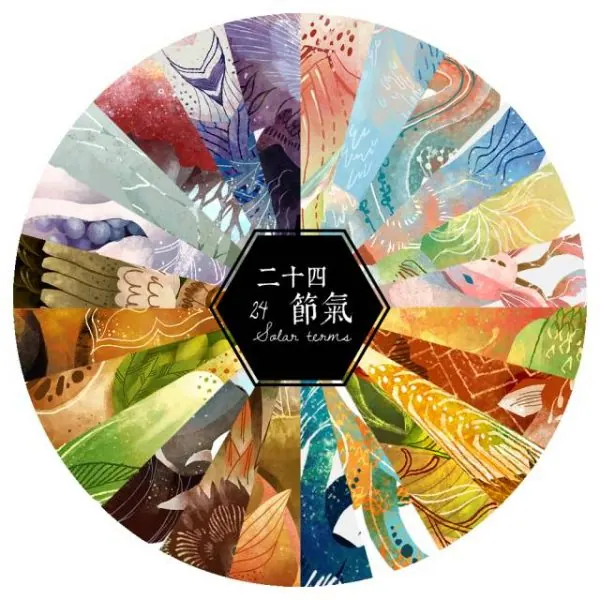
Definition of the 24 Solar Terms
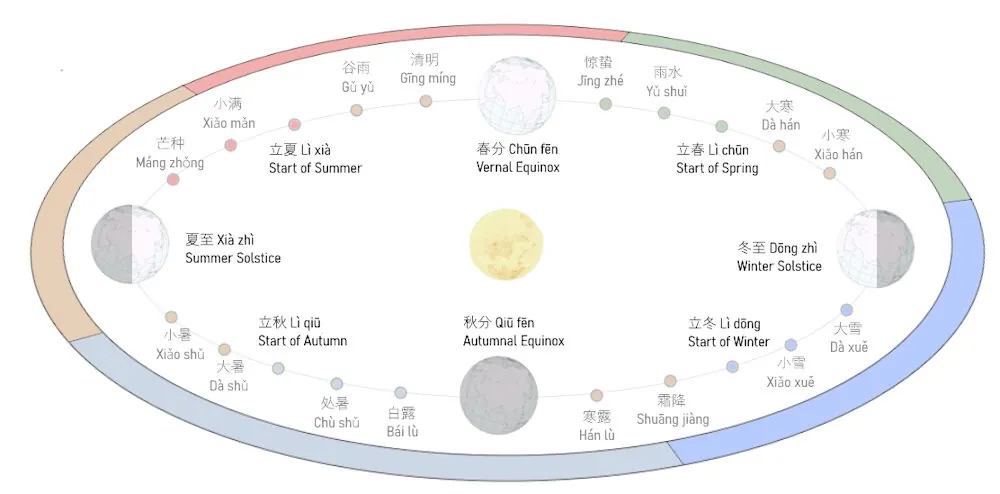
The traditional 24 Solar Terms (Jieqi) describe how the Chinese lunisolar calendar tracks changes in the Sun’s position along the ecliptic and links them to seasonal patterns, agriculture, and cultural life. This system refines the four solstices and equinoxes into 24 segments, each reflecting a distinct stage of climate and natural change during the year.
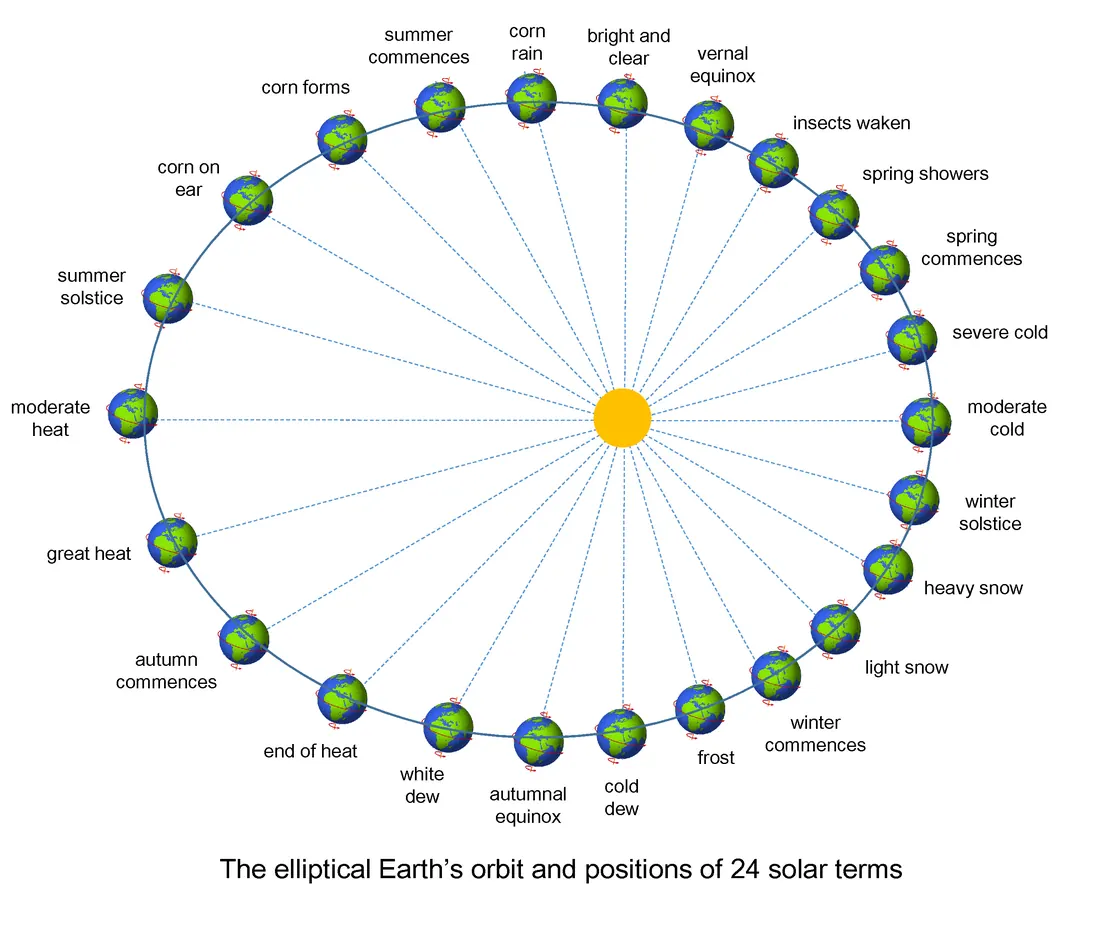
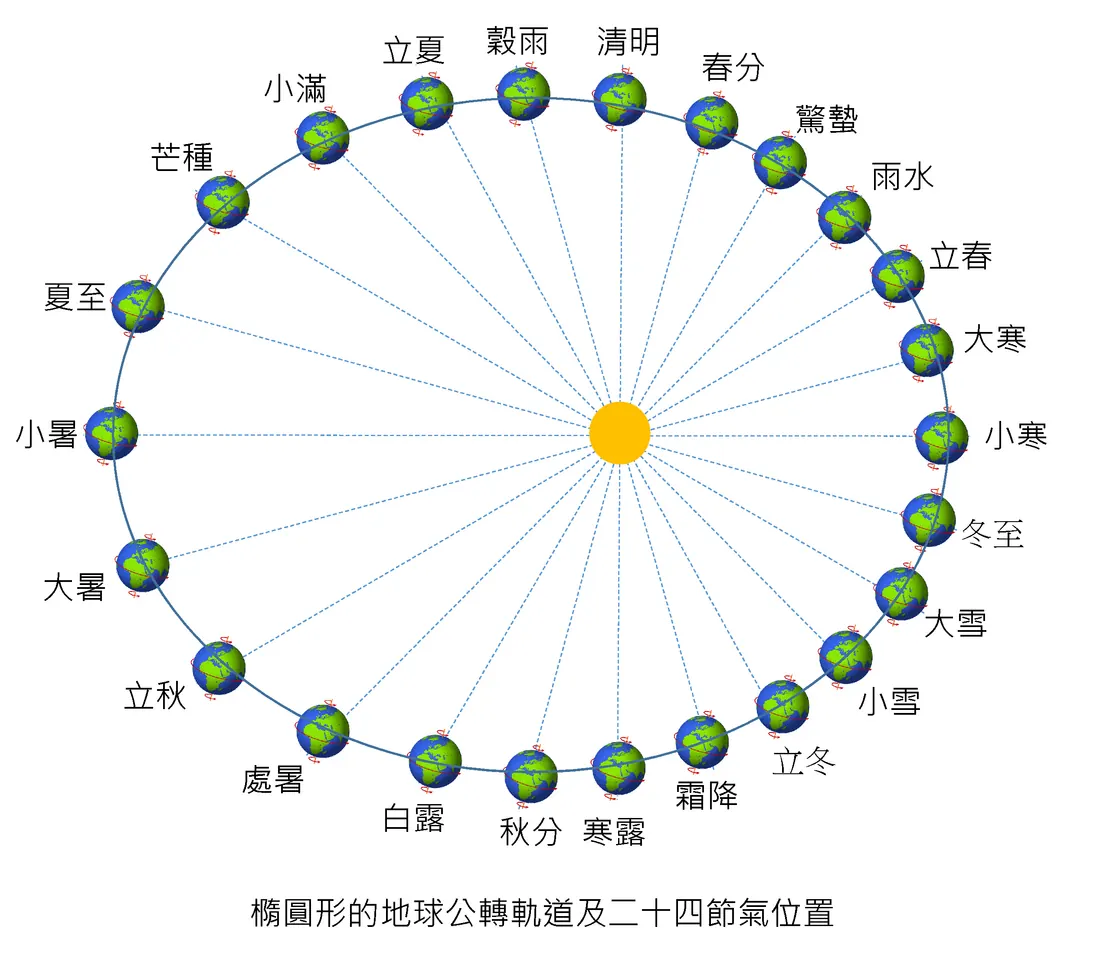
Ancient Chinese astronomers divided the Sun’s annual apparent path into 24 equal segments of 15 degrees in ecliptic longitude, and each segment is called a solar term (Jieqi).
One full cycle of 24 solar terms corresponds to one Earth revolution around the Sun and spans about 365.24 days, similar to the modern tropical year. In practice, their dates shift only by one or two days from year to year.
One full cycle of 24 solar terms corresponds to one Earth revolution around the Sun and spans about 365.24 days, similar to the modern tropical year. In practice, their dates shift only by one or two days from year to year.
 |
 |
Overview of the Eight Key Dates
|
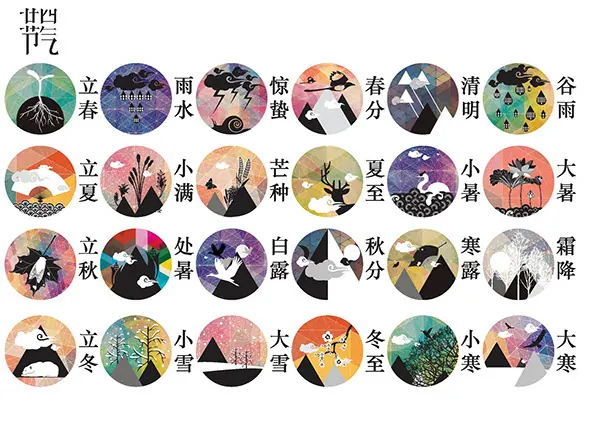
Within the 24 Solar Terms, eight dates serve as primary reference points for the seasonal cycle. Their typical Gregorian dates, which shift by one or two days annually due to the solar year's length, are as follows:
These subdivide the year into four seasons, each framed by a "beginning" term and an astronomical turning point linked to the Sun's position and daylight length. |
 |
Solstices, Equinoxes - The Key Anchor Points
Four of the 24 terms are the Spring Equinox (Chunfen), Summer Solstice (Xiazhi), Autumn Equinox (Qiufen), and Winter Solstice (Dongzhi), matching the astronomical events defined by Earth’s tilt and orbit. These four terms anchor the system: the equinoxes correspond to the Sun directly over the equator and nearly equal day and night lengths, while the solstices mark the most northerly and southerly positions of the subsolar point and the extremes of daylight duration. The remaining 20 terms describe intermediate stages, such as Beginning of Summer (Lixia), Grain Rain (Guyu), and Frost’s Descent (Shuangjiang), which relate closely to climate and crop conditions.
Solar Terms and Agricultural Guidance
Each solar term traditionally indicates typical weather conditions, soil state, and biological activity relevant to farming in East Asia. Names such as Rain Water (Yushui), Grain in Beard (Mangzhong), White Dew (Bailu), and Greater Snow (Daxue) reflect observed changes in precipitation, temperature, and plant development that guide sowing, transplanting, harvesting, and storage. Even with modern meteorology, some rural communities and agricultural planners still reference solar terms as a calendar of field operation windows and phenological expectations.
Cultural and Regional Adaptation
Beyond agriculture, solar terms influence festivals, dietary customs, and health practices in Chinese culture. Certain terms, for example Pure Brightness (Qingming) and Beginning of Autumn (Liqiu), are associated with specific ceremonies, family activities, and seasonal foods that reflect perceived changes in the environment. Although the detailed climate associated with a given term can vary by latitude and region, the system offers a shared temporal framework for observing and describing annual environmental cycles across East Asia.
Canva poster activity
Generate a textless, borderless, square image that reflect the environmental condition in [solar term] according to the 24 solar terms in the traditional Chinese culture. The image should contain [elements you want to add]
Suggested elements:
• Lake/pond/river
• Birds/insects
• Trees/bamboos/flowers/plants
Suggested elements:
• Lake/pond/river
• Birds/insects
• Trees/bamboos/flowers/plants