Earth’s Orbit and Rotation
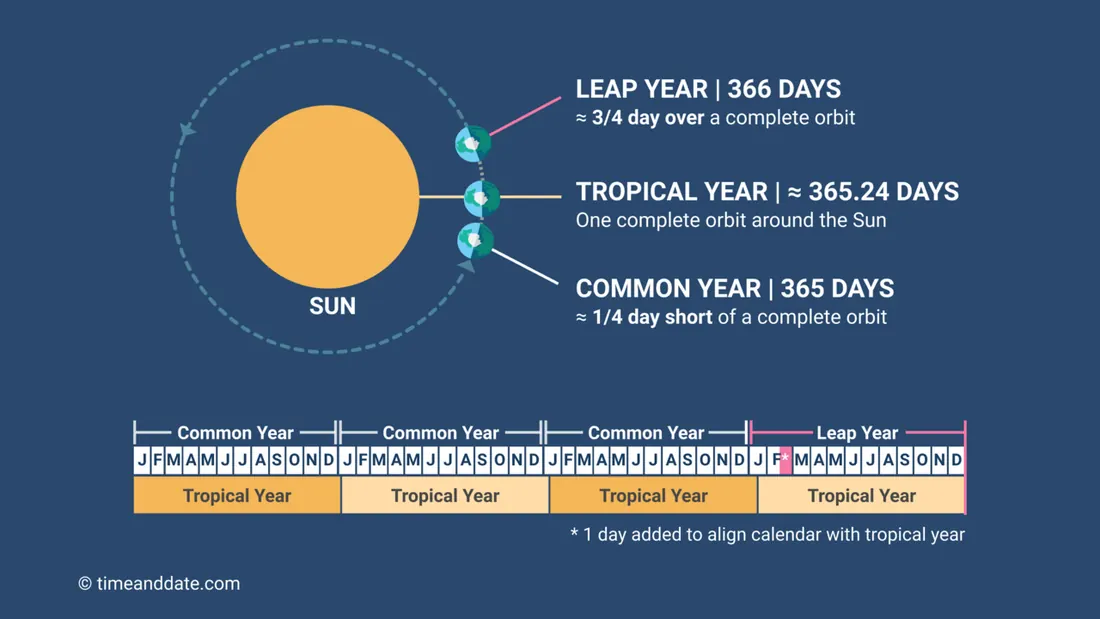
Earth both rotates on its axis and revolves around the Sun. One Solar day takes 24 hours, producing the cycle of day and night. One full revolution around the Sun (a Solar year or Tropical year) takes about 365.25 days. This fractional amount is what causes calendar years and astronomical years to drift gradually apart if uncorrected.
 |
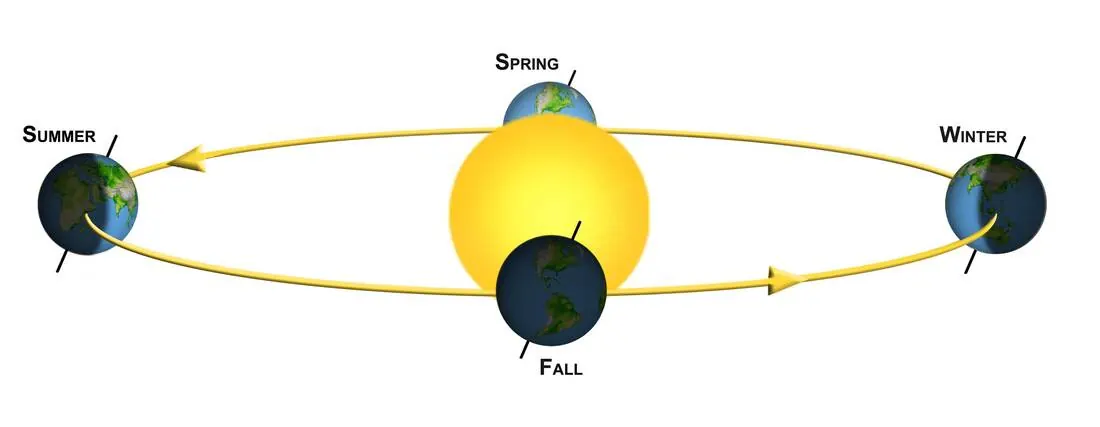 |
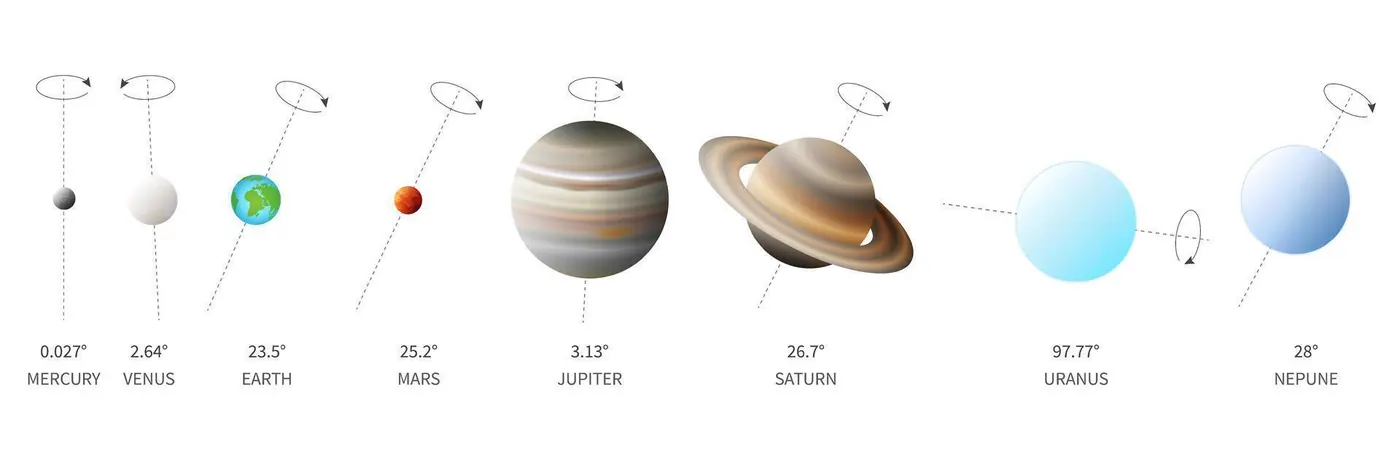
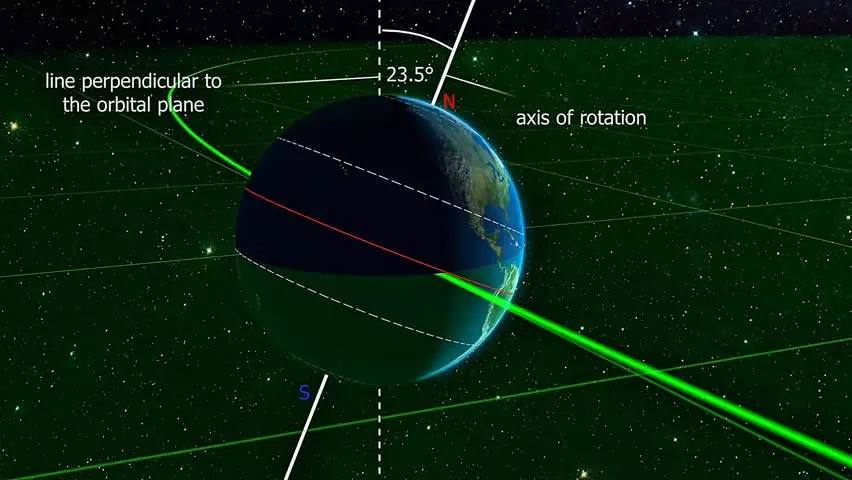
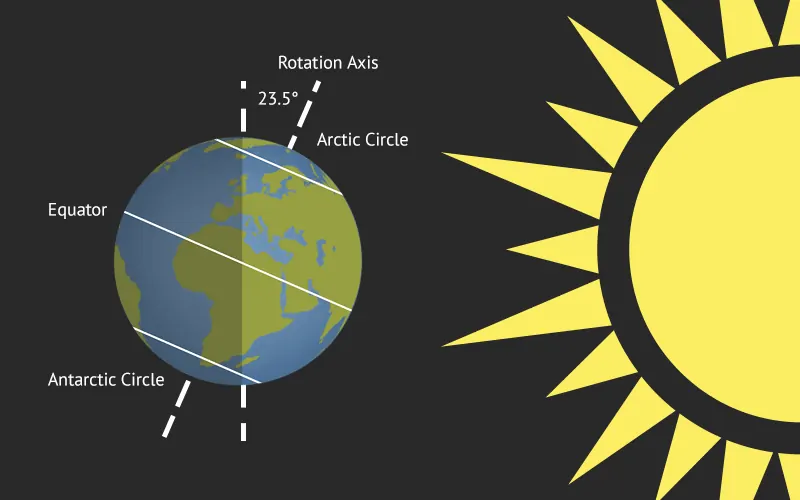
Earth’s axis is tilted by approximately 23.5∘ from the perpendicular line to the orbital plane as it revolves around the Sun. This tilt, known as axial tilt or obliquity, remains oriented toward mostly the same direction in space as Earth revolves. Because of this fixed tilt, the orientation of Earth relative to the Sun changes throughout the year.
Leap Years and the Calendar
Because one orbit of Earth around the Sun (Solar year) takes roughly 365.25 days, a standard 365-day common year omits about one-quarter of a day each year. To maintain alignment between the calendar and the Sun’s position, an additional day is added to February every four years, creating a leap year with 366 days.
 |
 |
Sunlight Angle
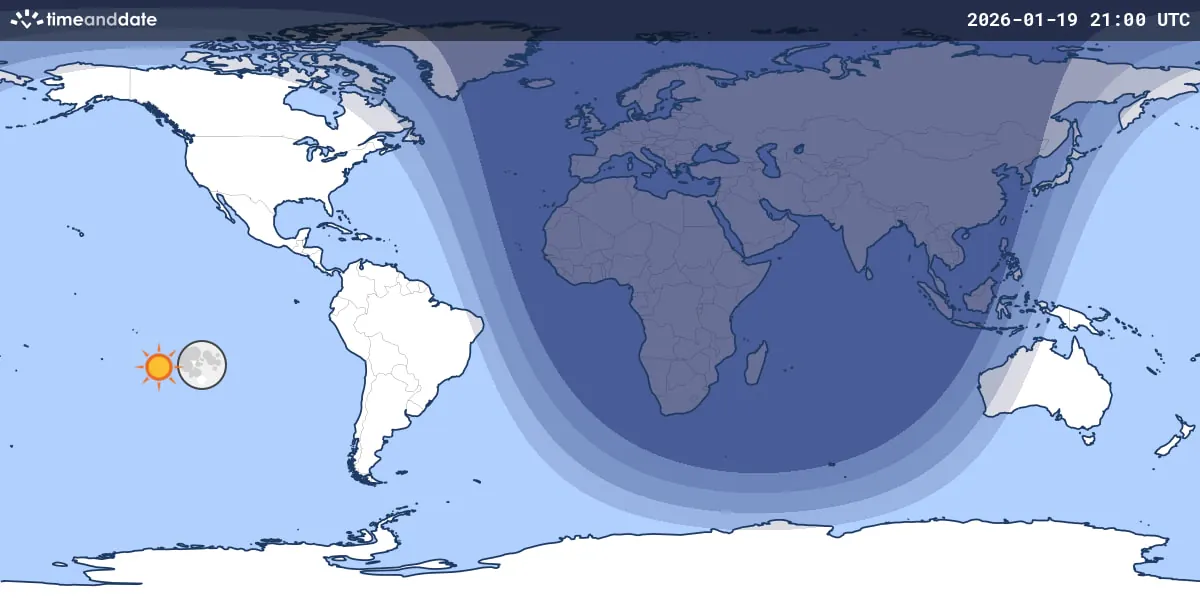
A key concept in understanding sunlight distribution is the subsolar point—the point on Earth’s surface where the Sun appears directly overhead at local noon.
This point marks where the Sun’s rays strike Earth at a 90∘ angle. As Earth travels along its orbit, the subsolar point moves between the Tropic of Cancer (23.5∘ N) and the Tropic of Capricorn (23.5∘ S). The latitude of this point determines the vertical angle of sunlight received at different locations.
This point marks where the Sun’s rays strike Earth at a 90∘ angle. As Earth travels along its orbit, the subsolar point moves between the Tropic of Cancer (23.5∘ N) and the Tropic of Capricorn (23.5∘ S). The latitude of this point determines the vertical angle of sunlight received at different locations.
 |
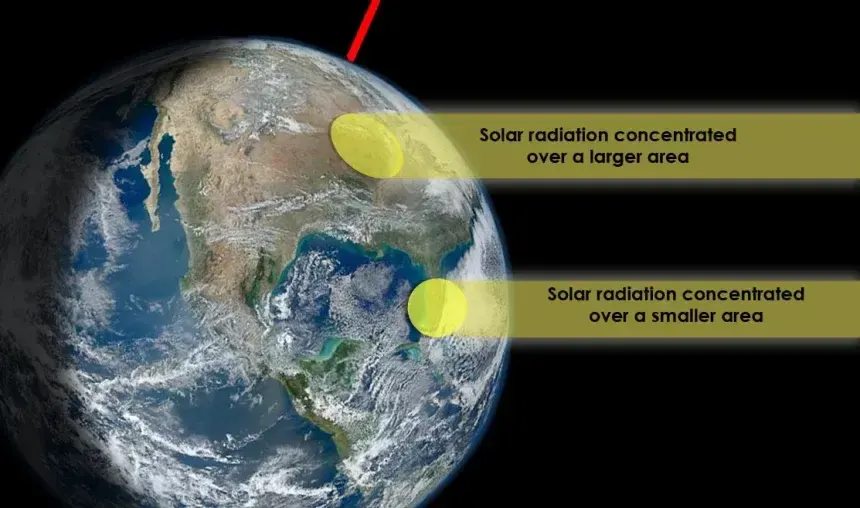 |
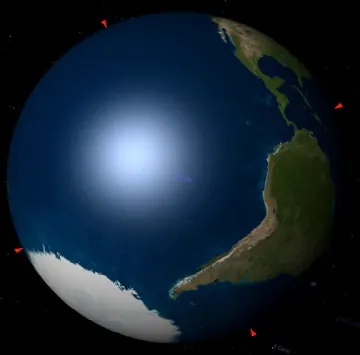
When sunlight arrives at a high angle (nearly overhead at 90∘ ), solar energy is concentrated on a smaller surface area, resulting in stronger heating. When sunlight arrives at a low angle—such as when the Sun is closer to the horizon—the same energy is spread across a larger area and must pass through more of Earth’s atmosphere, reducing intensity. This variation in the Sun’s angle is the fundamental cause of seasonal temperature differences across latitudes.
Seasons, Solstices and Equinoxes
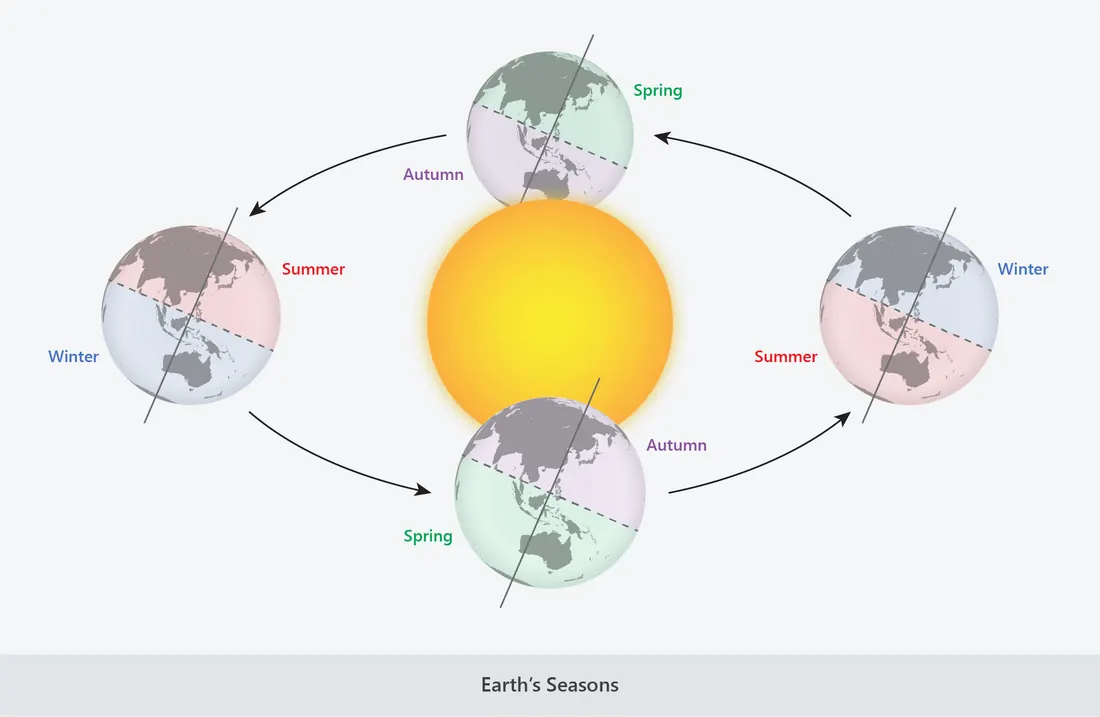
The change in sunlight angle affects both the duration of daylight and the intensity of solar radiation at Earth’s surface. Higher Sun angles distribute energy over a smaller area, increasing the average temperature, while lower angles spread the energy more thinly, resulting in cooler conditions.
As Earth revolves around the Sun, the shifting position of the subsolar point and the varying solar angle lead to the alternating seasons experienced in both hemispheres. The hemisphere tilted toward the Sun receives more direct sunlight and experiences longer days and higher average temperatures. The opposite hemisphere receives lower solar angles, shorter days, and cooler conditions.
As Earth revolves around the Sun, the shifting position of the subsolar point and the varying solar angle lead to the alternating seasons experienced in both hemispheres. The hemisphere tilted toward the Sun receives more direct sunlight and experiences longer days and higher average temperatures. The opposite hemisphere receives lower solar angles, shorter days, and cooler conditions.
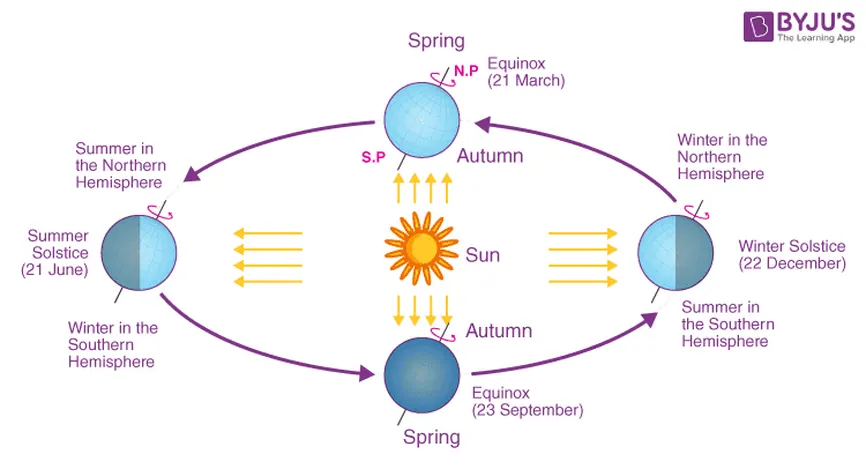
- At the June (Summer) Solstice, around 21 June, the subsolar point reaches its northernmost position at the Tropic of Cancer. The Northern Hemisphere experiences its longest day of the year and the highest solar angles, marking the start of summer. Simultaneously, the Southern Hemisphere receives sunlight at its lowest angles, indicating winter conditions there.
- At the September (Autumnal) Equinox, around 23 September, the subsolar point returns to the equator, and day and night are approximately equal everywhere. The Northern Hemisphere transitions into autumn as solar angles decline, while the Southern Hemisphere enters spring.
- At the December (Winter) Solstice, around 21 December, the subsolar point is located at the Tropic of Capricorn. The Southern Hemisphere now receives the most direct sunlight, experiencing summer conditions, while the Northern Hemisphere has its shortest day, marking winter.
- Finally, at the March (Vernal) Equinox, around 21 March, the subsolar point again crosses the equator, producing equal day and night globally. The Northern Hemisphere moves into spring, while the Southern Hemisphere enters autumn.
Over the course of a year, this continuous north–south migration of the subsolar point defines the rhythm of the seasons and explains the gradual change in sunlight intensity that shapes regional climates and biological cycles.
The Tropics, Polar Circles, and Daylight Extremes
|
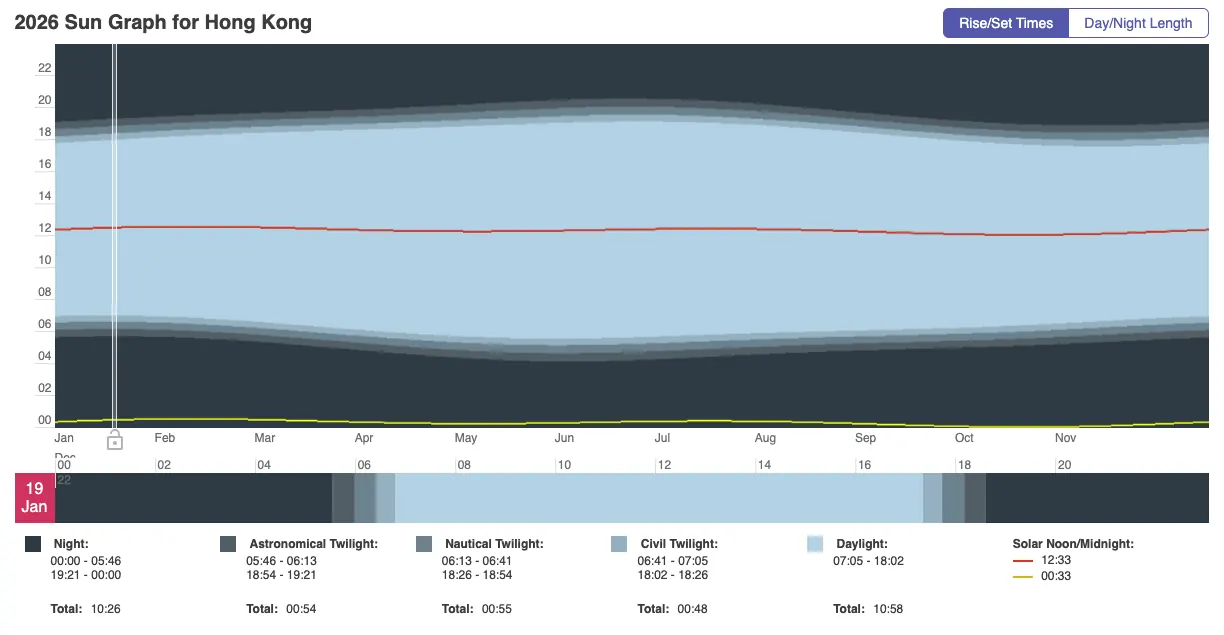
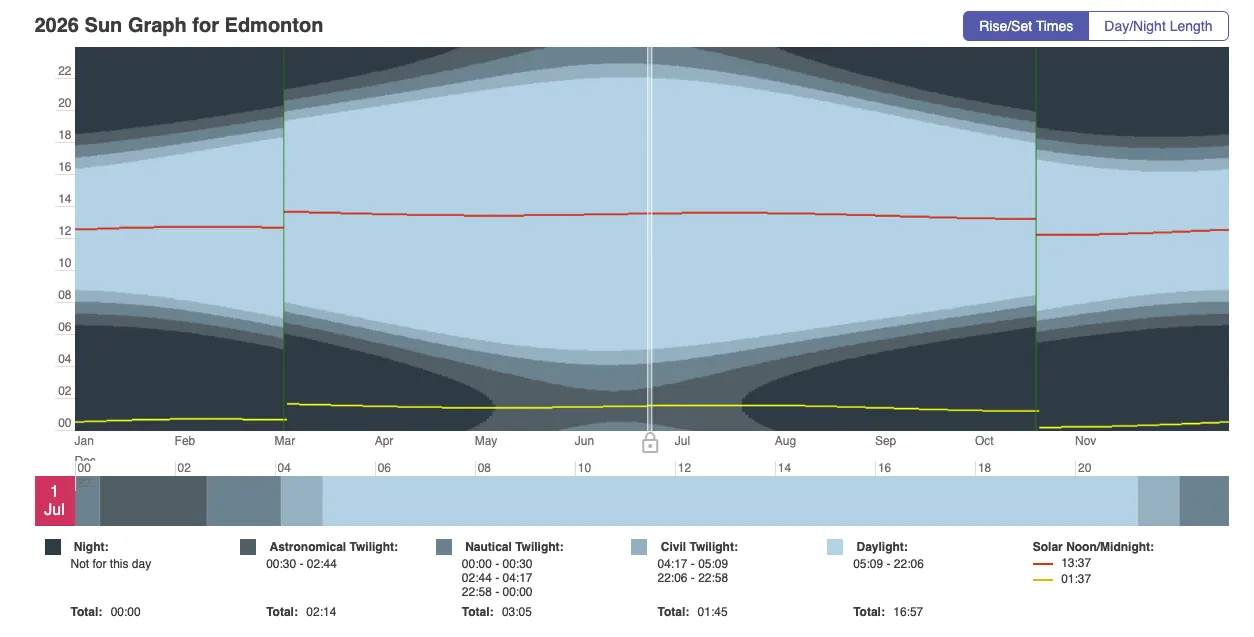
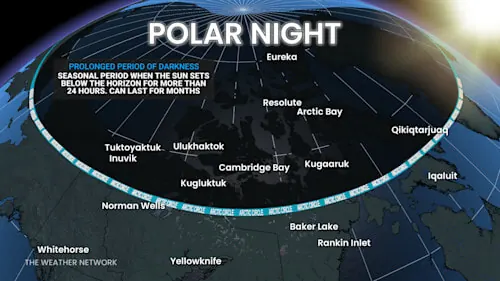
The Tropic of Cancer and Tropic of Capricorn mark the latitudes where the Sun can appear directly overhead at noon at the solstices. Beyond 66.5∘ north and south, the Arctic and Antarctic Circles define regions that experience at least one full day each year of continuous daylight or continuous darkness.
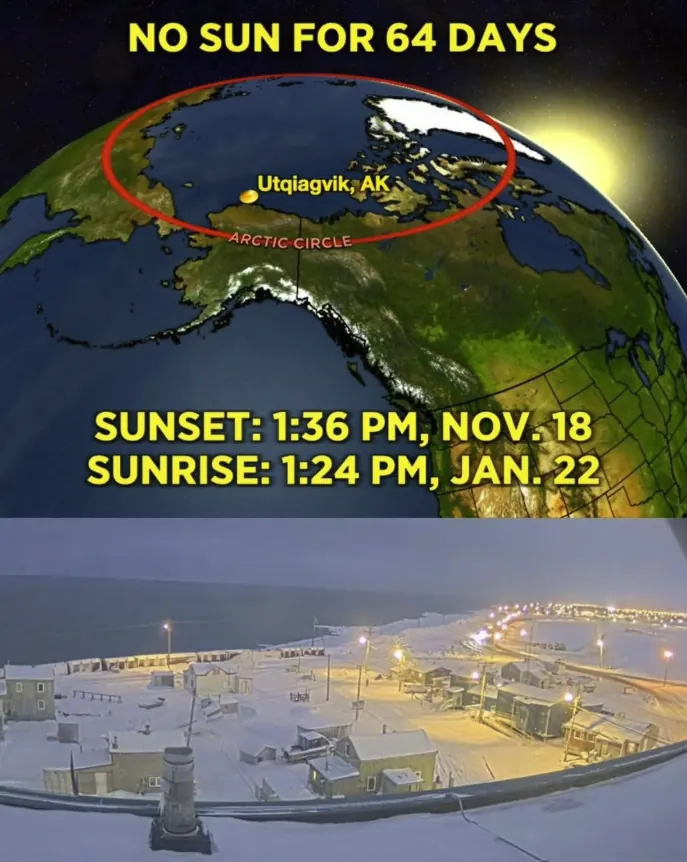
In locations close to the poles, such as northern Alaska or northern Scandinavia, the Sun can remain above the horizon for many weeks during local summer. This period is often called the “midnight Sun,” because the Sun is still visible at local midnight. During local winter, the opposite occurs: the Sun may stay below the horizon for weeks or months, producing very short twilight periods or complete darkness at midday. These extended light and dark seasons illustrate how strongly latitude controls the pattern of daylight over the year. |
 |
 |
 |
Daylight Saving Time
Many countries adjust their clocks seasonally using daylight saving time (DST). During warmer months, clocks are set one hour ahead of standard time to shift human activities into periods of increased daylight. This practice reduces artificial lighting use and aligns work hours with higher Sun positions in the sky. When the period ends, typically in autumn, clocks are set back one hour to standard time. While DST does not change the actual length of the day or night, it alters the alignment of local time with solar time.