The Sun–Earth–Moon System
|
The relationship between the Sun, Earth, and the Moon is defined by predictable movements known as orbits. As Earth orbits the Sun, the Moon simultaneously orbits Earth. These movements are governed by gravitational forces and result in specific patterns of light and shadow.
The Moon shines because it reflects sunlight. One half of the Moon is always illuminated by the Sun, but the portion of this illuminated hemisphere that we can see varies from:
|
  |
Sidereal Month vs Synodic Month
Recall from the chapter on Earth's rotation that:
A similar relationship applies to the Moon's orbit.
- A Sidereal Day is the time Earth takes to rotate once relative to the distant stars—approximately 23 hours, 56 minutes.
- A Solar Day is the time for the Sun to return to the same position in the sky--24 hours. The four-minute difference exists because Earth moves along its orbit during each rotation, so it must rotate slightly more to face the Sun again.
A similar relationship applies to the Moon's orbit.
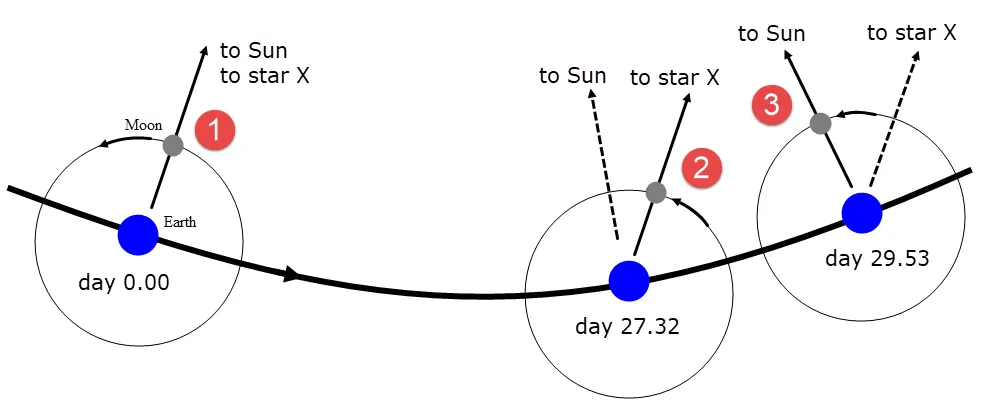
- A Sidereal Month is the time the Moon takes to complete one orbit relative to the distant stars—about 27.32 days.
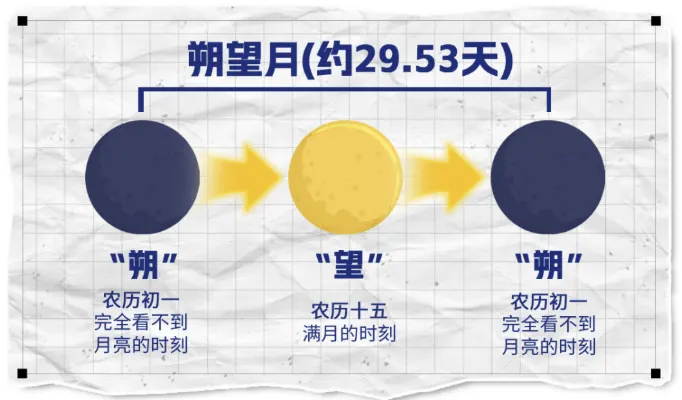
- A Synodic Month is the time from one new moon to the next—about 29.53 days. The difference of about two days arises because Earth is also moving around the Sun during the Moon's orbit. After 27.32 days, the Moon has returned to its original position among the stars, but the Sun's position has shifted, so the Moon needs additional time to realign with the Sun and complete its phase cycle.
Far Side and Near Side of the Moon
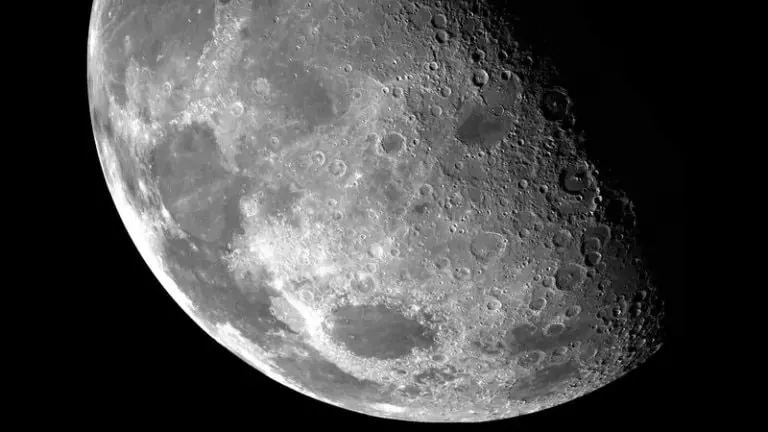
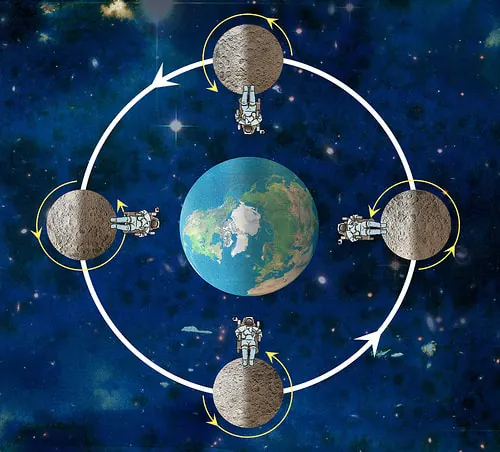
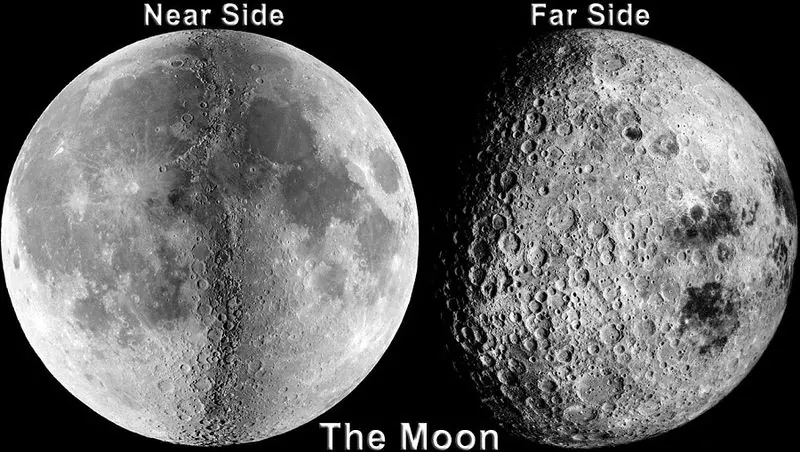
We always see the same face of the Moon from Earth. This occurs because the Moon completes exactly one full rotation on its own axis in the same amount of time it takes to complete one orbit around Earth—about 27.3 days.
In other words, while the Moon is circling Earth, it is also spinning like a top, but its spin is precisely synchronized with its orbital motion so that the same hemisphere always points toward us. This is called Synchronous Rotation. The side permanently facing away is the "far side," not the "dark side"—it receives just as much sunlight as the near side, but we never see it from our vantage point.
We always see the same face of the Moon from Earth. This occurs because the Moon completes exactly one full rotation on its own axis in the same amount of time it takes to complete one orbit around Earth—about 27.3 days.
In other words, while the Moon is circling Earth, it is also spinning like a top, but its spin is precisely synchronized with its orbital motion so that the same hemisphere always points toward us. This is called Synchronous Rotation. The side permanently facing away is the "far side," not the "dark side"—it receives just as much sunlight as the near side, but we never see it from our vantage point.
 |
 |
Phases of the Moon
 Crescent describes a shape that resembles a thin, curved sickle.
 Gibbous means "hump-backed" or "bulging."
|
 |
 Waxing means "increasing". ie: Waxing consumer confidence
 Waning means "decreasing". ie: Your partner is having a Waning interest in you.
|
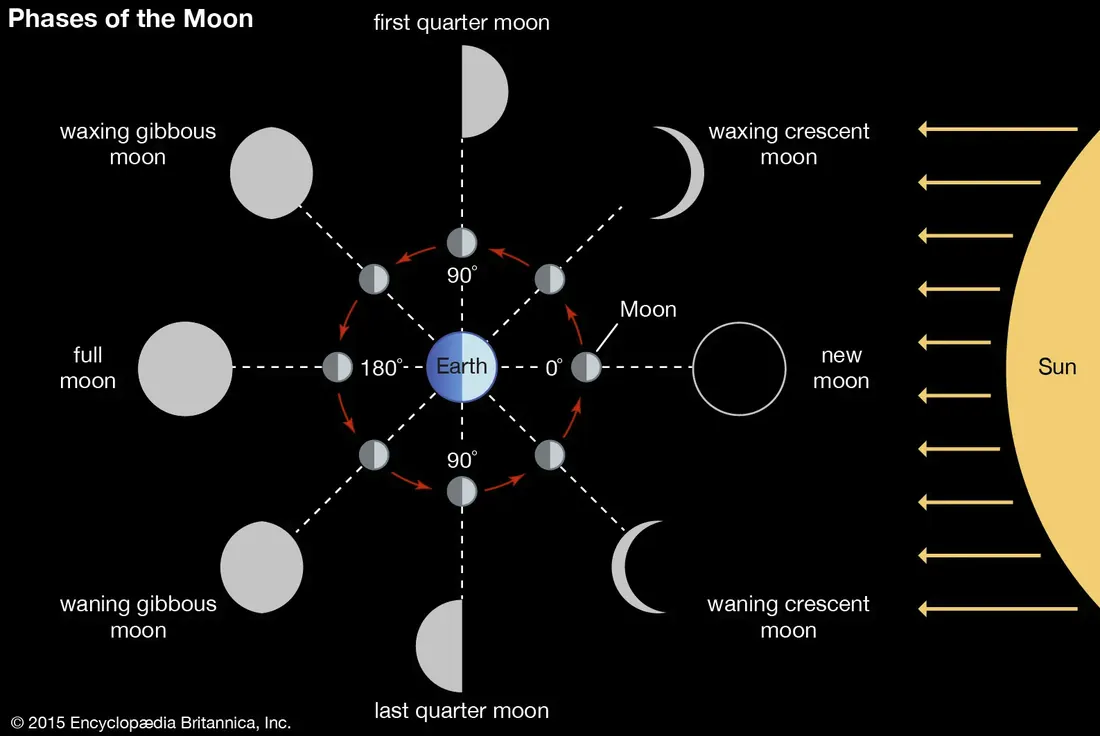
As the Moon orbits Earth, the relative positions of the Sun, Earth, and Moon change, causing different portions of the Moon's illuminated half to be visible from our perspective. This creates the familiar cycle of lunar phases.
The cycle begins with the new moon, when the Moon lies approximately between Earth and the Sun. The illuminated side faces away from us, making the Moon invisible. As the Moon moves eastward in its orbit, a thin sliver becomes visible—this is the waxing crescent. "Waxing" means the illuminated portion is increasing.
When the Moon has completed one-quarter of its orbit, we see the first quarter, with half of its visible surface illuminated. As the Moon continues, the illuminated portion grows beyond half, entering the waxing gibbous phase, until it reaches full moon, when the Moon and Sun are on opposite sides of Earth. The entire face visible from Earth is now illuminated.
After full moon, the illuminated portion decreases—this is the waning gibbous phase. At the three-quarter point, we see the last quarter, with the opposite half illuminated. Finally, the Moon becomes a waning crescent, shrinking to a thin sliver before returning to new moon.
These phases form a predictable cycle that repeats roughly every 29.53 days.
The cycle begins with the new moon, when the Moon lies approximately between Earth and the Sun. The illuminated side faces away from us, making the Moon invisible. As the Moon moves eastward in its orbit, a thin sliver becomes visible—this is the waxing crescent. "Waxing" means the illuminated portion is increasing.
When the Moon has completed one-quarter of its orbit, we see the first quarter, with half of its visible surface illuminated. As the Moon continues, the illuminated portion grows beyond half, entering the waxing gibbous phase, until it reaches full moon, when the Moon and Sun are on opposite sides of Earth. The entire face visible from Earth is now illuminated.
After full moon, the illuminated portion decreases—this is the waning gibbous phase. At the three-quarter point, we see the last quarter, with the opposite half illuminated. Finally, the Moon becomes a waning crescent, shrinking to a thin sliver before returning to new moon.
These phases form a predictable cycle that repeats roughly every 29.53 days.
 |
 |
Solar Eclipses

In the ancient time, the sun being eaten was a terrifying sign.
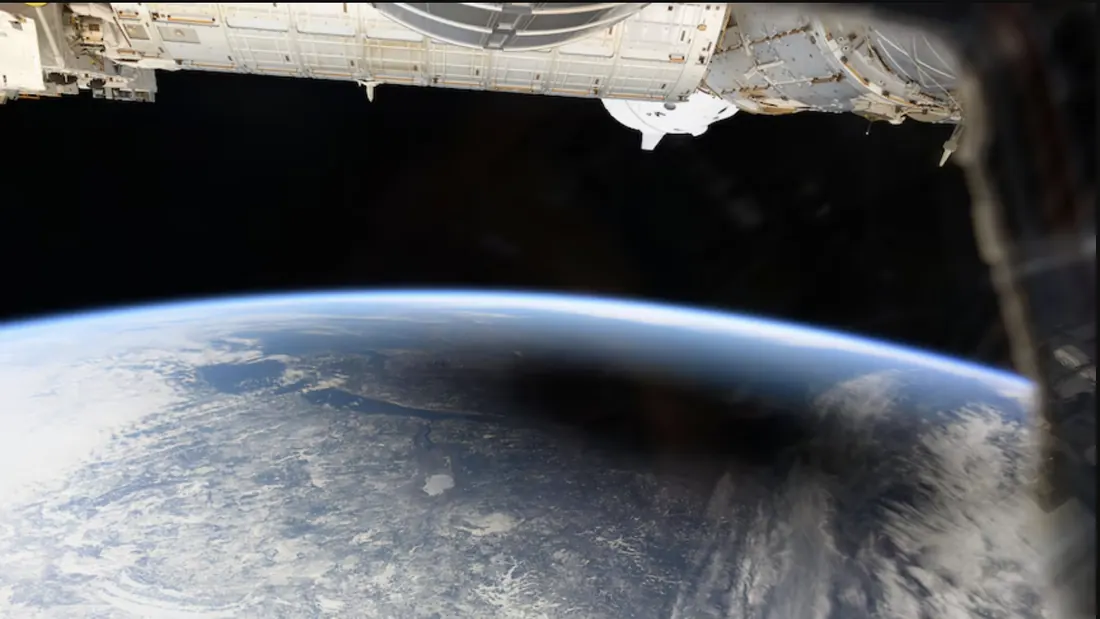
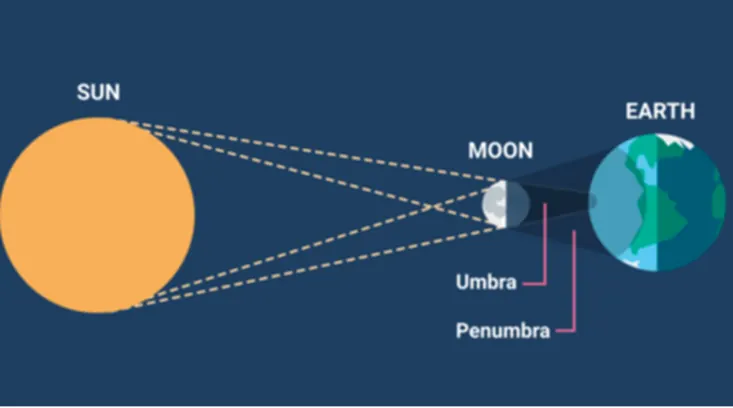
A solar eclipse occurs when the Moon passes directly between the Sun and Earth. During this specific alignment, the Moon casts a shadow on a small portion of Earth's surface. Because the Moon is much smaller than the Sun, it must be perfectly aligned to block the Sun's light. Solar eclipses can only occur at a new moon, when the Moon is roughly between Earth and the Sun, and the alignment is close to the ecliptic plane.
During a total solar eclipse, people in a narrow path on Earth are inside the Moon's umbra, the darkest part of its shadow, and the Sun appears completely covered. People outside this path but still under the Moon's penumbra, the lighter outer shadow, see a partial solar eclipse where only part of the Sun is covered. An annular solar eclipse occurs when the Moon appears too small to completely cover the Sun because it is near its farthest point from Earth, leaving a bright ring of sunlight visible.
During a total solar eclipse, people in a narrow path on Earth are inside the Moon's umbra, the darkest part of its shadow, and the Sun appears completely covered. People outside this path but still under the Moon's penumbra, the lighter outer shadow, see a partial solar eclipse where only part of the Sun is covered. An annular solar eclipse occurs when the Moon appears too small to completely cover the Sun because it is near its farthest point from Earth, leaving a bright ring of sunlight visible.
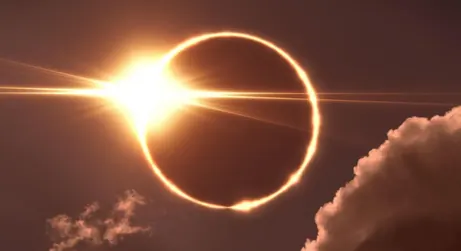 Moon blocking the sun
 |
  |
Lunar Eclipses
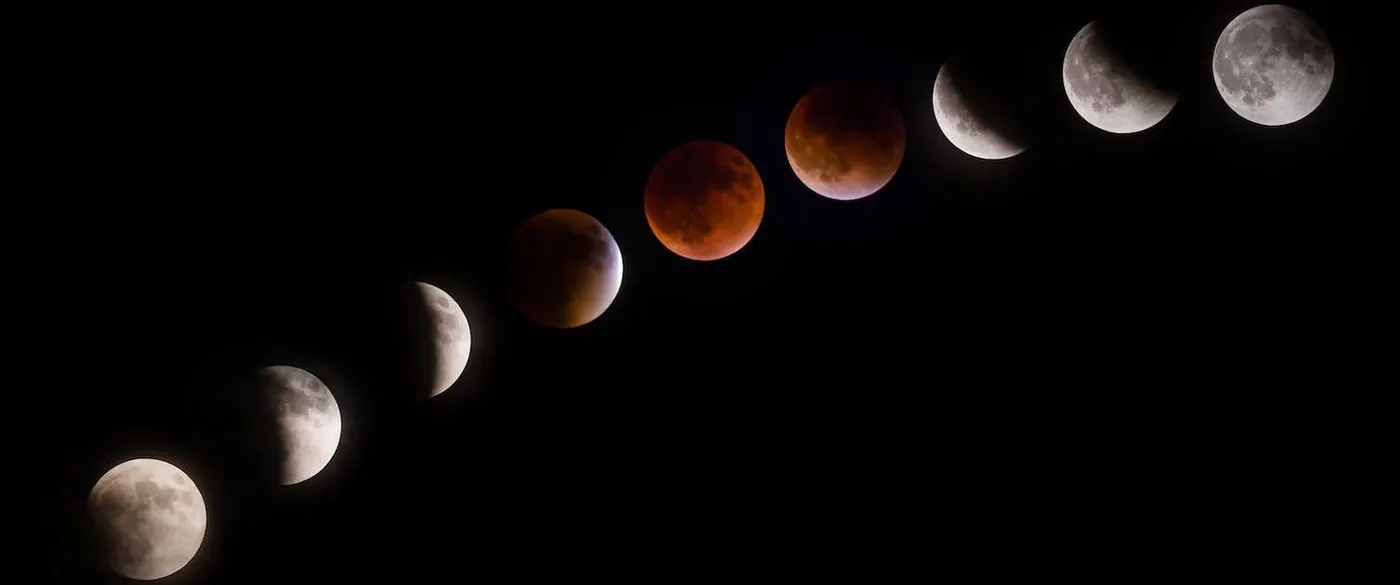
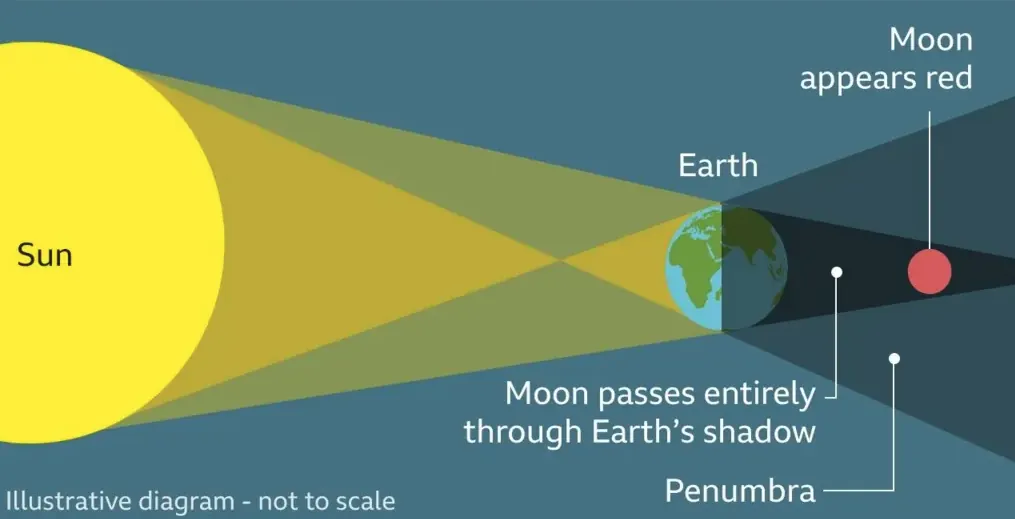
A lunar eclipse happens when Earth is positioned directly between the Sun and the Moon. In this configuration, Earth blocks sunlight from reaching the Moon, casting its shadow across the lunar surface. Unlike solar eclipses, lunar eclipses are visible from any location on the night side of Earth. Lunar eclipses only occur at full moon, when the Moon is on the opposite side of Earth from the Sun.
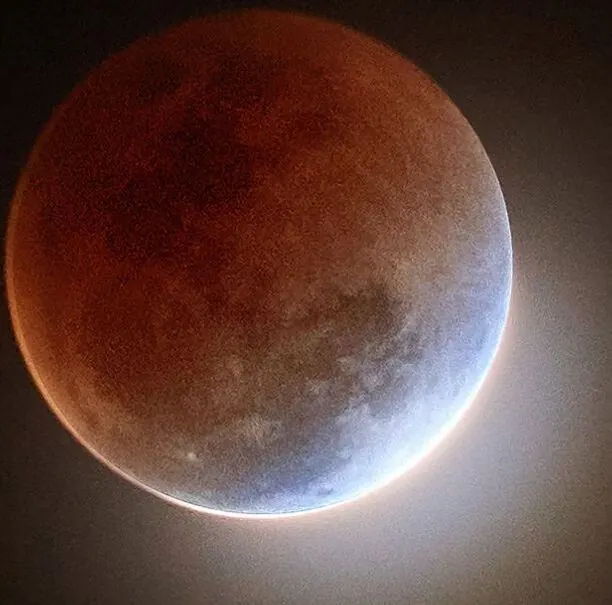
If the Moon passes into Earth's umbra, the dark inner shadow, the Moon often appears reddish—sometimes called a "blood moon." This occurs because Earth's atmosphere bends some sunlight toward the Moon, filtering out blue light and leaving only longer red wavelengths. This is called a total lunar eclipse.
If the Moon passes into Earth's umbra, the dark inner shadow, the Moon often appears reddish—sometimes called a "blood moon." This occurs because Earth's atmosphere bends some sunlight toward the Moon, filtering out blue light and leaving only longer red wavelengths. This is called a total lunar eclipse.
 |
 |
Lunar Eclipses do not happen every month
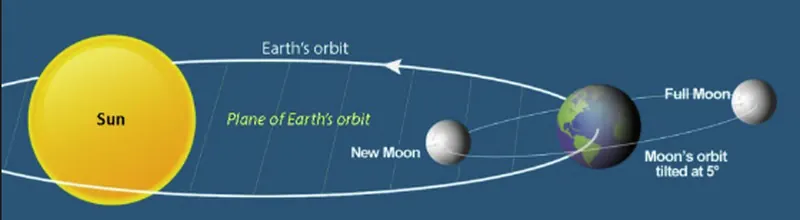
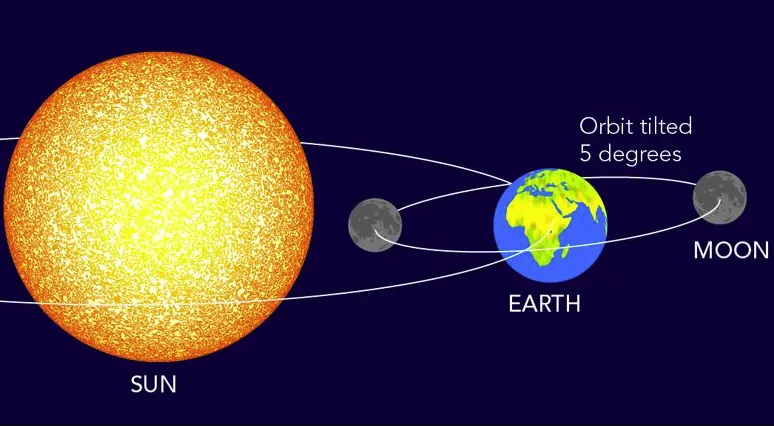
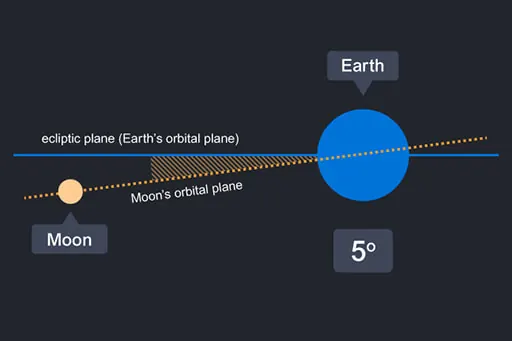
New and full Moons happen every lunar month, but eclipses are less common. Because the Moon’s orbit is tilted about 5 degrees, it usually passes a little above or below the line of the Sun and Earth, so shadows miss each other.
Eclipses only take place when a new or full Moon happens near the points where the Moon’s orbit crosses the ecliptic plane.
This special alignment causes either the Moon’s shadow to fall on Earth (solar eclipse) or Earth’s shadow to fall on the Moon (lunar eclipse).
New and full Moons happen every lunar month, but eclipses are less common. Because the Moon’s orbit is tilted about 5 degrees, it usually passes a little above or below the line of the Sun and Earth, so shadows miss each other.
Eclipses only take place when a new or full Moon happens near the points where the Moon’s orbit crosses the ecliptic plane.
This special alignment causes either the Moon’s shadow to fall on Earth (solar eclipse) or Earth’s shadow to fall on the Moon (lunar eclipse).