Introduction
If you were an astronaut on the Tiangong Space Station (CSS), you would see a sunrise approximately every 90 minutes. Another way to say this would be the orbital period of the CSS is approximately 90 minutes. You would witness 16 sunrises and 16 sunsets in a single 24-hour day.
The orbital period is the time required for an object to complete one full revolution around a celestial body. This concept is highly related to how we define our time and it often determines the functionality of the satellites. If they are timed well, the satellites may appear to be hovering at the same point above ground. This chapter will examine the factors that determine orbital period and the physical law that governs orbital motion.
The orbital period is the time required for an object to complete one full revolution around a celestial body. This concept is highly related to how we define our time and it often determines the functionality of the satellites. If they are timed well, the satellites may appear to be hovering at the same point above ground. This chapter will examine the factors that determine orbital period and the physical law that governs orbital motion.
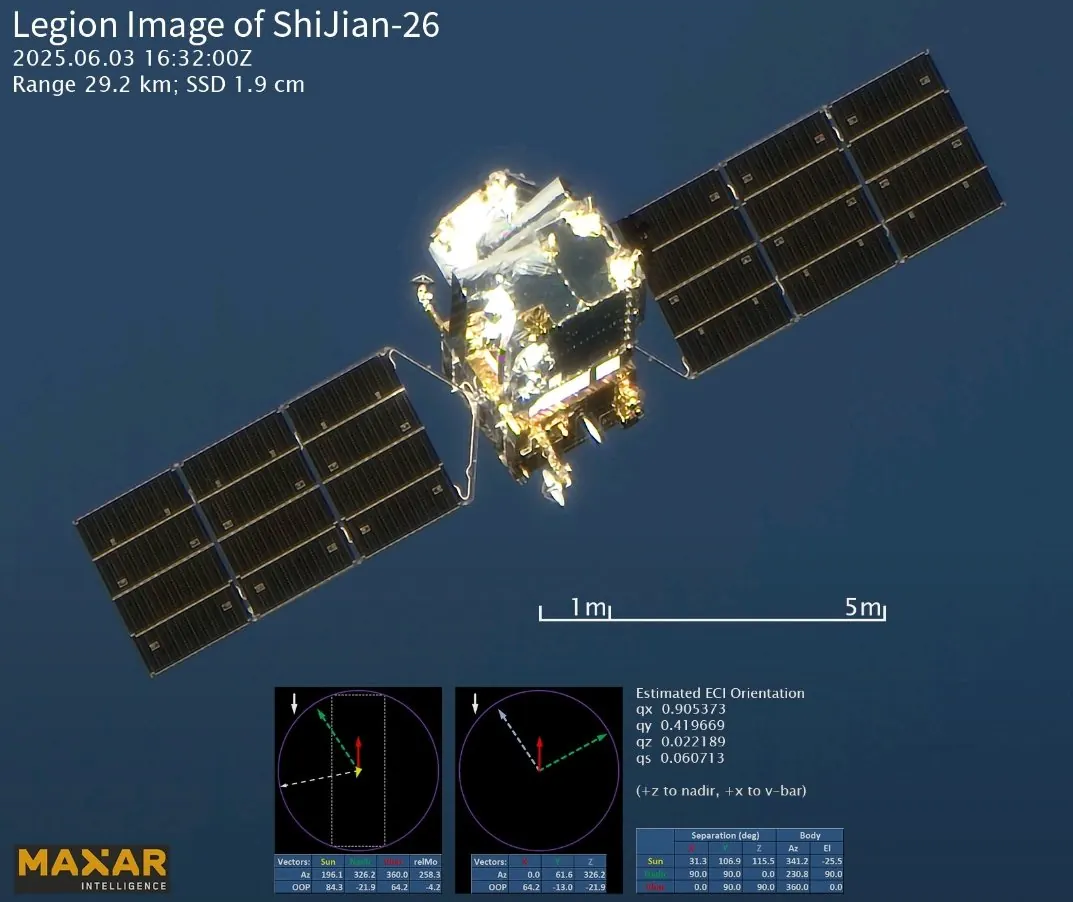 2025.06.03 - MAXAR Intelligence from US took an image of a Chinese Satellite to showcase its orbital tracking ability.
|
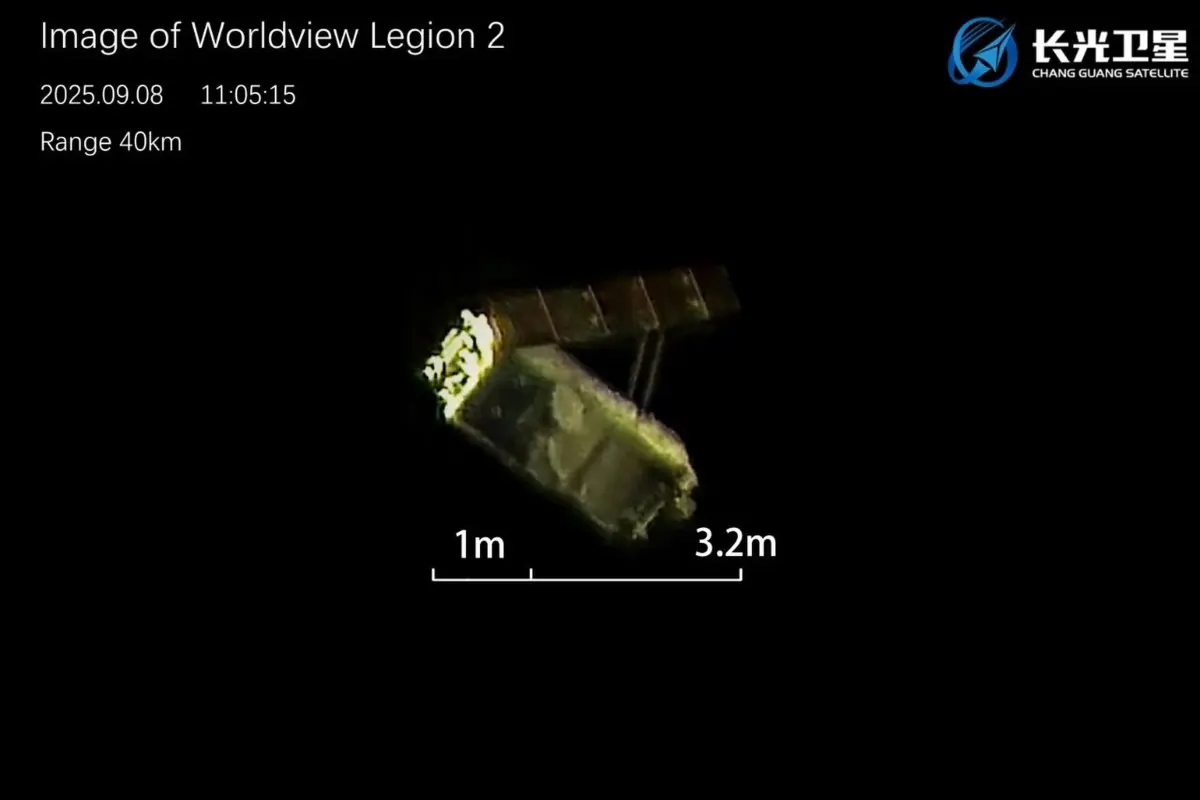 2025.09.08 - As a response, Chang Guang Satellite from China took an image of a US Satellite, showcasing the similar tracking ability.
|
To track a satellite, one must know its orbital period.
Examples of orbital period
The Orbital Period (T) is the time required for an object to make one full orbit around another. This period defines a planet's year around a star and a moon's month around its planet. For artificial satellites, the orbital period determines their operational rhythm and ground track.
Objects Orbiting the Earth
Planets Orbiting the Sun
The Solar System Orbiting the Galaxy
Objects Orbiting the Earth
- The Tiangong Space Station (CSS): Orbiting in Low Earth Orbit (LEO) with a period of approximately 90 minutes.
- GPS Satellites: Operating in Medium Earth Orbit (MEO) with a precise orbital period of 11 hours and 58 minutes.
- Geosynchronous Satellites: Located in high circular orbits with a period matching Earth's rotation (23 hours, 56 minutes), appearing to trace a fixed path in the sky.
- The Moon: Earth's natural satellite, completing one orbit every 27.3 days, a period known as a sidereal month.
Planets Orbiting the Sun
- Earth: Completes one revolution around the Sun every 365.25 days, defining our calendar year.
- Mars: Has a longer orbital period than Earth, taking about 687 Earth days to complete one orbit around the Sun.
The Solar System Orbiting the Galaxy
- The Solar System: Our entire system, including the Sun and planets, orbits the center of the Milky Way galaxy with an extraordinarily long orbital period of approximately 230 million Earth years.
From Kepler to Newton
|
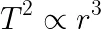
In the early 1600s, Johannes Kepler discovered a fundamental relationship, now known as Kepler's Third Law. He found that the square of a planet's orbital period (T) is proportional to the cube of its average distance from the Sun (r).
|
 |
|
This means a planet's "year" is mathematically linked to its distance from the Sun. If you double a planet's distance (r × 2), its orbital period becomes about 2.8 times longer (2³ = 8 and the square root of 8 is approximately 2.83).
But why does this relationship exist? Isaac Newton provided the answer with his Law of Universal Gravitation. He showed that the force of gravity holding objects in orbit depends on the mass of the central body and the distant between the two objects. By unifying this concept with Kepler's observation, Newton derived a single, powerful formula that works for any orbit: |
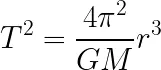 If you rearrange the terms, Kepler's Law is clearly visible.
|
|
Where, the orbital period (T) is calculated using the orbital radius (r), which is the average distance from the center of the orbiting object to the center of the central body of mass (M), with the gravitational constant (G) and the mathematical constant pi completing the equation.
|
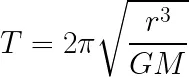 |
This equation confirms that the orbital period depends on only two things:
- The Orbital Radius (r): The farther away an object is, the longer its orbital period. This is the relationship Kepler discovered.
- The Mass of the Central Body (M): The more massive the object being orbited, the stronger its gravitational pull, and the faster an orbiting body must move to avoid falling in. A higher orbital speed results in a shorter period for a given distance.
The further away from the planet, the longer the orbital period.
The more massive the central body, the shorter the orbital period.
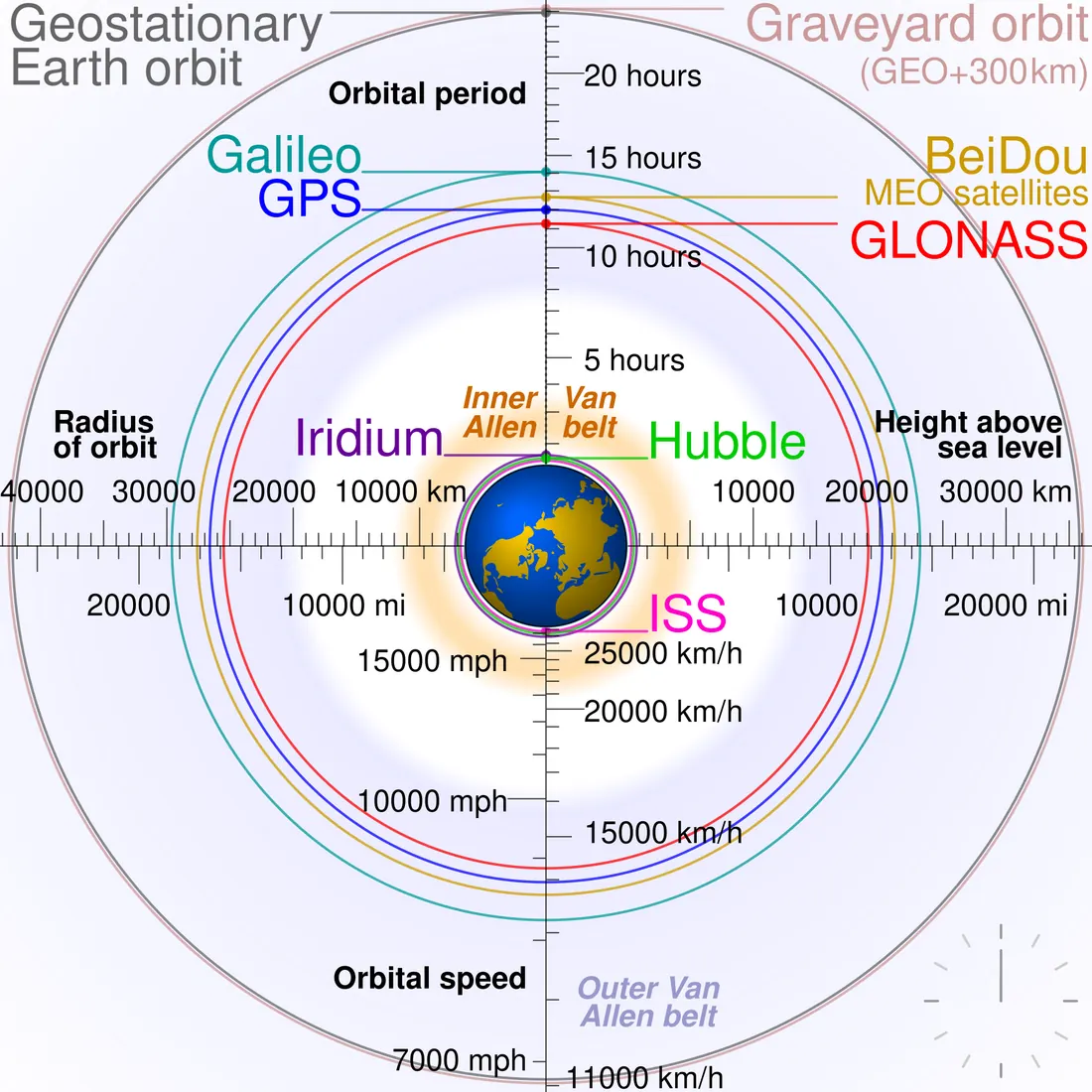
Orbital speed, orbital radius, and orbital period are inter-locked with one another.