Introduction
An orbit, once established, is a predictable path governed by gravity. However, spacecraft are not passive passengers; they must often change their orbits to achieve mission objectives. Orbital manoeuvres are the controlled use of thrust to alter a spacecraft’s path. Since an orbit is determined by a spacecraft's velocity (kinetic energy) and gravitational potential energy, applying thrust add energy to the spacecraft, allowing for a transition from one stable orbit to another.
Orbital Energy and Velocity Changes
 |
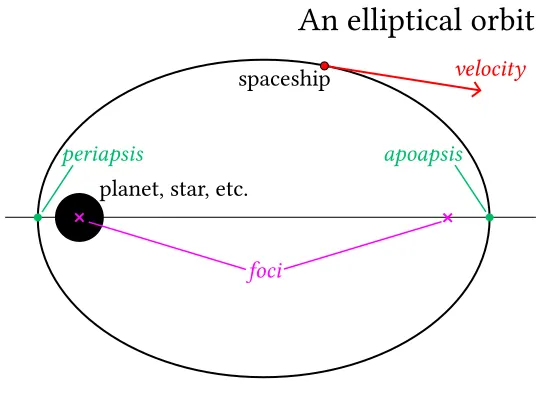 |
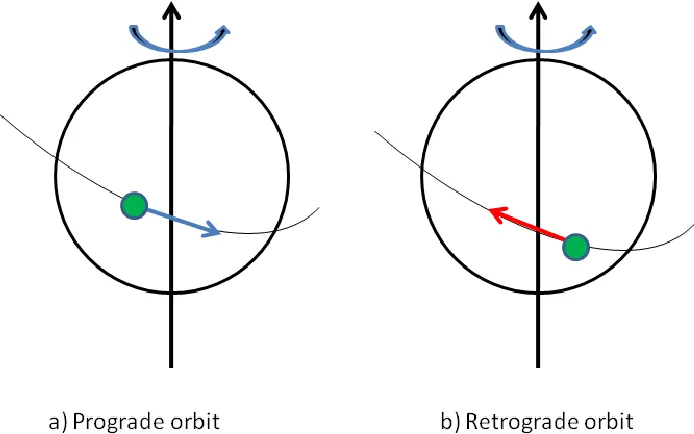
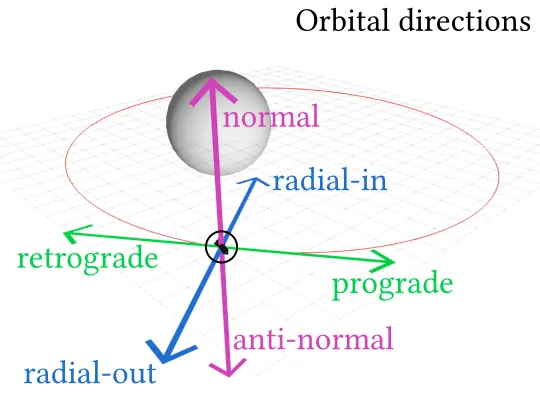
A spacecraft's orbital energy is the sum of its kinetic and potentialenergy. The most efficient way to change an orbit is to apply thrust in the direction the spacecraft is moving (prograde) or directly against it (retrograde). A prograde burn increases the spacecraft's velocity. This adds energy to the orbit, raising the altitude on the opposite side of the body (Apoapsis). Conversely, a retrograde burn decreases velocity, removing energy and lowering the Apoapsis. Short burns applied in other directions, such as radially or normally, are used for fine-tuning the orbital plane
The Hohmann Transfer Orbit
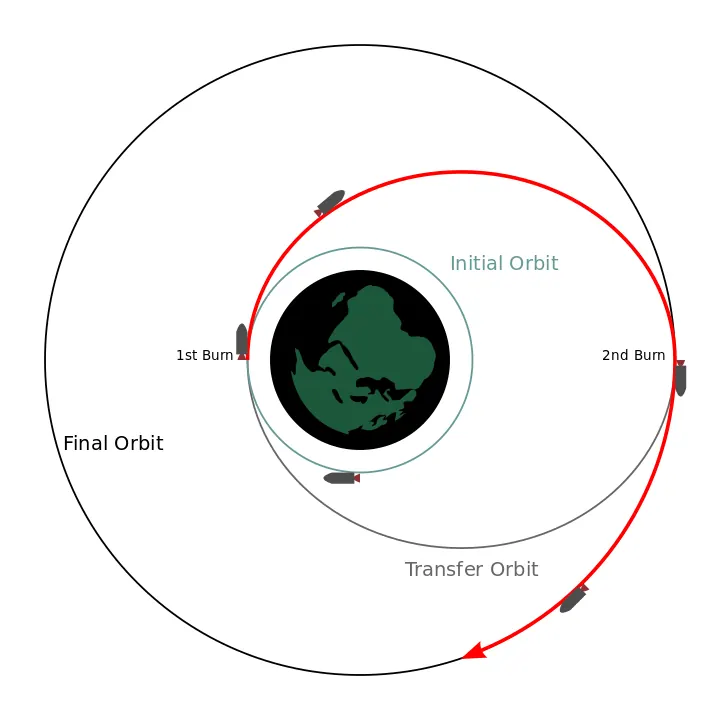
The Hohmann transfer is a fuel-efficient method to move between two circular orbits of different altitudes. It uses an elliptical orbit that touches both the initial and target orbits. The manoeuvre requires two engine burns: the first prograde burn transitions the spacecraft from the inner circular orbit to the elliptical transfer orbit. After coasting to the highest point of the ellipse, a second prograde burn circularizes the orbit at the new, higher altitude. The reverse process, using retrograde burns, lowers the orbit.
Orbital Rendezvous
 |
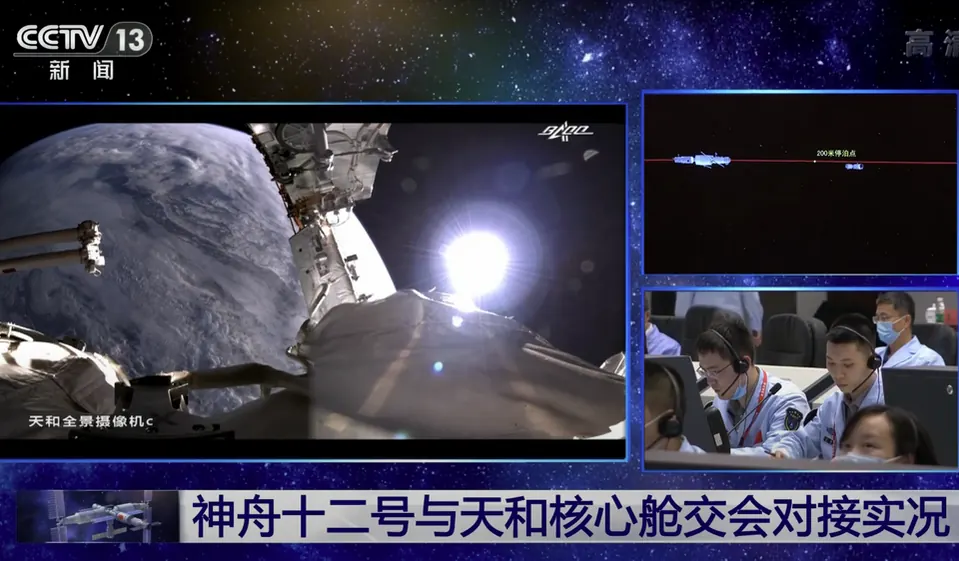 |
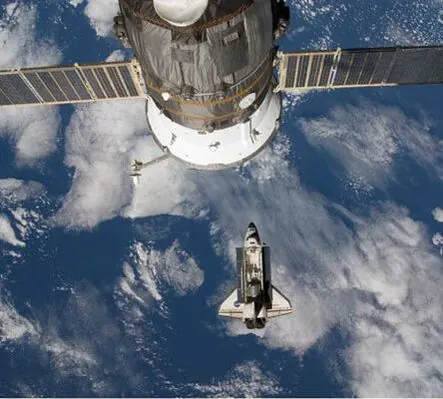
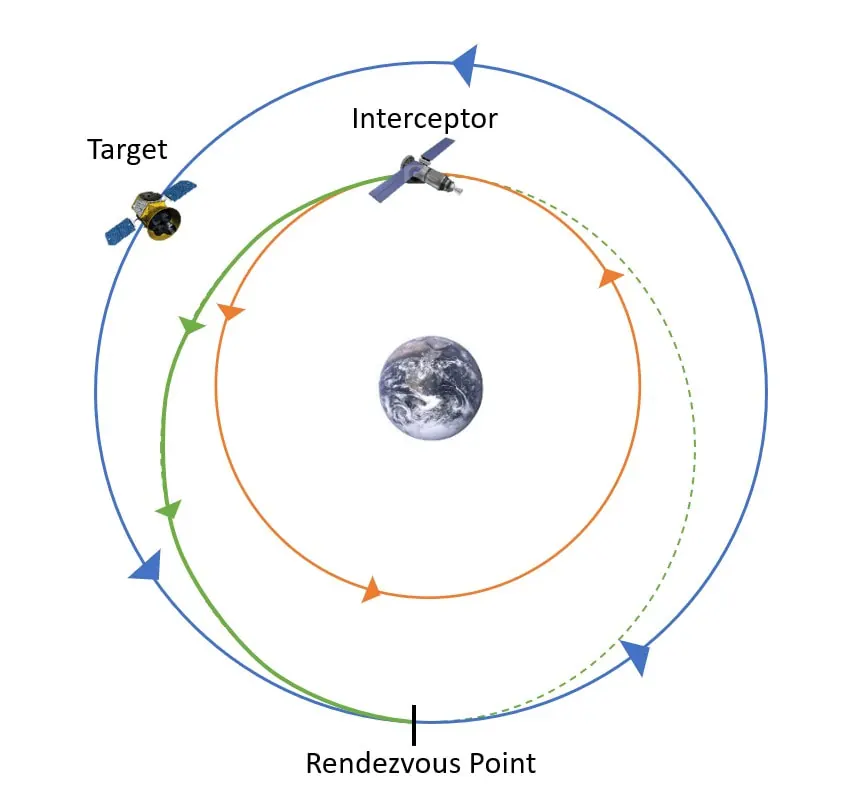
Orbital rendezvous is the process of meeting another object in space that is orbiting on the same plane. It requires precise timing and a series of manoeuvres, often beginning with a Hohmann transfer. The chasing spacecraft is typically placed into a slightly lower, faster phasing orbit to close the distance with the target. A series of burns then match the target's orbit, followed by final, small thruster adjustments to eliminate all relative velocity for a safe approach.
Gravity Assist
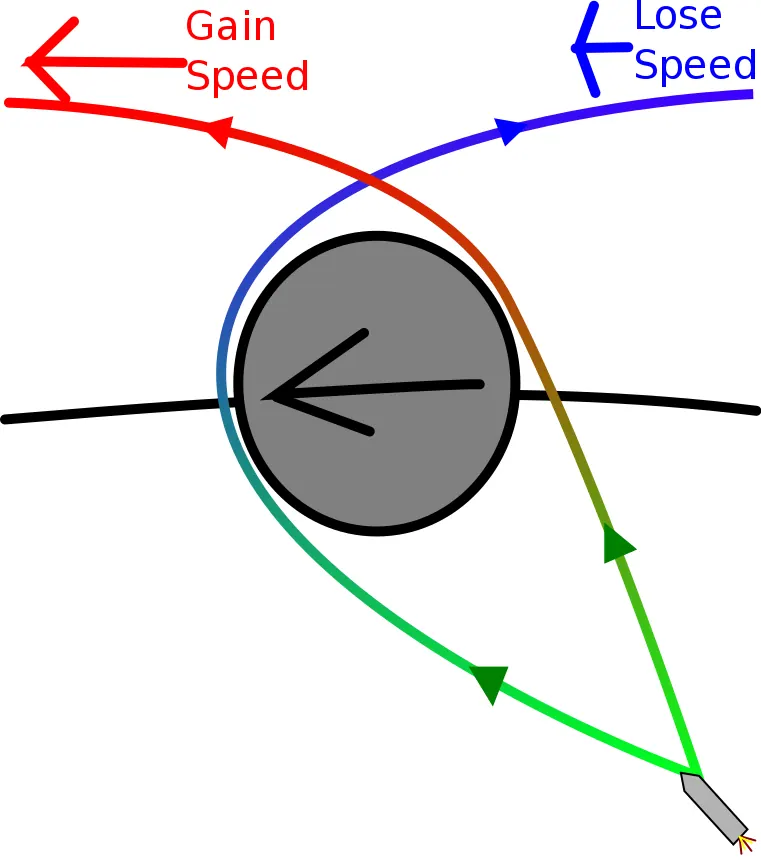
Gravity assist, or a planetary swing-by, is a technique used to alter a spacecraft's speed and path around the Sun without using its own propellant. By performing a carefully planned flyby of a planet, the spacecraft can gain or lose orbital energy relative to the Sun. As the spacecraft passes through the planet's gravitational field, it exchanges a tiny amount of momentum with the planet.
Flying behind the planet in its orbital path increases the spacecraft's heliocentric speed, while flying in front of it decreases speed. This allows missions to reach distant targets with less fuel.
Flying behind the planet in its orbital path increases the spacecraft's heliocentric speed, while flying in front of it decreases speed. This allows missions to reach distant targets with less fuel.
Satellite fly by the planet from behind/ahead as the planet orbit around the sun, the exchange in angular momentum speed up/slow down the satellite.
 |
 |
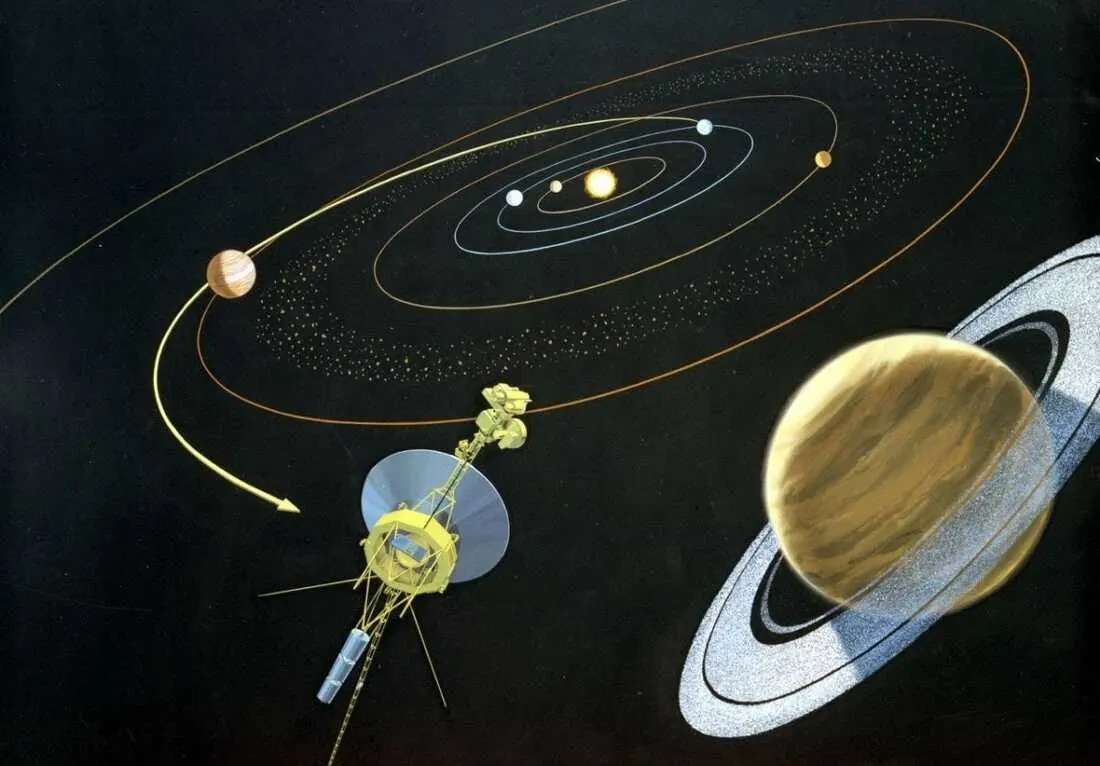
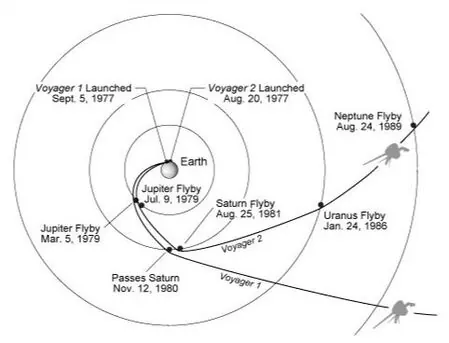
The Voyager missions provide a documented example of this technique. The Voyager 2 spacecraft used a series of gravity assists to visit the outer planets. A gravity assist from Jupiter increased its velocity, adjusting its trajectory toward Saturn. Subsequently, a gravity assist from Saturn directed it toward Uranus, and finally, an assist from Uranus enabled the flight path to Neptune. This sequential use of planetary gravity allowed the mission to visit four planets in a relatively short time frame with the propellant available on a single spacecraft.