Spirit of Lunar Exploration
The Chinese Lunar Exploration Program is a powerful expression of the national will, guided by the "Spirit of Lunar Exploration" (探月精神).
Chasing dreams, daring to explore, collaborating to tackle challenges, and cooperating for win-win results.
追逐夢想、勇於探索、協同攻堅、合作共贏
追逐夢想、勇於探索、協同攻堅、合作共贏
 |
This guiding ethos embodies the nation's resolve to achieve greatness in the new era of space exploration, symbolizing the rejuvenation of the Chinese nation and its growing scientific and technological strength. The Chang'e program, therefore, represents more than a series of missions; but a carefully executed national strategy, with each step designed to build upon the last, methodically constructing China's capabilities in space development. |
A Three-Step Approach
|
The Chinese Lunar Exploration Program (CLEP) was formally approved in 2004 and structured in three main phases:
This phased approach allowed engineers and scientists to test and refine their technologies at each stage before attempting more complex objectives. |
 |
Phase 1: Orbiting the Moon
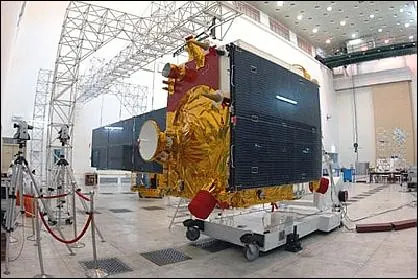 Photo of the Chang'e-1 spacecraft (image credit: CAST)
|
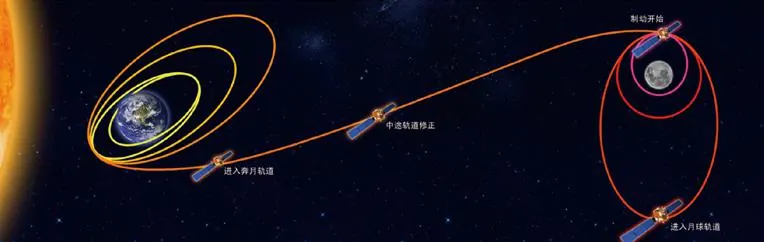 Illustration of the Chang'e-1 orbit transfer to the moon (image credit: chinadaily.com.cn)
|
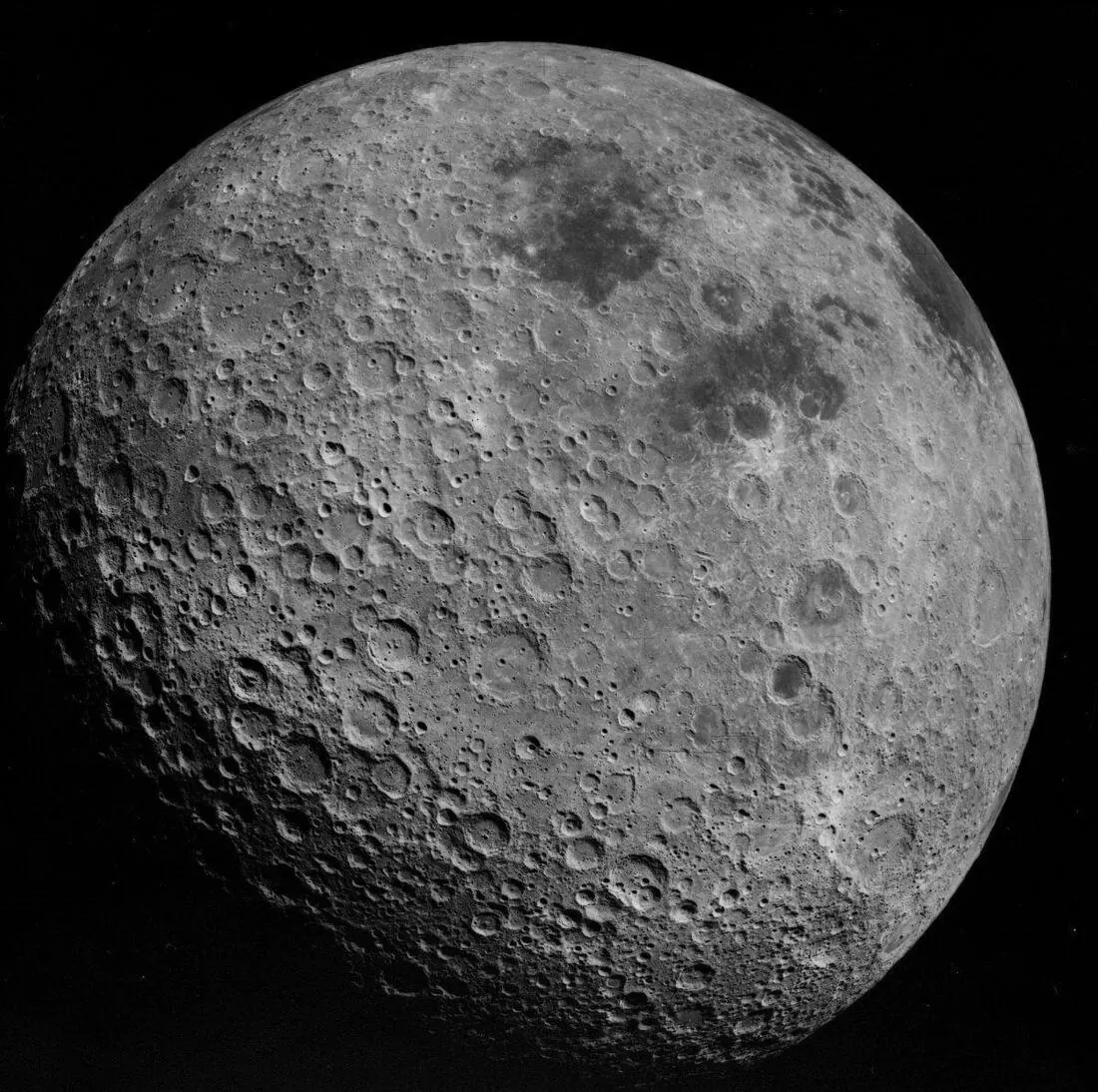
The program's first phase was focused on reaching lunar orbit and conducting a comprehensive survey from afar. The pioneering mission, Chang'e 1, launched in 2007 with a suite of scientific instruments. Its primary objectives were to create a three-dimensional map of the entire lunar surface, analyze the abundance and distribution of various chemical elements, and investigate the space environment between the Earth and Moon. After successfully operating for 16 months and delivering China's first complete lunar map, the mission concluded in March 2009. In a final demonstration of precise orbital control, the spacecraft was deliberately guided to perform a controlled impact on a predetermined area of the Moon's surface.
Building on this success, Chang'e 2 launched in 2010 as a faster and more advanced successor. Its main lunar task was to perform reconnaissance from a much lower orbit—dipping to just 15 km above the surface—to capture ultra-high-resolution images of the proposed landing site for the upcoming Chang'e 3 mission. However, Chang'e 2's journey did not end there. After completing its lunar objectives, it embarked on an ambitious extended mission into deep space. It first traveled to the Sun-Earth L2 Lagrange point to test China's tracking and control networks. Then, in a remarkable display of deep-space navigation, it successfully performed a flyby of the asteroid 4179 Toutatis in late 2012, becoming China's first asteroid explorer before continuing its journey into the solar system.
Building on this success, Chang'e 2 launched in 2010 as a faster and more advanced successor. Its main lunar task was to perform reconnaissance from a much lower orbit—dipping to just 15 km above the surface—to capture ultra-high-resolution images of the proposed landing site for the upcoming Chang'e 3 mission. However, Chang'e 2's journey did not end there. After completing its lunar objectives, it embarked on an ambitious extended mission into deep space. It first traveled to the Sun-Earth L2 Lagrange point to test China's tracking and control networks. Then, in a remarkable display of deep-space navigation, it successfully performed a flyby of the asteroid 4179 Toutatis in late 2012, becoming China's first asteroid explorer before continuing its journey into the solar system.
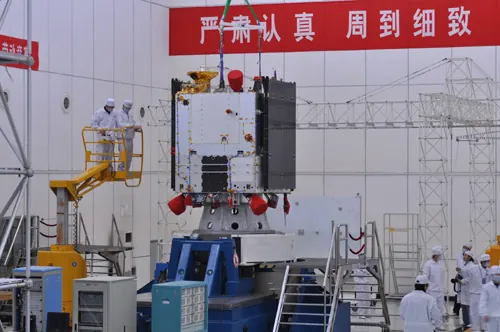 Chang’e 2
|
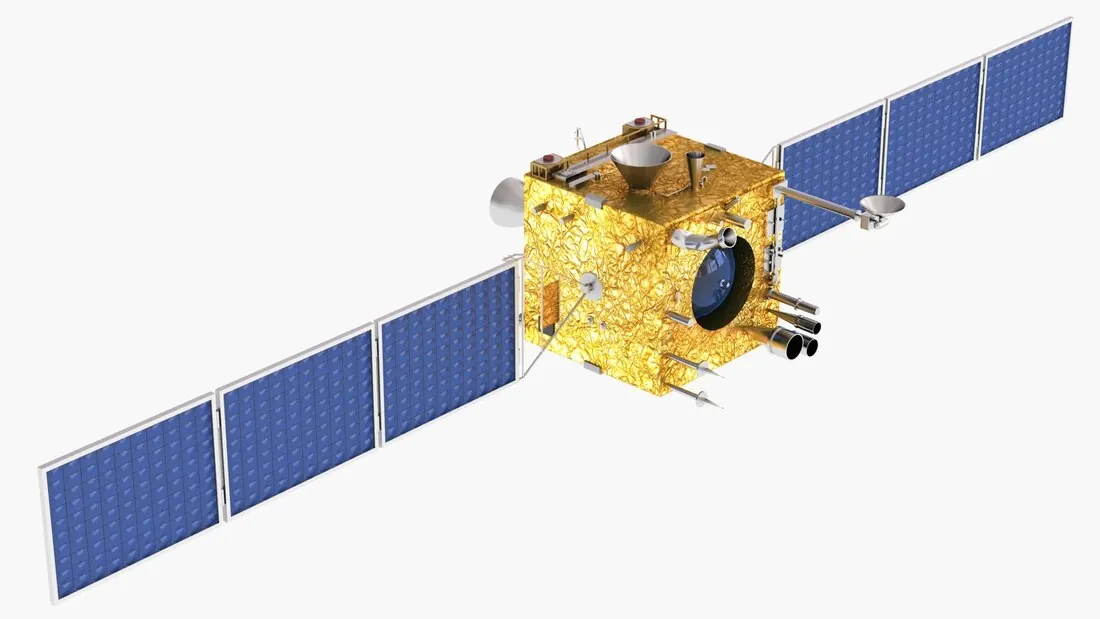 Chang'e 1 and 2 Satellite
|
Phase 2: Landing on the Surface
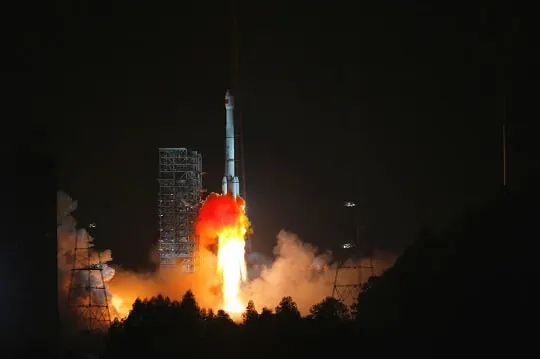 At 1:30 AM on December 2, 2013, Long March-3B rocket lifted the Chang'e-3 probe from the ground to once again explore the "Lunar Palace." It undertook the important mission of China's first soft landing and roving survey on the Moon, tasked with scientific explorations such as investigating the lunar surface topography and geological structure.
 |
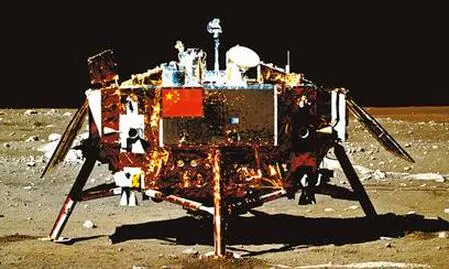  |
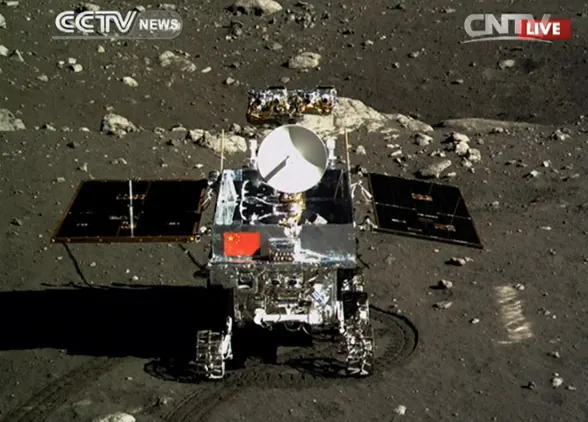
The second phase aimed to demonstrate a soft landing and deploy a rover for surface exploration. In 2013, the Chang'e 3 mission achieved this goal, making China the third country to successfully land a spacecraft on the Moon. After touching down in the Mare Imbrium region, the lander released the Yutu (Jade Rabbit) rover. The first of its kind for China, the Yutu rover was equipped with ground-penetrating radar to study the structure of the lunar soil and crust to new depths, embodying the spirit of "daring to explore."
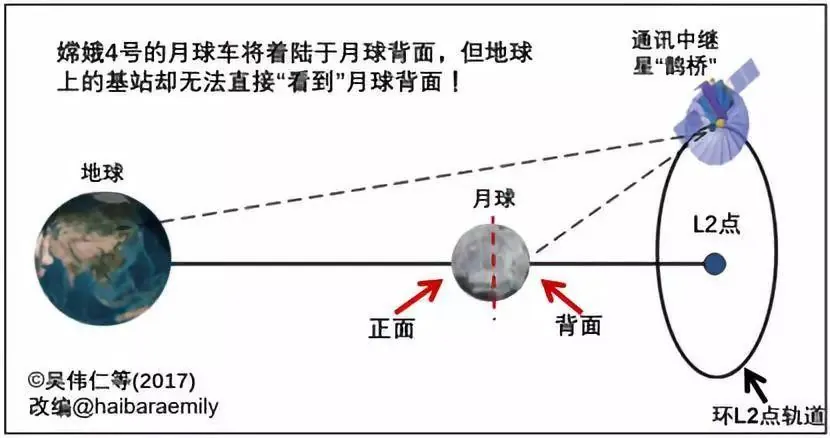
The program then undertook a more ambitious objective: landing on the far side of the Moon. Since the far side never faces Earth, direct communication is impossible. This required a novel solution.
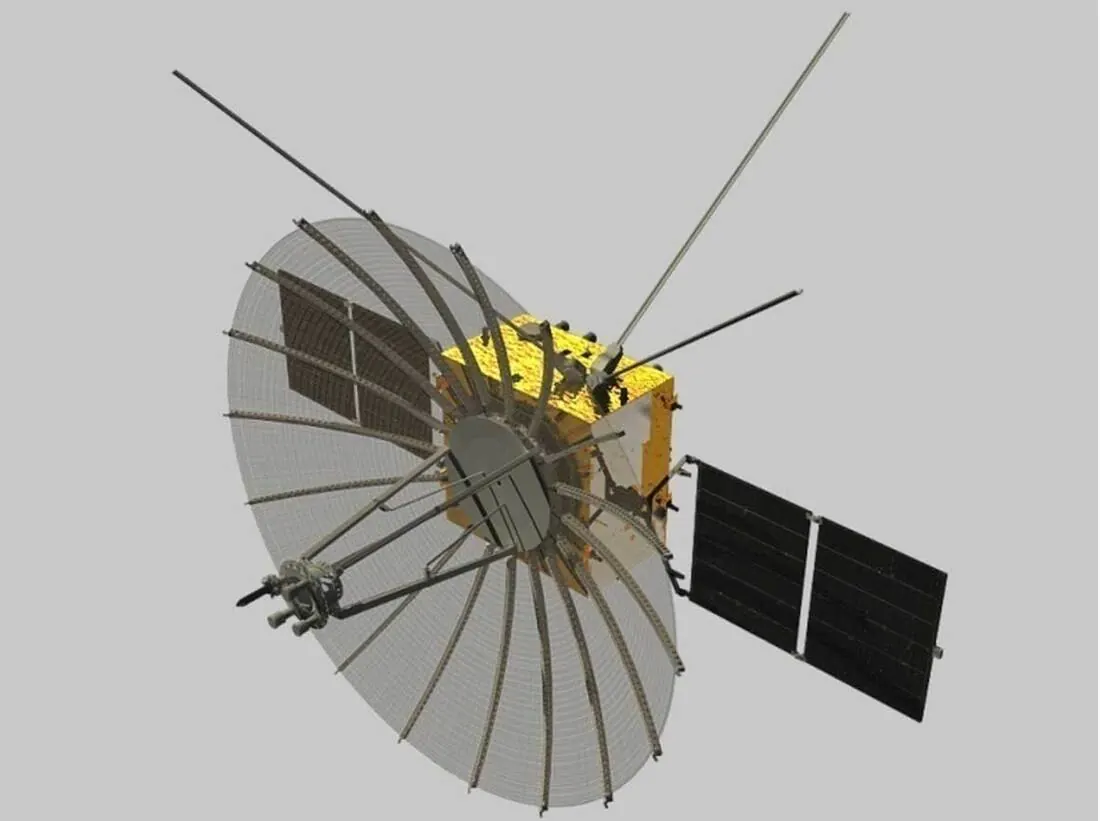
China first launched the Queqiao (Magpie Bridge) relay satellite in 2018 and placed it in a special orbit where it could communicate with both the far side and Earth simultaneously.
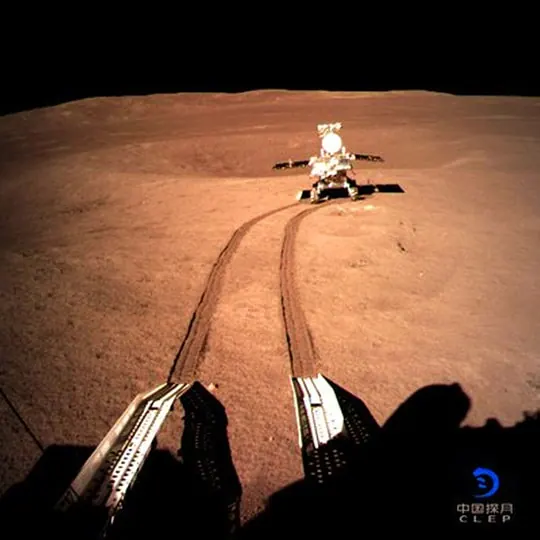
With this communication link established, the Chang'e 4 mission launched and, in January 2019, performed the first-ever soft landing on the Moon's far side. It deployed the Yutu-2 rover to explore the ancient and geologically distinct terrain of the Von Kármán crater. This landing was a milestone in space exploration, opening up a new region of the Moon for direct scientific study.
The program then undertook a more ambitious objective: landing on the far side of the Moon. Since the far side never faces Earth, direct communication is impossible. This required a novel solution.
China first launched the Queqiao (Magpie Bridge) relay satellite in 2018 and placed it in a special orbit where it could communicate with both the far side and Earth simultaneously.
With this communication link established, the Chang'e 4 mission launched and, in January 2019, performed the first-ever soft landing on the Moon's far side. It deployed the Yutu-2 rover to explore the ancient and geologically distinct terrain of the Von Kármán crater. This landing was a milestone in space exploration, opening up a new region of the Moon for direct scientific study.
 |
 |
Phase 3: Returning with Samples
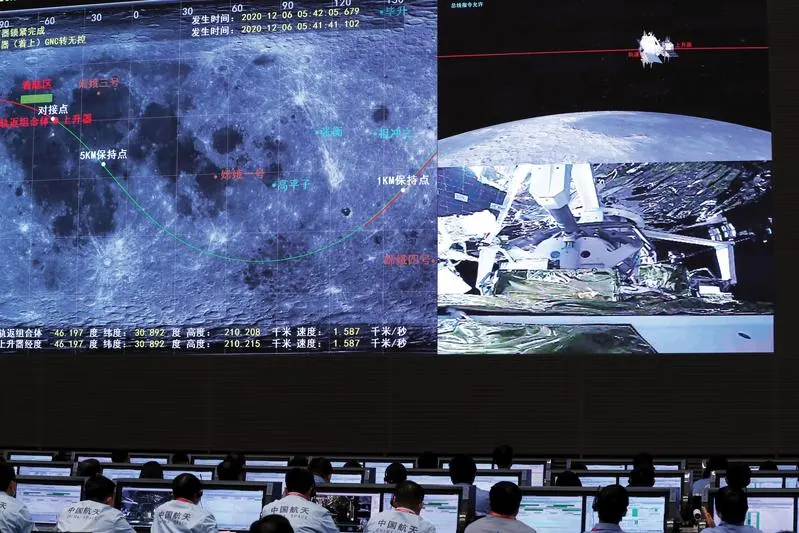 Technicians at the Beijing Aerospace Control Center monitor the docking of the Chang’e 5 lunar probe’s ascender with its orbiter-reentry capsule combination on Dec 6. (JIN LIWANG / XINHUA)
|
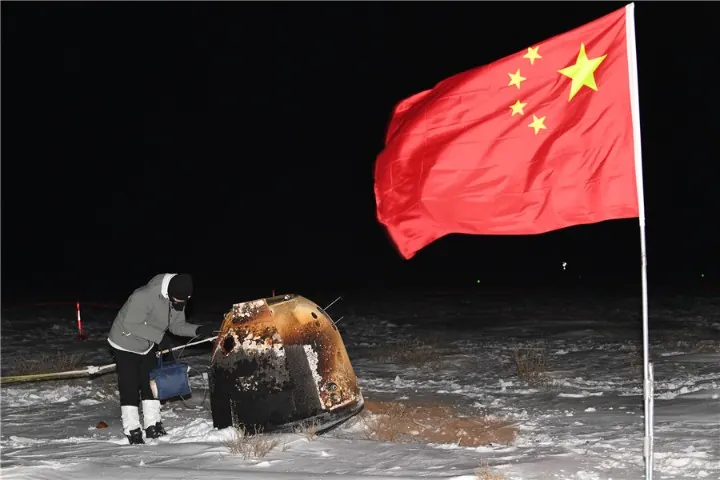 Chang'e 5 returns home with lunar samples - Chinadaily.com.cn
|
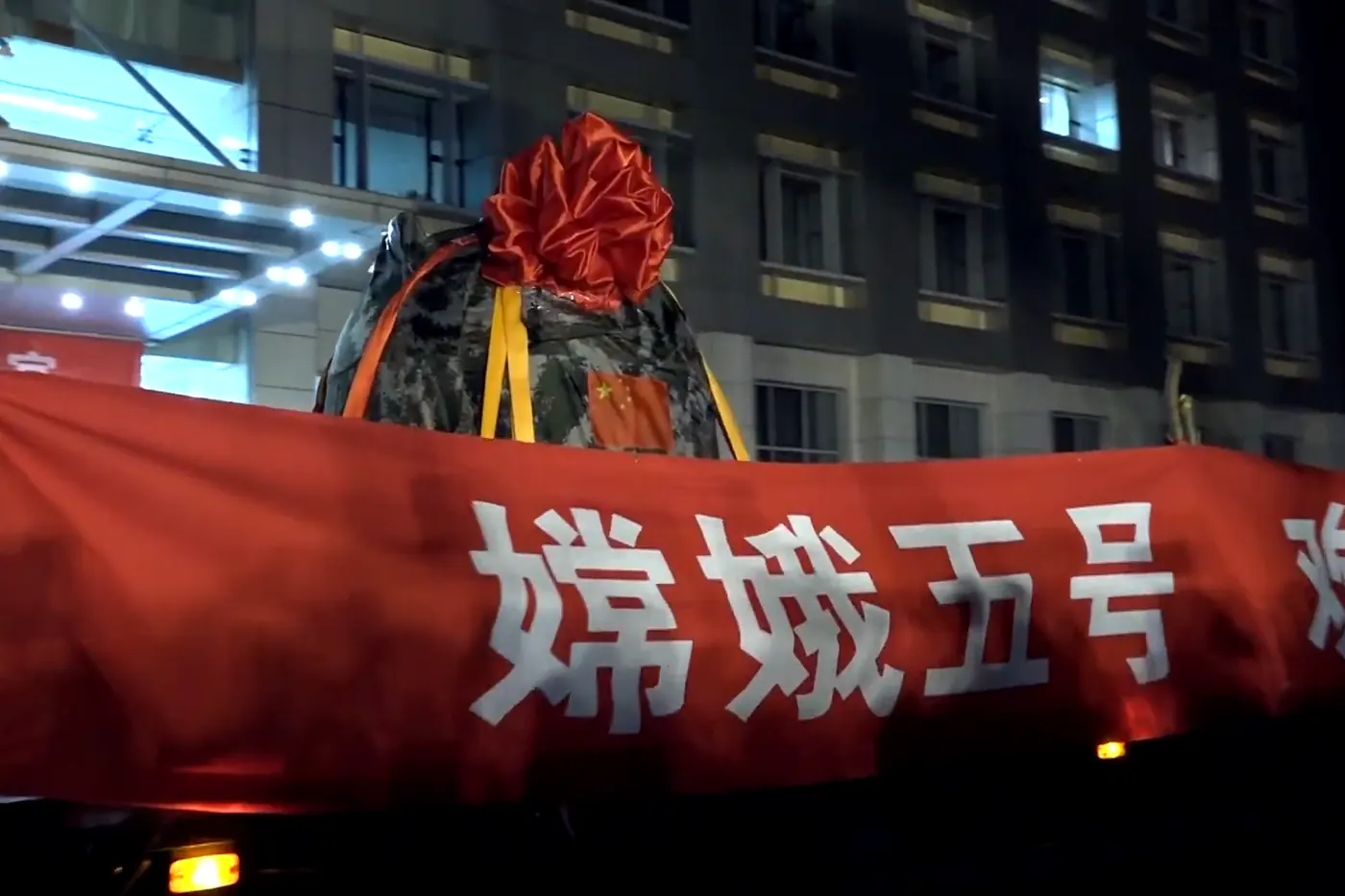 Chang-e 5 back to CAST
The third and final step of the initial program was to collect lunar material and return it to Earth. This was the goal of the Chang'e 5 mission, launched in November 2020. The mission was highly complex, involving four separate modules: an orbiter, a lander, an ascender, and a reentry capsule.
The lander touched down on a previously unvisited volcanic plain. It used a robotic arm and a drill to collect 1,731 grams of material. These samples were then launched from the lunar surface by the ascender, which docked with the orbiter. The samples were placed in the reentry capsule and returned to Earth in December 2020, completing the first lunar sample-return mission in over 40 years. Building on this triumph, the Chang'e 6 mission, launched in 2024, undertook an even more challenging objective. It successfully landed in the South Pole-Aitken Basin on the far side of the Moon, collected 1,935.3 grams of samples, and returned them to Earth. This historic achievement marked the first time material has ever been retrieved from the Moon's mysterious far side, providing invaluable scientific data and perfectly concluding the initial "orbit, land, return" strategy. |
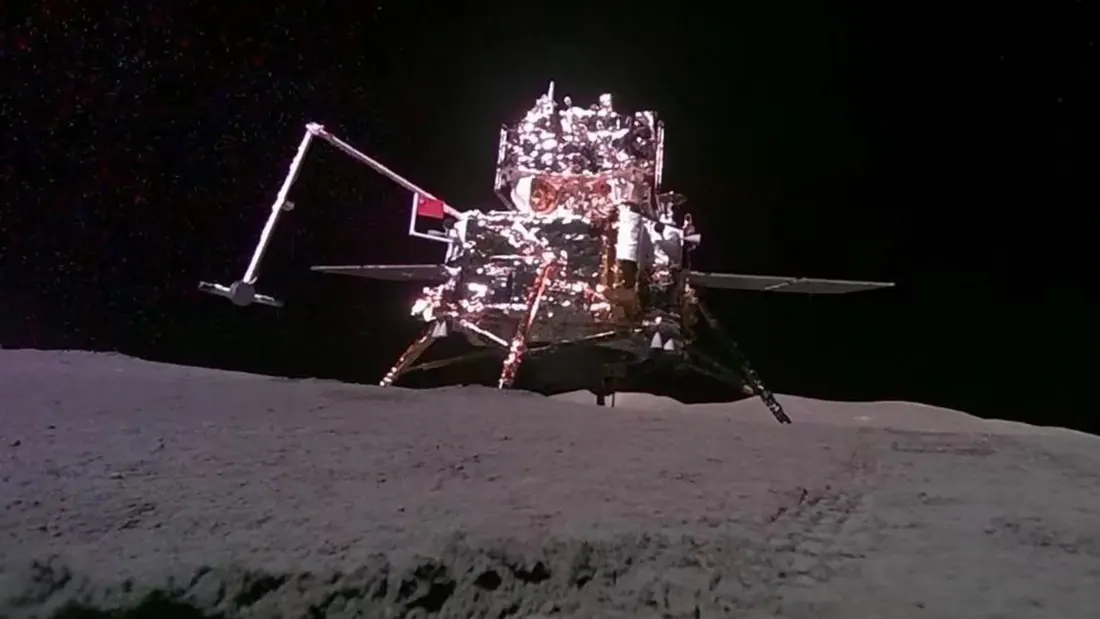 Chang'e-6 craft at the far side of the Moon, photo taken by Yutu rover.
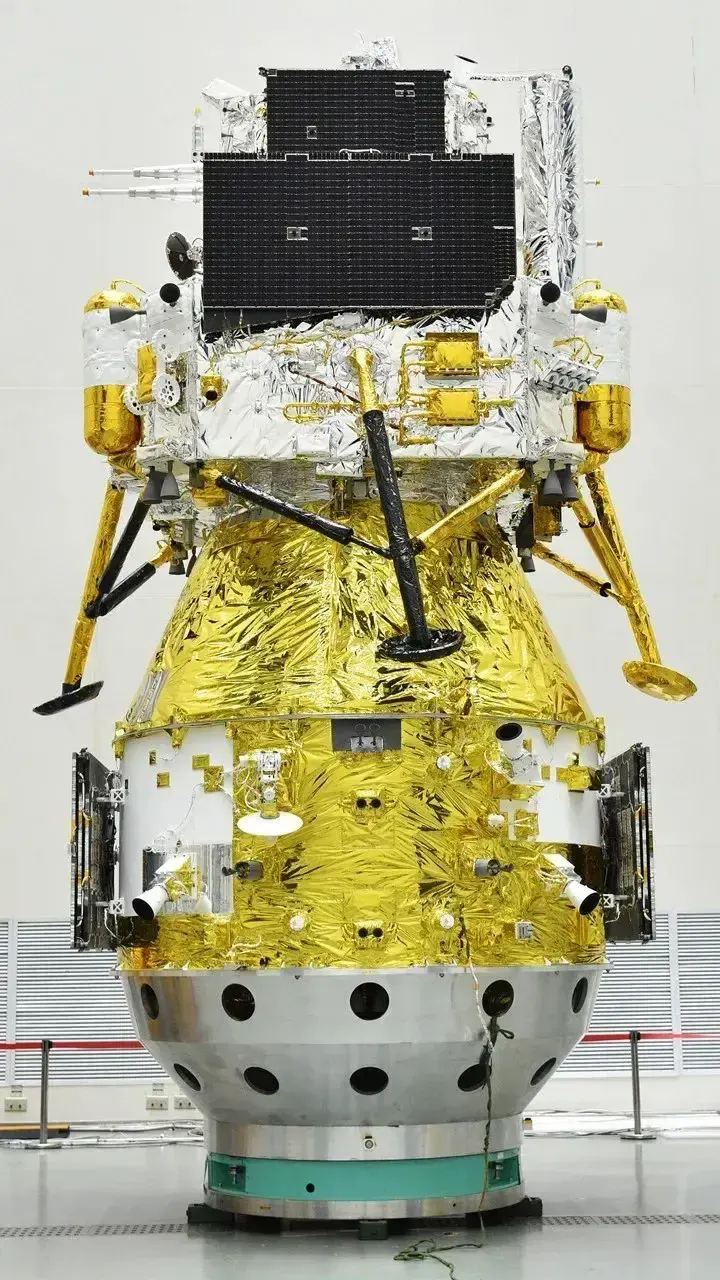 Chang'e 6
|
Building for the Future
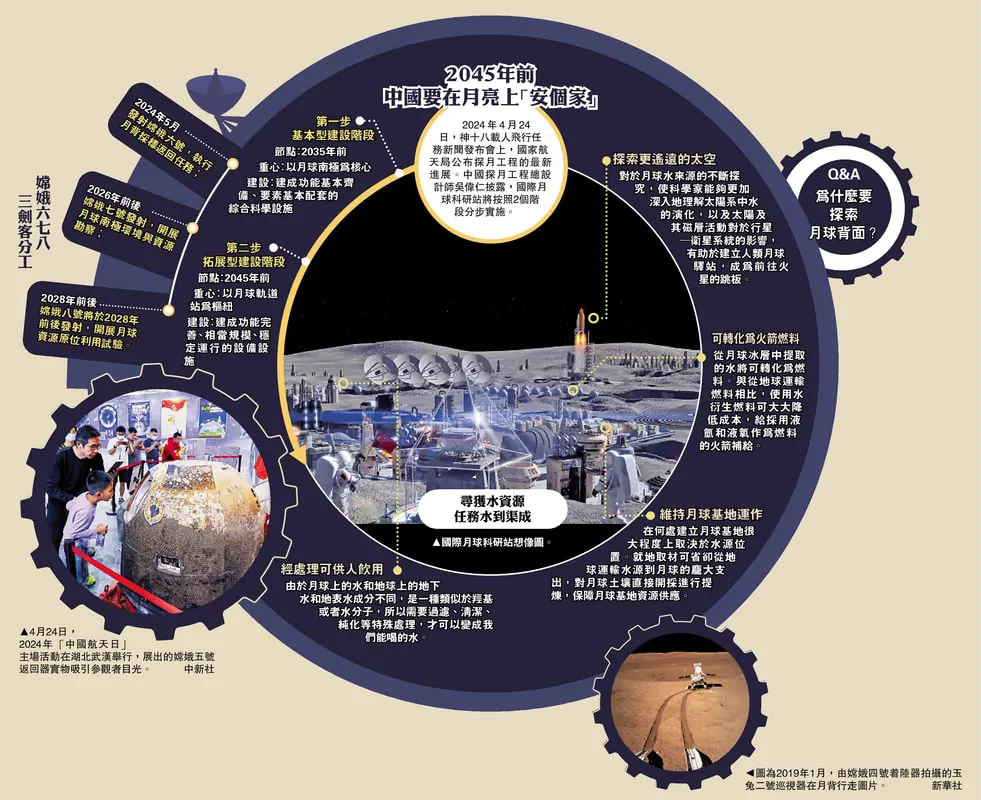
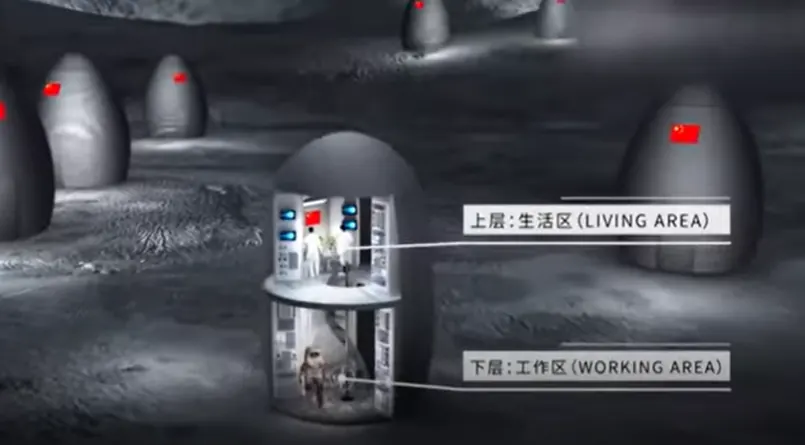
With the successful completion of the "orbit, land, return" (繞、落、回) strategy, the program has now transitioned to the even more ambitious Phase 4. This new stage is focused on establishing a permanent robotic presence on the Moon as a precursor to human settlement.
The International Lunar Research Station (ILRS)
The primary objective is to begin building the International Lunar Research Station (ILRS), a long-term scientific facility planned for the Moon's south pole. The foundation of the ILRS will be established by the next series of missions:
The International Lunar Research Station (ILRS)
The primary objective is to begin building the International Lunar Research Station (ILRS), a long-term scientific facility planned for the Moon's south pole. The foundation of the ILRS will be established by the next series of missions:
- Chang'e 7, planned for this year (2026), will conduct a detailed survey of the lunar south pole's environment and resources.
- Chang'e 8, planned for around 2028, will test key technologies for using local lunar materials, a practice known as in-situ resource utilization.
 |
|
The 2030 Crewed Mission:
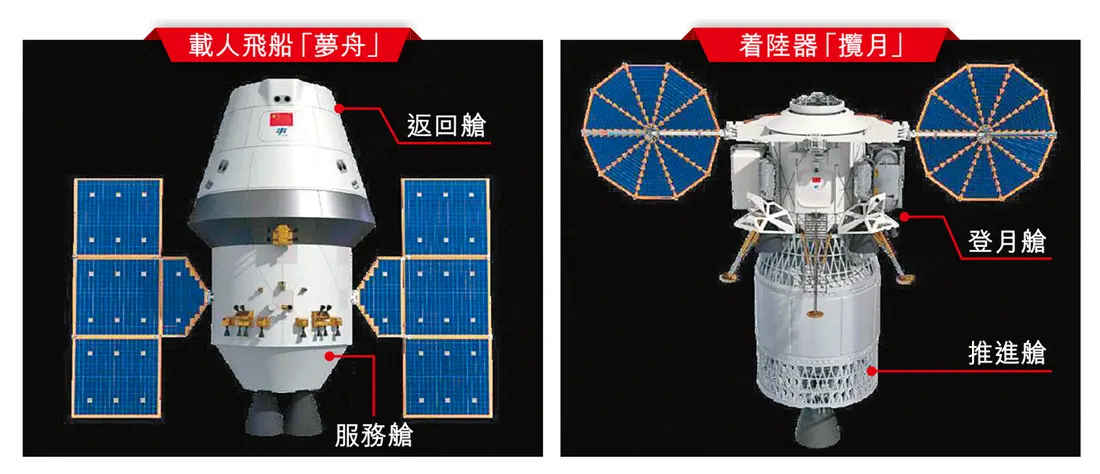
Parallel to the robotic construction of the ILRS, China is actively pursuing its monumental goal of landing astronauts on the Moon before 2030. This endeavor relies on newly developed, powerful hardware. The mission architecture involves two separate launches using the Long March 10 (CZ-10) carrier rocket:
Parallel to the robotic construction of the ILRS, China is actively pursuing its monumental goal of landing astronauts on the Moon before 2030. This endeavor relies on newly developed, powerful hardware. The mission architecture involves two separate launches using the Long March 10 (CZ-10) carrier rocket:
- First, the lunar lander, named "Lanyue" (揽月, or "Embracing the Moon"), will be launched and sent into orbit around the Moon.
- Next, a new-generation crewed spacecraft, named "Mengzhou" (梦舟, or "Dream Vessel"), will launch carrying three astronauts.
Activity
Students will design a “Best Wishes” card for the scientist team of China’s Lunar Space Program. The purpose is to thank them for their hard work and dedication to space exploration, and to encourage them to continue pursuing their mission with confidence and determination.
Students should write sincere messages expressing gratitude and support, and may decorate their cards with drawings of the moon, rockets, or stars. Through this activity, we show our appreciation and wish the scientists great success in their future achievements.
Students should write sincere messages expressing gratitude and support, and may decorate their cards with drawings of the moon, rockets, or stars. Through this activity, we show our appreciation and wish the scientists great success in their future achievements.