From Kitty Hawk to Modern Skies
|
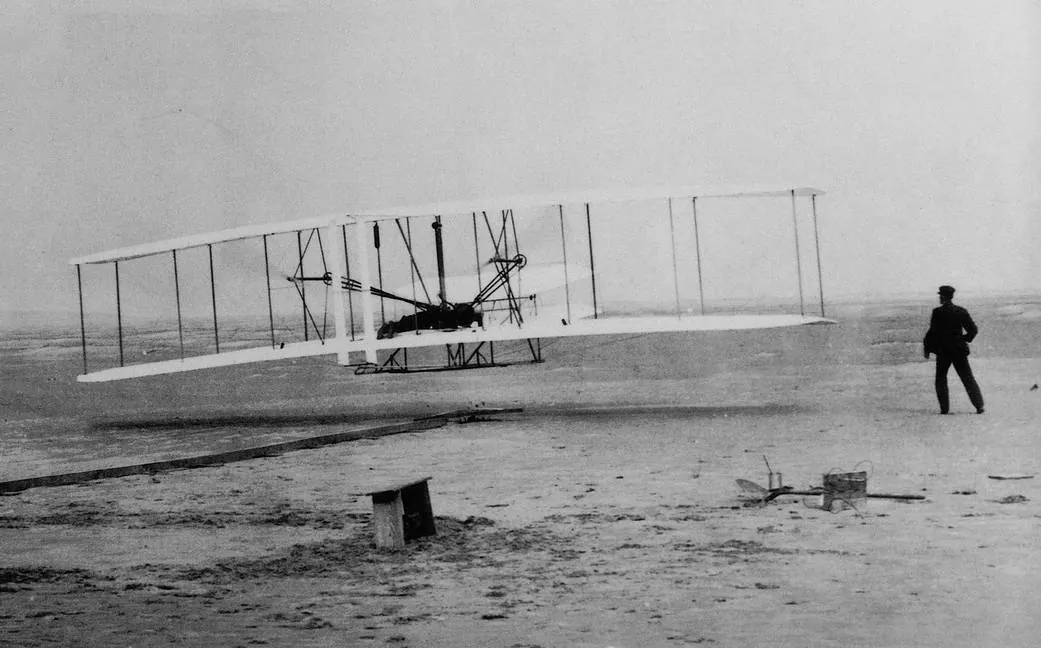
The dream of human flight became a reality on December 17, 1903, when Orville and Wilbur Wright achieved the first sustained, controlled, powered flight in Kitty Hawk, North Carolina. Their breakthrough was not merely building an engine but fundamentally understanding how to balance the invisible forces acting on their aircraft. This principle of balance, remains the absolute foundation of modern aviation, from the smallest drone to the largest commercial airliner. Today, aerospace engineers use advanced materials and computer models, but the core physics governing flight are unchanged. Every aircraft in the sky is a testament to the careful equilibrium of four fundamental forces: thrust, drag, lift, and weight.
|
 |
The Four Fundamental Forces
For an aircraft to fly in a steady, straight, and level path, all forces acting upon it must be in a state of equilibrium. This means the sum of the forces must be zero; no net force acts to accelerate the aircraft in any direction. This state is governed by Newton's First Law of Motion. The four forces always come in two pairs of opposites, such that the aircraft stays at constant velocity.
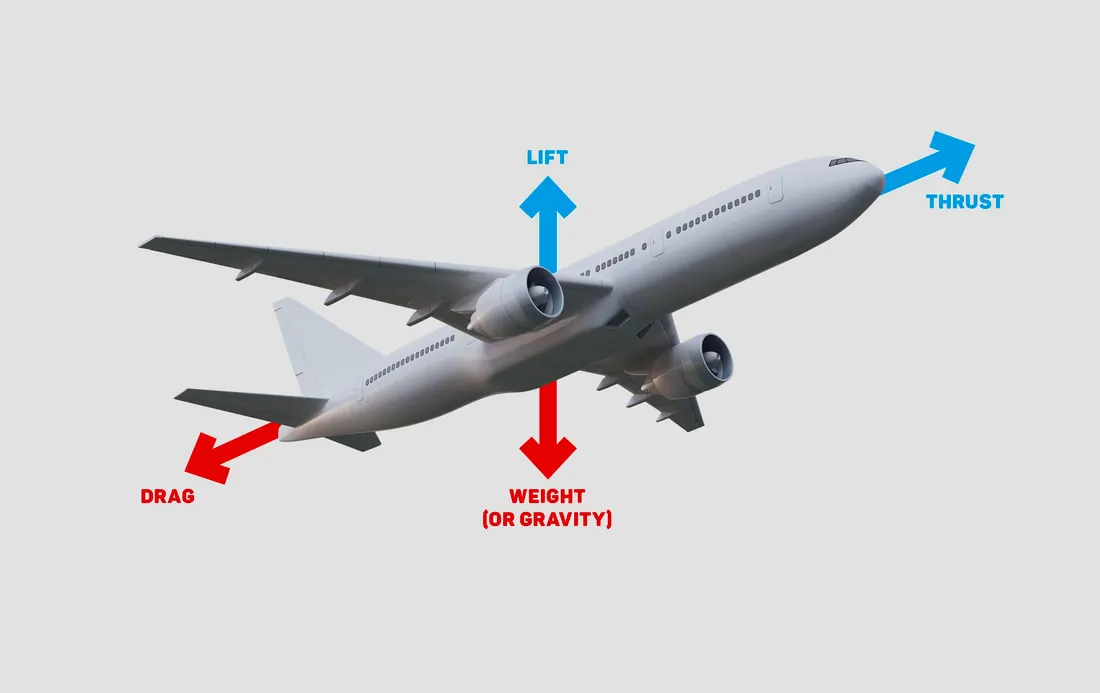
If Newton's First Law states that an object at rest tends to stay at rest, how does the generation of thrust illustrate a direct application of Newton's Third Law (action/reaction)?
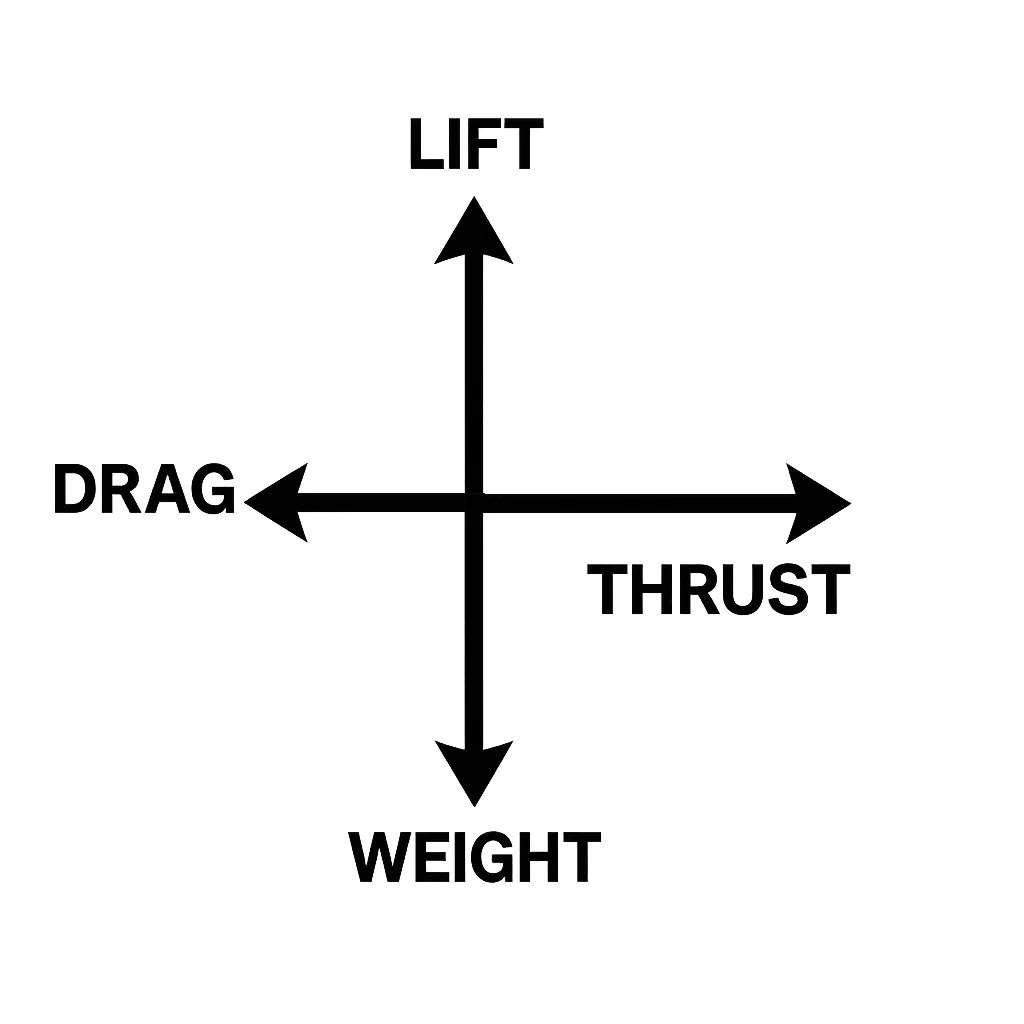 Static equilibrium is achieved when all forces are balanced. This happens when the aircraft is not accelerating, for example, when it is parked, or cruising at constant velocity.
|
When the forces are not balanced, then there is a net force accelerating the airplane. For example, when the plane is taking off.
|
Weight
Definition: Weight is the force exerted on the mass of the aircraft due to gravity. It is a field force and always acts vertically downward toward the centre of the Earth.
Calculation: It is calculated as the mass of the aircraft multiplied by the acceleration due to gravity.
Calculation: It is calculated as the mass of the aircraft multiplied by the acceleration due to gravity.

Given a constant gravitational acceleration (g), the greater the mass (m), the greater its weight (F_g).
Key Concept:
- Center of Gravity (CG): Weight is not applied at a single point but is distributed throughout the entire aircraft. For analysis, it is considered to act through a single point called the center of gravity. The location of the CG is critical for aircraft stability and control.
- Source: The mass of the aircraft itself, including its structure, engines, fuel, payload (passengers, cargo), and crew.
Lift
|
Definition: Lift is the aerodynamic force that holds an aircraft in the air. It is generated by the motion of the aircraft through the air and acts perpendicular to the relative wind (the direction of the airflow).
Lift is generated primarily by the wings, though the fuselage and tail surfaces contribute small amounts. |
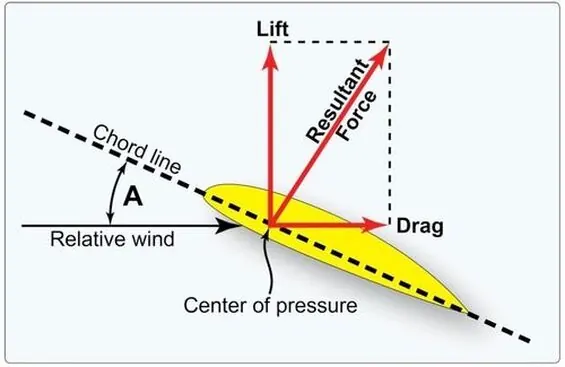 How might a pilot manipulate the factors listed above to increase lift during takeoff?
|
Here's a very brief explanation of how lift is generated. A lot of maths and theoretical knowledge is skipped at this current stage, but will come in later chapters. In most textbooks, even in pilot training, two main phenomena are introduced to explain the generation of lift:
- Newton's Third Law (Action/Reaction): The wing is shaped and angled to deflect air downward. According to Newton's Third Law, if the wing pushes air down, the air must push the wing up with an equal force.
- Bernoulli's Principle: The shape of an airfoil (wing cross-section) is curved on top and flatter on the bottom. As air flows over the wing, it must travel faster over the longer, curved top surface to meet the air flowing past the bottom. This higher velocity results in lower pressure on top of the wing (Bernoulli's Principle). The higher pressure below the wing then pushes it upward.
Drag
Definition: Drag is the aerodynamic force that opposes the aircraft's motion through the air. It acts parallel to and in the opposite direction of the relative wind.
Types of Drag:
The total drag can be represented by the equation:
Types of Drag:
- Parasite Drag: Drag not associated with the production of lift. It increases with the square of airspeed.
- Form Drag: Caused by the shape of the aircraft. A streamlined shape minimizes form drag.
- Skin Friction Drag: Caused by the roughness of the aircraft's surface and the viscosity of air.
- Interference Drag: Occurs where two surfaces meet (e.g., wing and fuselage), disrupting smooth airflow.
- Induced Drag: A direct consequence of producing lift. It is caused by the vortices created at the wingtips due to high-pressure air from below the wing spilling over to the low-pressure area above. Induced drag is highest at low speeds and high angles of attack (e.g., during takeoff and landing).
The total drag can be represented by the equation:
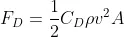
The drag force (F_D) is proportional to the coefficient of Drag (C_D), the density of air (ρ), the speed of the aircraft (v), and the contact surface area. The coefficient of drag contains all complex dependencies and is usually determined experimentally.
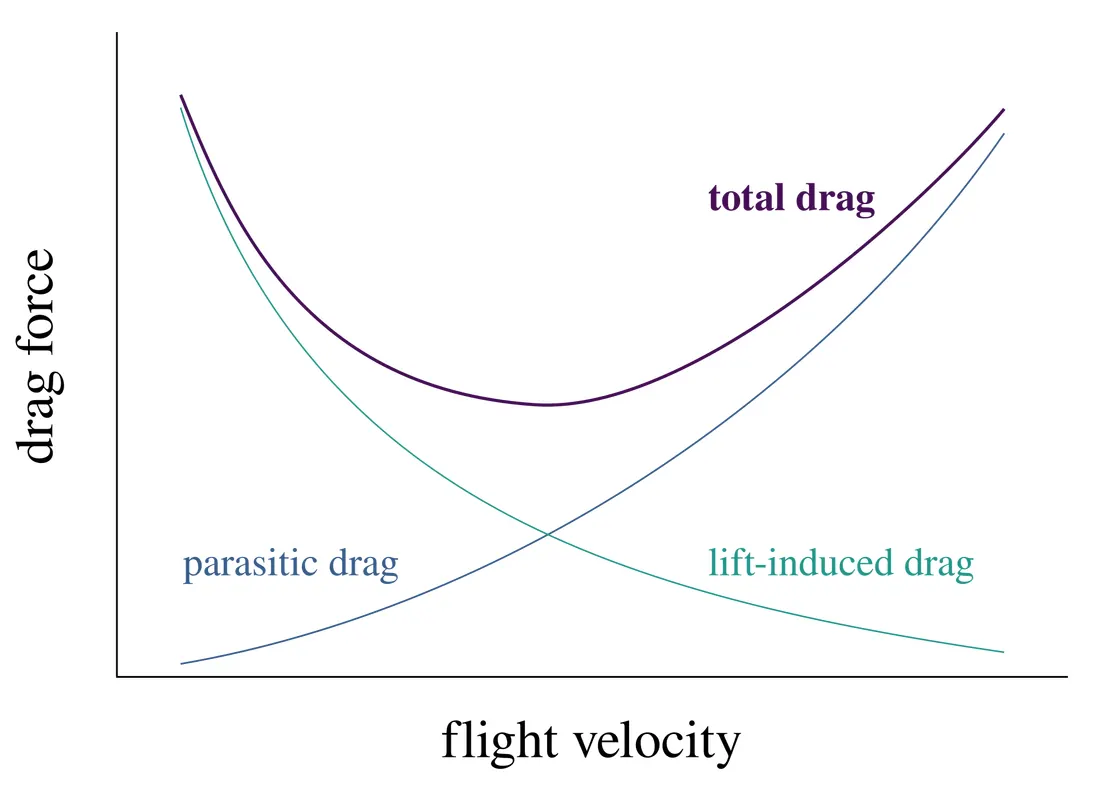 Drag Curve:
The total drag on an aircraft is the sum of parasite and induced drag. This relationship creates a characteristic "drag curve" where total drag is at a minimum at a specific airspeed. |
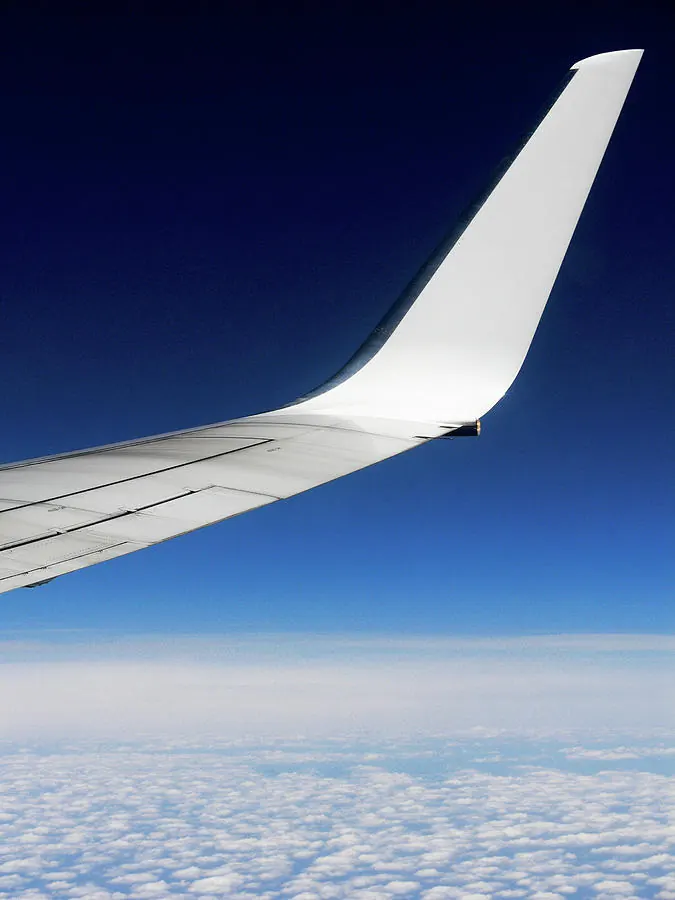 What kind(s) of drag does a wing surface encounter?
|
Thrust
|
Definition: Thrust is the force that propels an aircraft forward through the air. It is generated by the aircraft's propulsion system and acts parallel to the longitudinal axis of the aircraft.
|
 |
Thrust is a mechanical force, typically generated by accelerating a mass of air or gas backward (Newton's Third Law: for every action, there is an equal and opposite reaction).
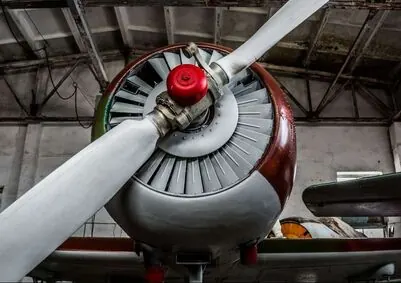
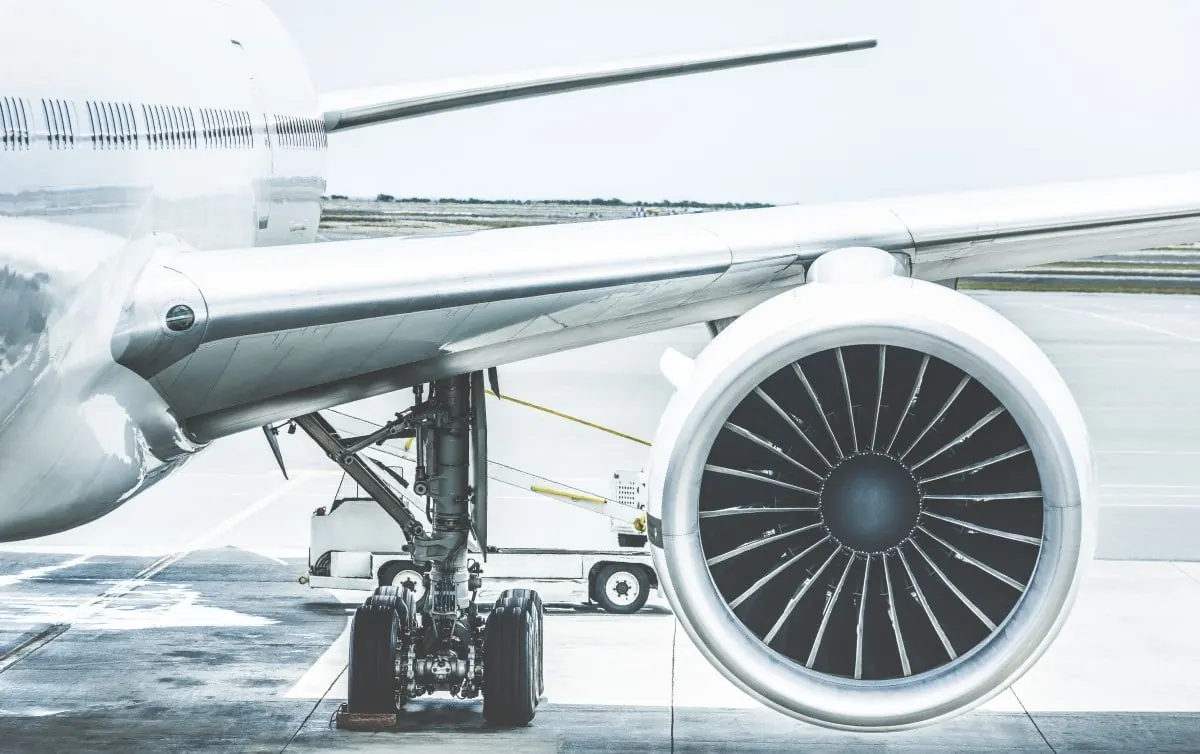
Propulsion system: Propellers vs. Jet Engines:
While both propellers and jet engines operate on Newton's Third Law, they differ fundamentally in how they accelerate mass:
Propulsion system: Propellers vs. Jet Engines:
While both propellers and jet engines operate on Newton's Third Law, they differ fundamentally in how they accelerate mass:
- Propellers: act as rotating airfoils (wings). Their angled blades generate a pressure difference, pulling a large mass of air backward at a relatively low speed. This action creates an opposite reaction—thrust—propelling the aircraft forward. Propellers are highly efficient at lower speeds but their effectiveness decreases as aircraft speed approaches the speed of sound due to shockwave formation on the blades.
- Jet Engines (Turbojets/Turbofans): operate on the principle of jet propulsion. Air is ingested, compressed, mixed with fuel and ignited. The resulting hot, high-pressure gases are then expelled backward at a very high velocity through a nozzle. The force of expelling this mass of gas rearward produces an equal and opposite forward force: thrust. Turbofan engines, the most common type on commercial airliners, feature a large fan at the front that bypasses a portion of air around the core engine. This bypass air generates thrust much like a propeller (by accelerating a large mass of air) and is responsible for the high efficiency of modern jet engines at high subsonic speeds.
 |
 |
Achieving equilibrium
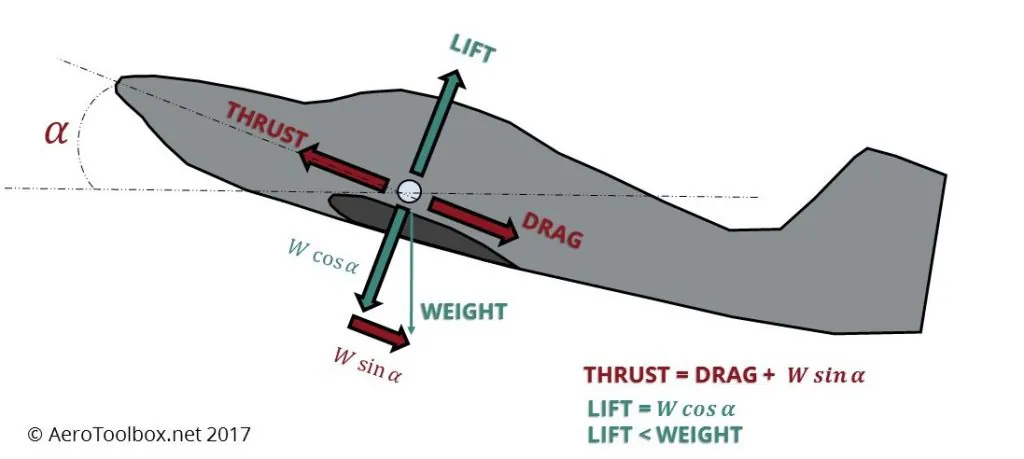
An aircraft maintains steady, level flight through a precise equilibrium of forces.
For vertical velocity to remain constant, Lift must equal Weight; if lift exceeds weight, the aircraft climbs, and if it is less, the aircraft descends.
For horizontal velocity to remain constant, Thrust must equal Drag; if thrust is greater, the aircraft accelerates, and if it is less, it decelerates. A pilot manages these balances using the aircraft's controls.
For vertical velocity to remain constant, Lift must equal Weight; if lift exceeds weight, the aircraft climbs, and if it is less, the aircraft descends.
For horizontal velocity to remain constant, Thrust must equal Drag; if thrust is greater, the aircraft accelerates, and if it is less, it decelerates. A pilot manages these balances using the aircraft's controls.
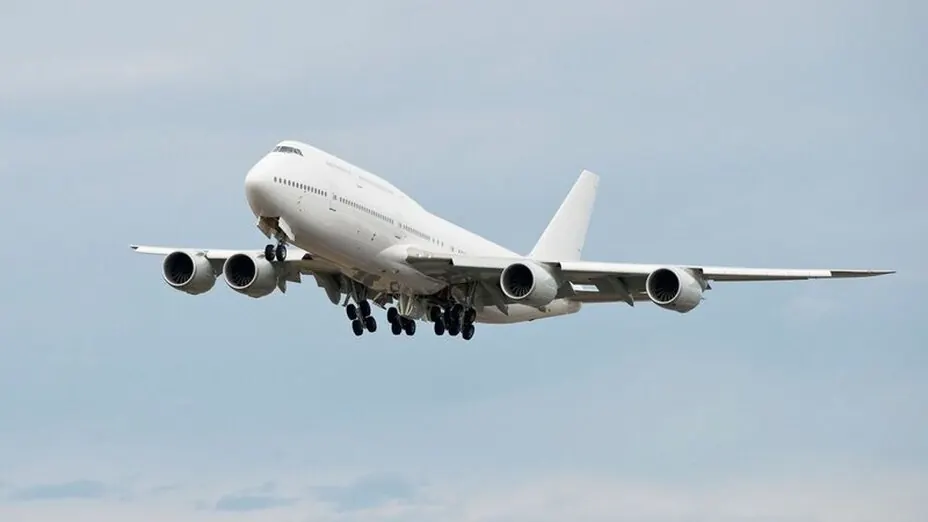
The scenario of a descent illustrates how these forces interact dynamically.
Imagine a pilot reduces engine thrust but deliberately holds the nose in a level attitude. This action instantly creates an imbalance where thrust is less than drag, causing the aircraft to begin decelerating. As speed decays, the wings generate less lift, causing a second imbalance where lift becomes less than weight. This imbalance initiates a descent.
Moments later, the aircraft now begins to trade altitude for speed. As it descends, gravity accelerates it downward, increasing its airspeed. This is not an acceleration from engine power, but a conversion of potential energy (height) into kinetic energy (speed).
The increasing speed, in turn, generates more lift and more drag. This process continues until the forces naturally find a new balance: the increased speed creates enough lift to stabilize the descent rate and enough drag to once again equal the reduced thrust.
At this point, the aircraft will continue descending, but it will do so at a constant, faster airspeed.
Imagine a pilot reduces engine thrust but deliberately holds the nose in a level attitude. This action instantly creates an imbalance where thrust is less than drag, causing the aircraft to begin decelerating. As speed decays, the wings generate less lift, causing a second imbalance where lift becomes less than weight. This imbalance initiates a descent.
Moments later, the aircraft now begins to trade altitude for speed. As it descends, gravity accelerates it downward, increasing its airspeed. This is not an acceleration from engine power, but a conversion of potential energy (height) into kinetic energy (speed).
The increasing speed, in turn, generates more lift and more drag. This process continues until the forces naturally find a new balance: the increased speed creates enough lift to stabilize the descent rate and enough drag to once again equal the reduced thrust.
At this point, the aircraft will continue descending, but it will do so at a constant, faster airspeed.