Introduction
 |
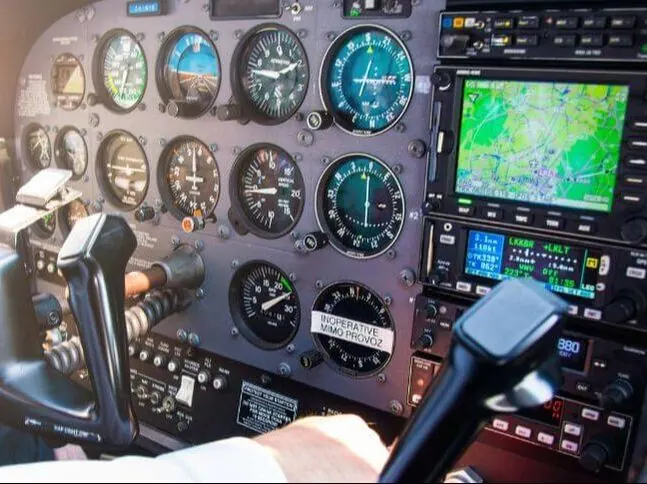 |
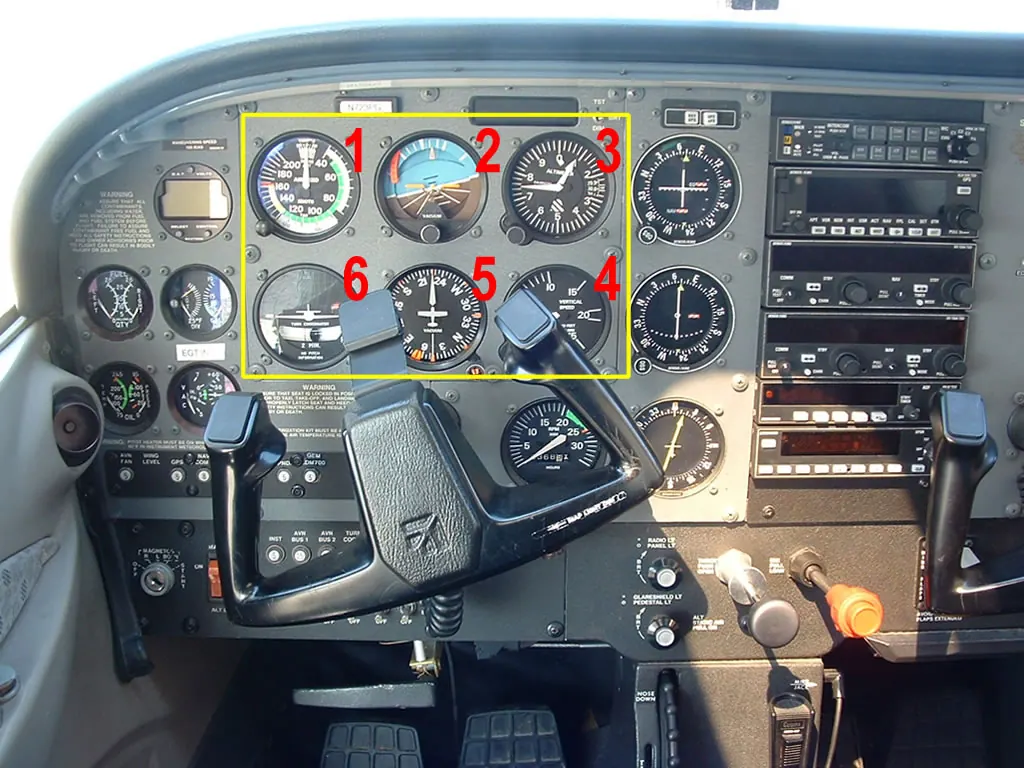
In conditions with no external visual references, such as cloud or fog, a pilot cannot rely on sight to determine the aircraft's orientation. To operate safely, pilots depend on a core set of six instruments, traditionally arranged in two rows of three and known as the "six-pack." These instruments provide essential data on the aircraft's attitude, heading, altitude, and speed, enabling controlled flight without visual cues.
The six primary flight instruments are divided into two systems based on their operating principles: the pitot-static system and the gyroscopic system.
The six primary flight instruments are divided into two systems based on their operating principles: the pitot-static system and the gyroscopic system.
The Pitot-Static Flight Instruments
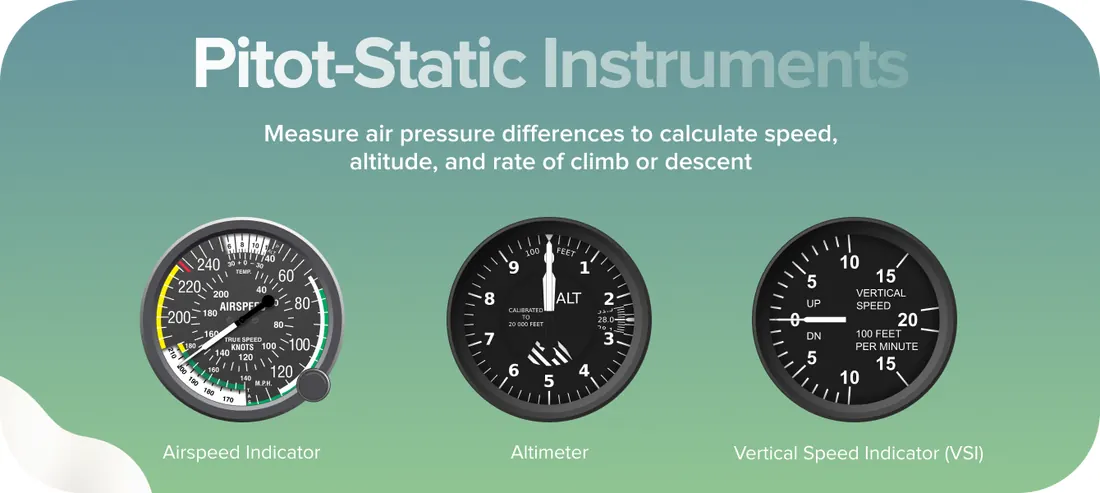
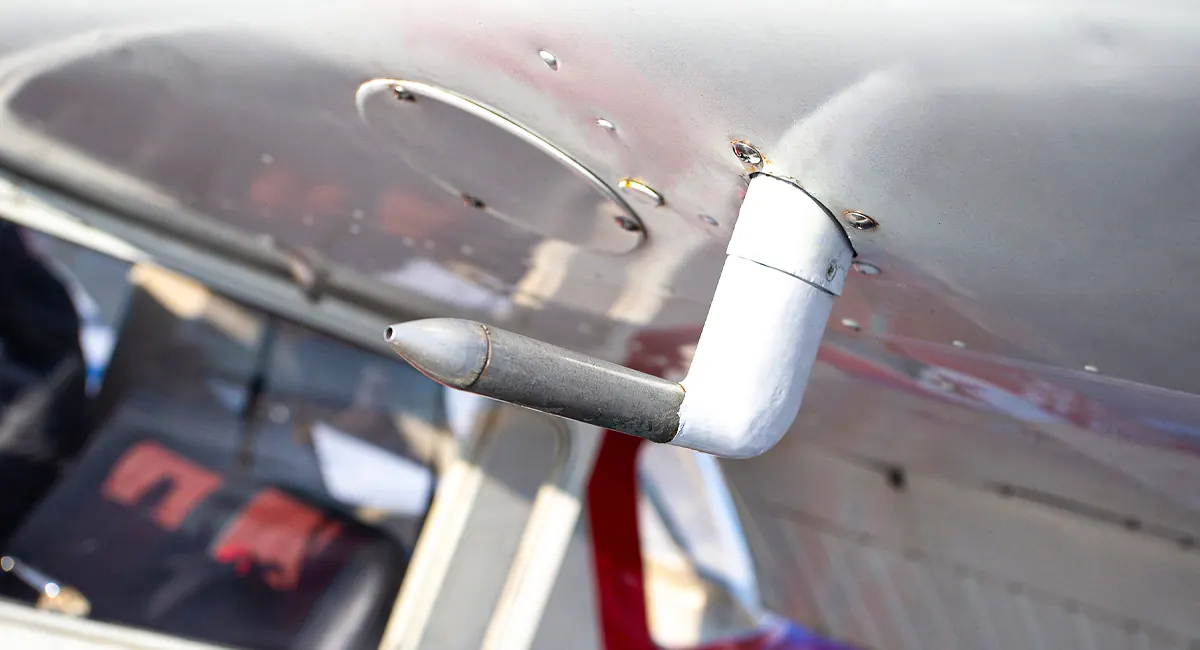
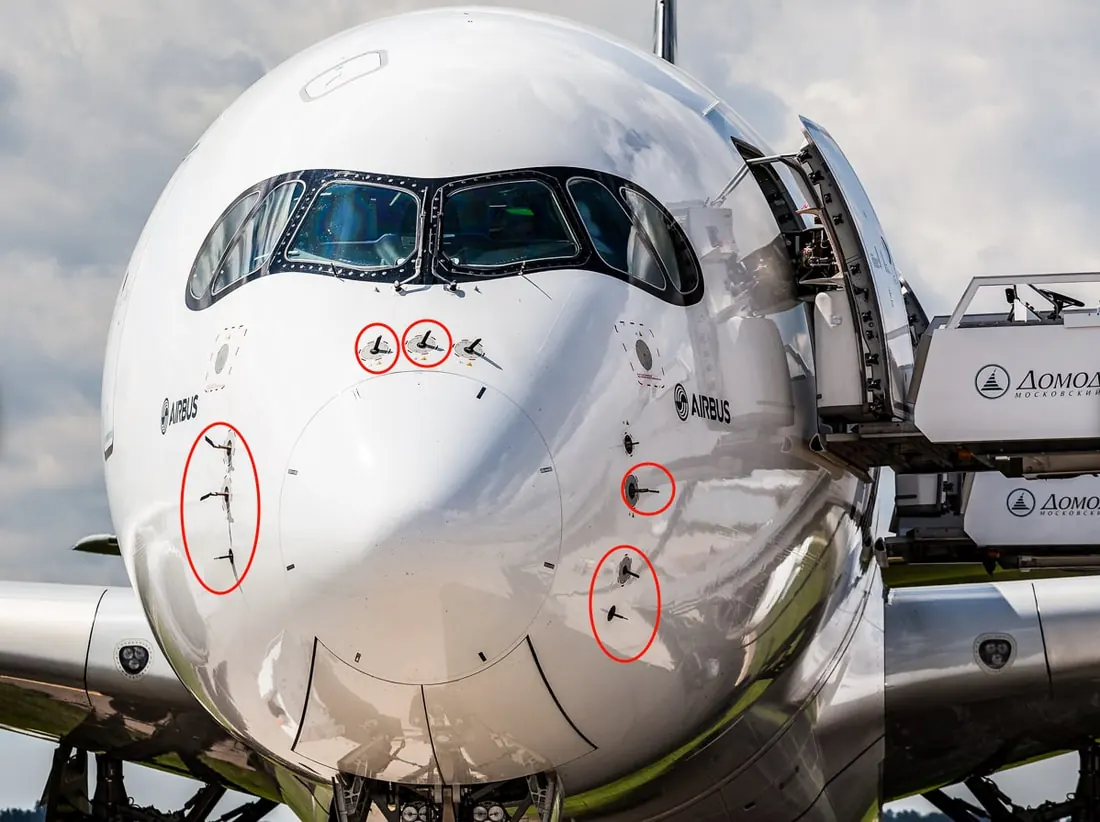
The pitot-static system operates by measuring air pressure. It consists of a pitot tube, which faces forward to capture ram air pressure, and a static port, which measures the ambient atmospheric pressure.
Airspeed Indicator
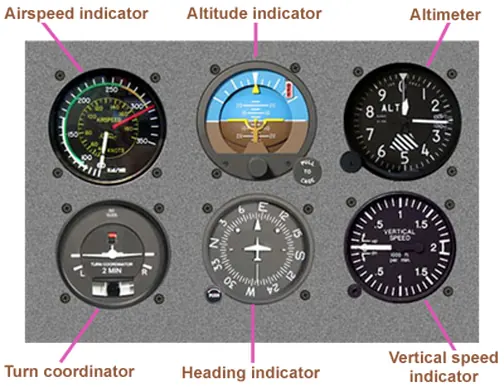
The airspeed indicator displays the aircraft's speed through the air, measured in knots. It functions by comparing the dynamic pressure from the pitot tube with the static pressure from the static port. This instrument is important for maintaining a speed that is both fast enough to generate lift and slow enough to ensure the aircraft's structure is not stressed.
Altimeter
The altimeter indicates the aircraft's altitude above mean sea level, measured in feet. It is a pressure gauge that measures the static air pressure from the static port. As altitude increases, atmospheric pressure decreases, and the altimeter translates this pressure change into a height reading. Pilots use this instrument for terrain clearance and vertical separation from other aircraft.
Vertical Speed Indicator (VSI)
The vertical speed indicator shows the rate at which the aircraft is climbing or descending, expressed in feet per minute. It operates by measuring the rate of change of static pressure. A diaphragm inside the instrument is connected to the static port through a calibrated leak, allowing it to detect pressure changes and display the corresponding rate of altitude change.
- Pitot tube → Measures dynamic pressure (caused by the aircraft moving through air).
- Static port → Measures ambient static pressure (air pressure at your current altitude).
Airspeed Indicator
The airspeed indicator displays the aircraft's speed through the air, measured in knots. It functions by comparing the dynamic pressure from the pitot tube with the static pressure from the static port. This instrument is important for maintaining a speed that is both fast enough to generate lift and slow enough to ensure the aircraft's structure is not stressed.
Altimeter
The altimeter indicates the aircraft's altitude above mean sea level, measured in feet. It is a pressure gauge that measures the static air pressure from the static port. As altitude increases, atmospheric pressure decreases, and the altimeter translates this pressure change into a height reading. Pilots use this instrument for terrain clearance and vertical separation from other aircraft.
Vertical Speed Indicator (VSI)
The vertical speed indicator shows the rate at which the aircraft is climbing or descending, expressed in feet per minute. It operates by measuring the rate of change of static pressure. A diaphragm inside the instrument is connected to the static port through a calibrated leak, allowing it to detect pressure changes and display the corresponding rate of altitude change.
 |
 |
The Gyroscopic Flight Instruments
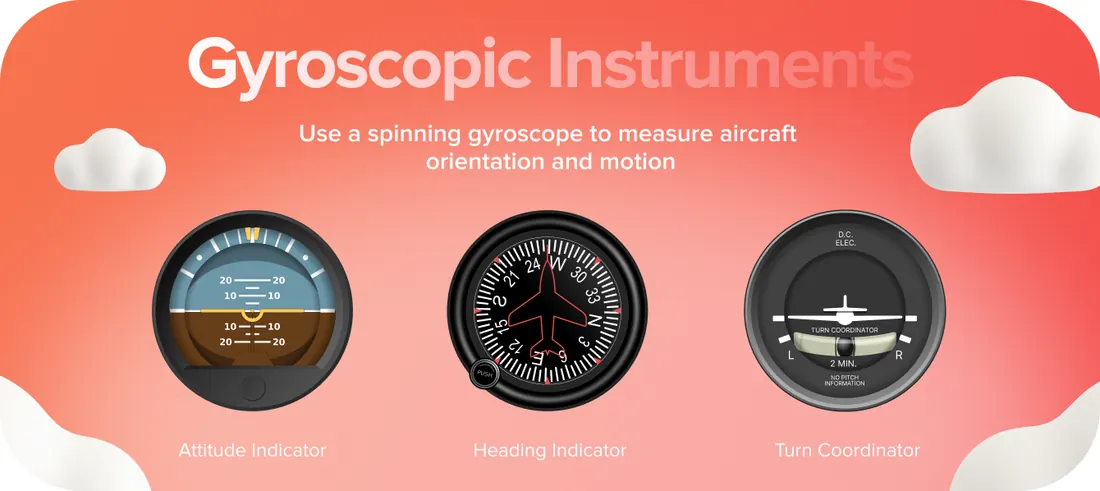
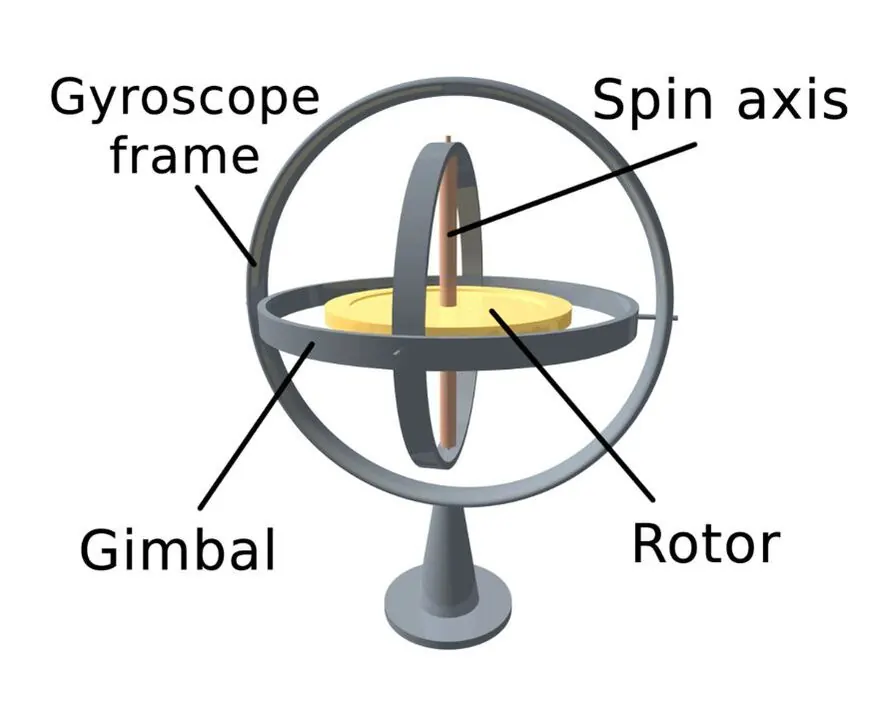
Gyroscopic instruments function based on the principle of gyroscopic inertia, where a spinning rotor resists changes to its plane of rotation. This provides a stable reference in space.
Attitude Indicator (AI)
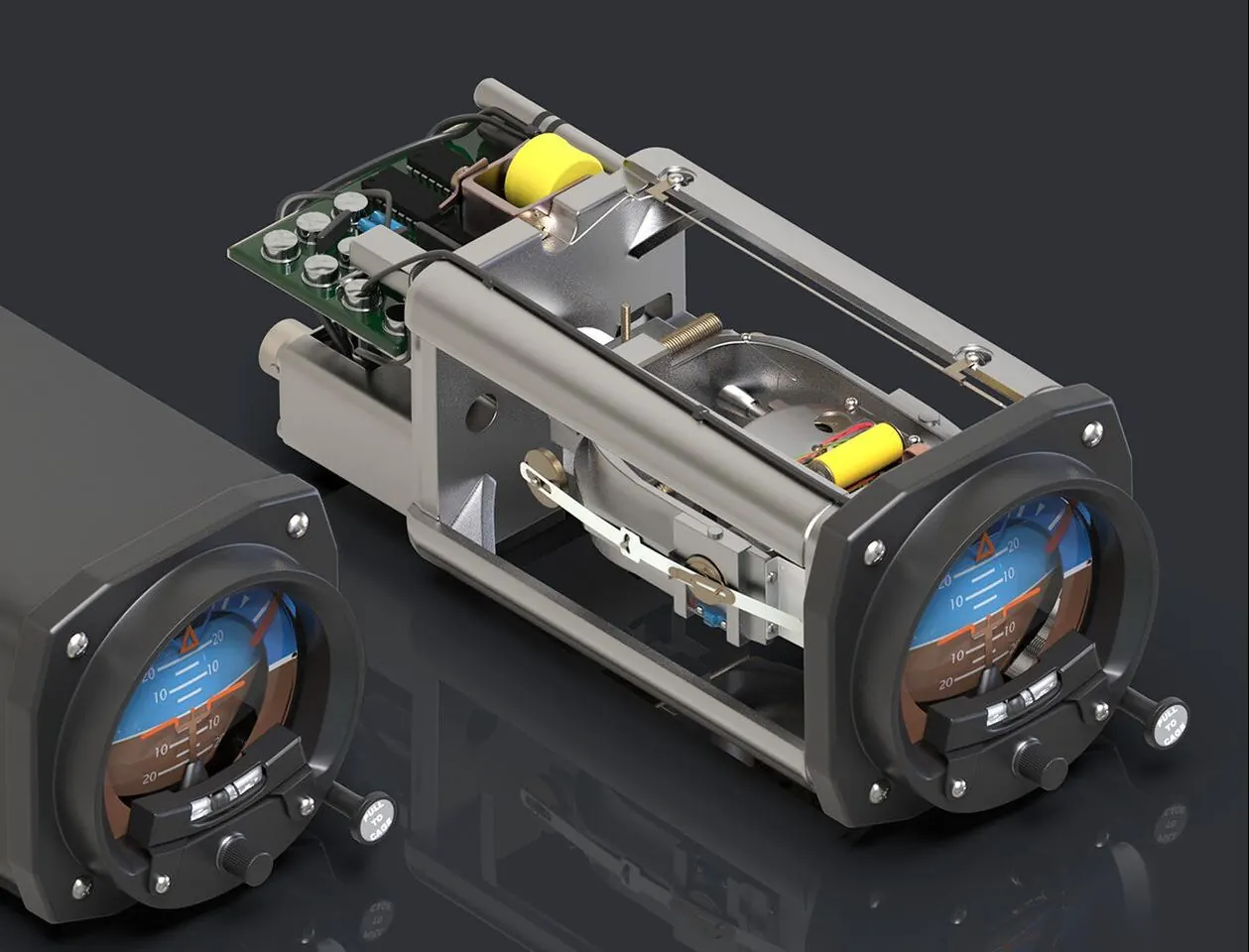
The attitude indicator, or artificial horizon, displays the aircraft's orientation relative to the earth's horizon. It shows the pitch (nose-up or nose-down) and bank (wing-up or wing-down) angles. A gyroscope inside maintains a fixed reference, allowing a miniature aircraft symbol to move against a background representing the horizon. This is the primary instrument for establishing and maintaining aircraft attitude.
Heading Indicator (HI)
The heading indicator shows the aircraft's directional heading, measured in degrees from magnetic north. Unlike a magnetic compass, which can be erratic during turns and acceleration, the gyroscopically stabilized heading indicator provides a stable and reliable directional reference. Pilots must periodically realign it with the magnetic compass during level, unaccelerated flight.
Turn Coordinator
The turn coordinator indicates the rate of turn and the coordination of the turn. The instrument contains a gyroscope to sense both the rolling and yawing motions of the aircraft.
Attitude Indicator (AI)
The attitude indicator, or artificial horizon, displays the aircraft's orientation relative to the earth's horizon. It shows the pitch (nose-up or nose-down) and bank (wing-up or wing-down) angles. A gyroscope inside maintains a fixed reference, allowing a miniature aircraft symbol to move against a background representing the horizon. This is the primary instrument for establishing and maintaining aircraft attitude.
Heading Indicator (HI)
The heading indicator shows the aircraft's directional heading, measured in degrees from magnetic north. Unlike a magnetic compass, which can be erratic during turns and acceleration, the gyroscopically stabilized heading indicator provides a stable and reliable directional reference. Pilots must periodically realign it with the magnetic compass during level, unaccelerated flight.
Turn Coordinator
The turn coordinator indicates the rate of turn and the coordination of the turn. The instrument contains a gyroscope to sense both the rolling and yawing motions of the aircraft.
- The miniature aircraft shows the roll rate and turn rate.
- The "ball" indicates whether the forces in the turn are balanced. This is known as a coordinated turn.
 |
 |
Integrated Instrument Use
Pilots do not focus on a single instrument but perform a continuous cross-check, or scan, of the entire six-pack. This integrated process builds a good understanding of the aircraft's flight path.
For example, to initiate a climb, a pilot references the attitude indicator to raise the nose, the altimeter to confirm the increase in altitude, the vertical speed indicator to establish a steady climb rate, and the airspeed indicator to ensure the aircraft remains within a safe speed range.
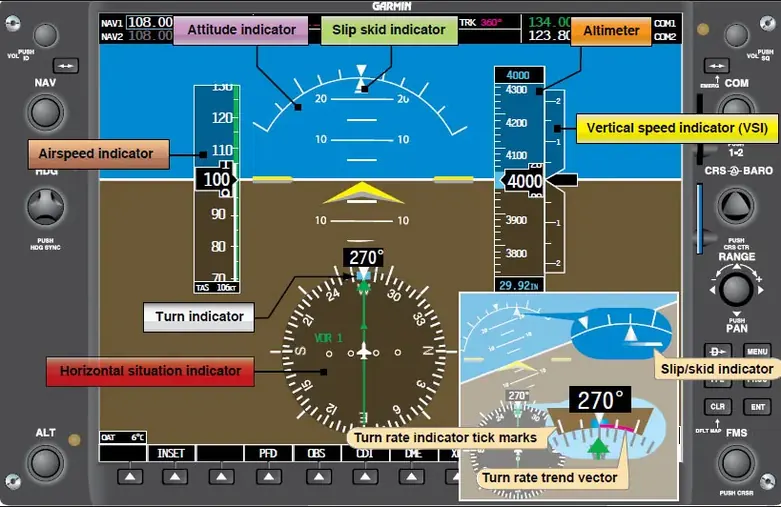
With the release of the electronic flight display (EFD) system, conventional instruments have been replaced by multiple liquid crystal display (LCD) screens.
For example, to initiate a climb, a pilot references the attitude indicator to raise the nose, the altimeter to confirm the increase in altitude, the vertical speed indicator to establish a steady climb rate, and the airspeed indicator to ensure the aircraft remains within a safe speed range.
With the release of the electronic flight display (EFD) system, conventional instruments have been replaced by multiple liquid crystal display (LCD) screens.