Goal: Generating Thrust
|
Thrust is a forward-acting force that opposes drag (the rearward-acting force of air resistance). According to Newton's Second Law of Motion (F=ma), to accelerate an airplane forward, we must create a net forward force. Thrust makes this possible.
All aircraft engines, from the simplest piston engine to the most advanced turbojet, produce thrust by applying Newton's Third Law of Motion: For every action, there is an equal and opposite reaction. In practical terms, this means that if an engine can accelerate a mass of air backwards, the air will exert an equal and opposite force forward on the engine—and thus, on the aircraft. The key difference between engine types lies in how they accelerate that air. |
 |
Piston Engines
The piston engine, powering the first successful aircraft and most small planes today, is a type of internal combustion engine. It converts chemical energy (fuel) into mechanical energy (a spinning crankshaft). Its operation can be broken down into a two-step process: generating power and converting it to thrust.
The Four-Stroke (Otto) Cycle: Most aircraft piston engines operate on a four-stroke cycle, illustrated in the simplified diagram below. Attached is an aged mnemonic that describes the four-stroke Otto cycle of a simple combustion engine.
The Four-Stroke (Otto) Cycle: Most aircraft piston engines operate on a four-stroke cycle, illustrated in the simplified diagram below. Attached is an aged mnemonic that describes the four-stroke Otto cycle of a simple combustion engine.
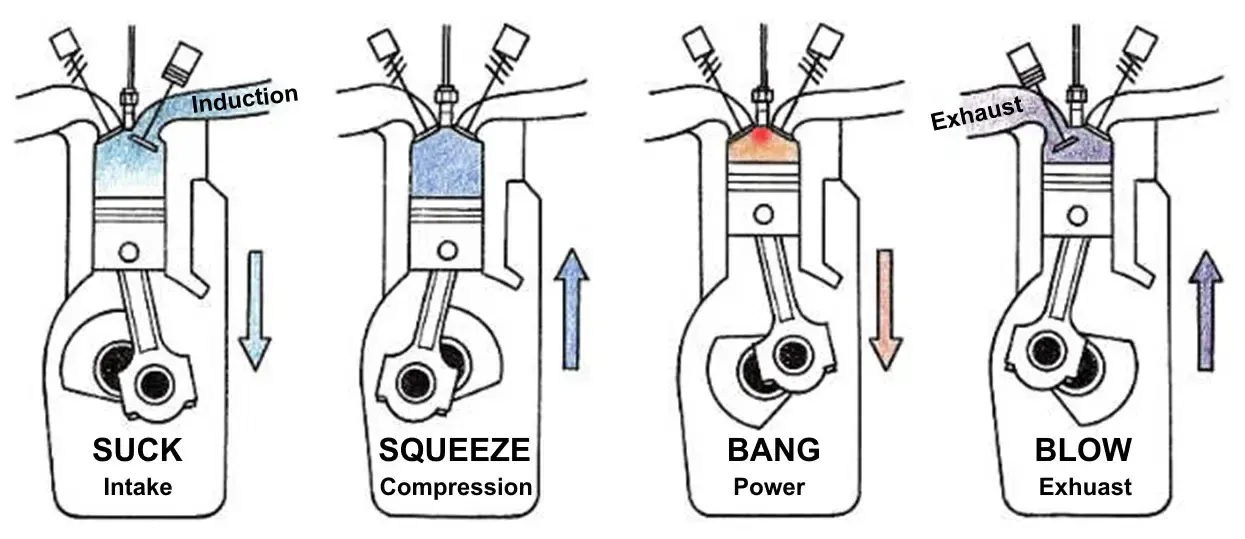
- Intake: The intake valve opens. As the piston moves down, it draws a mixture of fuel and air into the cylinder.
- Compression: Both valves close. The piston moves up, compressing the fuel-air mixture, making it highly volatile.
- Power: At the peak of compression, the spark plugs ignite the mixture. The resulting controlled explosion creates high pressure, forcing the piston down. This is the only stroke that produces power, turning the crankshaft.
- Exhaust: The exhaust valve opens. The piston moves back up, pushing the burned gases out of the cylinder.
This cycle repeats hundreds of times per minute in multiple cylinders, creating continuous rotation of the crankshaft.
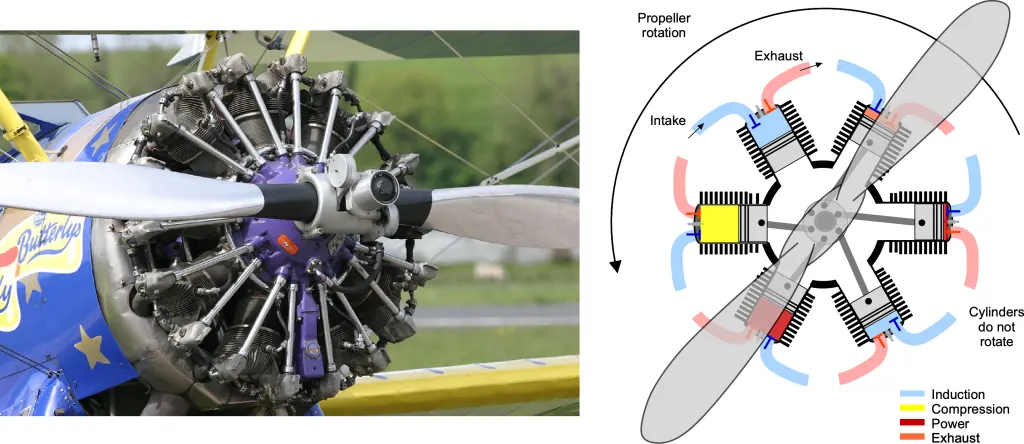
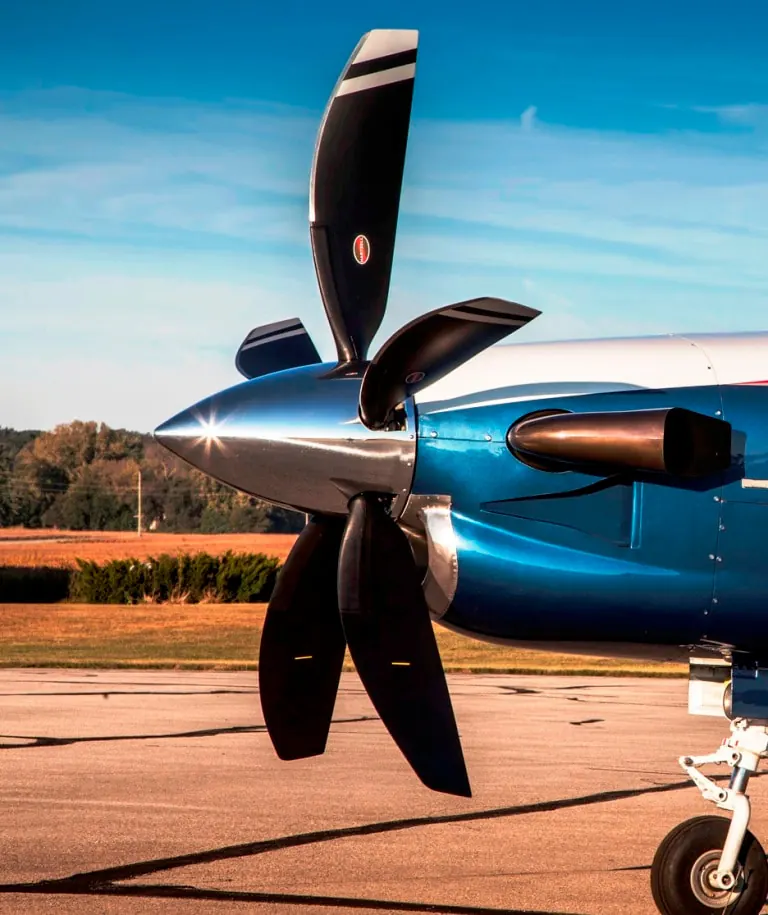
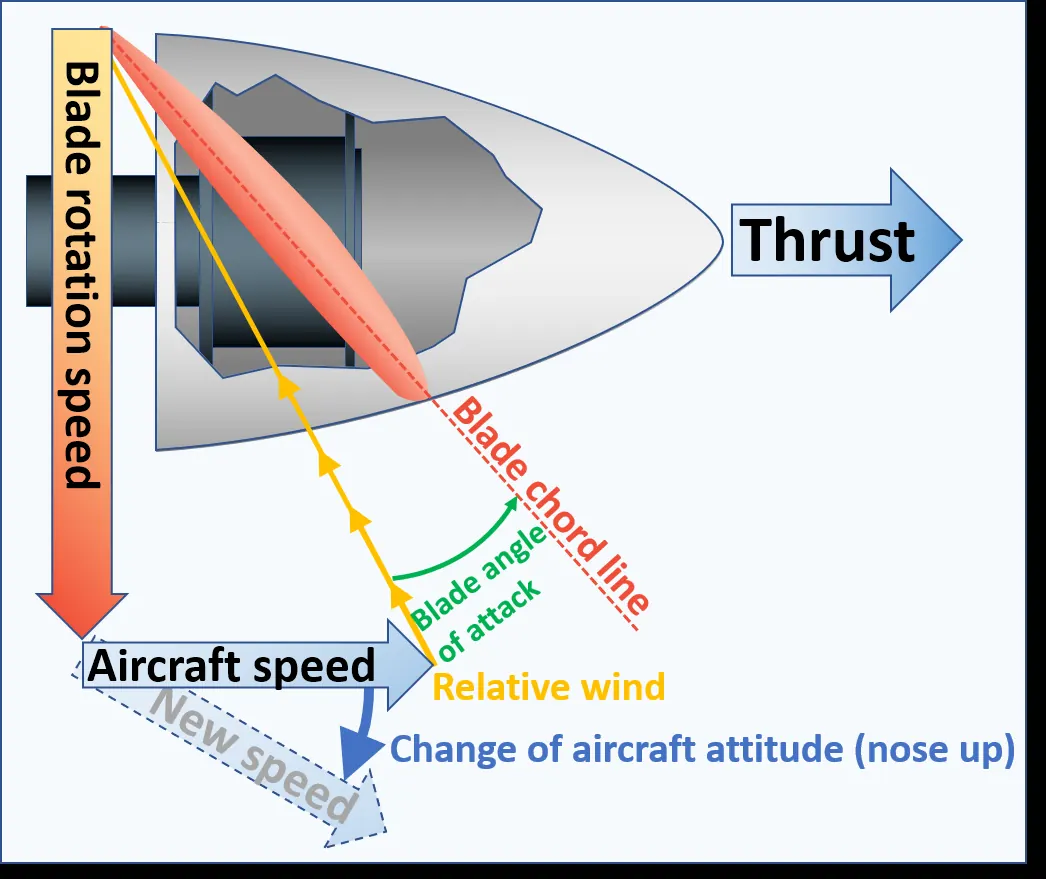
Each blade of the propeller is shaped like a wing, with a curved upper surface and a flatter lower surface. As it spins, it cuts through the air.
- The angle of the blade (its "pitch") forces air backwards.
- Due to its airfoil shape, a region of lower pressure is created in front of the propeller and higher pressure behind it, just like a wing generates lift.
- This pressure difference accelerates a large mass of air rearward at a relatively slow speed.
 |
 |
Jet Engines
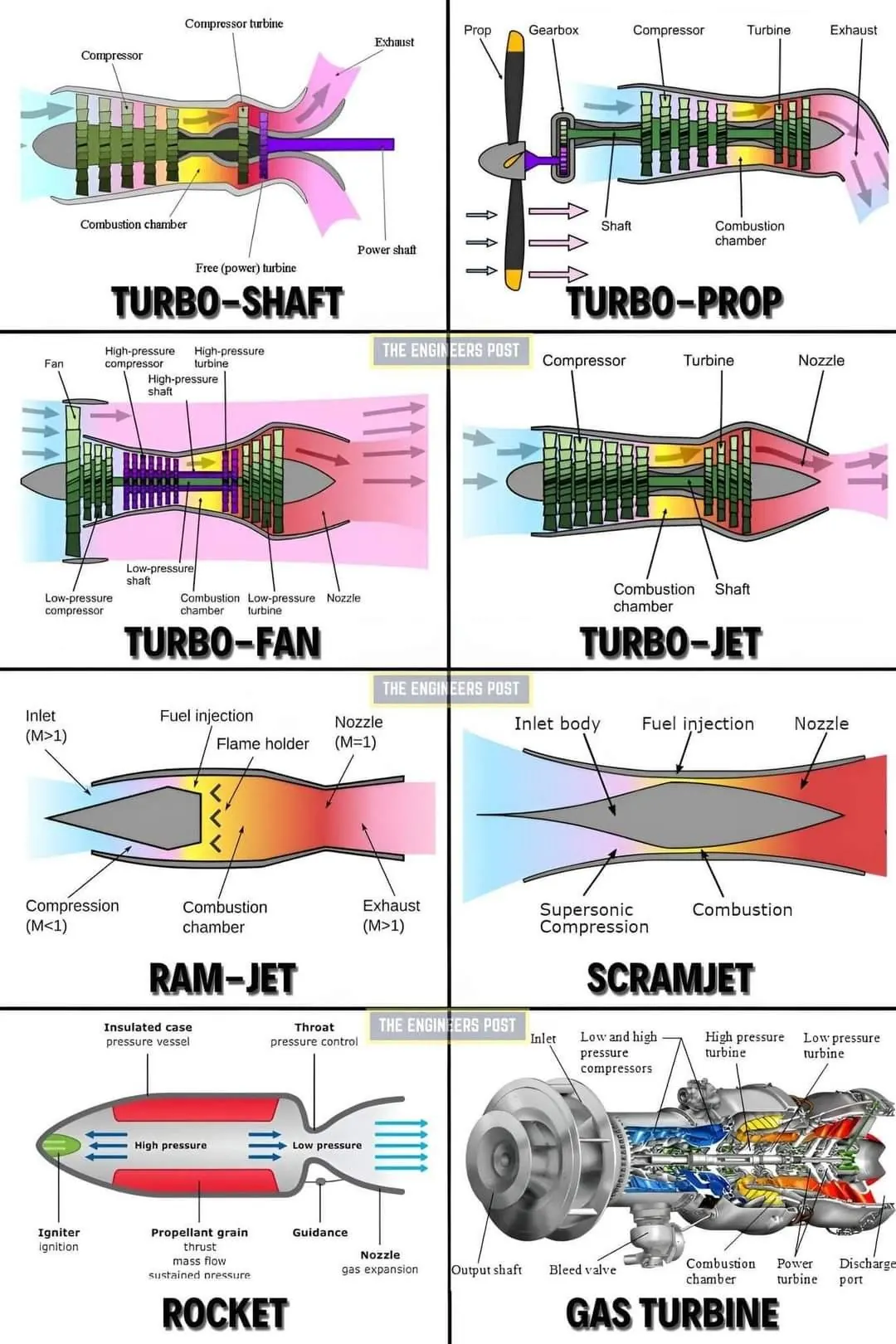
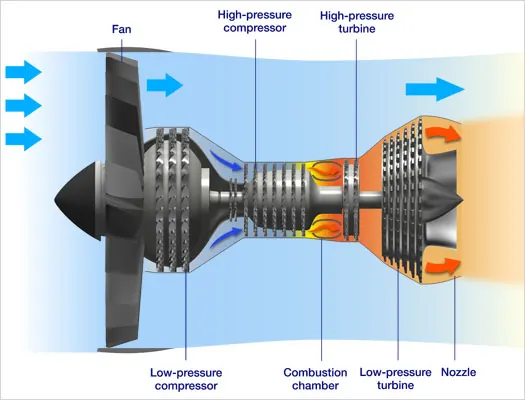
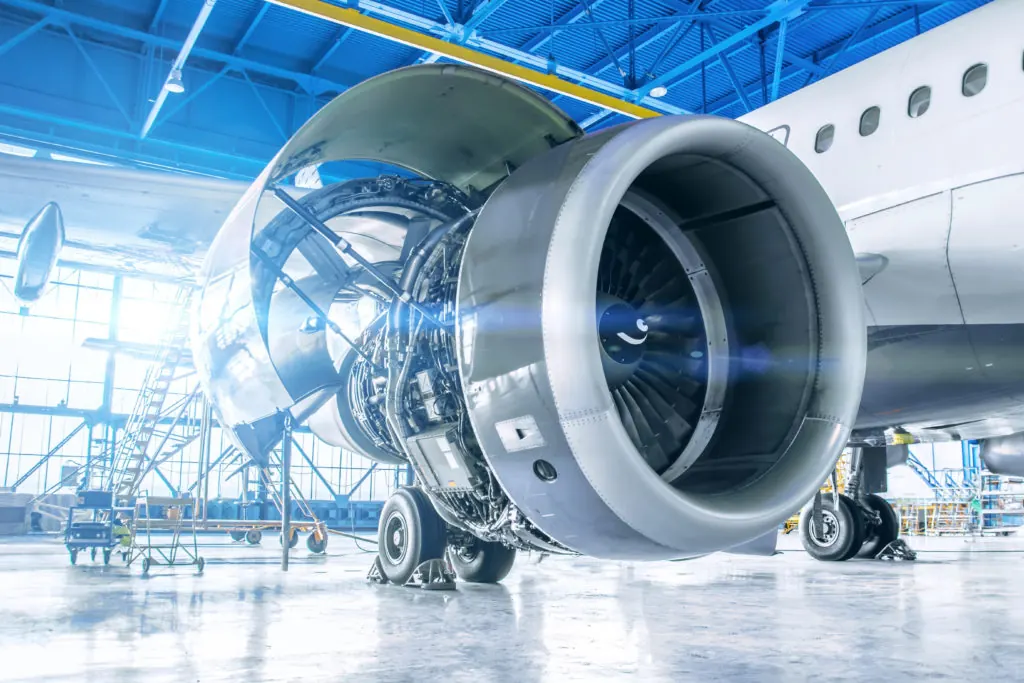
Jet engines, also known as gas turbine engines, represent a different philosophy. They eliminate the intermediate steps of the piston engine by generating thrust directly through the exhaust. While there are several types (turboprops, turbofans, turbojets, turboshafts), we will focus on the core principles common to all--The Gas Turbine Cycle.
The Gas Turbine (Brayton) Cycle: A jet engine is essentially a continuous-flow machine. It takes in air, processes it, and expels it at a much higher speed, all in a constant stream. Similarly, this process can be memorably described in four stages:
The Gas Turbine (Brayton) Cycle: A jet engine is essentially a continuous-flow machine. It takes in air, processes it, and expels it at a much higher speed, all in a constant stream. Similarly, this process can be memorably described in four stages:
 |
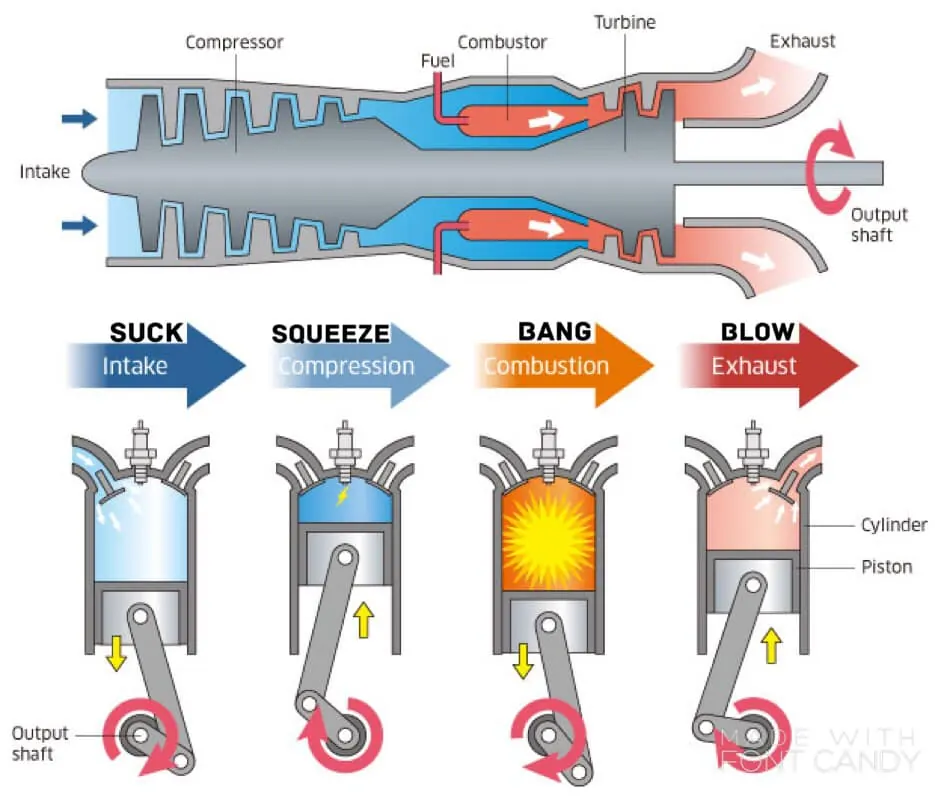 |
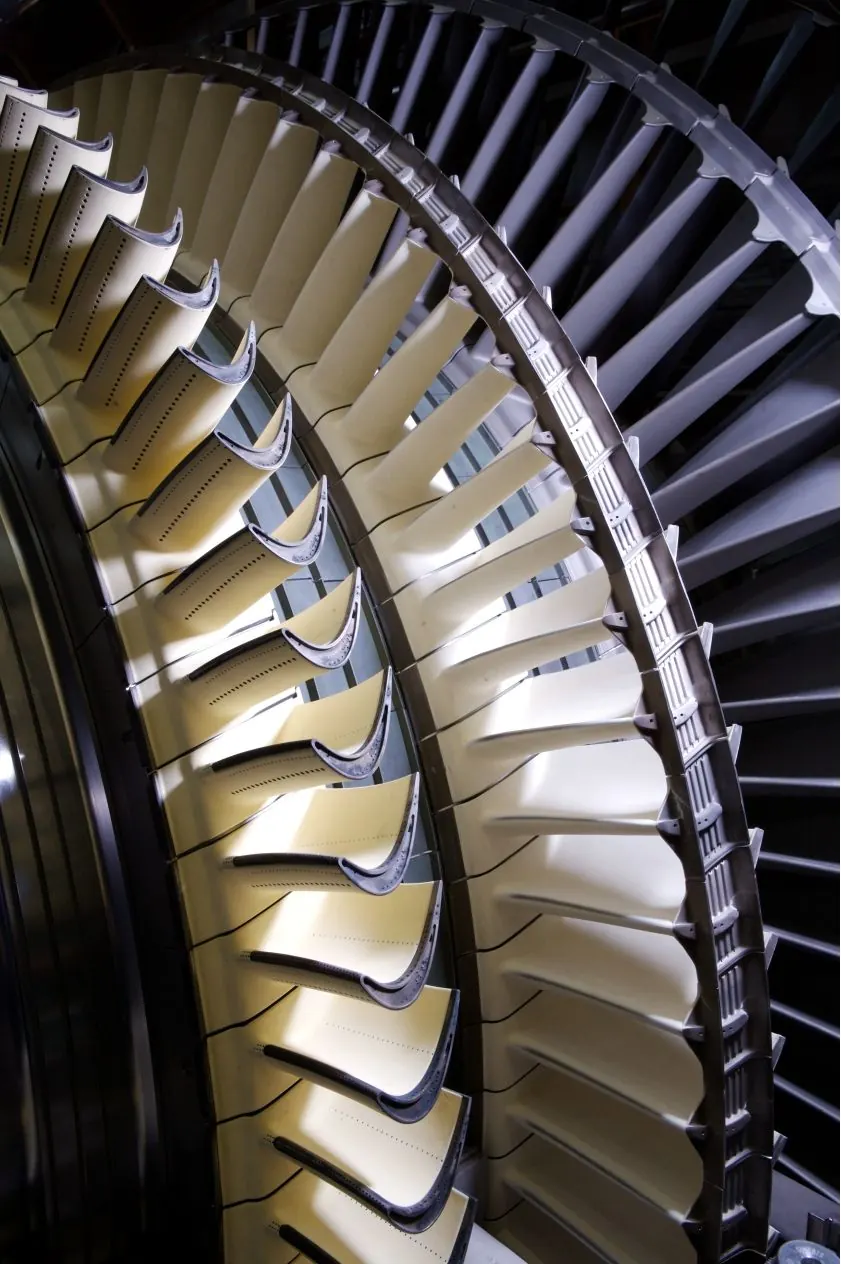
- Intake & Compression: Air is drawn into the front of the engine (suck). It then enters the compressor, a series of rotating and stationary fan blades. The compressor's job is to squeeze the air, increasing its pressure and temperature dramatically. High-pressure air is essential for an efficient combustion process.
- Combustion: The high-pressure air enters the combustion chamber. Here, fuel is sprayed and continuously ignited. The mixture burns at an extremely high temperature, causing the gases to expand massively and rapidly. The pressure remains relatively constant, but the volume and energy of the gases skyrocket.
- Exhaust & Thrust: The super-hot, high-energy gases then rush out of the combustion chamber toward the rear of the engine. On their way out, they pass through the turbine. The turbine is another set of fan blades that extracts just enough energy from the gas stream to spin the compressor at the front (via a connecting shaft). The vast majority of the gas's energy is not used to spin the turbine; it rushes out of the exhaust nozzle at the back.
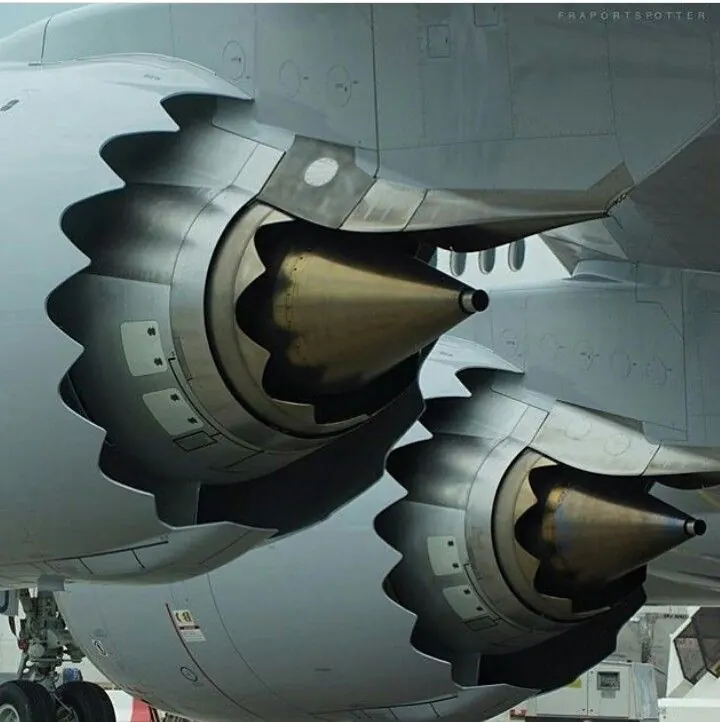
Creating Thrust: As these high-energy gases are accelerated to extremely high speeds out of the exhaust nozzle (the "action"), they generate a powerful reactive force—thrust—that pushes the engine, and the aircraft, forward (the "reaction").
Summary
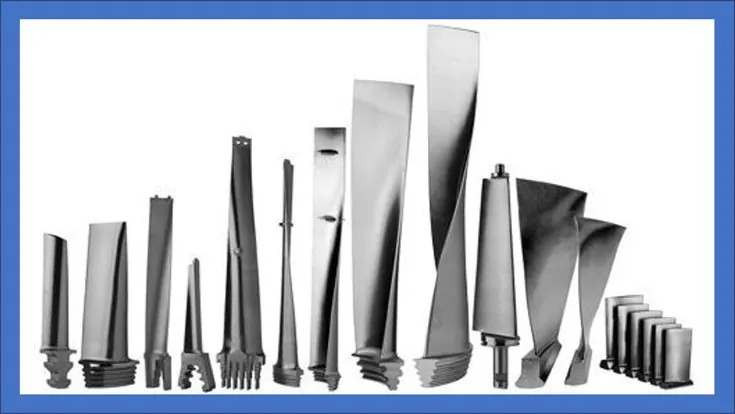
In summary, a jet engine produces thrust by taking in air, compressing it, mixing it with fuel and igniting it to create a high-energy gas stream, and then expelling that gas backwards at high speed.
The core trade-off is between moving a large mass of air slowly (propellers, efficient at low speed) versus a smaller mass of air very fast (jets, efficient at high speed).
- All aircraft engines produce thrust by obeying Newton's Third Law: accelerating mass backwards to create a forward reaction force.
- Piston Engines are internal combustion engines that use a The Four-Stroke (Otto) Cycle to spin a crankshaft, which turns a propeller. The propeller, acting as a rotating wing, generates thrust by pushing a large volume of air rearward.
- Jet Engines are continuous-flow gas turbines that operate on a the The Gas Turbine (Brayton) Cycle. They generate thrust directly by expelling high-energy exhaust gases at very high speed out of a nozzle.
The core trade-off is between moving a large mass of air slowly (propellers, efficient at low speed) versus a smaller mass of air very fast (jets, efficient at high speed).