The Three Axes: An Overview
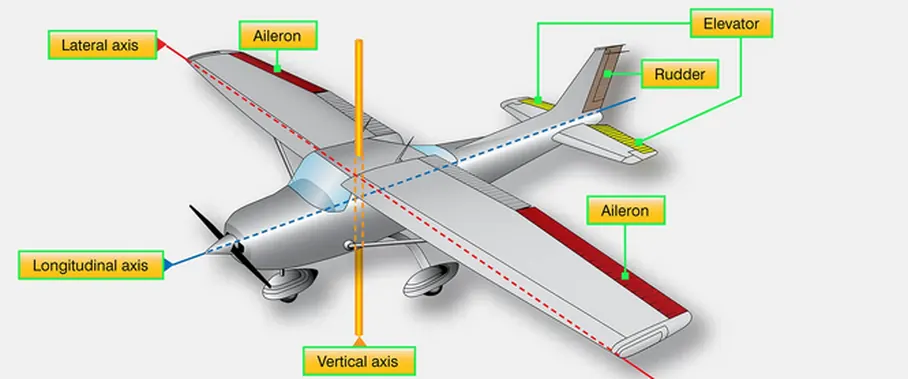
An aircraft rotates around its center of gravity, which we can think of as the pivot point for all its movements. The three axes are perpendicular to each other, including:
- The Longitudinal Axis (Roll Axis): An imaginary line that runs from the nose of the aircraft to its tail. Rotation around this axis is called roll.
- The Lateral Axis (Pitch Axis): An imaginary line that runs from wingtip to wingtip. Rotation around this axis is called pitch.
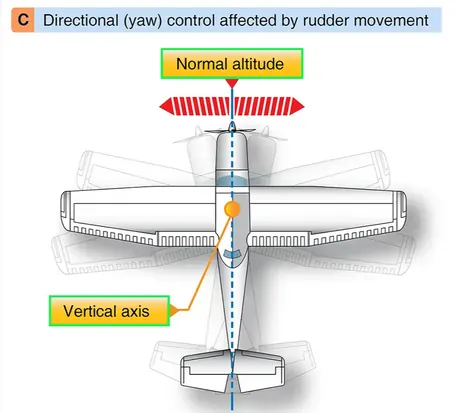
- The Vertical Axis (Yaw Axis): An imaginary line that runs vertically from the top to the bottom of the aircraft. Rotation around this axis is called yaw.
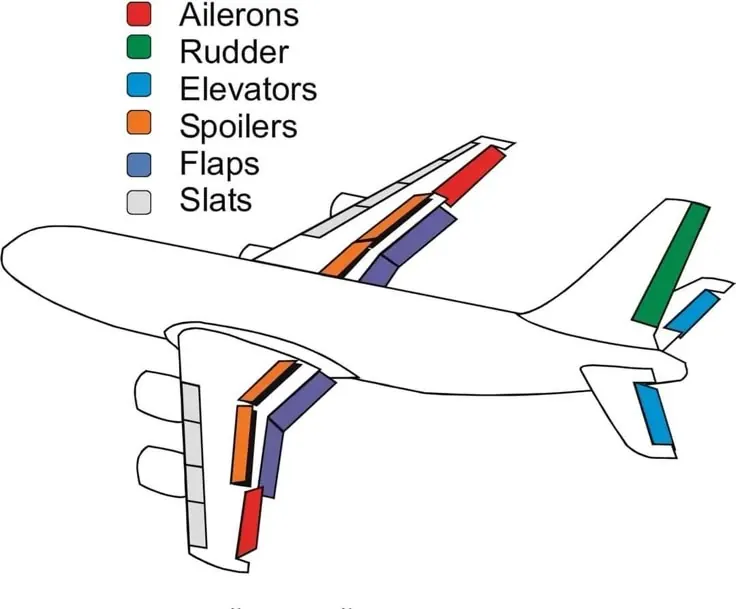
Control surfaces
 |
 |
Roll (Controlled by the Ailerons)
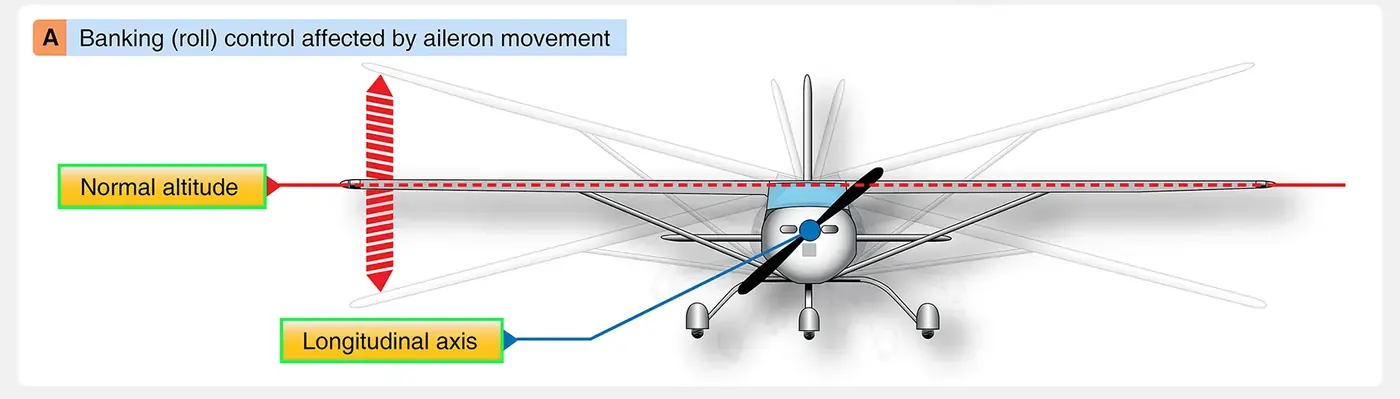
Roll is the rotation of an aircraft around its longitudinal (nose-to-tail) axis, causing the wings to bank. This banking motion tilts the wing's lift force, creating a horizontal component that pulls the aircraft into a turn.
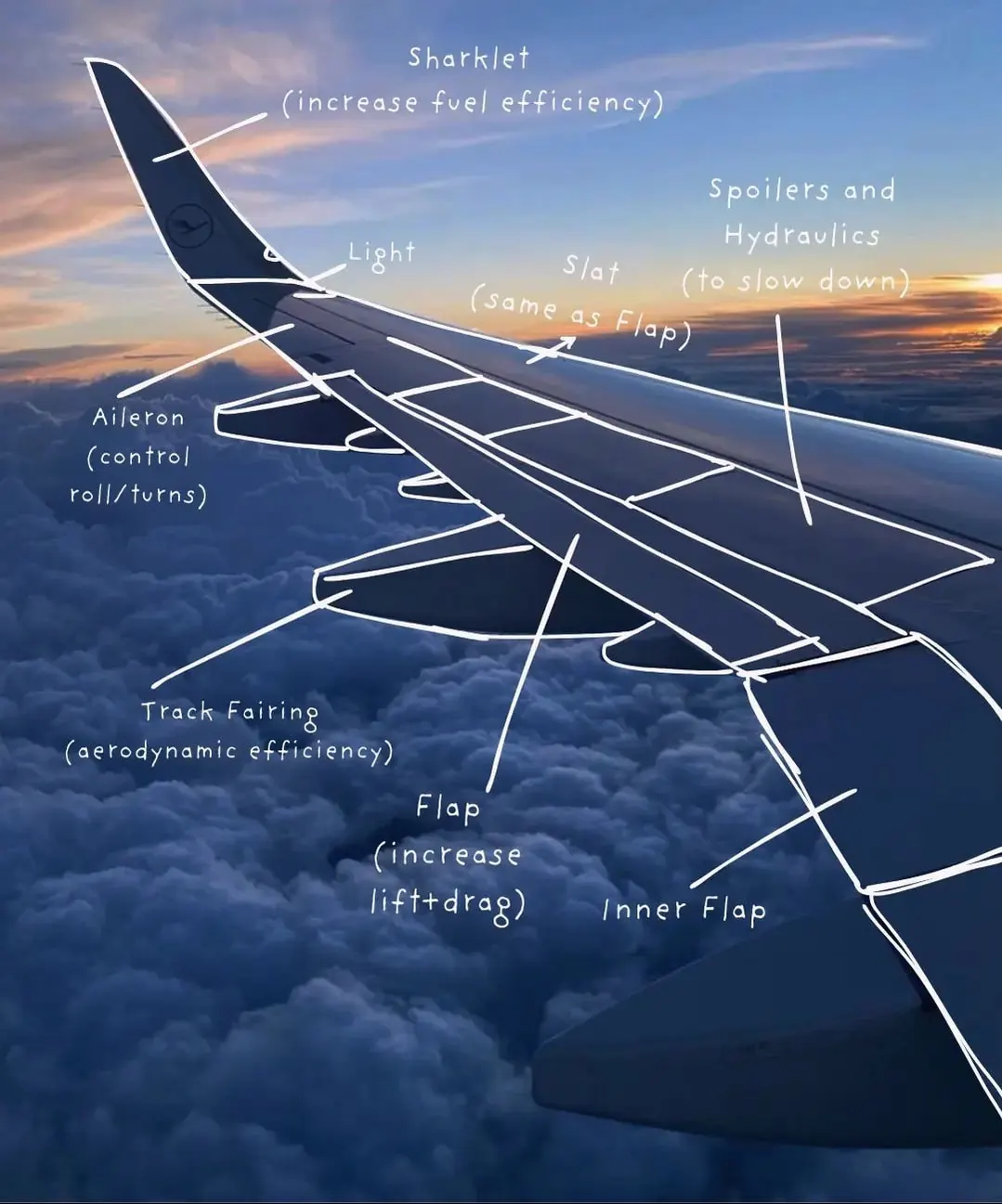
Ailerons, located on the trailing edge of each wingtip, control roll. They work in opposition:
Ailerons, located on the trailing edge of each wingtip, control roll. They work in opposition:
- To roll left: The left aileron raises (reducing lift) and the right aileron lowers (increasing lift).
- To roll right: The right aileron raises (reducing lift) and the left aileron lowers (increasing lift).
|
The pilot commands this action by moving the control yoke left or right.
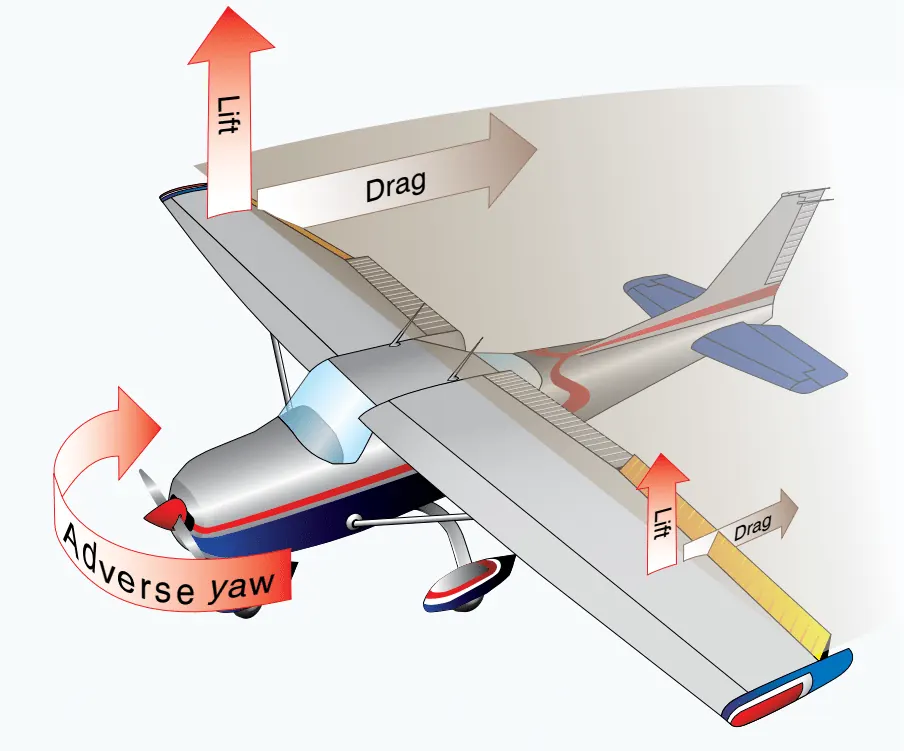
However, a pilot must be careful of an effect known as Adverse Yaw: The downward-deflected aileron creates more drag, yawing the nose opposite the intended roll. This is corrected using the rudder. |
 |
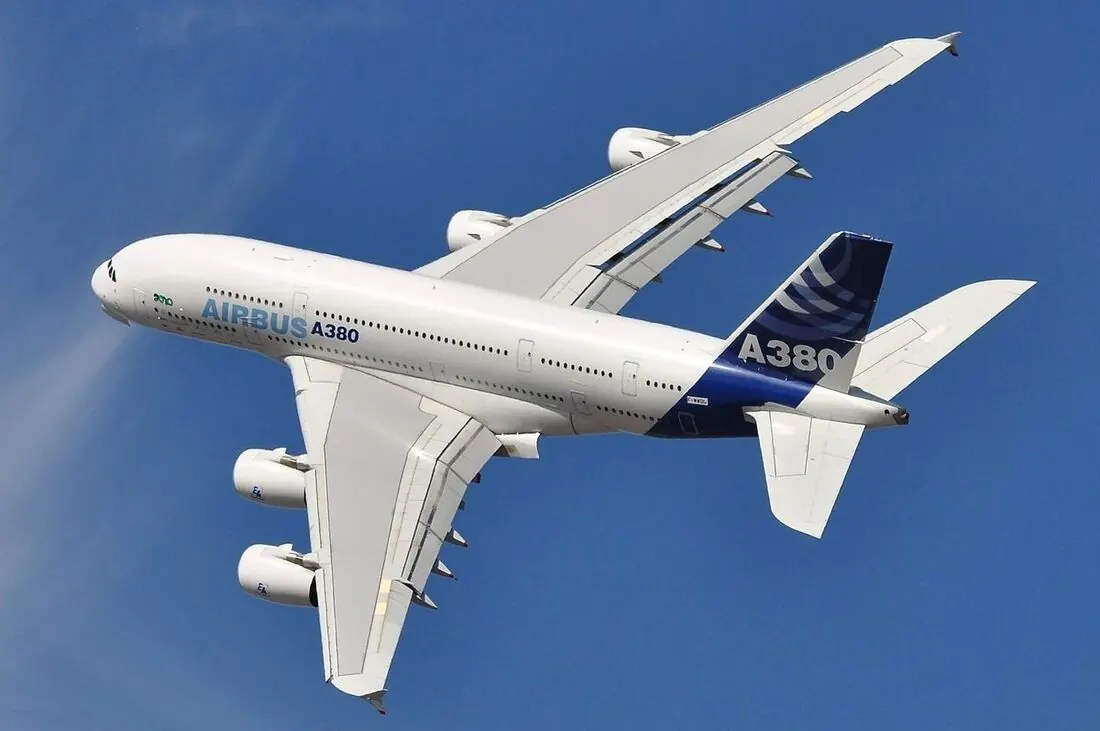
Is the A380 beginning to bank left, or stabilizing/leveling from a left bank?
Pitch (Controlled by the Elevator)
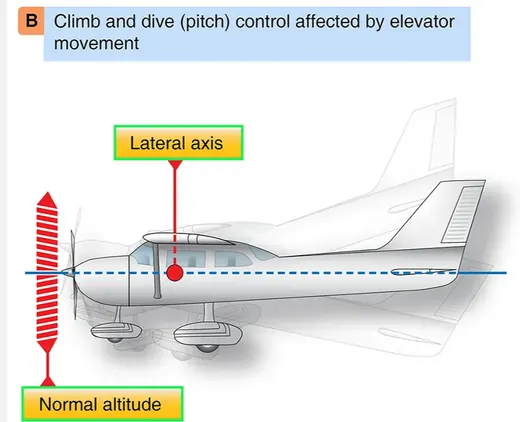
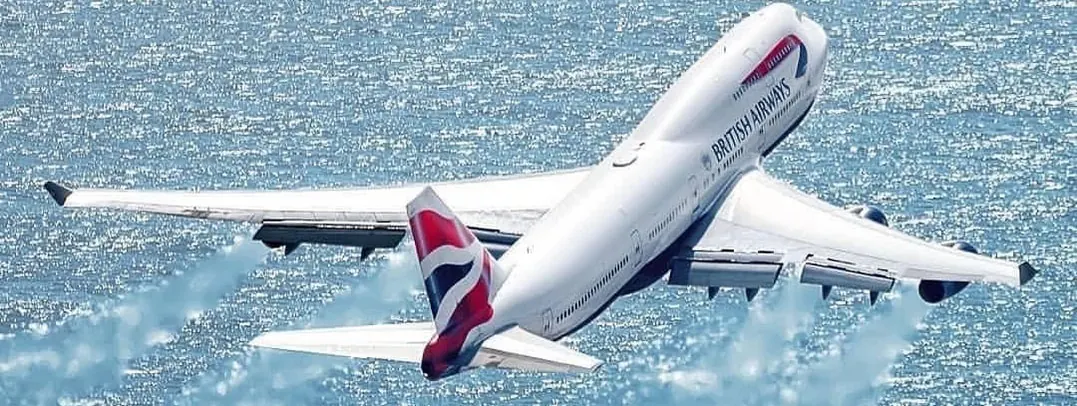
Pitch is the aircraft's rotation around its lateral axis (from wingtip to wingtip), which moves the nose up or down relative to the horizon. This change in attitude controls whether the aircraft climbs, descends, or flies level.
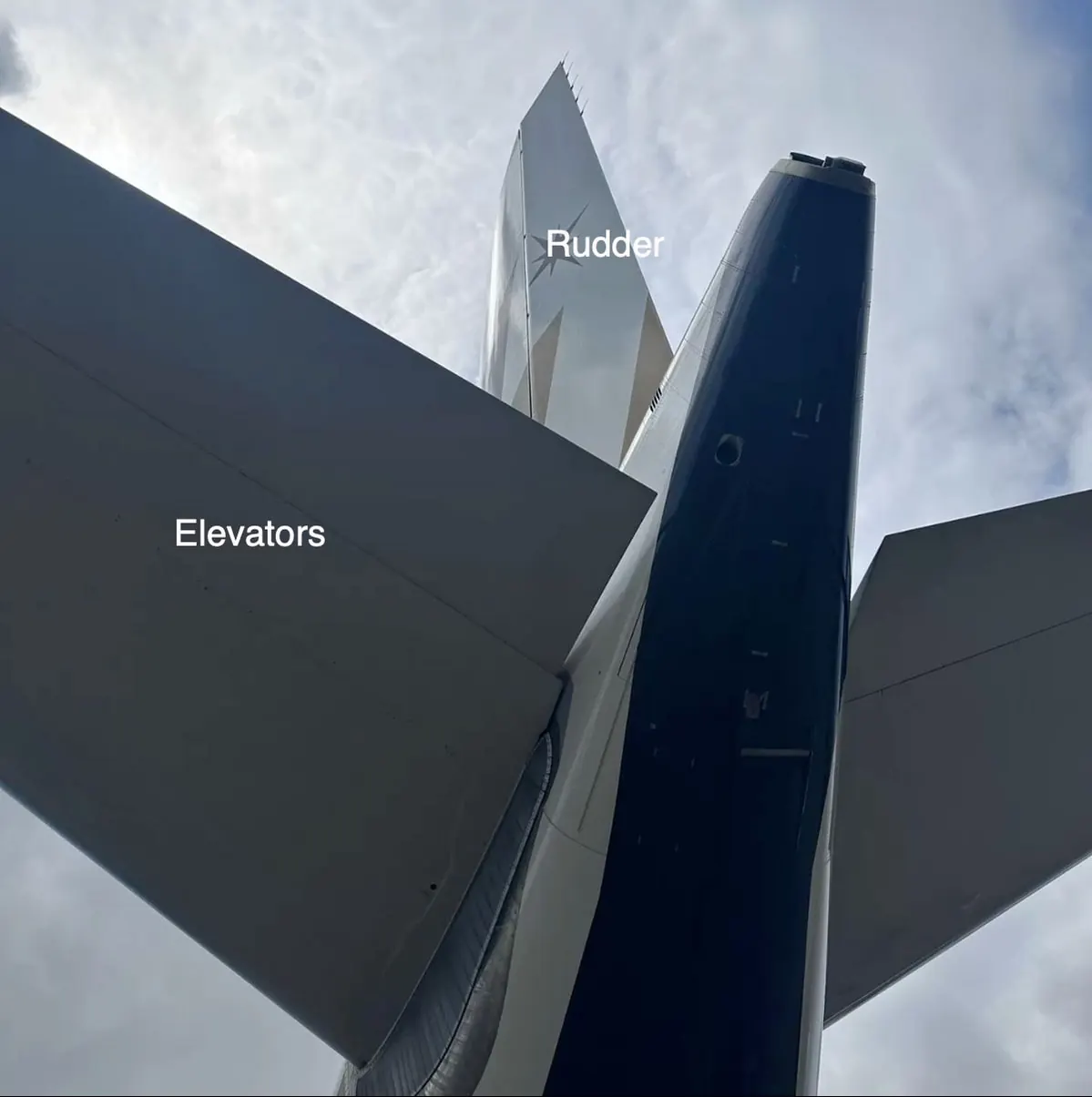
This motion is controlled by the elevator, a hinged surface on the trailing edge of the horizontal stabilizer at the tail. The pilot moves the control yoke backward or forward to command the following:
Changing the pitch attitude directly trades airspeed for altitude, or altitude for airspeed. A nose-up angle makes the aircraft climb and slow down, while a nose-down angle makes it descend and accelerate.
This motion is controlled by the elevator, a hinged surface on the trailing edge of the horizontal stabilizer at the tail. The pilot moves the control yoke backward or forward to command the following:
- Upward Deflection: Pulling the yoke back deflects the elevator upward. This action produces a downward aerodynamic force on the tail, which raises the nose and puts the aircraft into a climb.
- Downward Deflection: Pushing the yoke forward deflects the elevator downward. This creates an upward aerodynamic force on the tail, which lowers the nose and puts the aircraft into a descent.
Changing the pitch attitude directly trades airspeed for altitude, or altitude for airspeed. A nose-up angle makes the aircraft climb and slow down, while a nose-down angle makes it descend and accelerate.
Yaw (Controlled by the Rudder)
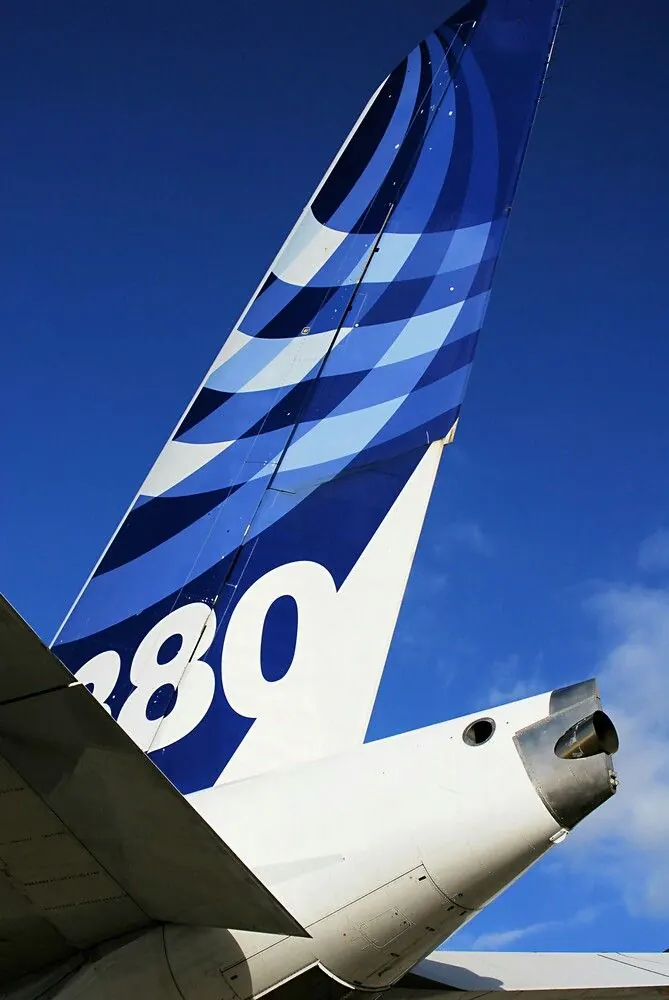
Yaw is the rotation of an aircraft around its vertical axis, resulting in the nose moving side-to-side. This movement is controlled by the rudder, a hinged surface on the vertical stabilizer's trailing edge.
The rudder's primary role is not to turn the aircraft, but to coordinate its movement. It is used to counteract adverse yaw during banked turns, correct for asymmetrical thrust in multi-engine planes, and maintain directional alignment during crosswind landings. Its main function is to ensure balanced and coordinated flight by correcting undesired side-to-side motion.
- The pilot uses foot pedals to operate the rudder. Pressing the left pedal deflects the rudder left, pushing the tail right and yawing the nose left.
- Pressing the right pedal deflects the rudder right, pushing the tail left and yawing the nose right.
The rudder's primary role is not to turn the aircraft, but to coordinate its movement. It is used to counteract adverse yaw during banked turns, correct for asymmetrical thrust in multi-engine planes, and maintain directional alignment during crosswind landings. Its main function is to ensure balanced and coordinated flight by correcting undesired side-to-side motion.
 |
 |
The Six Degrees of Freedom
|
Three Rotational (covered in this chapter):
|
Three Translational (movement along an axis):
|
Summary: Controlling the Aircraft
We explained how an aircraft is maneuverered around its three axes of rotation, which all intersect at its center of gravity.
Effective flight requires the coordinated use of all three controls. For example, a turn is initiated with the ailerons (roll), maintained with the elevator (pitch), and kept coordinated with the rudder (yaw). Together, these primary control surfaces allow a pilot to precisely maneuver the aircraft through three-dimensional space.
- Pitch is controlled by the elevator and rotates the aircraft around its lateral axis to make the nose move up or down, managing climbs and descents.
- Roll is controlled by the ailerons and rotates the aircraft around its longitudinal axis to raise or lower the wings, initiating turns.
- Yaw is controlled by the rudder and rotates the aircraft around its vertical axis to move the nose left or right, primarily used for coordination and stability.
Effective flight requires the coordinated use of all three controls. For example, a turn is initiated with the ailerons (roll), maintained with the elevator (pitch), and kept coordinated with the rudder (yaw). Together, these primary control surfaces allow a pilot to precisely maneuver the aircraft through three-dimensional space.