What's a good telescope?
Optical telescopes are usually described using four linked concepts: aperture, magnification, light‑gathering power, and resolution. These are then summarized by the focal ratio, which helps compare “fast” and “slow” telescopes.
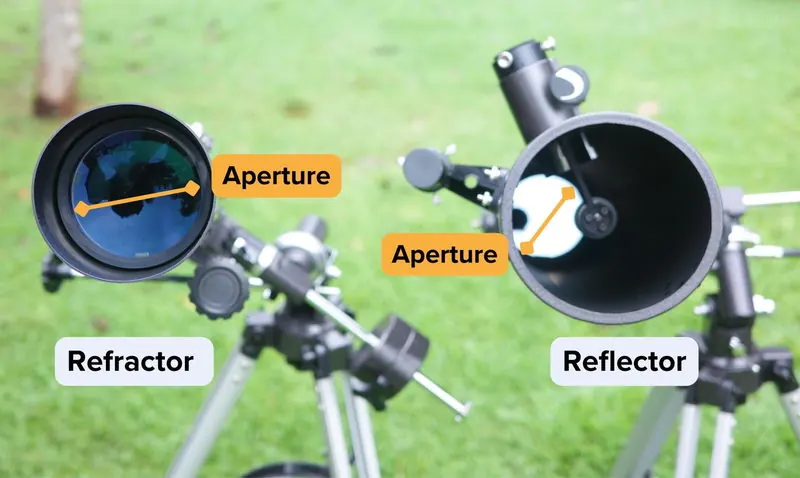
Aperture Diameter
|
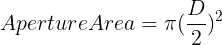
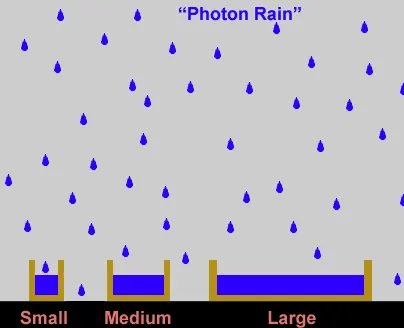
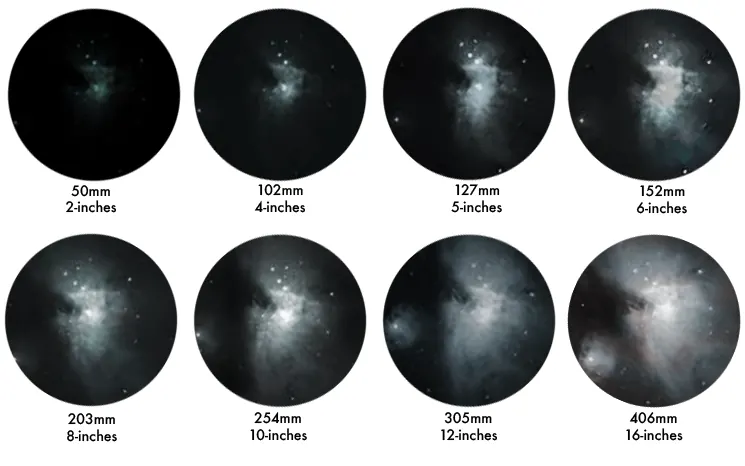
The aperture is the clear diameter of the telescope’s main lens or mirror. It defines how much light the telescope can collect from distant, faint objects.
  |
 |
Focal Length and Image Formation
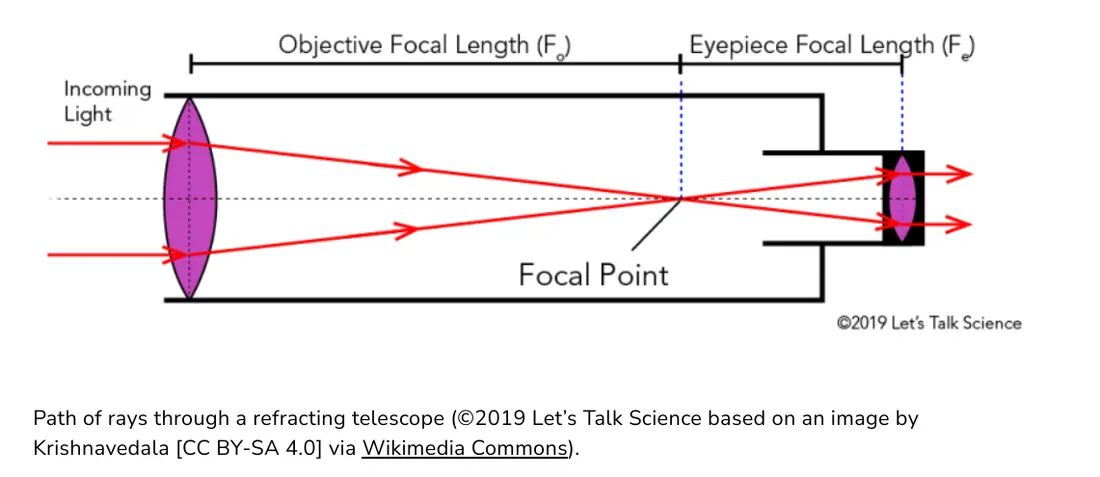
In an optical telescope, the objective (main lens or mirror at one end of the tube) collects parallel light from a distant object and brings it to a single point called the focal point. At this focal plane, the telescope forms a small real image that the eyepiece then magnifies so the eye can see it clearly.
The objective focal length is the distance from the objective to the focal point.
The objective focal length is the distance from the objective to the focal point.
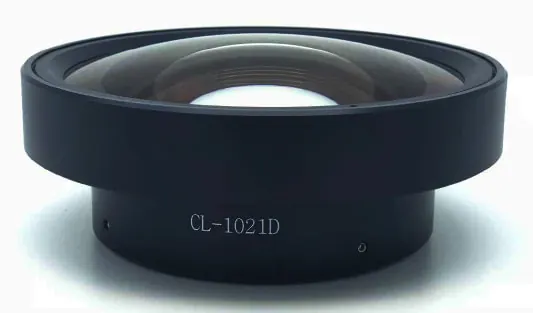
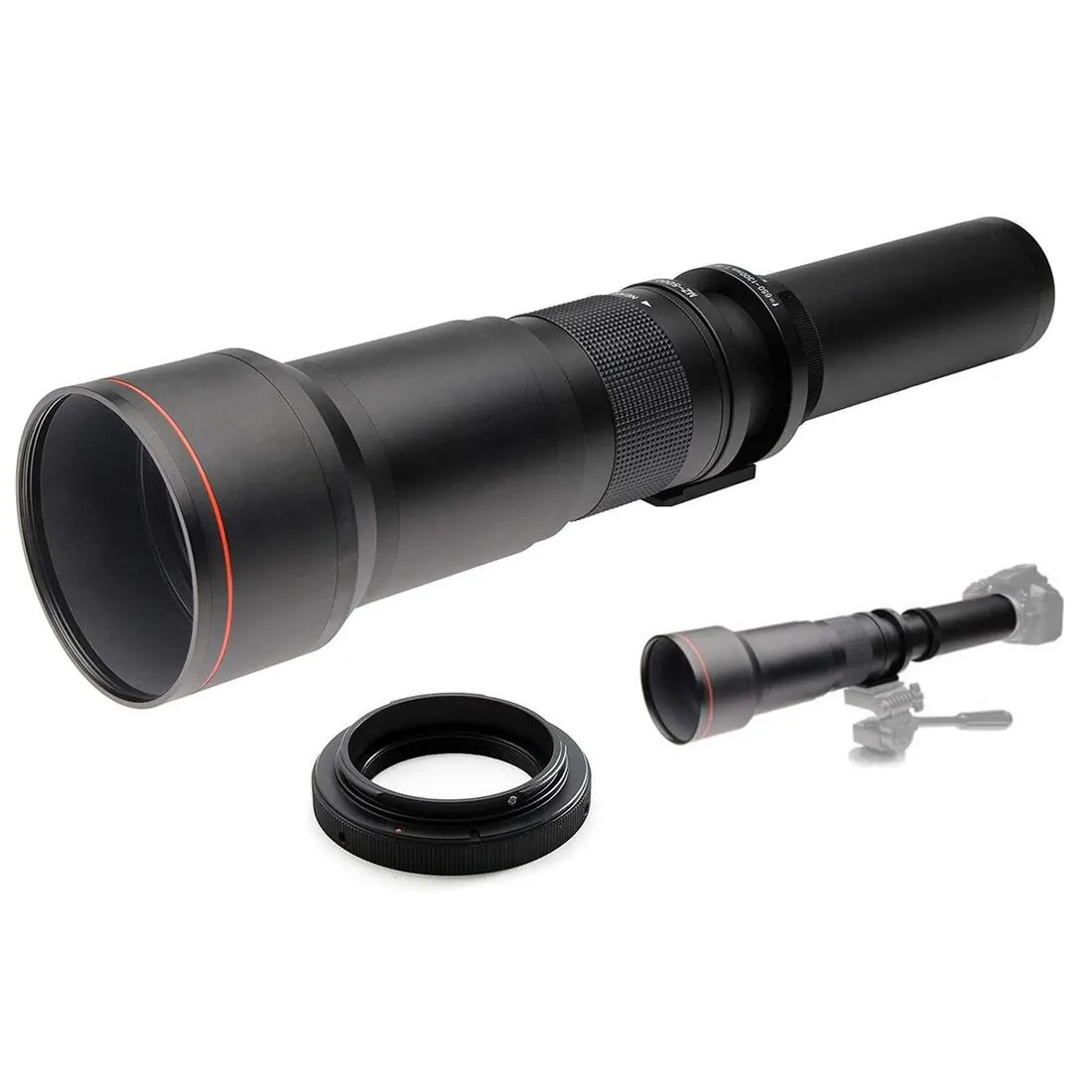
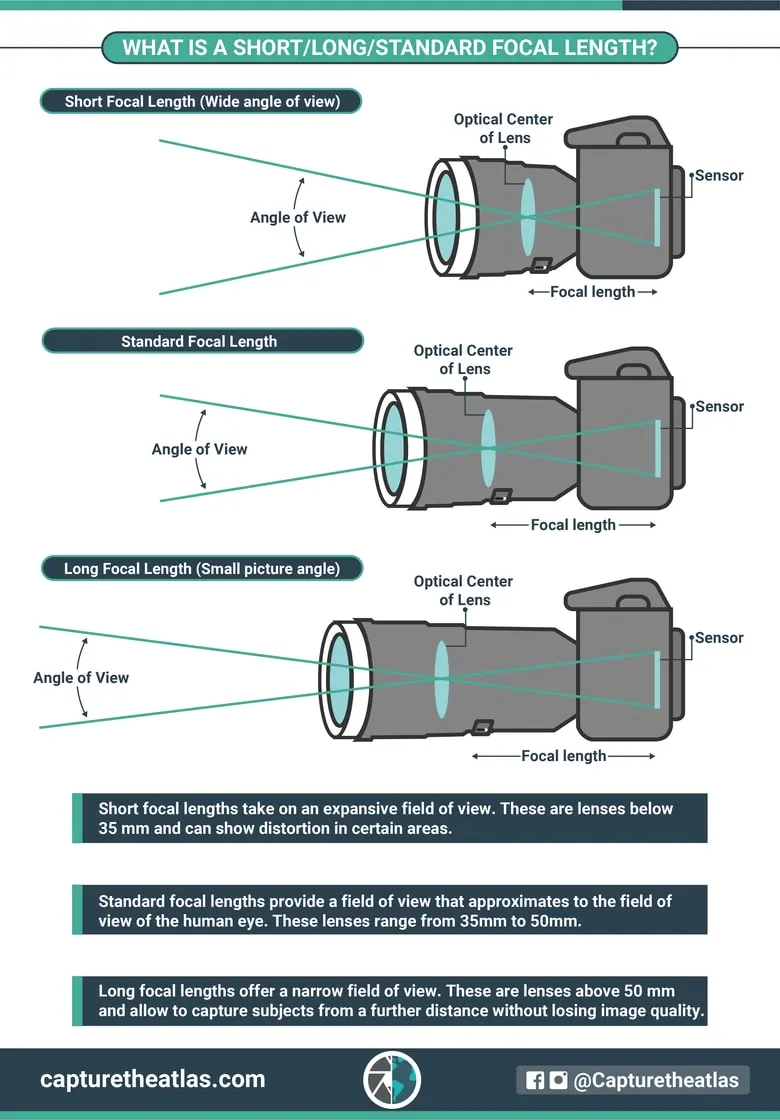
- A longer objective focal length produces a larger image at the focal plane and a narrower field of view, which suits small targets such as planets or lunar craters.
- A shorter focal length produces a smaller image scale but a wider field of view, which suits wide‑field views of star fields, open clusters, and extended nebulae.
  |
 |
Magnification
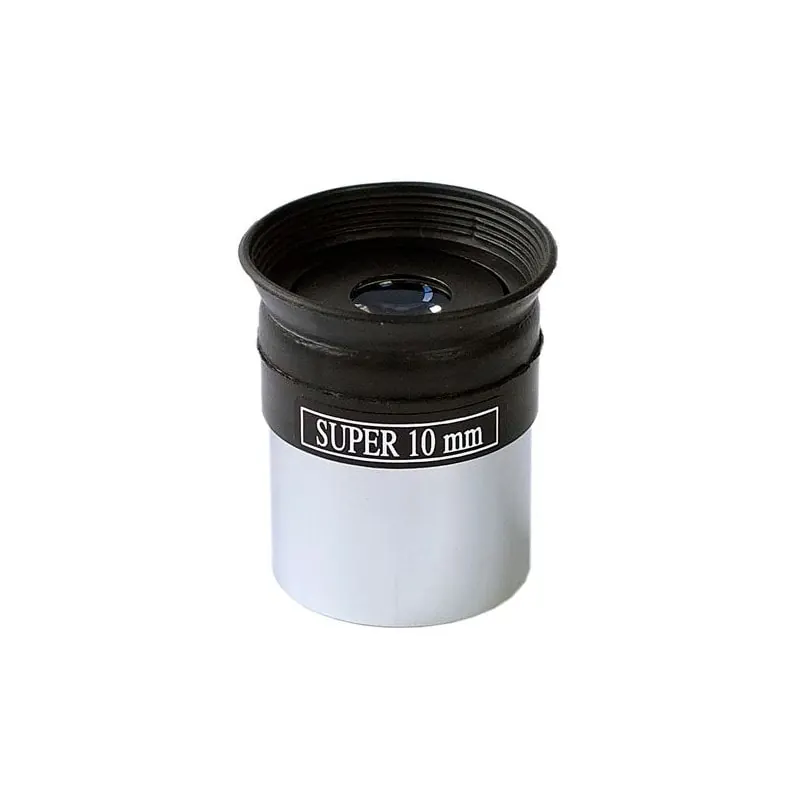
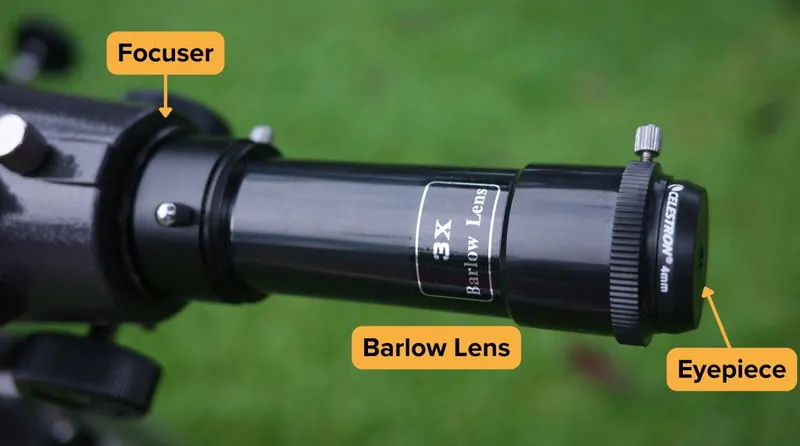
Magnification describes how much larger an object appears through the telescope–eyepiece system compared with the naked eye. It is set by the ratio of the objective and eyepiece focal lengths:
 Example:
A telescope with a 1000 mm objective focal length using a 10 mm eyepiece gives Magnification = 1000 /10 = 100 This combination provides 100× magnification. Magnification alone is not a good measure of telescope performance, because very high magnification on a small aperture produces dim, low‑contrast images and does not improve the finest detail beyond the limits set by aperture and atmospheric seeing. |
  |
Resolution and the Rayleigh Limit
|
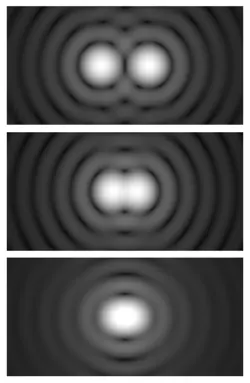
Resolution is the ability of a telescope to separate fine details, such as closely spaced stars or small features on a planet. Even with perfect optics, diffraction limits the smallest angle that can be resolved. The Rayleigh angular resolution limit for a circular aperture is often written as:
 where
A larger aperture D gives a smaller θ, meaning better angular resolution and finer visible detail at the eyepiece or on a detector. 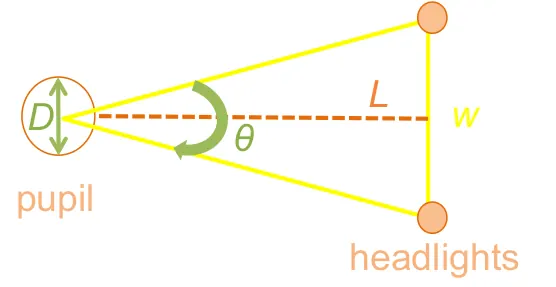 |
 |
Focal Ratio and “Fast” vs “Slow” Telescopes
|
Fast
|
Slow
|
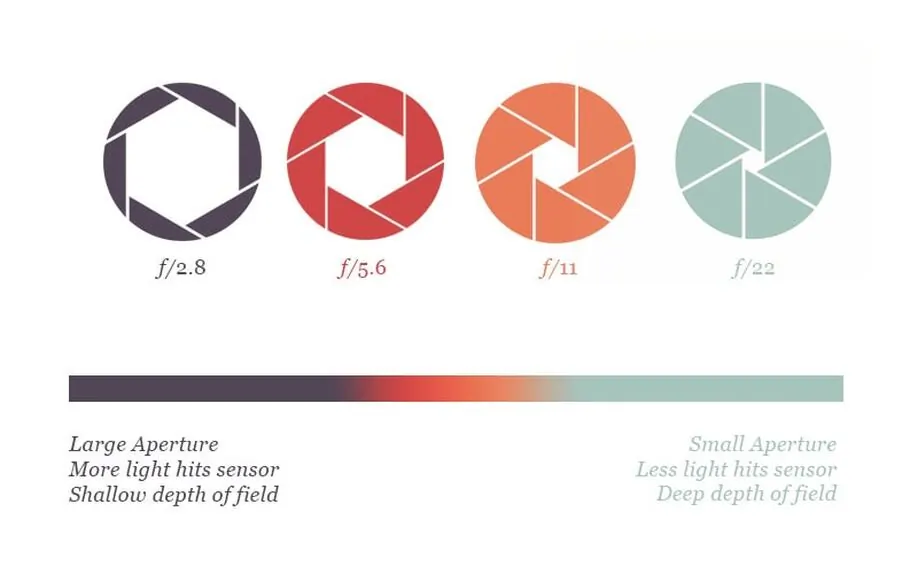
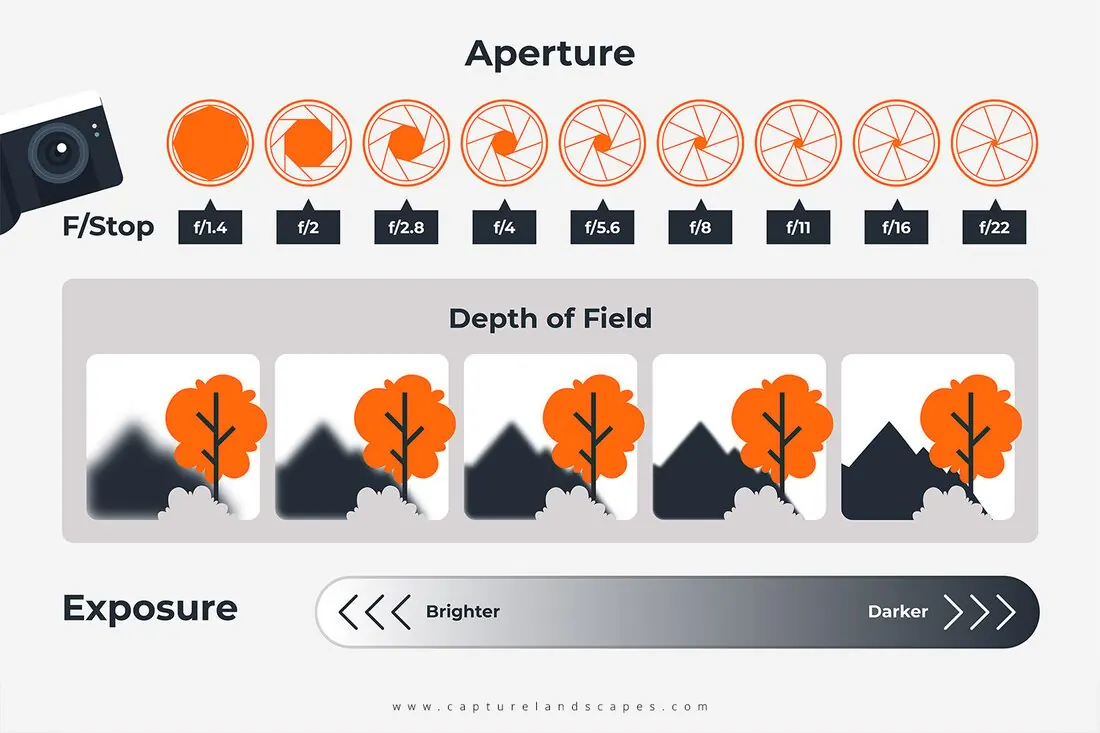
In a telescope’s focal ratio, small numbers mean a “fast” telescope and large numbers mean a “slow” telescope.
- A fast telescope (low f‑number, with a relatively wide aperture) produces a brighter image on a camera sensor in a given exposure time, so to collect the same amount of light it needs less time, hence “fast.” This design is well suited to deep‑sky objects such as nebulae, galaxies, and star clusters, because they are faint and often large on the sky, so a wide field and efficient light collection are helpful.
- A slow telescope (high f‑number, with a relatively narrow aperture) produces a dimmer image on a camera sensor in a given exposure time, so to collect the same amount of light it needs more time, hence “slow.” This design is well suited to the Moon, planets, and double stars, because these targets are bright but small, so a narrower field with higher image scale makes it easier to study fine surface details and close angular separations.

For example, a telescope with a 1000 mm focal length and 100 mm aperture has f/10.
Activity: The Deep Space Procurement Challenge
Mission: Lead Researcher
Objective: Procure an entry-level telescope capable of viewing Lunar craters and the moons of Jupiter.
Budget: HKD 450
|
Step 1: Open Amazon
Navigate to Amazon.com to begin the search. |
 |
|
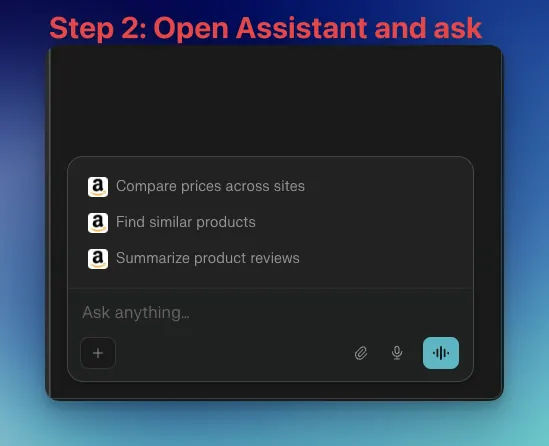
Step 2: Delegate to Comet Assistant
Copy and paste this specific prompt into your AI assistant: "I am looking for a beginner-friendly telescope for Year 7 students. Please search Amazon for 3 options that meet these specifications:
Required Actions:
|
  |
|
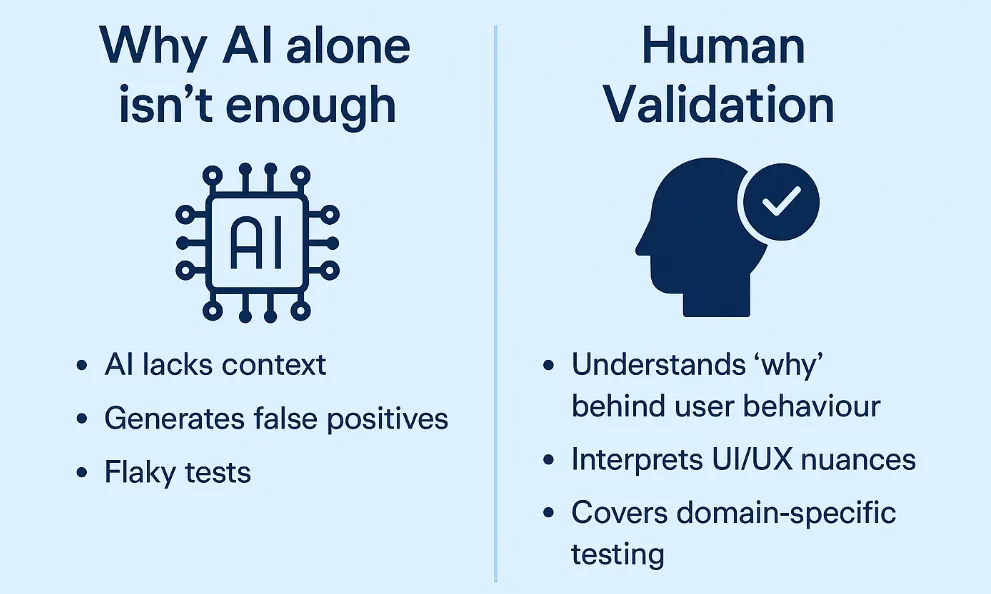
Step 3: Human Quality Check (The "Science Lead" Review)
Once the AI presents the options, verify the following technical details:
|
 |
|
Step 5: Discussion
|
 |