Introduction to Optics
Light is a form of energy that enables us to see the world around us and, just as importantly, allows astronomers to observe distant stars, planets, and galaxies. At its core, light behaves in predictable ways—it can travel through space, bounce off surfaces, bend when passing through materials, and carry information across vast distances. In this unit, we will learn about making observation with telescopes, starting from the very nature of light.
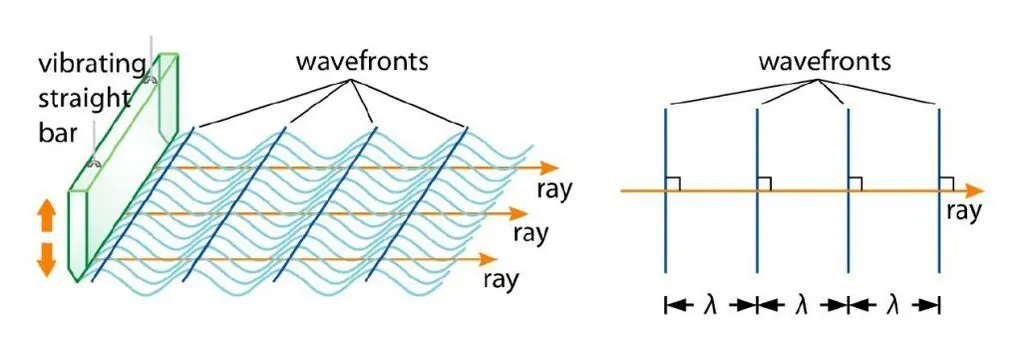
In geometric optics, the path of light is represented by straight lines called light rays (orange lines) instead of all the wavefronts blue lines). The rays travel perpendicular to the wave fronts, simplifying the diagrams of how light moves through optical systems.
Light's boundary behaviour
|
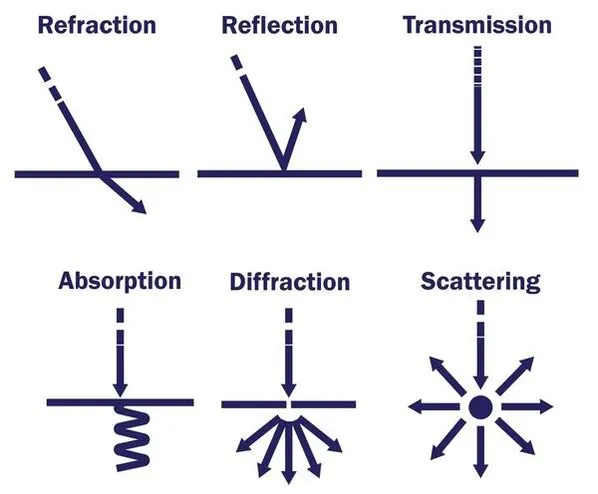
Light behaves in a variety of ways when it interacts with different materials or obstacles. It can reflect off surfaces like mirrors, refract or bend as it passes from one medium to another, and transmit through transparent substances such as glass. Some of its energy can also be absorbed, converting into heat or other forms of energy within the material. When light encounters edges or small openings, it diffracts, spreading out and creating interference patterns. Additionally, particles in the atmosphere or other media can scatter light in many directions, which explains phenomena like the blue color of the sky.
|
 |
Reflection
Reflection occurs when light waves encounter a surface and bounce back into the original medium instead of passing through. The law of reflection states that:
The angle of incidence equals the angle of reflection, both measured relative to the normal (a line perpendicular to the surface).
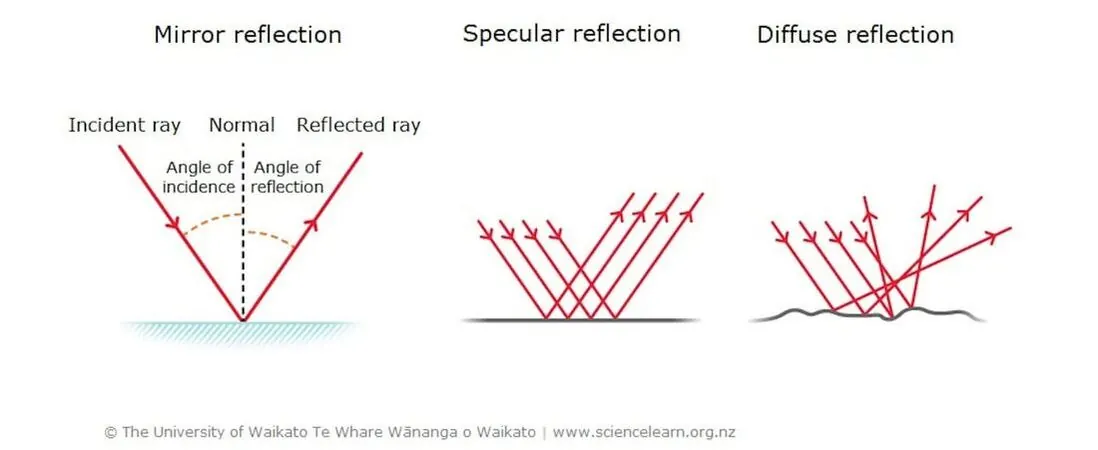
Reflection can be specular, where smooth surfaces like mirrors produce clear images, or diffuse, where rough surfaces scatter light in many directions. This phenomenon is fundamental to optics, enabling the functioning of mirrors, telescopes, and many imaging systems.
 |
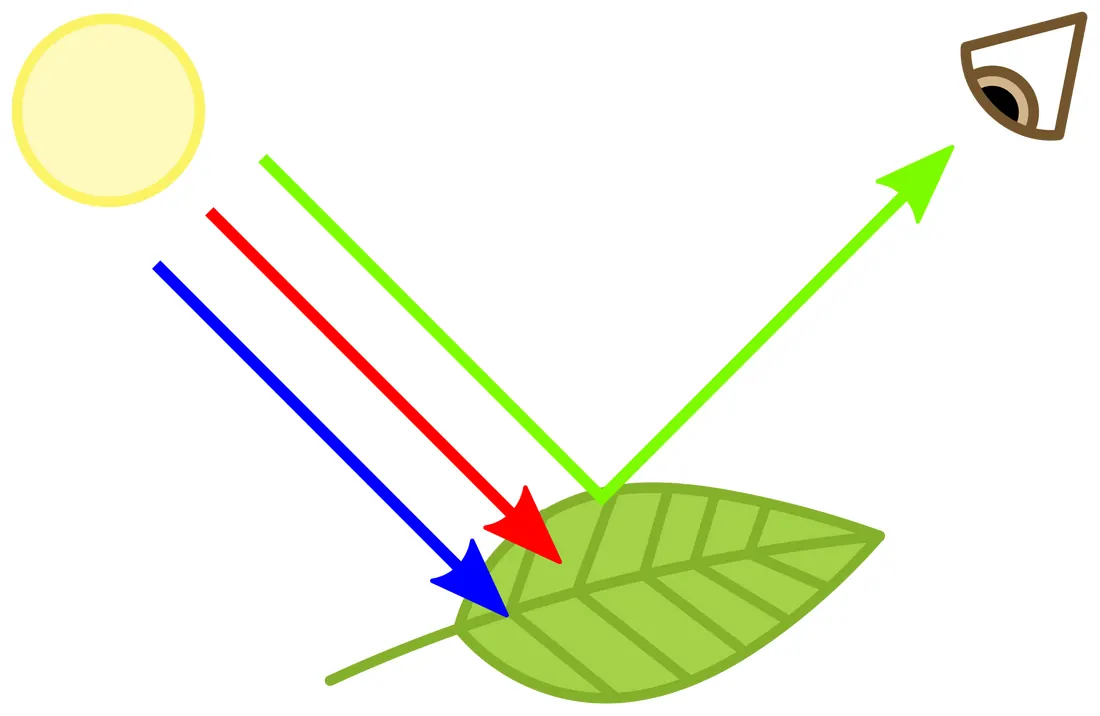 |
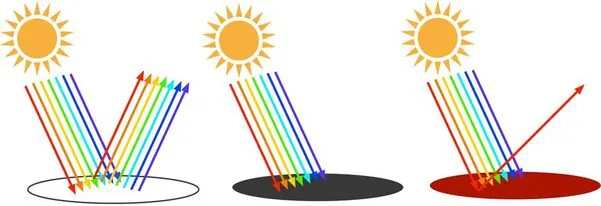
Objects are visible because they reflect certain wavelengths of light into our eyes. The color we perceive depends on which wavelengths are reflected and which are absorbed.
A white object reflects nearly all wavelengths of visible light, while a black object absorbs nearly all and reflects none.
Colored objects reflect only specific portions of the spectrum; for example, a green leaf appears green because its pigments, primarily chlorophyll, absorb most wavelengths in the red and blue regions of the spectrum while reflecting green light. This selective reflection not only defines the color of the leaf but also supports photosynthesis by absorbing the most energy-efficient wavelengths.
A white object reflects nearly all wavelengths of visible light, while a black object absorbs nearly all and reflects none.
Colored objects reflect only specific portions of the spectrum; for example, a green leaf appears green because its pigments, primarily chlorophyll, absorb most wavelengths in the red and blue regions of the spectrum while reflecting green light. This selective reflection not only defines the color of the leaf but also supports photosynthesis by absorbing the most energy-efficient wavelengths.
Refraction
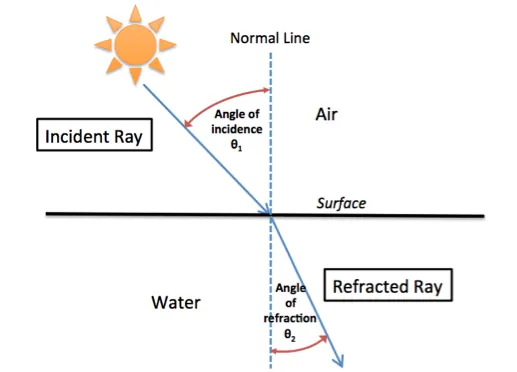
Refraction is the bending of light as it passes from one medium to another with a different optical density, such as from air into water or glass. This bending happens because the speed of light changes depending on the medium—light travels faster in air than in water or glass.
When light enters a denser medium, it slows down and bends toward the normal line (an imaginary line perpendicular to the surface). Conversely, when it moves from a denser to a less dense medium, it speeds up and bends away from the normal. Note that it involves some higher level physics to fully explain this phenomena.
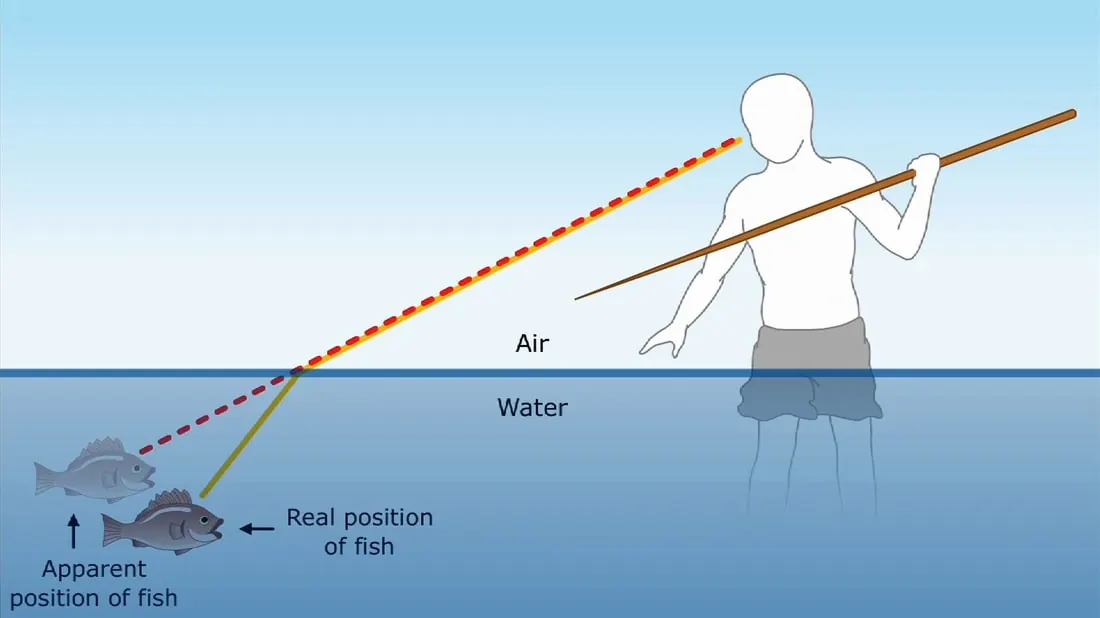
This predictable relationship between the angles of incidence and refraction is described by Snell’s law, which expresses how the change in speed determines the amount of bending. A clear example of refraction is seen in fishing: a fish beneath the water’s surface appears to be at a shallower position than it actually is. This illusion happens because light rays from the fish bend as they pass from water into air, changing direction before reaching the observer’s eyes.
When light enters a denser medium, it slows down and bends toward the normal line (an imaginary line perpendicular to the surface). Conversely, when it moves from a denser to a less dense medium, it speeds up and bends away from the normal. Note that it involves some higher level physics to fully explain this phenomena.
This predictable relationship between the angles of incidence and refraction is described by Snell’s law, which expresses how the change in speed determines the amount of bending. A clear example of refraction is seen in fishing: a fish beneath the water’s surface appears to be at a shallower position than it actually is. This illusion happens because light rays from the fish bend as they pass from water into air, changing direction before reaching the observer’s eyes.
 |
 |
Transmission
|
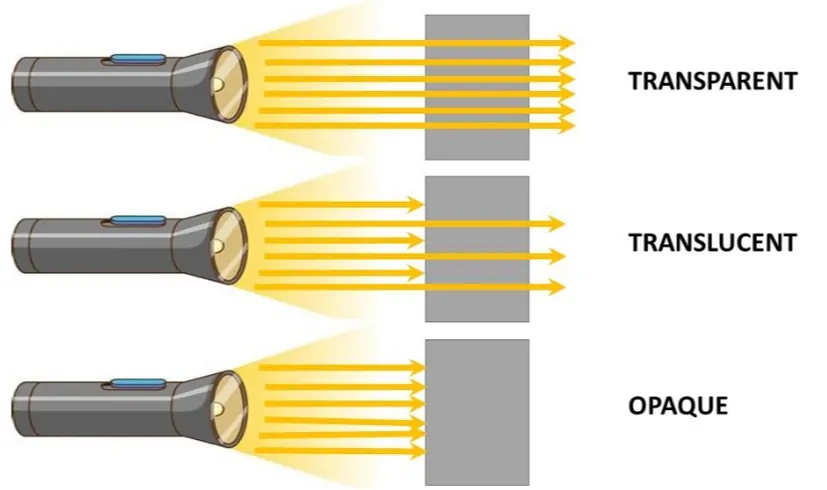
Transmission occurs when light or other electromagnetic waves pass through a material instead of being completely reflected or absorbed.
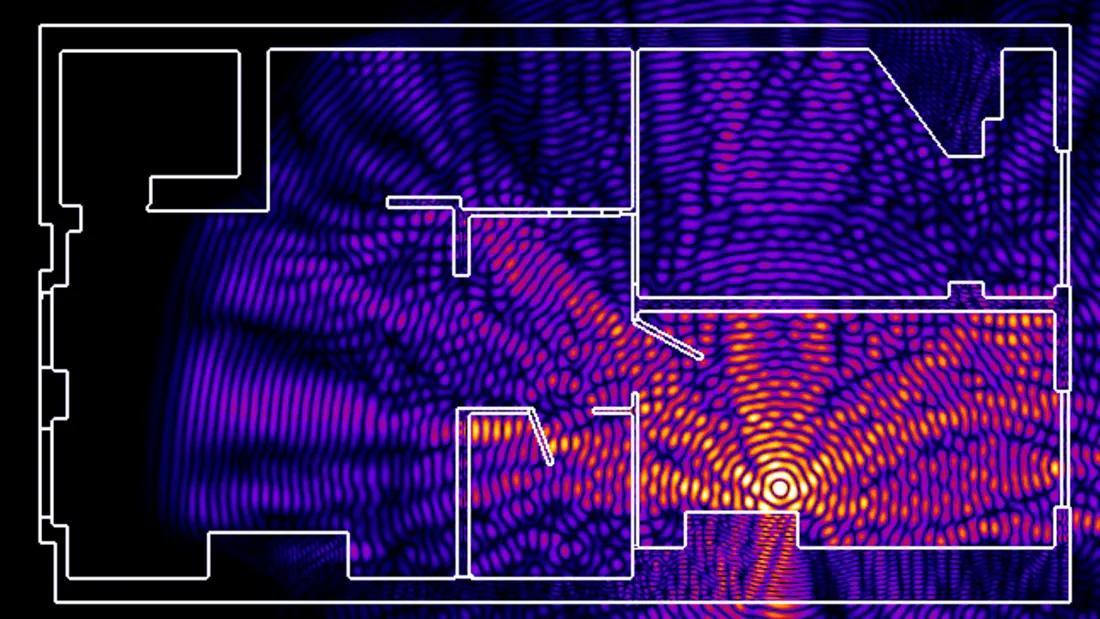
The amount of transmission depends on the material’s properties--transparent substances, like glass, allow most visible light to pass through, while opaque materials block it. Although transmission is often discussed with visible light, the same concept applies to other forms of electromagnetic radiation, such as radio or Wi-Fi signals. For example, Wi-Fi waves can travel through walls, but their strength often decreases depending on the wall’s thickness and composition. Materials like wood or drywall transmit signals fairly well, while concrete or metal significantly reduce transmission by reflecting or absorbing much of the energy. This illustrates how transmission depends on both the wave’s frequency and the physical characteristics of the barrier it encounters. |
  |
Absorption
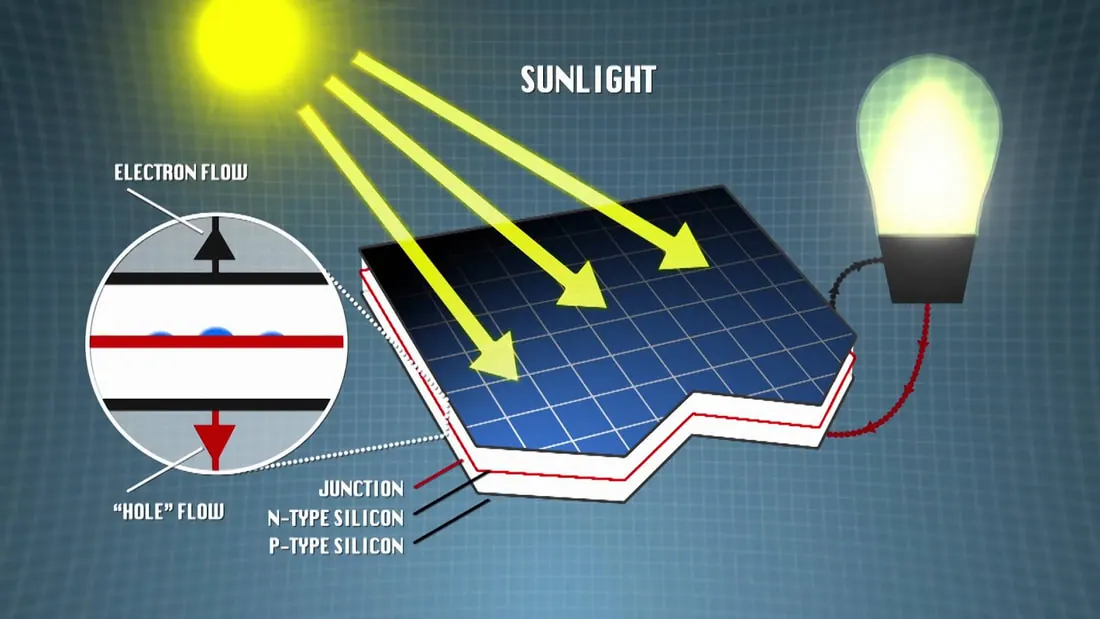
Absorption occurs when the energy of light waves is taken up by a material’s atoms or molecules, often converting into heat or triggering electronic transitions. Different materials absorb specific wavelengths depending on their molecular structure; for example, pigments absorb certain colors and reflect others, giving them their visible hue. In physics and engineering, absorption plays a key role in phenomena such as solar energy conversion, radiation shielding, and spectroscopy.
 |
 |
Diffraction
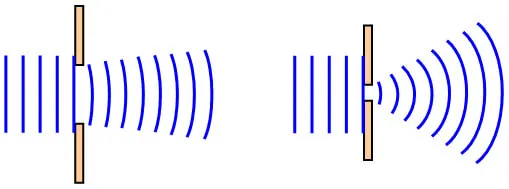
Diffraction is the spreading of light waves as they pass by the edge of an obstacle or through a narrow aperture comparable to the wavelength of light.
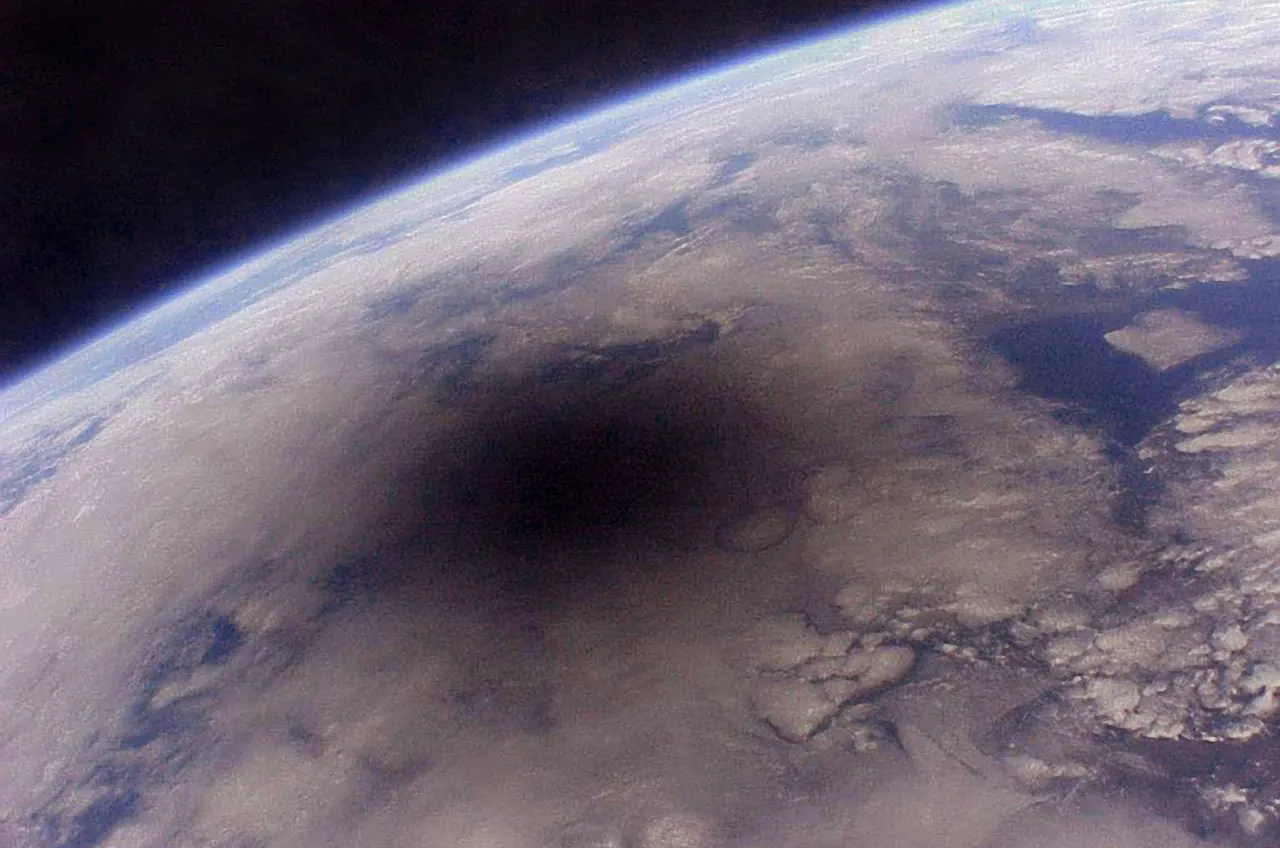
This bending around edges reveals light's wave nature. During a lunar eclipse, the Moon blocks direct sunlight in the central shadow region, but faint light diffracts around the Moon's rim, allowing subtle illumination near the edges. This effect highlights how diffraction operates even on astronomical scales.
This bending around edges reveals light's wave nature. During a lunar eclipse, the Moon blocks direct sunlight in the central shadow region, but faint light diffracts around the Moon's rim, allowing subtle illumination near the edges. This effect highlights how diffraction operates even on astronomical scales.
 |
 |
Scattering
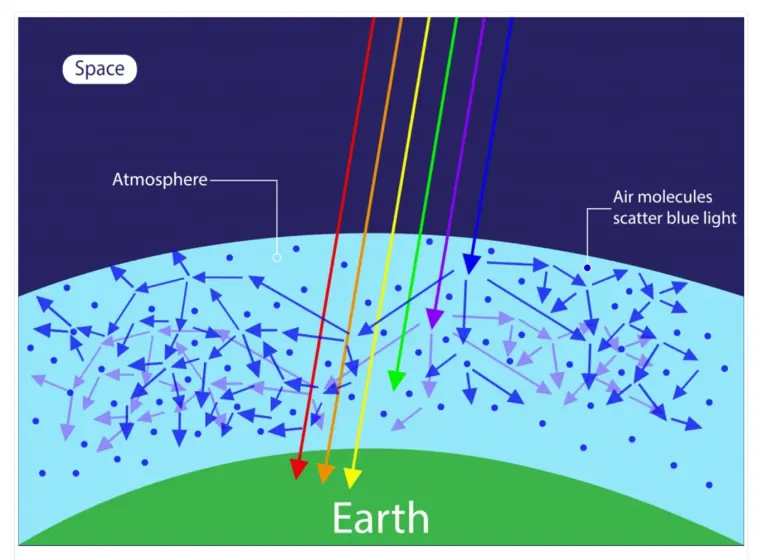
Scattering occurs when light interacts with particles or irregularities in a medium, causing it to deviate from its original path in many directions.
This random redirection explains everyday effects like the blue color of the sky, where shorter wavelengths scatter more than longer ones. Clouds and fog appear white or gray because larger particles scatter all colors of light more equally.
Scattering influences visibility and atmospheric colors, playing a key role in weather observation and remote sensing.
This random redirection explains everyday effects like the blue color of the sky, where shorter wavelengths scatter more than longer ones. Clouds and fog appear white or gray because larger particles scatter all colors of light more equally.
Scattering influences visibility and atmospheric colors, playing a key role in weather observation and remote sensing.
Activity: Using Perplexity as research tool
|
AI research tools like Perplexity can help gather, summarize, and explain information from a wide range of sources. However, the quality of the results depends heavily on the questions you ask. A well-written prompt is clear, specific, and guides the AI toward the kind of response you need.
|
 |
How to Write a Good Prompt
A good prompt tells the AI exactly what you need. Be clear and specific.
Example Prompt:
“Explain refraction of light in simple terms. Research at least 5 authoritative educational sites to summarise the topic. Give one example and describe what causes the bending.”
Example Prompt:
“Explain refraction of light in simple terms. Research at least 5 authoritative educational sites to summarise the topic. Give one example and describe what causes the bending.”
Follow up prompts
- Pick one behavior from the list above.
- Write your first prompt to learn the basics.
Example for scattering:
“What is light scattering? Why is the sky blue?” - Ask a follow-up question to learn more.
Example:
“How is scattering different from reflection?” - Find a real-world use.
Example:
“How is diffraction used in a concert hall or a camera lens?”