Optimal Exhaust Pressure and Staging
The challenge of rocketry lies not only in achieving lift-off but in maximizing efficiency throughout the entire journey to space. A rocket must operate effectively across vastly different environments, from the dense atmosphere at sea level to the near-vacuum of space. This chapter examines the relationship between a rocket nozzle's design, the surrounding ambient pressure, and the resulting thrust. It will explore why a single, fixed design is insufficient and how the principle of staging provides a practical solution to these fundamental physical constraints.
The Function of the Nozzle
|
A rocket nozzle is designed to accelerate hot gases from the combustion chamber to produce thrust. Its efficiency is measured by specific impulse, which indicates the thrust produced per unit of propellant.
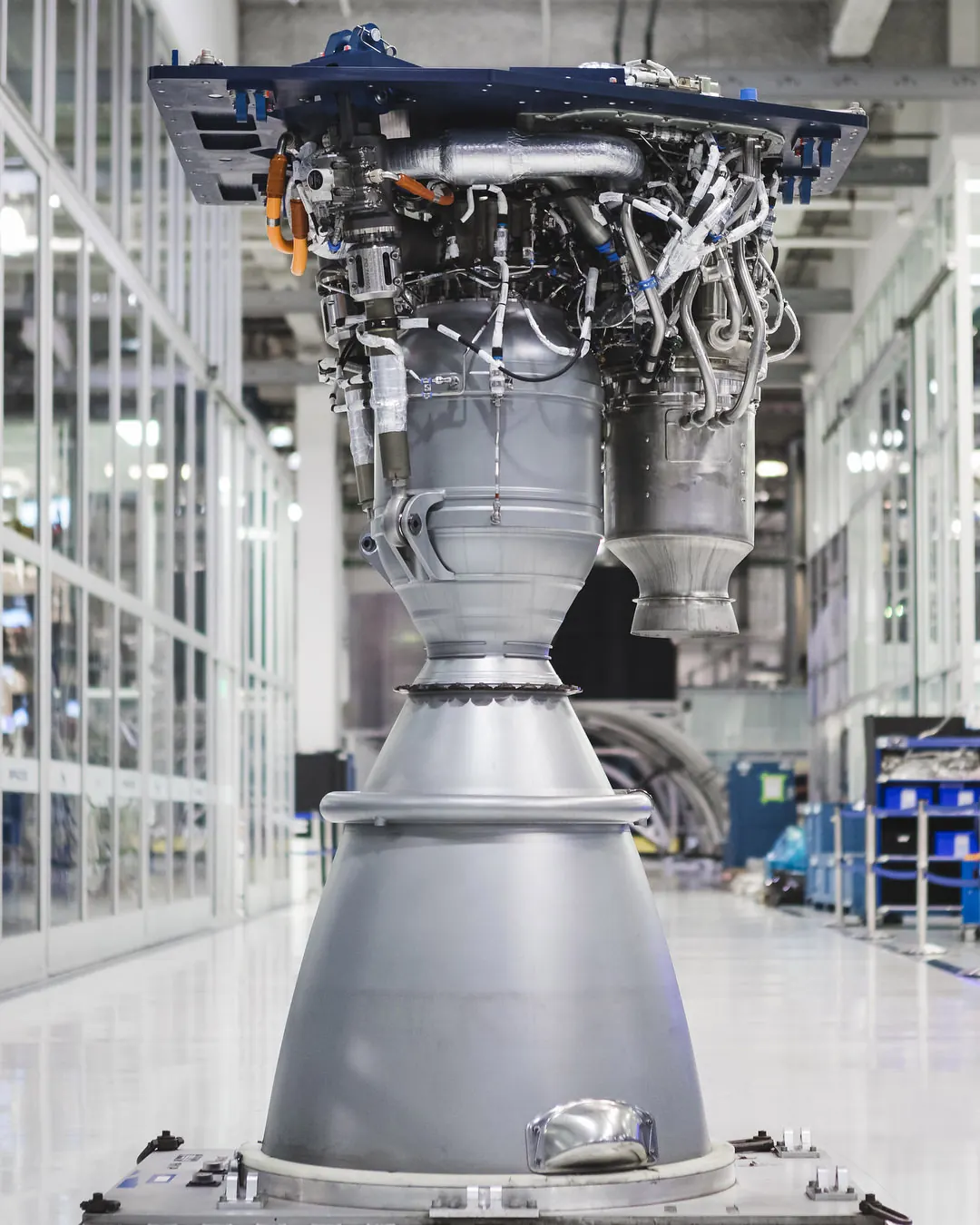
The convergent-divergent nozzle, known as the De Laval nozzle, is the standard design. It has a narrow throat that chokes the flow, accelerating gases to sonic velocity, followed by a diverging section that further expands the gases to supersonic speeds. This shape converts the thermal energy of the gas into kinetic energy as efficiently as possible. |
 |
Nozzle Expansion and Ambient Pressure
The performance of a fixed nozzle is dependent on the ambient pressure of its environment. Optimal expansion occurs when the pressure of the exhaust gases at the nozzle exit exactly matches the ambient pressure
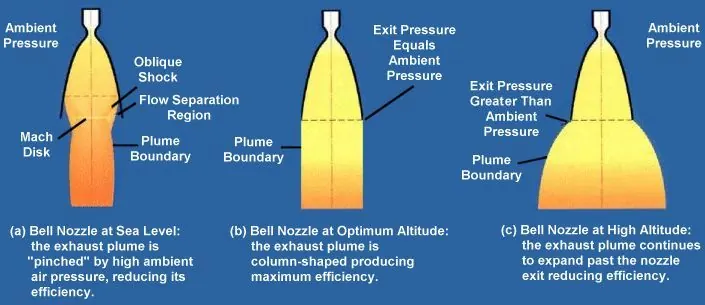
The above condition generates maximum thrust, otherwise:
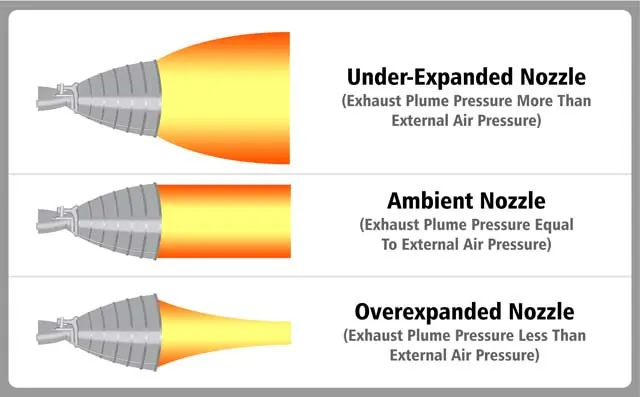
- (a): If the exhaust pressure is lower than the ambient pressure, the nozzle is over-expanded. This can cause flow separation and shock waves inside the nozzle, reducing efficiency.
- (b): If the exhaust pressure equals the ambient pressure, the nozzle is ideal-ambient.
- (c): If the exhaust pressure is higher than the ambient pressure, the nozzle is under-expanded. The gases continue to expand radially after exiting the nozzle, which is an inefficient conversion of energy that does not contribute to forward thrust.
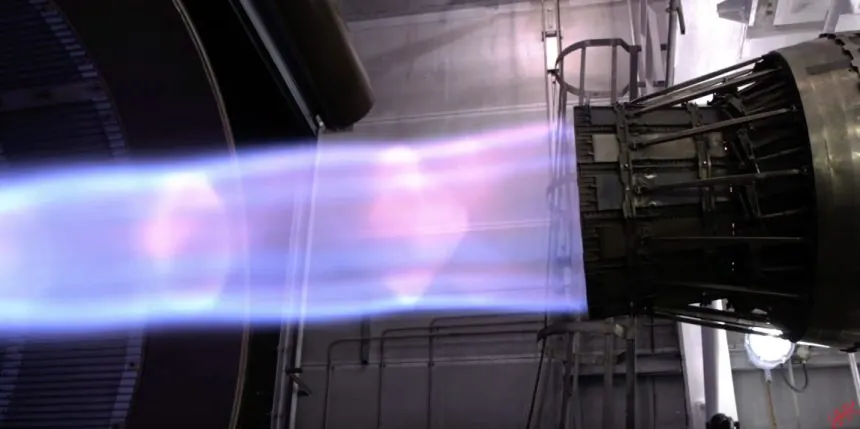
A visible manifestation of this pressure mismatch is the formation of shock diamonds, or Mach disks, in the exhaust plume. These are repeating patterns of bright, diamond-shaped shock waves.
They form when exhaust gases are compressed by the ambient air, increasing in pressure and temperature until they glow. This compressed gas then expands, leading to a cycle of expansion and compression that creates the distinctive diamond pattern. While shock diamonds indicate a less-than-optimal expansion for that altitude, they are a normal part of the operation for many rocket engines, especially during atmospheric flight where the ambient pressure is constantly changing.
They form when exhaust gases are compressed by the ambient air, increasing in pressure and temperature until they glow. This compressed gas then expands, leading to a cycle of expansion and compression that creates the distinctive diamond pattern. While shock diamonds indicate a less-than-optimal expansion for that altitude, they are a normal part of the operation for many rocket engines, especially during atmospheric flight where the ambient pressure is constantly changing.
 |
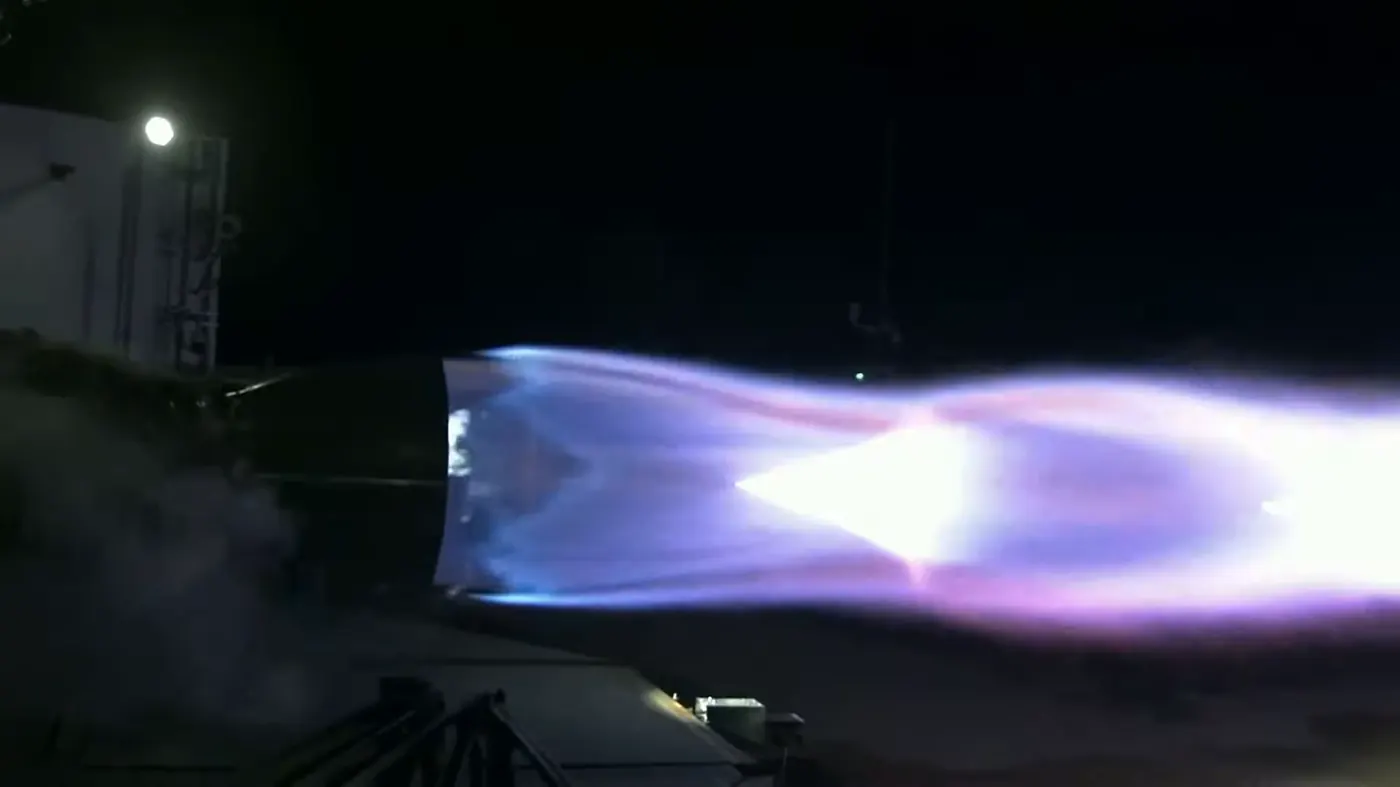 |
Optimal expansion occurs when the pressure of the exhaust gases equal the ambient pressure.
The Engineering Compromise and Need for Staging
A single nozzle cannot maintain optimal expansion from sea level to the vacuum of space. A nozzle designed for high efficiency at low altitude performs poorly at high altitude, and vice-versa. This is one reason for the use of rocket staging. Staging involves jettisoning empty propellant tanks and spent engines during the ascent.
This strategy also addresses a more fundamental limitation defined by the rocket equation. The final velocity of a rocket depends on its exhaust velocity and the ratio of its initial mass to its final mass. As propellant is consumed, the empty mass of the stages becomes a penalty.
By discarding this spent mass, the remaining stages can operate more efficiently. Upper stages can use nozzles optimized for near-vacuum conditions without the burden of lifting the lower stages' dead weight.
This strategy also addresses a more fundamental limitation defined by the rocket equation. The final velocity of a rocket depends on its exhaust velocity and the ratio of its initial mass to its final mass. As propellant is consumed, the empty mass of the stages becomes a penalty.
By discarding this spent mass, the remaining stages can operate more efficiently. Upper stages can use nozzles optimized for near-vacuum conditions without the burden of lifting the lower stages' dead weight.
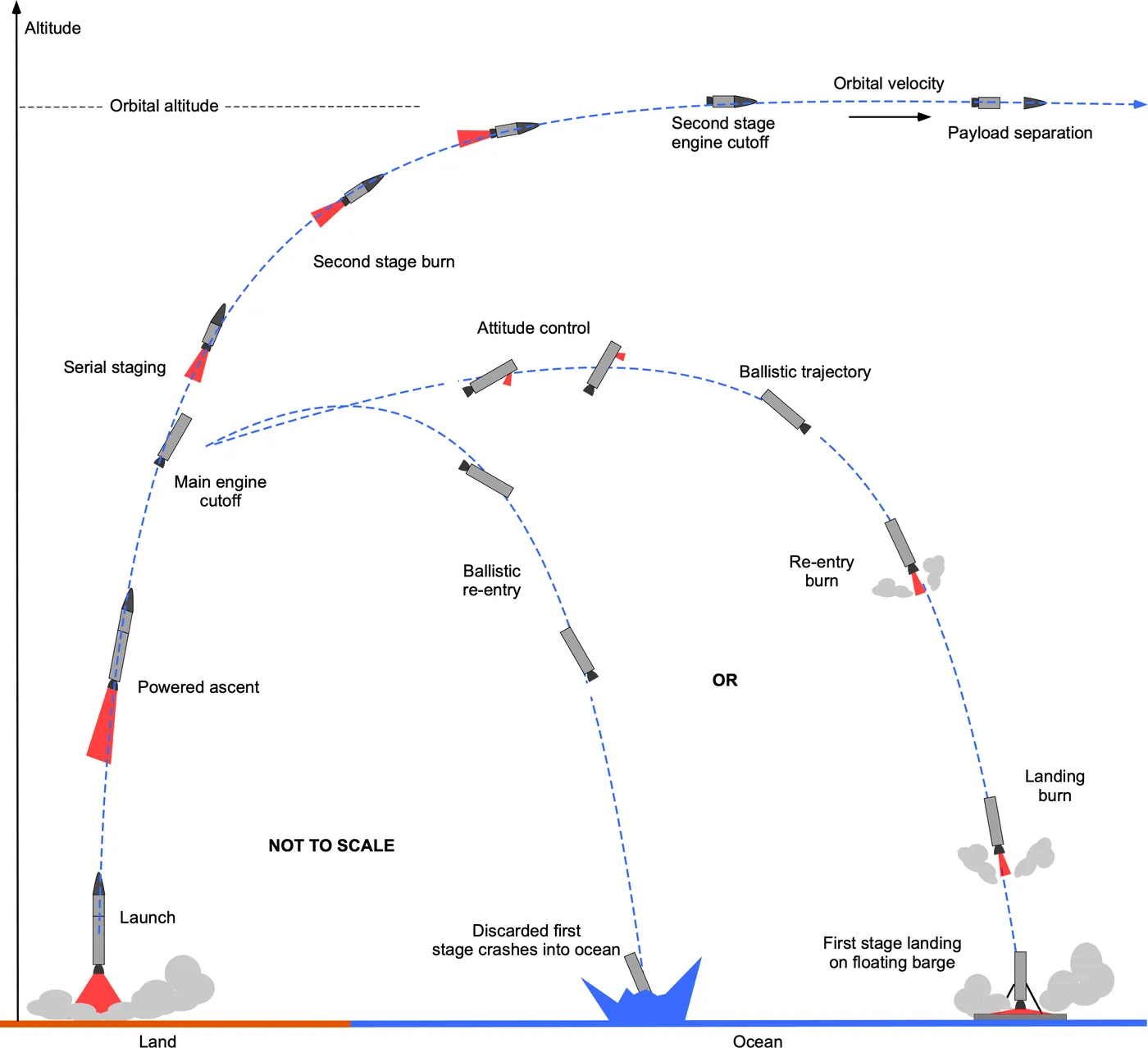
- The launch starts with a vertical power ascent to overcome gravity and drag.
- To improve efficiency, serial staging is used: empty first stages and boosters separate after main engine cutoff (MECO).
- The second stage then ignites, building the horizontal speed for orbit.
- For reusable rockets, the first stage reorients and performs reentry and landing burns for a controlled touchdown, while expendable stages follow a ballistic trajectory into the ocean.
- Once the second stage burn achieves the exact orbital velocity, second stage engine cutoff (SECO) occurs.
- The spacecraft is now in orbit, and the payload separates to begin its mission.