The Necessity of Closed-Loop Systems
On Earth, biological processes naturally recycle the resources required for life. For example, the Oxygen-Carbon Dioxide Cycle functions as a biological recycling system where plants and animals exchange gases, maintaining a consistent supply of breathable air in the atmosphere.
In a spacecraft or a Mars habitat, these processes must be replicated using mechanical and chemical engineering. A closed-loop system is a cycle where waste products are processed to become usable resources again. This minimises the need for resupply missions from Earth, which are limited by the high cost and long travel times associated with orbital mechanics.
On Earth, biological processes naturally recycle the resources required for life. For example, the Oxygen-Carbon Dioxide Cycle functions as a biological recycling system where plants and animals exchange gases, maintaining a consistent supply of breathable air in the atmosphere.
In a spacecraft or a Mars habitat, these processes must be replicated using mechanical and chemical engineering. A closed-loop system is a cycle where waste products are processed to become usable resources again. This minimises the need for resupply missions from Earth, which are limited by the high cost and long travel times associated with orbital mechanics.
Atmospheric Management and Carbon Scrubbing
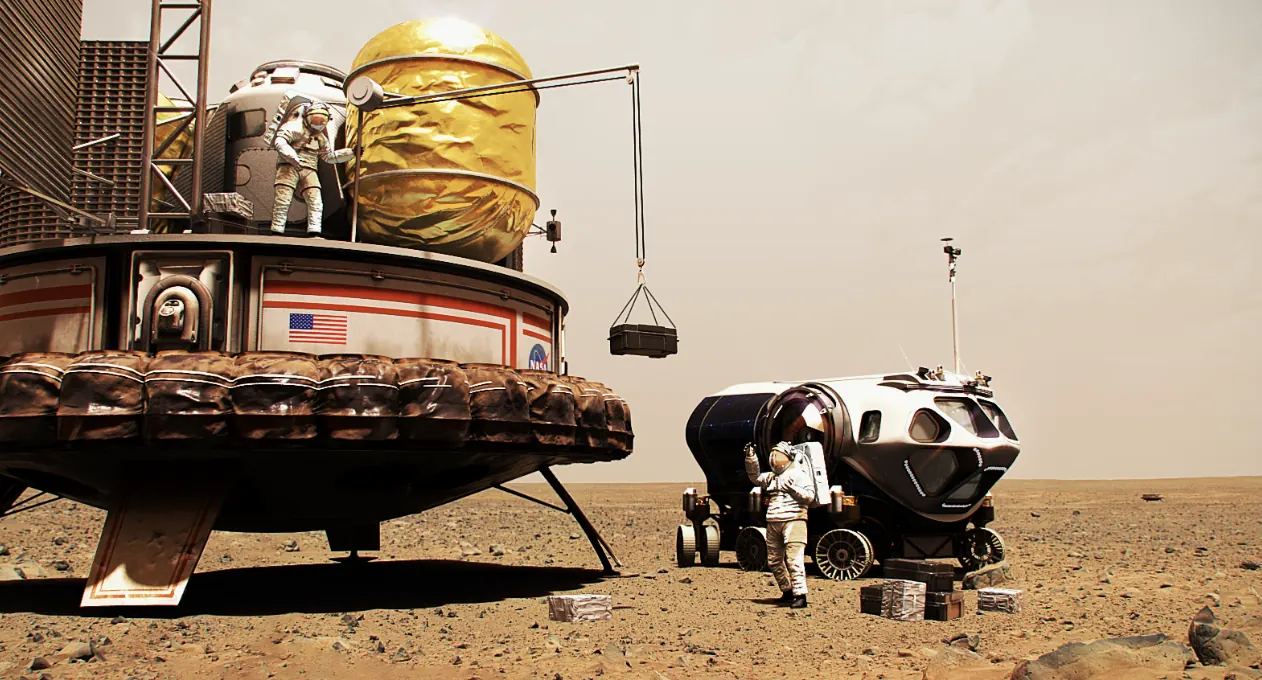
Human respiration consumes oxygen and produces carbon dioxide. In an enclosed environment, carbon dioxide levels must be regulated to prevent toxicity. Systems like the Sabatier reactor use chemical reactions to manage these gases. By reacting waste carbon dioxide with hydrogen, engineers can produce water and methane. The water is then split through electrolysis to release breathable oxygen back into the cabin atmosphere, while the hydrogen is cycled back into the reactor.
Human respiration consumes oxygen and produces carbon dioxide. In an enclosed environment, carbon dioxide levels must be regulated to prevent toxicity. Systems like the Sabatier reactor use chemical reactions to manage these gases. By reacting waste carbon dioxide with hydrogen, engineers can produce water and methane. The water is then split through electrolysis to release breathable oxygen back into the cabin atmosphere, while the hydrogen is cycled back into the reactor.
Water Recovery and Purification
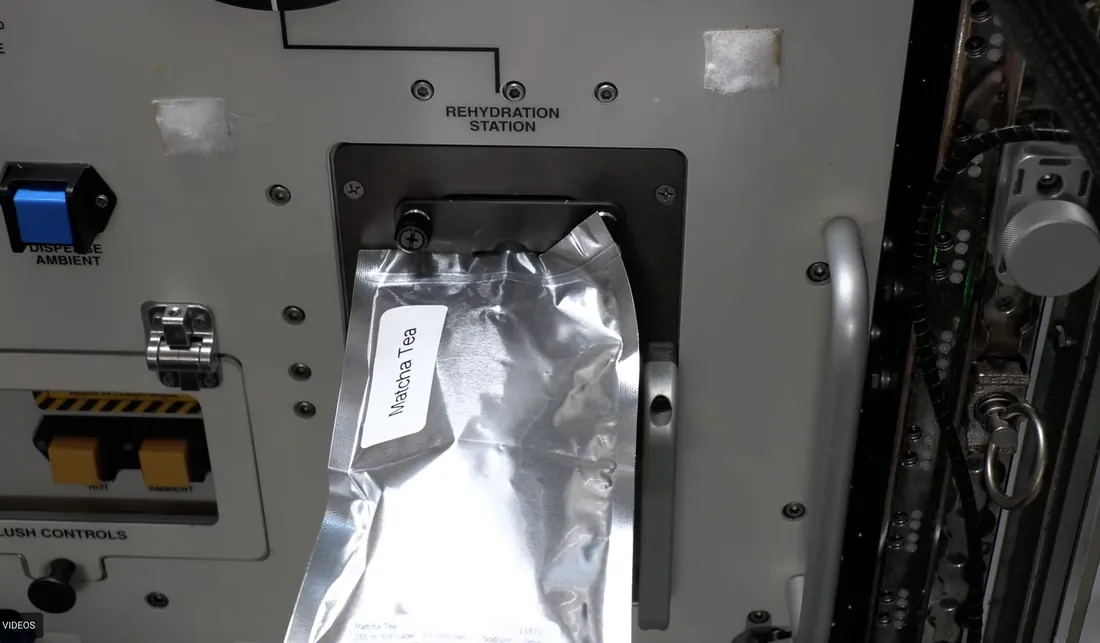
Water is required for hydration, hygiene, and oxygen production. A sustainable habitat collects moisture from the air (humidity) and liquid waste. These fluids undergo a multi-stage filtration process that includes centrifugal separation to account for low gravity, followed by chemical treatment and high-temperature oxidation to remove contaminants. This process ensures that the water quality meets safety standards for repeated consumption over the duration of a multi-year mission.
Water is required for hydration, hygiene, and oxygen production. A sustainable habitat collects moisture from the air (humidity) and liquid waste. These fluids undergo a multi-stage filtration process that includes centrifugal separation to account for low gravity, followed by chemical treatment and high-temperature oxidation to remove contaminants. This process ensures that the water quality meets safety standards for repeated consumption over the duration of a multi-year mission.
In-Situ Resource Utilization (ISRU)
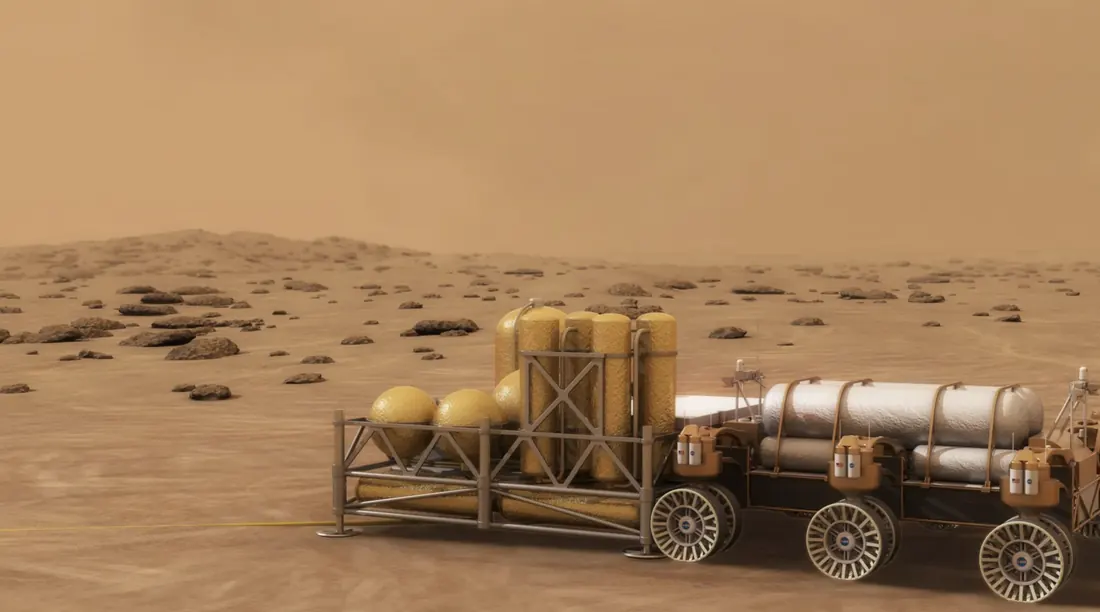
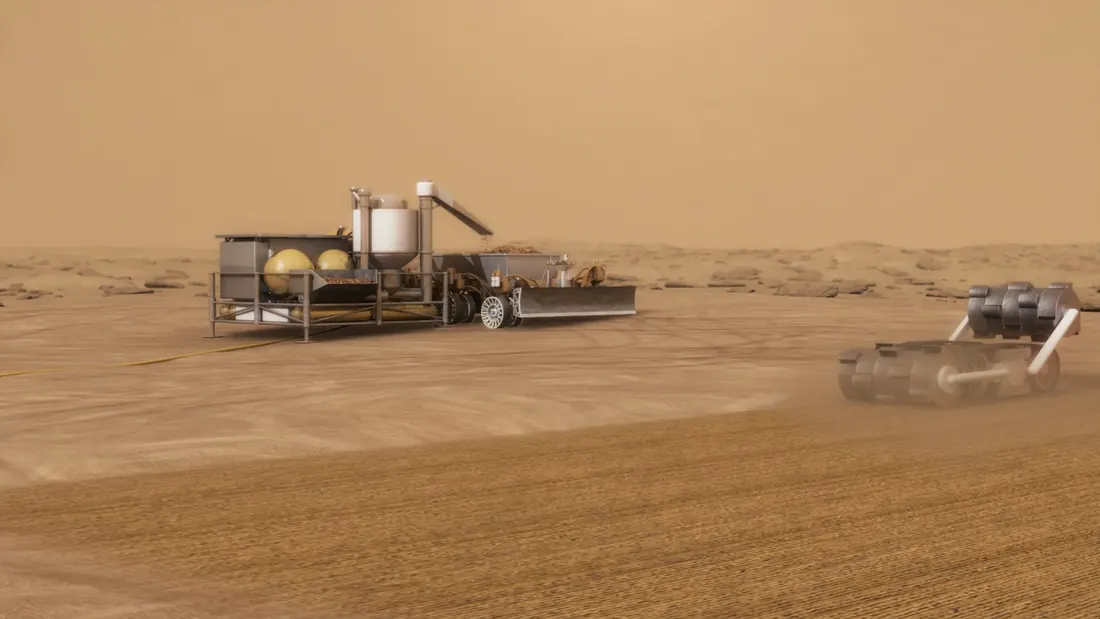
Transporting every liter of fuel and oxygen from Earth to Mars is inefficient due to the mass of the propellant required to lift those supplies. In-Situ Resource Utilization involves extracting materials directly from the Martian environment. The Martian atmosphere is 95% carbon dioxide, which can be harvested to create oxygen and rocket fuel. Additionally, subsurface ice can be mined and melted to provide a primary water source for both the crew and the production of hydrogen-based fuels.
Transporting every liter of fuel and oxygen from Earth to Mars is inefficient due to the mass of the propellant required to lift those supplies. In-Situ Resource Utilization involves extracting materials directly from the Martian environment. The Martian atmosphere is 95% carbon dioxide, which can be harvested to create oxygen and rocket fuel. Additionally, subsurface ice can be mined and melted to provide a primary water source for both the crew and the production of hydrogen-based fuels.
|
Shielding from Solar and Galactic Radiation
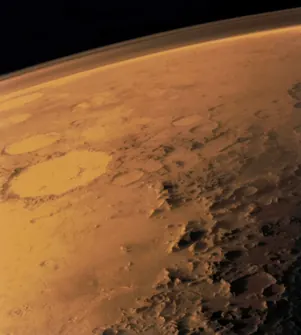
Mars lacks a thick atmosphere and a global magnetic field, exposing the surface to high levels of solar energetic particles and galactic cosmic rays. Engineers must design habitats that incorporate shielding materials. Using Martian regolith (soil) to cover habitats provides a physical barrier against radiation. Other designs involve using the habitat’s water storage tanks as a lining for the walls, as hydrogen-rich substances are effective at absorbing radiation particles. |
 |
Engineering Challenge: The Mars Design Problem
Designing a sustainable habitat for Mars requires a transition from Earth-dependent systems to self-sufficient technologies. As mission planners and engineers continue to refine the Sabatier reaction, water filtration methods, design habitats that block solar radiation, and utilizing Martian resources through ISRU, and also aim to reduce the risks and costs of long-duration space travel. The goal remains to create a stable environment that can support human life for years at a time. The successful integration of these systems is the fundamental requirement for any mission to the Martian surface. These systems represent the bridge between short-term exploration and a permanent human presence beyond Earth’s orbit.
Designing a sustainable habitat for Mars requires a transition from Earth-dependent systems to self-sufficient technologies. As mission planners and engineers continue to refine the Sabatier reaction, water filtration methods, design habitats that block solar radiation, and utilizing Martian resources through ISRU, and also aim to reduce the risks and costs of long-duration space travel. The goal remains to create a stable environment that can support human life for years at a time. The successful integration of these systems is the fundamental requirement for any mission to the Martian surface. These systems represent the bridge between short-term exploration and a permanent human presence beyond Earth’s orbit.