Staying Alive in Space
Engineering for survival in space begins at the scale of a single person inside a suit and extends to entire communities living in permanent habitats. Both levels must manage the same basic challenges: vacuum, radiation, temperature extremes, limited resources, and the need for stable minds and bodies. This section uses Chinese space projects as a thread, from the Feitian extravehicular suit to proposed lunar bases built with “Moon soil bricks”.
Spacesuits
Cabin suits (艙內服), Feitian extravehicular suits (飛天艙外服), and lunar suits (登月服) serve distinct roles in Chinese space missions, each adapted to specific environments and tasks. Cabin suits protect astronauts during launch and re-entry inside spacecraft, Feitian suits enable work outside space stations in microgravity, and lunar suits support surface operations under partial gravity and harsher surface conditions.
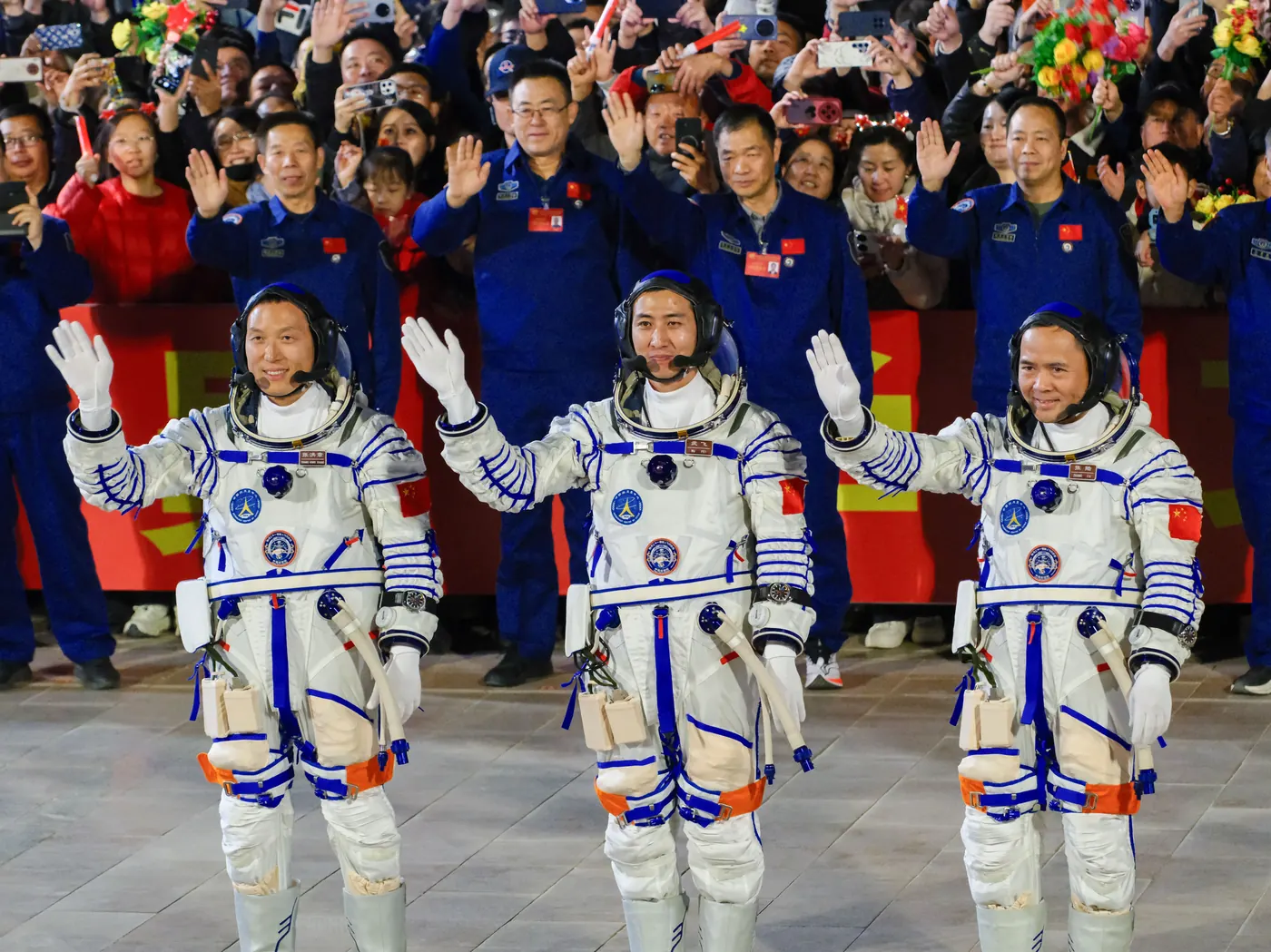
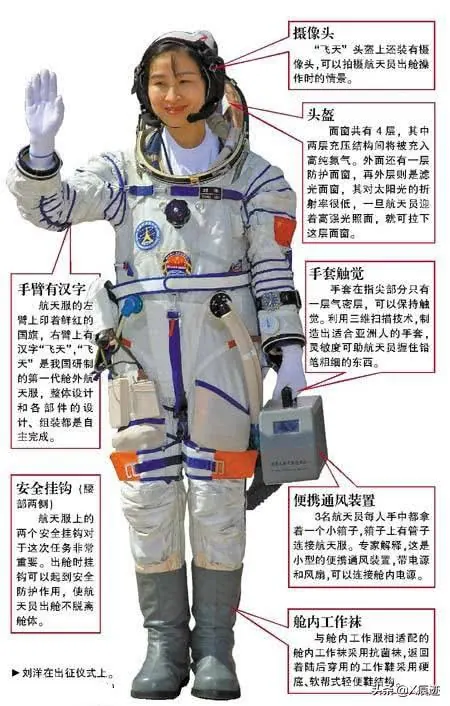
Cabin suits for spacecraft interiorsCabin suits, weighing around 10 kilograms, connect to the spacecraft via an umbilical for oxygen, power, and cooling during high-risk phases like ascent or descent. They maintain internal pressure and temperature if cabin pressure drops suddenly, acting as a short-term backup for about six hours without independent life support. Layers include a restriction layer of high-strength polyester, a gas-tight rubber-coated layer, and a heat-dissipation layer linked to underwear with ventilation tubes, all designed for seated positions inside the cabin.
 |
 |
Feitian suits for spacewalks
|
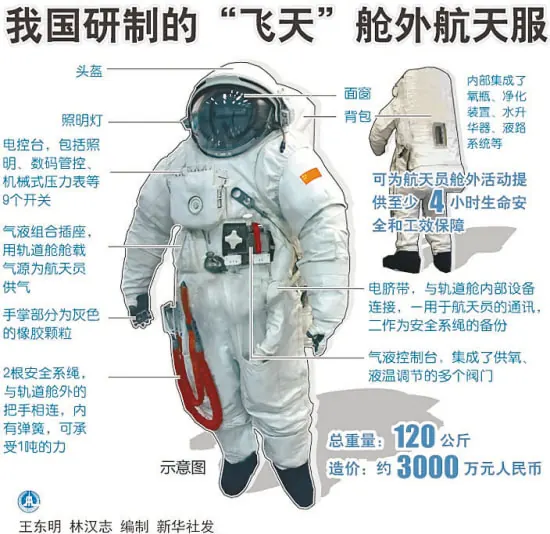
Feitian extravehicular suits, at 120 kilograms each, function as self-contained mini-spacecraft for extravehicular activities, with a backpack holding oxygen, CO2 scrubbers, cooling loops, and batteries for at least four hours of untethered work.
The semi-rigid torso uses aluminum alloy for pressure resistance up to 120 kPa, while flexible limbs and seven-layer construction handle vacuum, temperature swings from -110°C to +110°C, and micrometeoroids. Color-coded bands (red, blue, yellow) distinguish multiple suits during group spacewalks, and features like helmet cameras and lights aid operations in zero gravity. |
 |
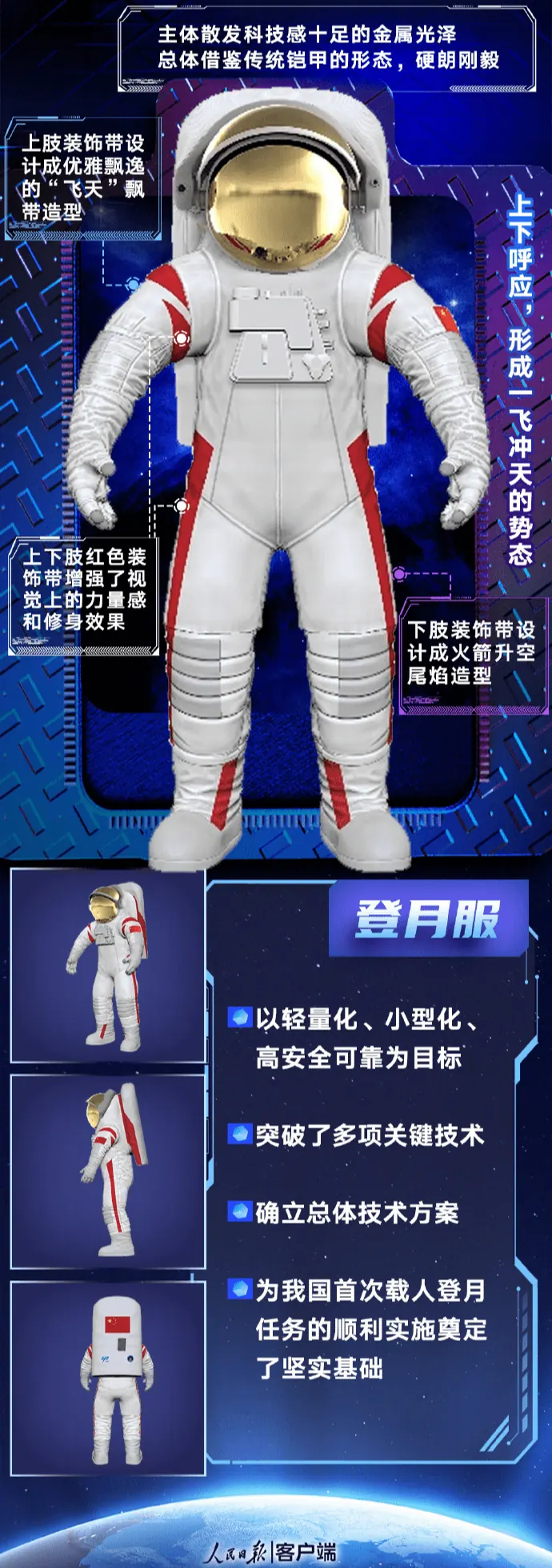
Lunar suits for surface explorationLunar suits build on Feitian designs but adjust for the Moon's one-sixth gravity, requiring better joint flexibility for walking, kneeling, and tool use on uneven regolith.
They incorporate enhanced dust resistance to prevent abrasive lunar soil from jamming seals or mechanisms, along with reinforced boots and gloves for surface tasks like drilling or sample collection. Planned for China's ILRS missions, these suits prioritize longer mobility durations and integrated tools, differing from Feitian's focus on station-relative floating tasks. 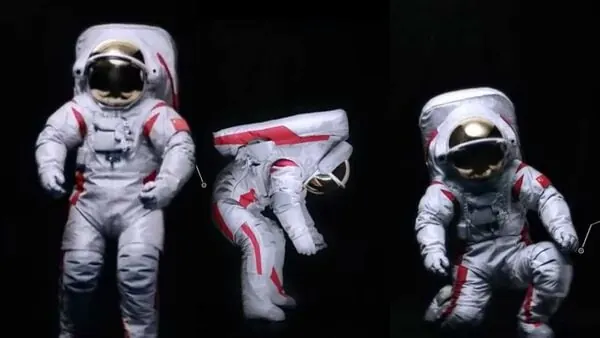 |
 |
From suits to shells
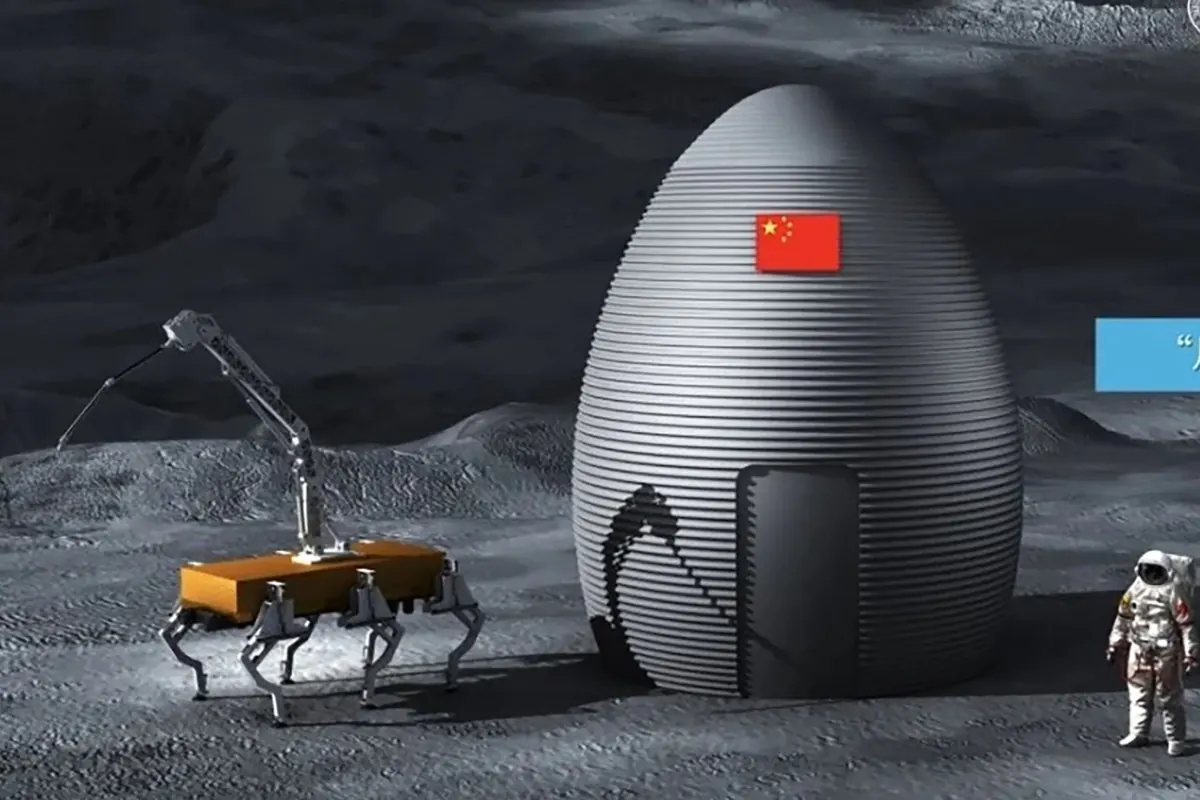
If a suit is a one-person habitat, a space station module or lunar base is a shared “large suit” that must balance internal pressure with the strength of its walls. Chinese research on lunar buildings, such as the “Yue Huzun”(月壶尊”) egg-shaped model made from simulated regolith, uses curved shells without internal columns to spread forces smoothly through the structure.
This type of geometry reduces stress concentration and helps the habitat tolerate pressure differences between the interior and the vacuum outside, as well as impacts from small meteoroids.
Teams in China have also experimented with making interlocking “Moon soil bricks” using simulated lunar regolith, inspired by traditional Chinese masonry and wooden joinery. These bricks can be arranged like a three-dimensional puzzle, improving resistance to compression while allowing robots to assemble and repair walls one brick at a time. Using local regolith instead of transporting heavy construction materials from Earth reduces launch mass and offers the possibility of thicker, more protective structures for the same transport cost.
This type of geometry reduces stress concentration and helps the habitat tolerate pressure differences between the interior and the vacuum outside, as well as impacts from small meteoroids.
Teams in China have also experimented with making interlocking “Moon soil bricks” using simulated lunar regolith, inspired by traditional Chinese masonry and wooden joinery. These bricks can be arranged like a three-dimensional puzzle, improving resistance to compression while allowing robots to assemble and repair walls one brick at a time. Using local regolith instead of transporting heavy construction materials from Earth reduces launch mass and offers the possibility of thicker, more protective structures for the same transport cost.