What treaties do we have that guide the use of Space?
|
Foundational Framework: The Outer Space Treaty (1967)
The primary legal framework governing all extraterrestrial activity is the Treaty on Principles Governing the Activities of States in the Exploration and Use of Outer Space, including the Moon and Other Celestial Bodies, commonly known as the Outer Space Treaty. Established in 1967, this agreement serves as the "constitution" of space. It dictates that outer space is not subject to national appropriation, meaning no country can claim sovereignty or ownership over Mars, the Moon, or any asteroid. Instead, space is defined as the "province of all mankind," intended for peaceful exploration and scientific investigation for the benefit of all nations, regardless of their economic or scientific development. |
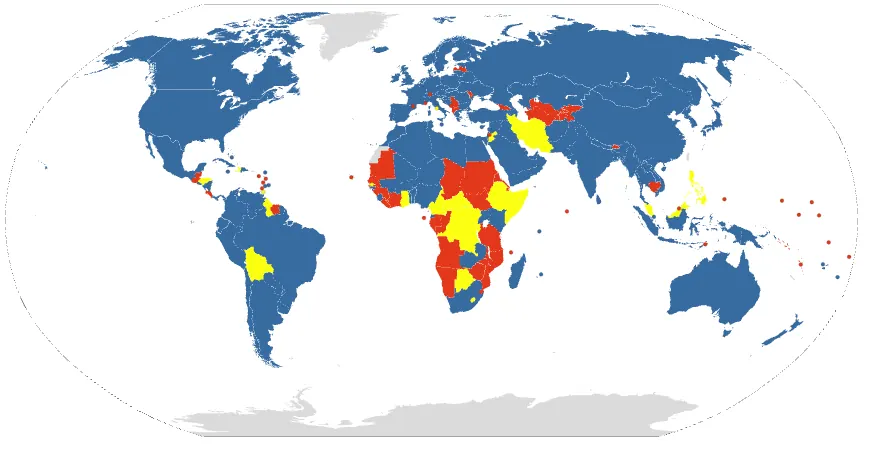 |

Signing of the Outer Space Treaty, 27 January 1967
Article I states that exploration and use of outer space shall be carried out for the benefit and in the interests of all countries and shall be the province of all mankind, irrespective of the degree of their economic or scientific development.
Article II prohibits national appropriation of outer space or any celestial body by claim of sovereignty, by means of use or occupation, or by any other means.
Article IV bans placement of nuclear weapons or other weapons of mass destruction in orbit around Earth, on celestial bodies, or in outer space in any other manner. It further requires that the Moon and other celestial bodies be used exclusively for peaceful purposes and forbids military bases, testing of any type of weapons, or military maneuvers on celestial bodies.
Article IX addresses environmental protection, requiring states to conduct exploration so as to avoid harmful contamination of celestial bodies and adverse changes to Earth's environment from extraterrestrial matter, with appropriate measures adopted where necessary.
Article II prohibits national appropriation of outer space or any celestial body by claim of sovereignty, by means of use or occupation, or by any other means.
Article IV bans placement of nuclear weapons or other weapons of mass destruction in orbit around Earth, on celestial bodies, or in outer space in any other manner. It further requires that the Moon and other celestial bodies be used exclusively for peaceful purposes and forbids military bases, testing of any type of weapons, or military maneuvers on celestial bodies.
Article IX addresses environmental protection, requiring states to conduct exploration so as to avoid harmful contamination of celestial bodies and adverse changes to Earth's environment from extraterrestrial matter, with appropriate measures adopted where necessary.
|
The Moon Agreement and Resource Management (1979)
The Moon Agreement of 1979 builds upon the foundation of the Outer Space Treaty by further defining the legal status of celestial bodies. It introduces the concept that the Moon and its natural resources are the "common heritage of mankind." While fewer nations have ratified this specific agreement compared to the 1967 Treaty, it establishes an ethical benchmark for resource management. It proposes that if the extraction of resources (such as water ice or minerals) becomes feasible, an international regime should be established to ensure that the benefits of those resources are shared equitably among all countries, preventing a monopoly by any single entity. |
 |
|
Equitable Access and International Cooperation
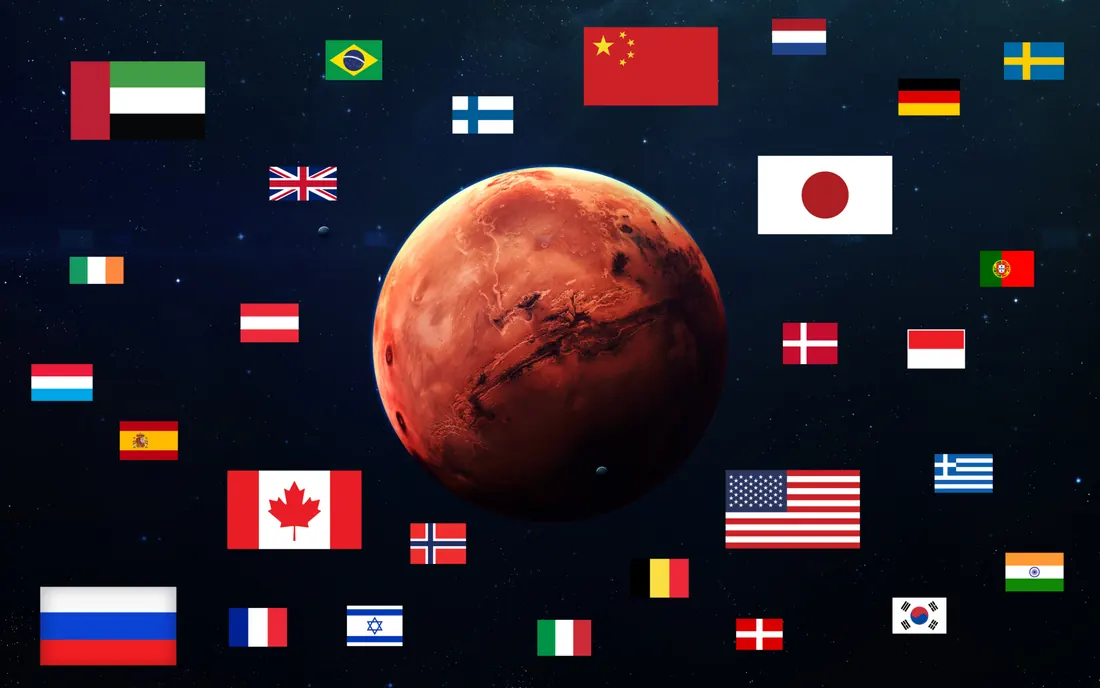
Because space is the province of all humankind, ethical habitat design must consider equitable access. This principle suggests that the technical knowledge and infrastructure developed for Mars should encourage international cooperation rather than exclusion. |
 |
|
China's perspectives on the principle of "Shared Future" and Inclusive Development
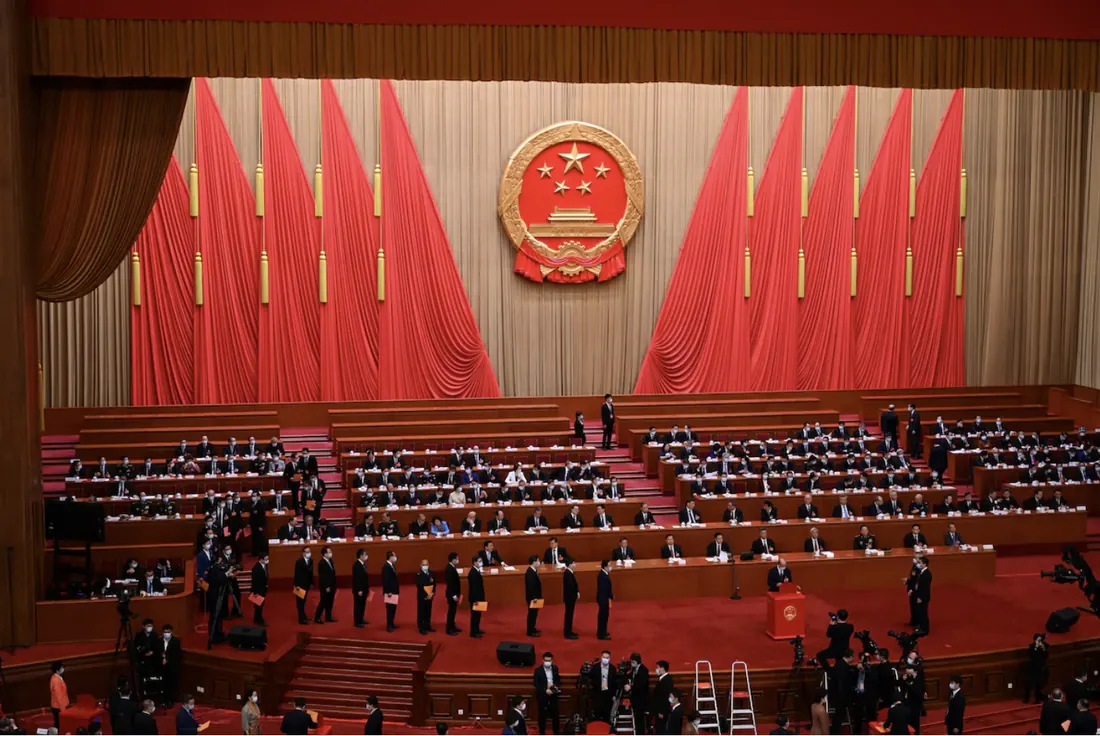
It is important to note that China is a major participant in international space law and has integrated these principles into its own national strategy. While China follows the core international treaties, it also contributes specific perspectives on "shared futures" and "inclusive development" through its own policy documents. A distinct contribution from Chinese space policy is the concept of a "Community with a Shared Future for Mankind" in outer space. This ethical framework suggests that space exploration should not just be a competition between powerful nations, but a cooperative effort that includes developing countries. In the context of habitat design, this is seen in the International Lunar Research Station (ILRS) project. Led by China and Russia, the ILRS is designed as an open platform, inviting international partners to participate in building and using the facility. This emphasizes the ethical principle of inclusive development, ensuring that more nations have the opportunity to engage in extraterrestrial living and research. |
 |
Debate Activity
Treaty Violations and Reciprocity
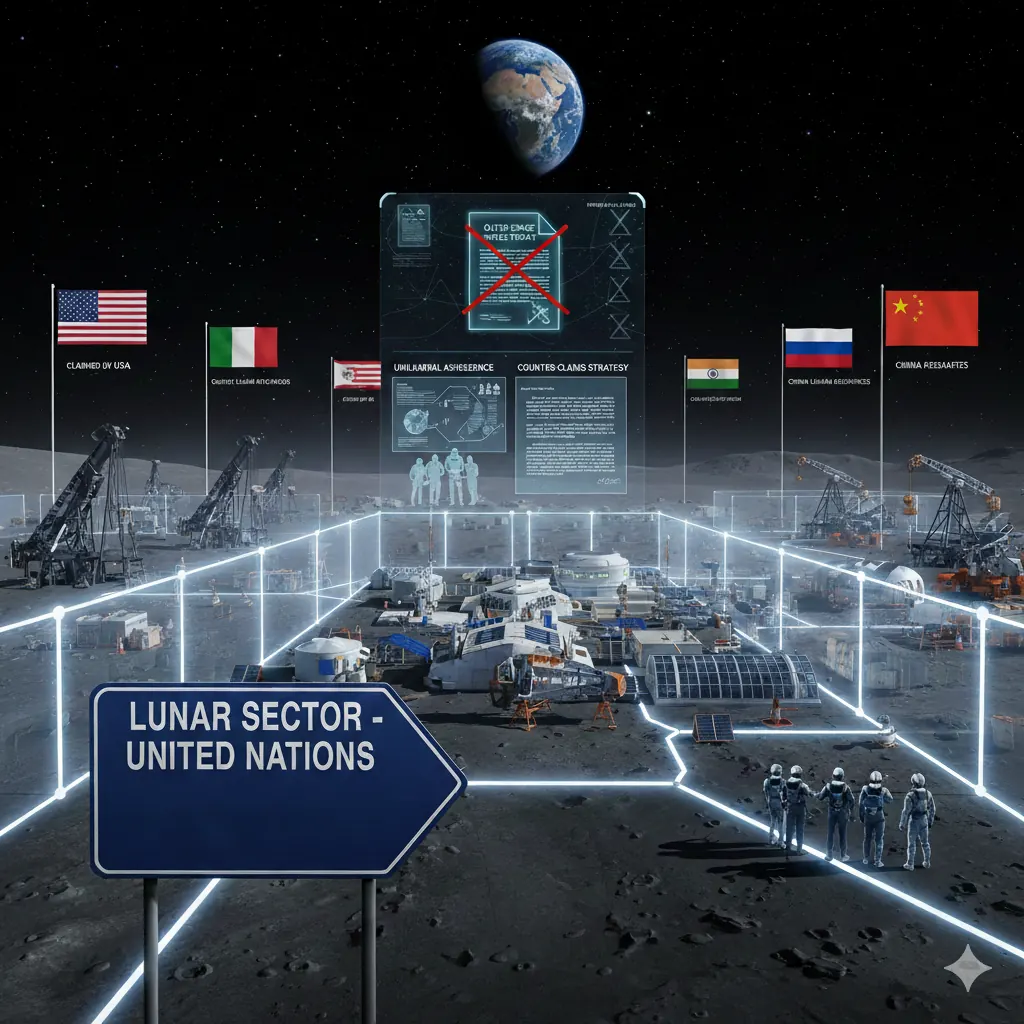
If all major spacefaring nations claim lunar territories despite the Outer Space Treaty’s non-appropriation rule, should your nation uphold the treaty unilaterally or file counter-claims to secure essential resources?
Defend your choice: Refer to Article II and ideas of reciprocity and norm erosion.
- Option A: Adhere strictly to the treaty to maintain moral and legal leadership.
- Option B: Claim equivalent sites to protect national interests in a changing practice environment.
- Option C: Unrestrictedly claim as much territories as fast as possible.
Defend your choice: Refer to Article II and ideas of reciprocity and norm erosion.
Equitable Access and Global Commons

Should asteroid mining programs include mandatory resource-sharing mechanisms so that developing nations benefit even if they lack the very basic of space technology?
Defend your choice: Balance equity, engineering feasibility, and incentives for innovation.
- Option A: Yes—share raw resources equally with all United Nation members
- Option B: Yes—share raw resources with all United Nation members according to their contribution in getting the resources
- Option C: No—resources should be kept as national asset owned by the nation who mined it.
Defend your choice: Balance equity, engineering feasibility, and incentives for innovation.
Non-Intelligent/Less-Intelligent Extraterrestrial Life
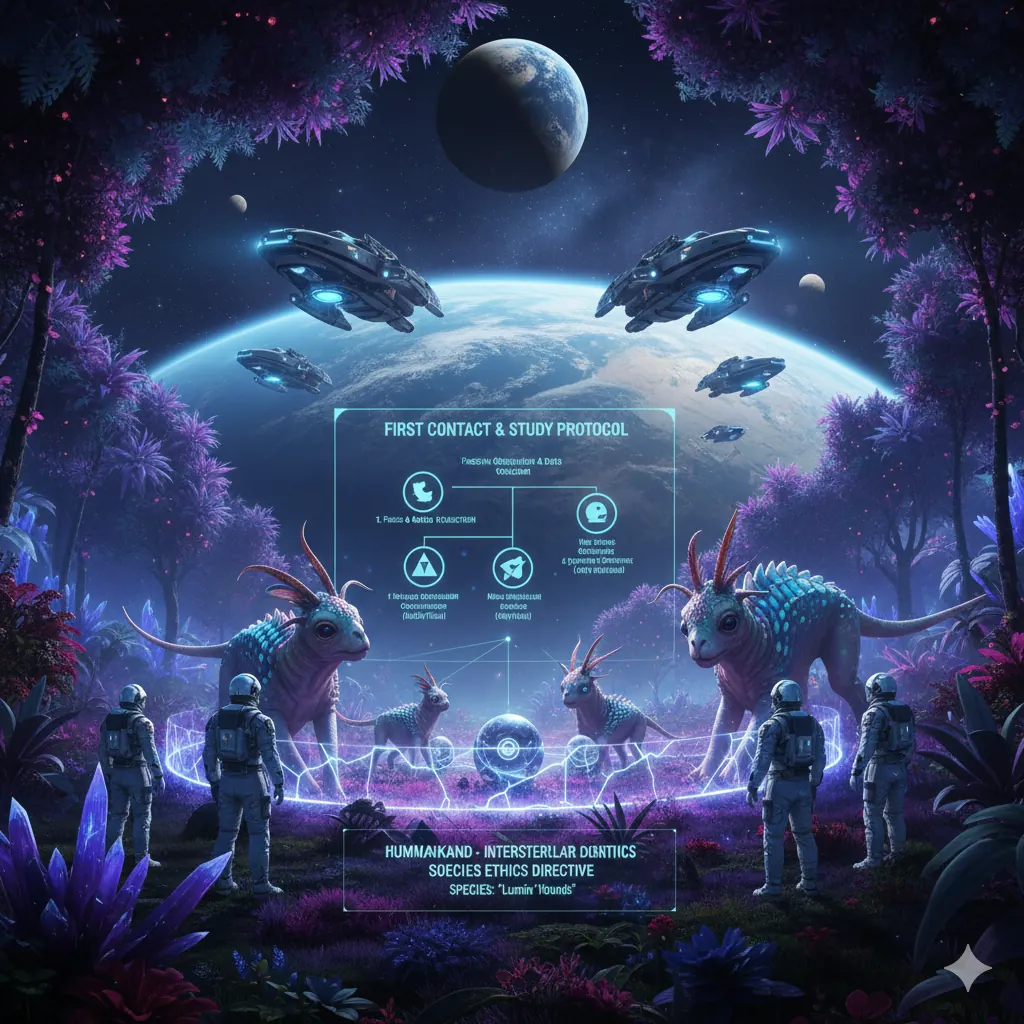
If non-intelligent/less-intelligent extraterrestrial life forms are discovered, how should humankind design protocols for interaction and study?
Defend your choice: Draw on Outer Space Treaty Article IX (avoid harmful contamination), planetary protection ethics, and comparisons to Earth biodiversity conservation. Consider whether non-intelligent life deserves intrinsic protection or should they be treated as resources?
- Option A: No restriction on interaction or study, prioritise advancing mankind's interest.
- Option B: Heavy restriction on interaction or study, prioritise preservation and conservation of local life forms.
- Option C: If you have other ideas
Defend your choice: Draw on Outer Space Treaty Article IX (avoid harmful contamination), planetary protection ethics, and comparisons to Earth biodiversity conservation. Consider whether non-intelligent life deserves intrinsic protection or should they be treated as resources?
Intelligent Extraterrestrial Life of equal or above standard

If there exist an unresolvable conflict of interest between mankind and an Intelligent Extraterrestrial Life of equal or above standard, how should we approach it?
Defend your choice: Extend Outer Space Treaty Article IX (avoid harmful interference) and Article IV (peaceful purposes) to intelligent life; debate whether lesser intelligence diminishes rights or warrants paternalistic stewardship. Consider precedents from Earth's indigenous protection ethics.
- Option A: Prepared for diplomatic resolution that caters to alien interest at the cost of sacrificing ours.
- Option B: Prepared for diplomatic resolution that straightly protect mankind's interest at the cost of sacrificing the aliens.
- Option C: Establish binding treaties that based on common values
- Option D: Any other ideas
Defend your choice: Extend Outer Space Treaty Article IX (avoid harmful interference) and Article IV (peaceful purposes) to intelligent life; debate whether lesser intelligence diminishes rights or warrants paternalistic stewardship. Consider precedents from Earth's indigenous protection ethics.