Part 1: The Diversity Challenge in Space
As humanity builds frontier cities on Earth and Moon for diverse humans and aliens, we face a challenge: creating fair communities from scratch where survival depends on cooperation across different biological needs and values.
Political scientist Tanner Smith proposes modified liberalism—balancing individual protections with community survival in hostile environments. The key is identifying common moral values shared across all beings. The foundation rests on five moral values common across intelligent species:
Political scientist Tanner Smith proposes modified liberalism—balancing individual protections with community survival in hostile environments. The key is identifying common moral values shared across all beings. The foundation rests on five moral values common across intelligent species:
- Fairness (everyone gets what they need)
- Reciprocity (helping those who help you)
- Care for the vulnerable (protecting young, elderly, disabled)
- Honesty (truth-telling enables trust)
- Cooperation (working together achieves more)
Fictional Case Study: The Frontier City of Harmony Gate
Harmony Gate, humanity's first frontier city, opened on Earth in 2075 to welcome extraterrestrial visitors. Its charter states: "We build not just for survival, but for harmony—where every being has the chance to shine." Four alien races live alongside humans, each with unique abilities and needs that any successful design framework must accommodate.
|
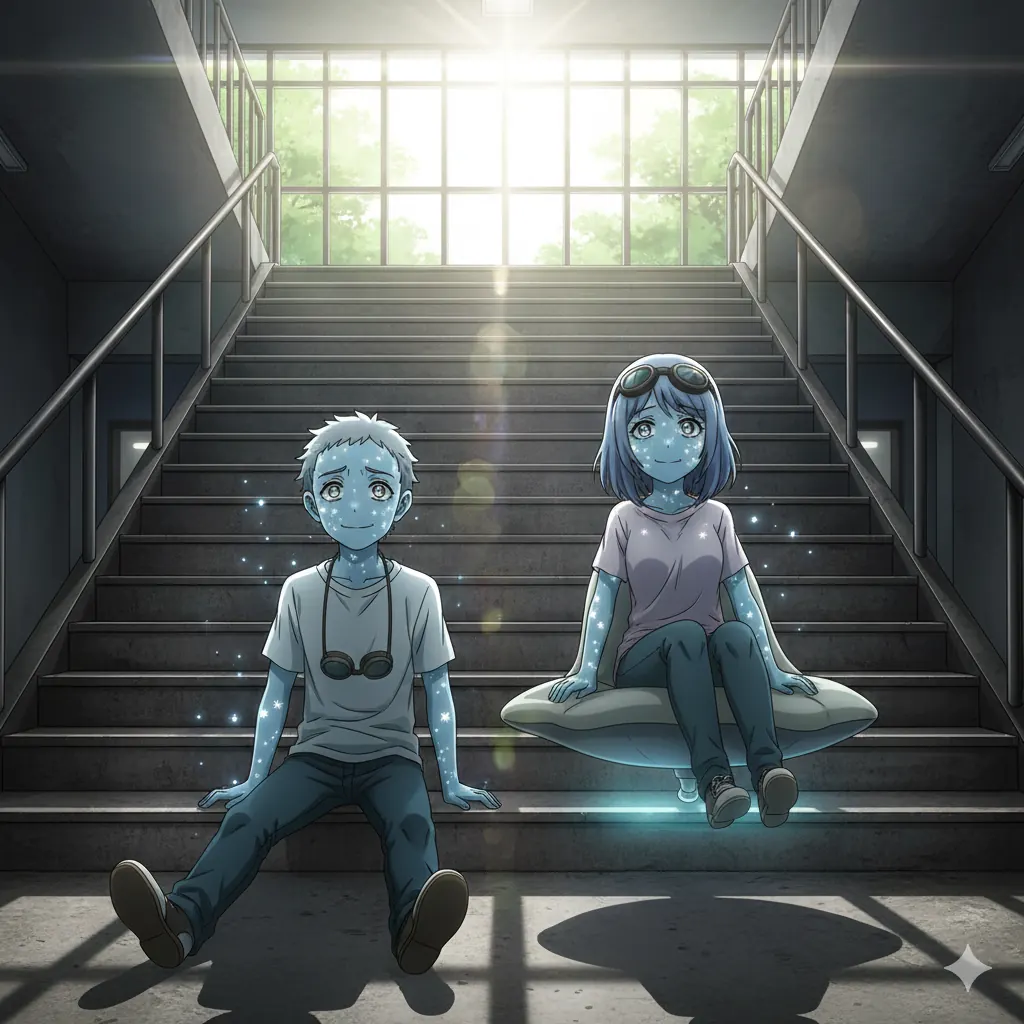
The Auries come from Aetheria, a low-gravity, dim world. Earth's gravity exhausts them—most use hover-chairs or exoskeletons. Sunlight hurts their enormous sensitive eyes, so they never go outside without dark goggles. Their eyes have a distinct reflective layer, like cats, that glows when light hits them. They excel as astronomers and night-shift workers, noticing details others miss. Their bioluminescent freckles glow softly when expressing emotions.
|
 |
|
The Bumbles evolved on a dense, fog-shrouded planet where sound is muffled but vibrations carry. Their oversized ears, resembling those of a bunny, swivel independently to pinpoint the faintest sounds. Their hearing is so acute that Earth's constant noise—traffic, conversations, machinery—overwhelms them like continuous thunder. They wear noise-dampening hoods to function. Their neurochemistry drives rapid thought-switching and constant movement; stillness is nearly impossible. This makes them creative problem-solvers but easily distracted. They have one deep fear: reflective eyes. The Auries' glowing eyes trigger an ancient instinct, making them freeze in primal terror whenever they catch that gleam in the dark.
|
 |
|
The Chillas evolved on frozen Cryosia, a world with such extreme cold that their metabolism slowed to a crawl to conserve energy. On Earth's warmer temperatures, they move even slower—their bodies never fully warming to the activity levels of other species. They speak with long pauses between sentences, take hours to make decisions, and rest frequently. Other races perceive them as lazy or dim, but in truth, their minds are simply processing at a different pace. They are deeply thoughtful philosophers and artists, producing works of extraordinary depth—just on their own timeline. Their cultural value of patience clashes with faster-paced races who mistake stillness for stupidity.
|
 |
|
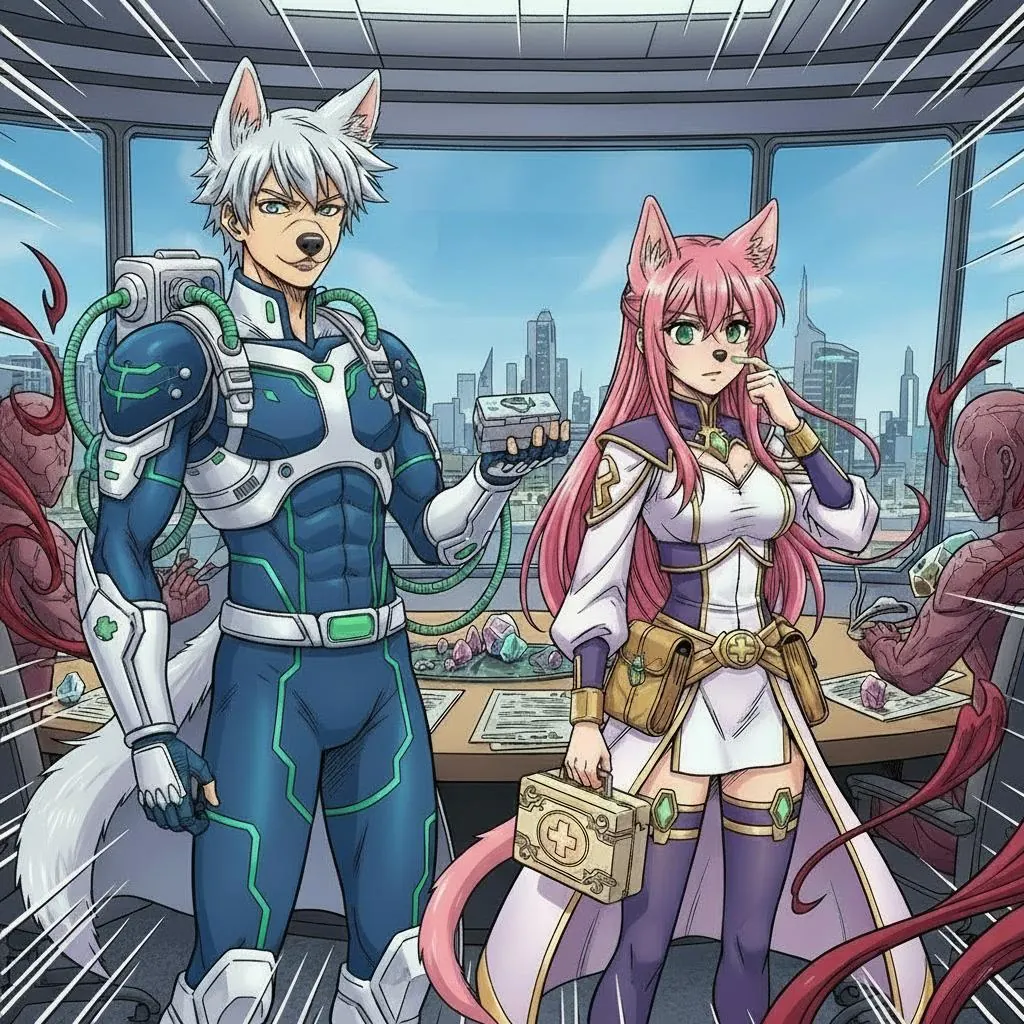
The Dotties come from a scent-rich world where pheromones communicate emotion and intent. Their noses are extraordinarily sensitive—they can smell fear, joy, and critically, deception. When a being lies, their pheromones change, and Dotties can literally smell the dishonesty. This makes them invaluable in negotiations and conflict resolution. However, they have one deadly vulnerability: peanutone, a chemical compound common in human environments. Even trace amounts trigger violent allergic reactions—swelling, respiratory distress, anaphylaxis. They must carry emergency kits and scan all food and spaces for this scent. Their gift of truth-scenting and their life-threatening allergy create constant tension between utility and survival.
|
 |
Discussion Challenges for Harmony Gate
Auries have reflective eyes that glow in dim light. Bumbles have an ancient terror of reflective eyes. When they meet in dark corridors, Bumbles freeze in panic. Now Bumbles avoid Aurie neighborhoods and Auries feel discriminated against. How can lighting design prevent unexpected encounters? What policies help both groups understand each other's experience?
Bumbles hear everything—traffic, conversations, machines—as overwhelming thunder. Their noise-dampening hoods help but isolate them. Some demand silent zones, but others need machines to survive. Can buildings use sound-dampening materials? What noise regulations balance Bumble needs with everyone else's?
Chillas pause thirty seconds before answering questions. Bumbles think rapidly and now make decisions without them, arguing "we can't wait forever." Chillas feel silenced and isolated. Can meeting spaces host parallel fast and slow discussions? How do you balance efficiency with inclusion?
An Aurie's hover-chair broke in the market. She lay on the ground for twenty minutes while others stepped around her, unsure how to help. Now Auries are afraid to go out alone. How can public spaces improve accessibility? Should every district have trained responders?