What goes up, must go down...Right?
|
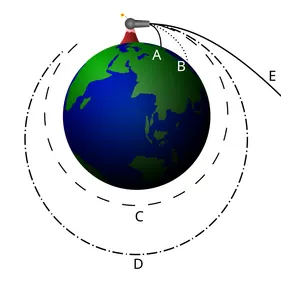
Have you ever thrown a ball? It arcs up, then curves down, pulled by Earth's gravity until it hits the ground. Now, imagine throwing that ball so incredibly fast that as it falls toward Earth, the Earth's surface curves away beneath it at exactly the same rate.
The ball is forever falling, but it never hits the ground. This is the simple, brilliant secret of every satellite, spacecraft, and space station orbiting our planet. In this chapter, we'll uncover the physics that keeps the space station soaring, the challenges it faces from a wisp of an atmosphere, and the regular "boosts" it needs to keep calling space its home. |
 |
Why Speed is the Key to Orbit
|
The Tiangong Space Station is perpetually falling toward Earth, but its tangential velocity is so great (reaching 28,000 km/h) that the planet's surface curves away beneath it at the same rate. It keeps missing the ground.
Gravity provides the centripetal force—the inward-directed force required for any object to follow a curved path. There is no outward "centrifugal force" pushing against it. The sensation of weightlessness astronauts experience is not because they are beyond gravity's reach (gravity in LEO is nearly 90% as strong as on Earth's surface). They are weightless because both they and the station are in freefall, accelerating toward Earth at the same rate. This state of constant, forward-moving freefall is what defines an orbit. |
 |
The Benefits of Low Earth Orbit (LEO)
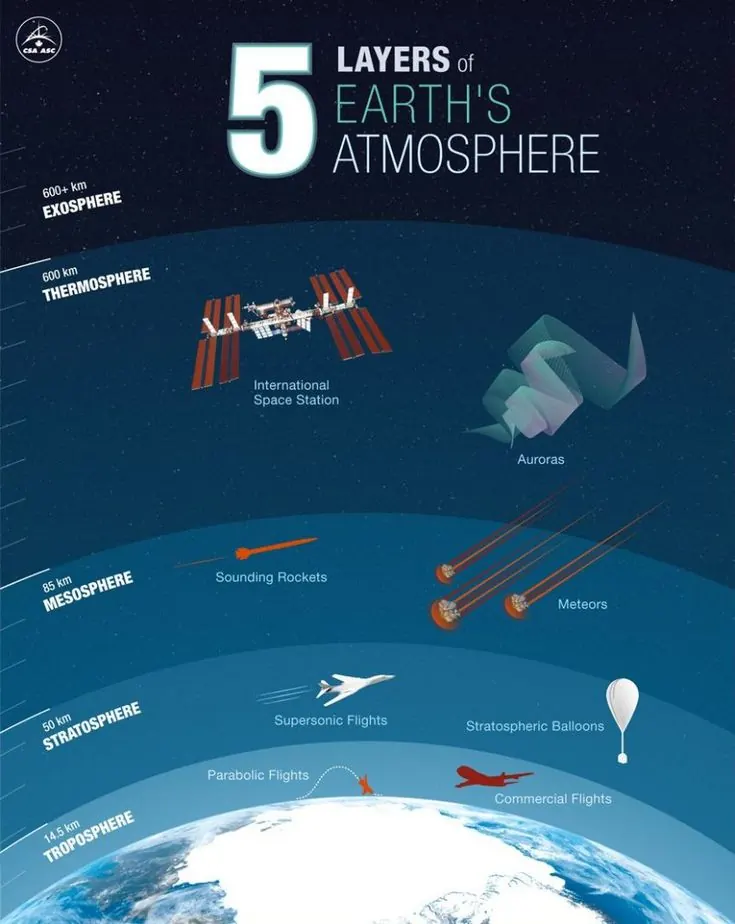
The Tiangong Space Station orbits at an average altitude of about 390 km, in what we call Low Earth Orbit (LEO). This is generally defined as any orbit between 160 km and 2,000 km above the Earth's surface.
- Accessibility & Safety: LEO is much easier and cheaper to reach from Earth than higher orbits. This allows for regular crew rotations, resupply missions, and emergency returns if needed. It's also below most of the Earth's radiation belts, protecting the crew from hazardous high energy particles.
- Earth Observation: Being close to Earth provides stunningly detailed views for scientific observation—tracking weather, monitoring ecosystems, and managing disasters.
- Microgravity Research:The state of continuous free-fall (microgravity) is perfect for experiments in biology, physics, and materials science that can't be done on Earth.
 |
 |
The Invisible Drag: Understanding Orbital Decay
The Tiangong Space Station orbits in Low Earth Orbit (LEO) because it is accessible and optimal for research. However, LEO is not a perfect vacuum. Even at Tiangong's altitude of approximately 390 km, there are still traces of Earth's atmosphere—an extremely thin soup of individual gas molecules.
As Tiangong travels at over 28,000 km/h, it constantly collides with these sparse molecules. This interaction creates a tiny but continuous force called atmospheric drag, which acts as a gentle brake, slowly reducing the station's orbital energy and speed. This is known as orbital decay.
According to orbital mechanics, for any object in a stable orbit, its orbital altitude is directly determined by its speed. If the vehicle's speed decreases, its orbit must shrink. Therefore, as drag slows the vehicle down, it loses altitude, or undergoes orbital decay, moving into a progressively lower orbit.
Without active intervention, this process would continue until the station re-entered Earth's denser atmosphere and burned up. Orbital decay is the fundamental reason why stations like Tiangong are not permanent structures and require regular maintenance to remain in space.
Did You Know? Solar activity significantly accelerates orbital decay! When the Sun is more active, it emits more radiation, which heats and expands Earth's upper atmosphere. This expansion pushes gases to higher altitudes, increasing the density of the environment around Tiangong and thus the drag force acting upon it.
As Tiangong travels at over 28,000 km/h, it constantly collides with these sparse molecules. This interaction creates a tiny but continuous force called atmospheric drag, which acts as a gentle brake, slowly reducing the station's orbital energy and speed. This is known as orbital decay.
According to orbital mechanics, for any object in a stable orbit, its orbital altitude is directly determined by its speed. If the vehicle's speed decreases, its orbit must shrink. Therefore, as drag slows the vehicle down, it loses altitude, or undergoes orbital decay, moving into a progressively lower orbit.
Without active intervention, this process would continue until the station re-entered Earth's denser atmosphere and burned up. Orbital decay is the fundamental reason why stations like Tiangong are not permanent structures and require regular maintenance to remain in space.
Did You Know? Solar activity significantly accelerates orbital decay! When the Sun is more active, it emits more radiation, which heats and expands Earth's upper atmosphere. This expansion pushes gases to higher altitudes, increasing the density of the environment around Tiangong and thus the drag force acting upon it.
 |
 |
Giving a Boost: The Need for Reboosting Maneuvers
To combat orbital decay and maintain the Tiangong Space Station's operational orbit, engineers from the China Manned Space Agency perform regular reboosting maneuvers.
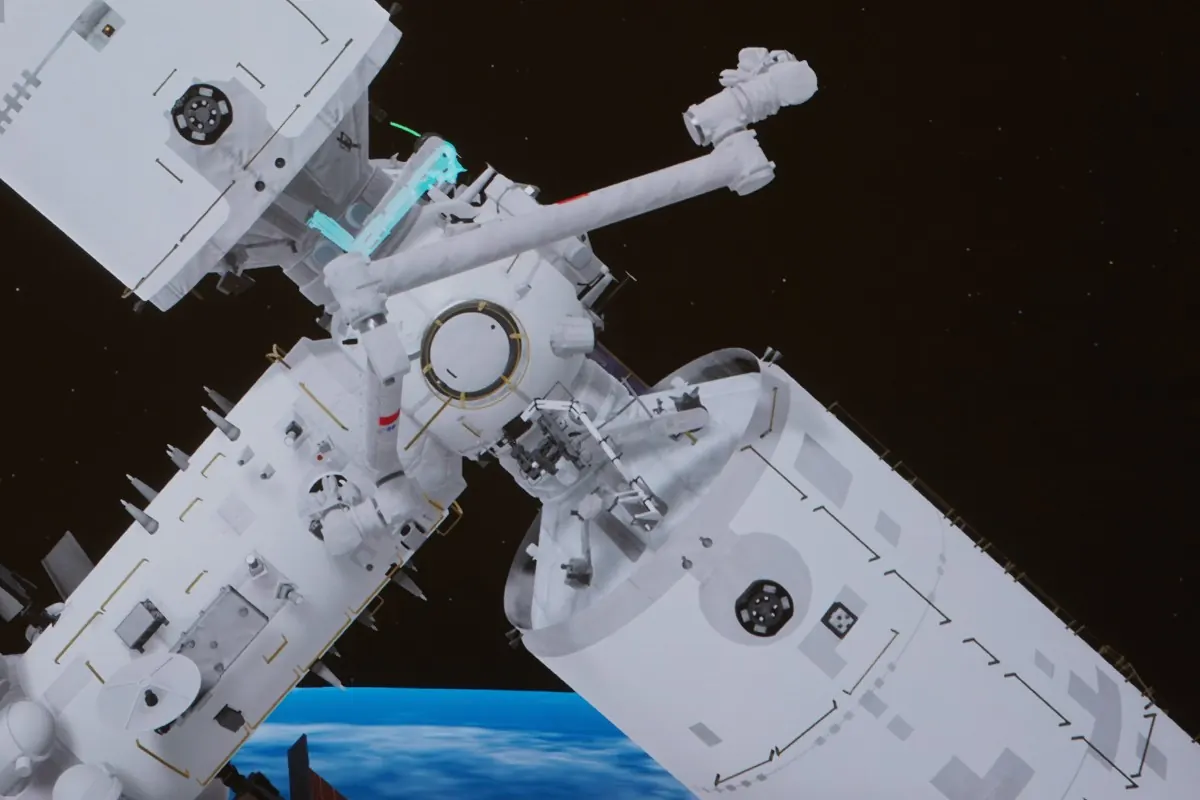
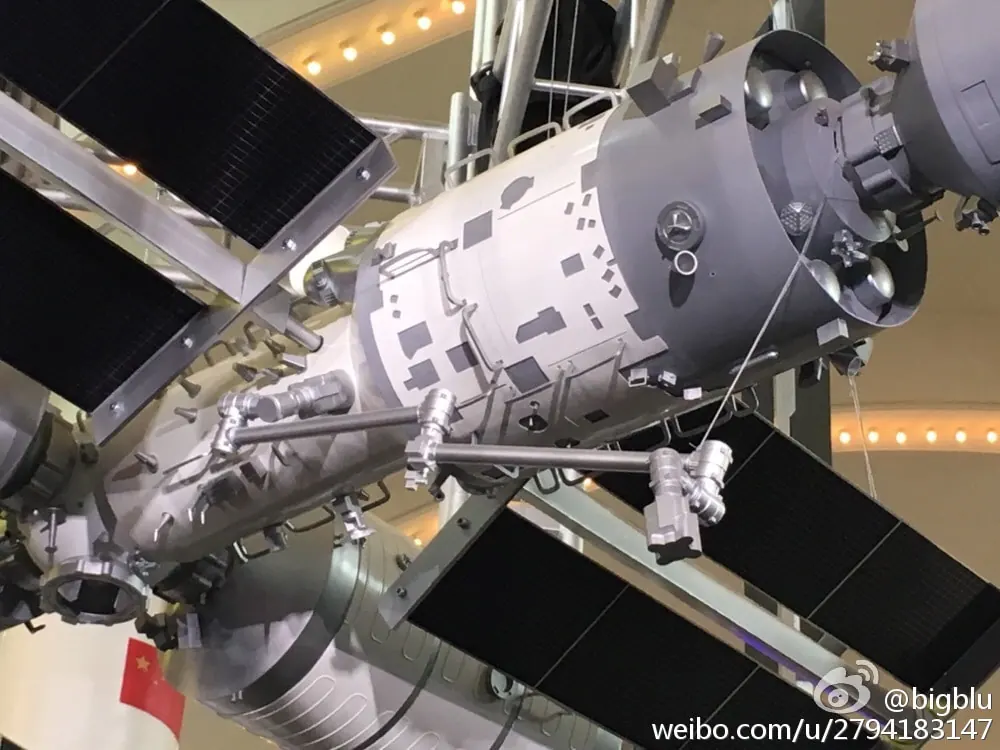
The Tianhe core module of Tiangong is equipped with its own thrusters. Additionally, reboosts are often performed by the automated Tianzhou cargo spacecraft while they are docked to the station. These engines fire for a precise duration, providing a gentle thrust that increases the station's speed.
The Tianhe core module of Tiangong is equipped with its own thrusters. Additionally, reboosts are often performed by the automated Tianzhou cargo spacecraft while they are docked to the station. These engines fire for a precise duration, providing a gentle thrust that increases the station's speed.
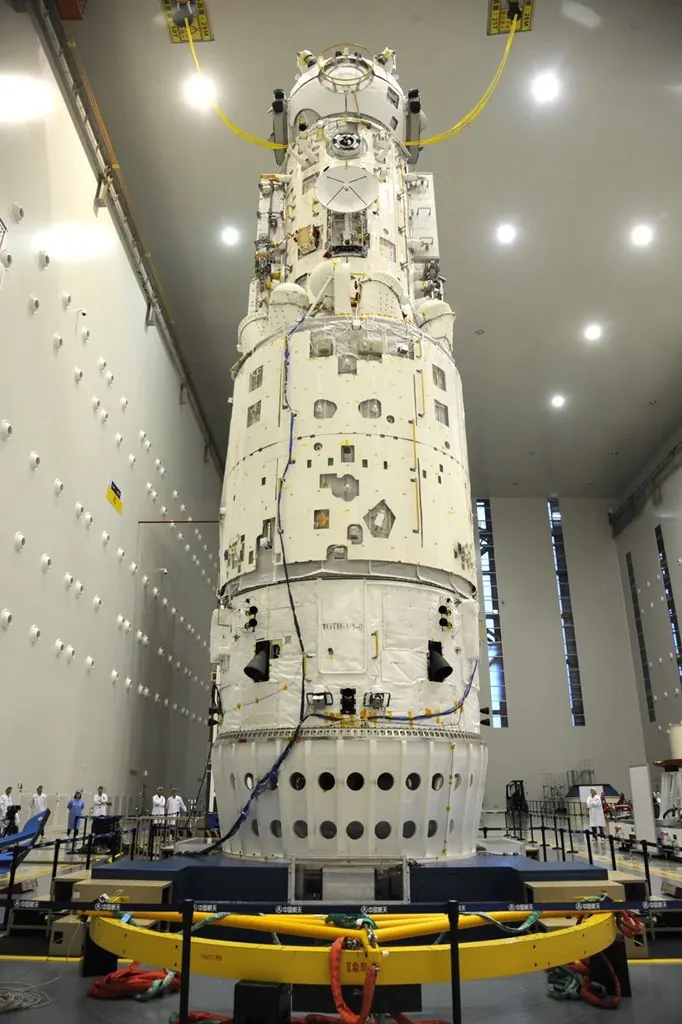
The physics of orbit dictates that a specific orbital altitude requires a specific velocity. By using thrusters to increase Tiangong's speed, engineers add energy to its orbit thereby counteracting the energy lost to atmospheric drag.
Tiangong, like all stations in LEO, requires these reboosts multiple times a year. The frequency depends on solar activity and the station's target altitude. This constant maintenance is a non-negotiable part of engineering a home in orbit, ensuring Tiangong remains a stable platform for scientific discovery for years to come.
Tiangong, like all stations in LEO, requires these reboosts multiple times a year. The frequency depends on solar activity and the station's target altitude. This constant maintenance is a non-negotiable part of engineering a home in orbit, ensuring Tiangong remains a stable platform for scientific discovery for years to come.