An independent biosphere:
|
The dream of creating a self-sustaining environment in space has long captivated scientists and engineers. Early concepts focused on closed ecological systems, where plants, microbes, and technology would work in harmony to recycle everything. The most ambitious Earth-based attempt was Biosphere 2, a massive sealed structure built in the late 1980s to explore the viability of life in a closed system. While the project faced significant challenges, including oxygen fluctuations and difficulties in managing its agricultural biome, it provided invaluable lessons on the complexity of balancing biological and technological systems. These historical efforts directly informed the design of the more focused and reliable systems used in orbit today.
A space station is a modern, technologically-driven closed environment, isolated in the vacuum of space. Unlike on Earth, there is no natural atmosphere to breathe, no water cycle, and no simple way to dispose of waste. The Environmental Control and Life Support System (ECLSS) is the technological marvel that solves this problem, engineering a habitable home in orbit by managing the crew's most vital resources: air, water, and waste. |
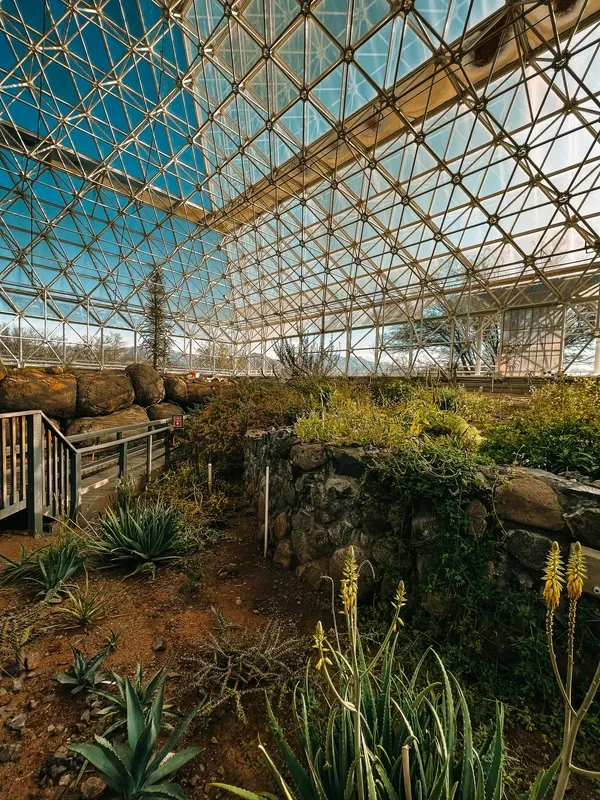 Biosphere 2
|
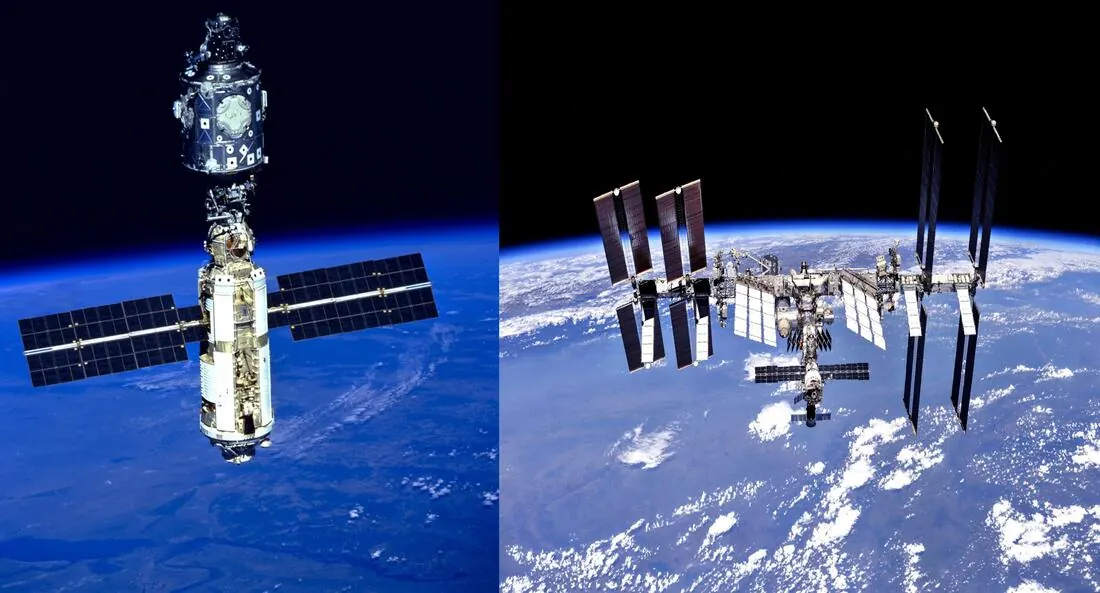
ISS from the first module to its current configuration.
Breathable Air:
The ECLSS must continuously provide oxygen and remove the carbon dioxideandtrace contaminants that astronauts exhale and release.
The primary method for oxygen production is the electrolysis of water, using electricity to split it into breathable oxygen and hydrogen. A key achievement on the Chinese Space Station is its success in achieving 100% oxygen regeneration, meaning all the oxygen the crew breathes is generated on-board, eliminating the need for continuous supply from Earth.
The primary method for oxygen production is the electrolysis of water, using electricity to split it into breathable oxygen and hydrogen. A key achievement on the Chinese Space Station is its success in achieving 100% oxygen regeneration, meaning all the oxygen the crew breathes is generated on-board, eliminating the need for continuous supply from Earth.
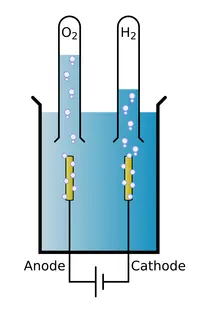
Splitting water into Hydrogen gas and Oxygen gas by Electrolysis of water.
To maintain a safe and breathable atmosphere, the station employs multiple approaches for carbon dioxide removal.
- The primary method for initial capture uses a molecular sieve canister made of lithium hydroxide, which effectively adsorbs CO₂ from the cabin air as it passes through.
- For long-duration missions, a more sustainable approach is the Sabatier reaction, which processes this captured CO₂ along with hydrogen (from water electrolysis) to generate water and methane. This method not only removes CO₂ but also recycles its elements, contributing to the station's closed-loop water system.
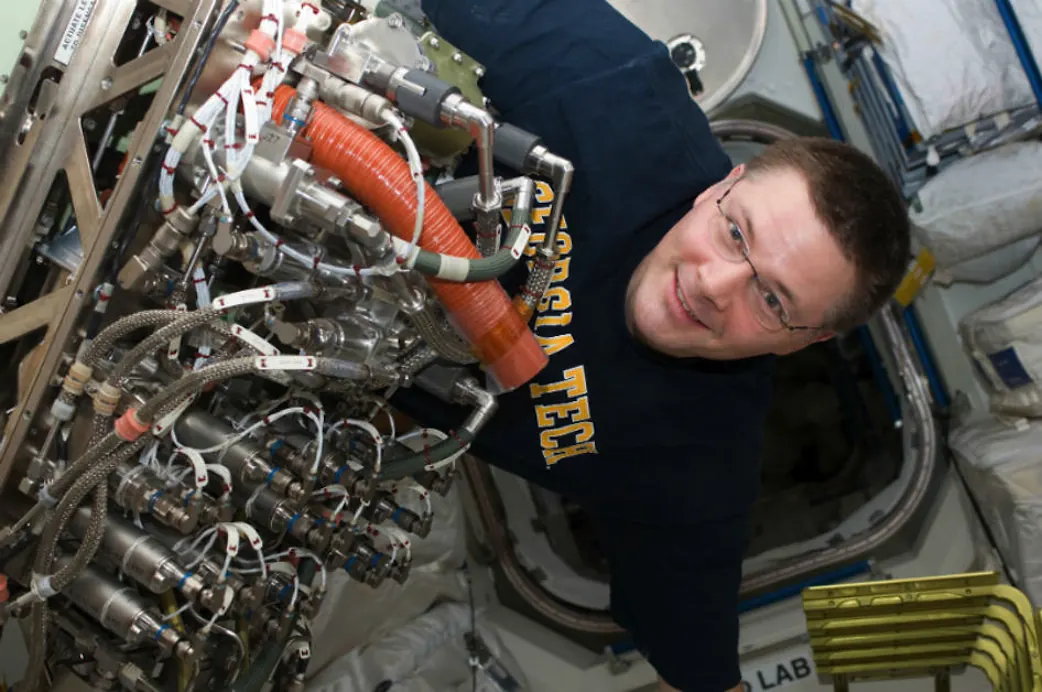 Sabatier reactor ISS install 2011 (NASA)
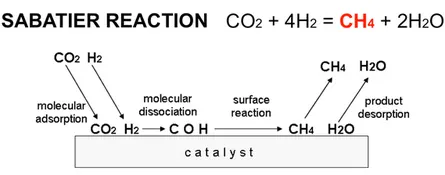 Sabatier Reaction turning Carbon dioxide to fuel and oxygen.
|
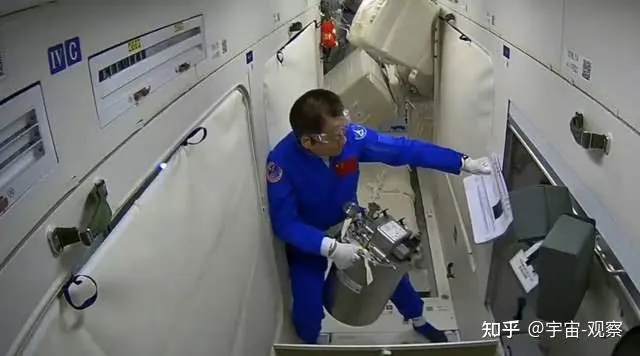 Carbon dioxide filtration system maintenance on board the Tiangong Space Station.
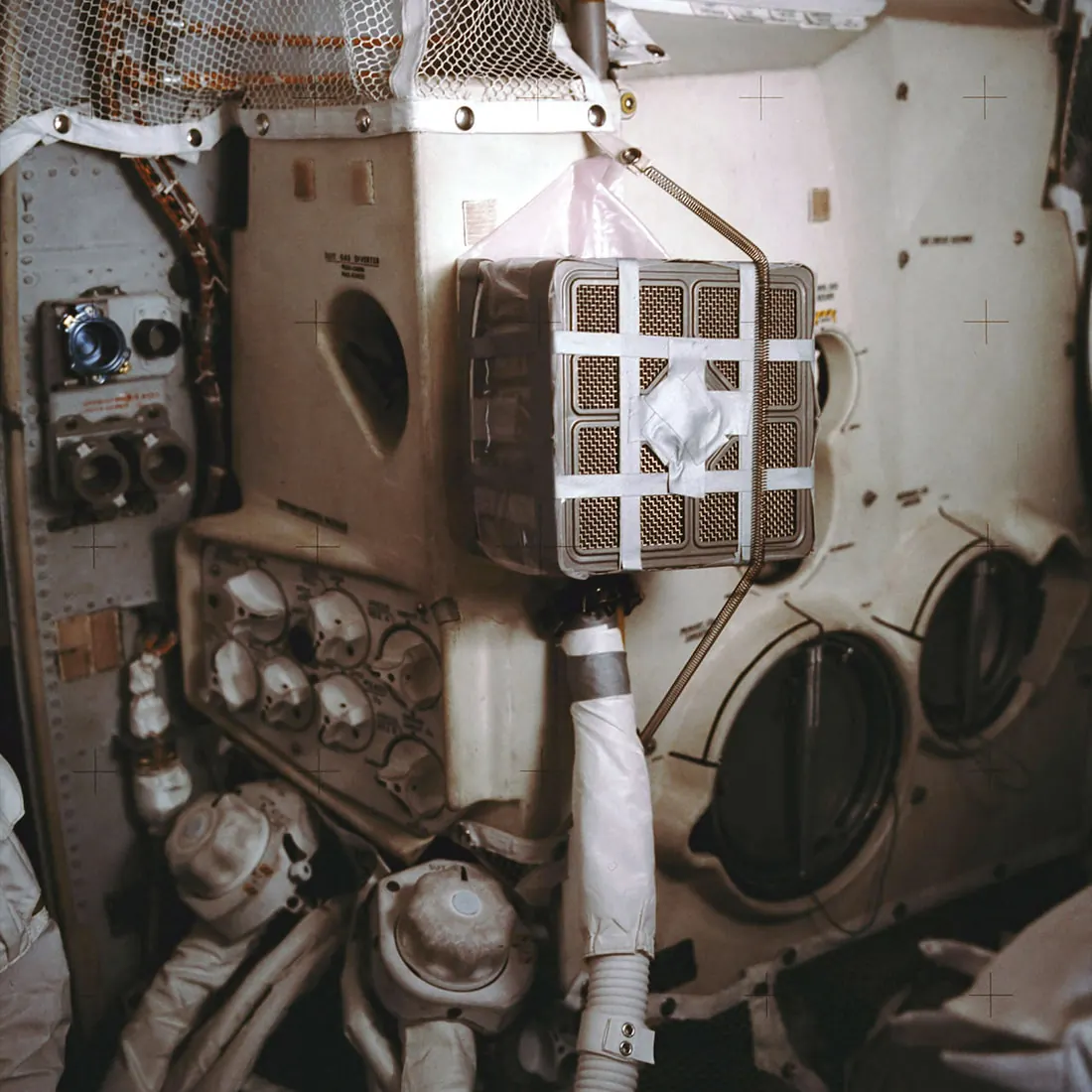 Carbon dioxide filtration box in the Apollo Missions.
 Carbon capture by Lithium Hydroxide sieve.
|
Clean Water:
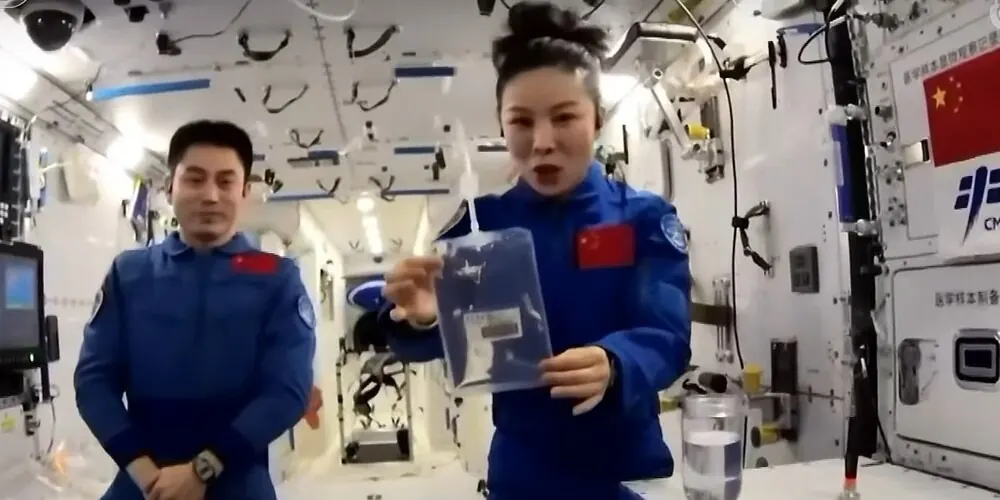
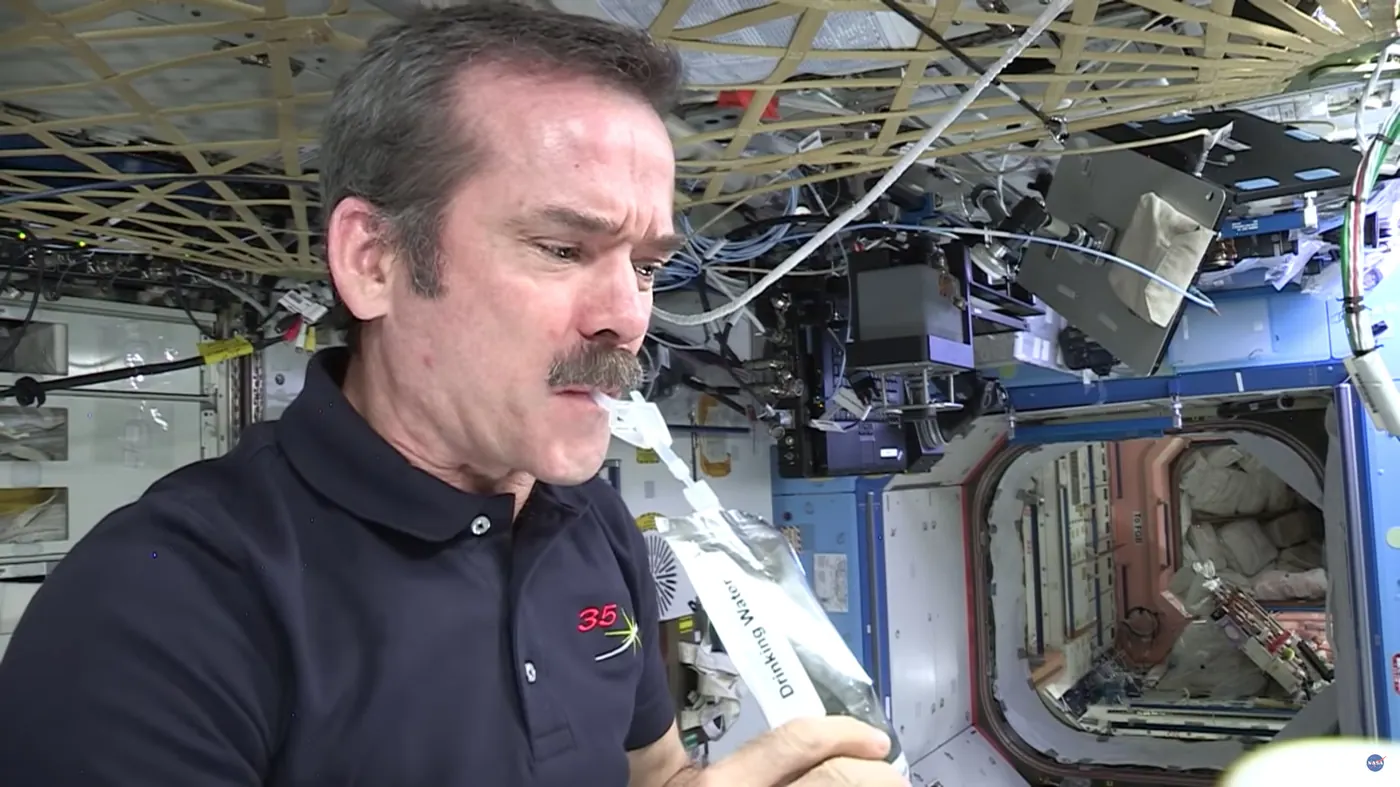
Because launching water from Earth is prohibitively expensive, the ECLSS is designed to recycle nearly every drop of moisture. The system collects water from various sources, including humidity condensate (from crew breath and sweat), urine, and wastewater. This water undergoes a multi-stage purification process involving filtration, catalytic oxidation, and the addition of a biocide like iodine to prevent microbial growth.
The Chinese Space Station has demonstrated a high water closure rate of over 95%, with its urine processing system alone capable of recovering approximately 90% of water from urine, which is then used for drinking, oxygen production, and hygiene.
The Chinese Space Station has demonstrated a high water closure rate of over 95%, with its urine processing system alone capable of recovering approximately 90% of water from urine, which is then used for drinking, oxygen production, and hygiene.
 |
 |
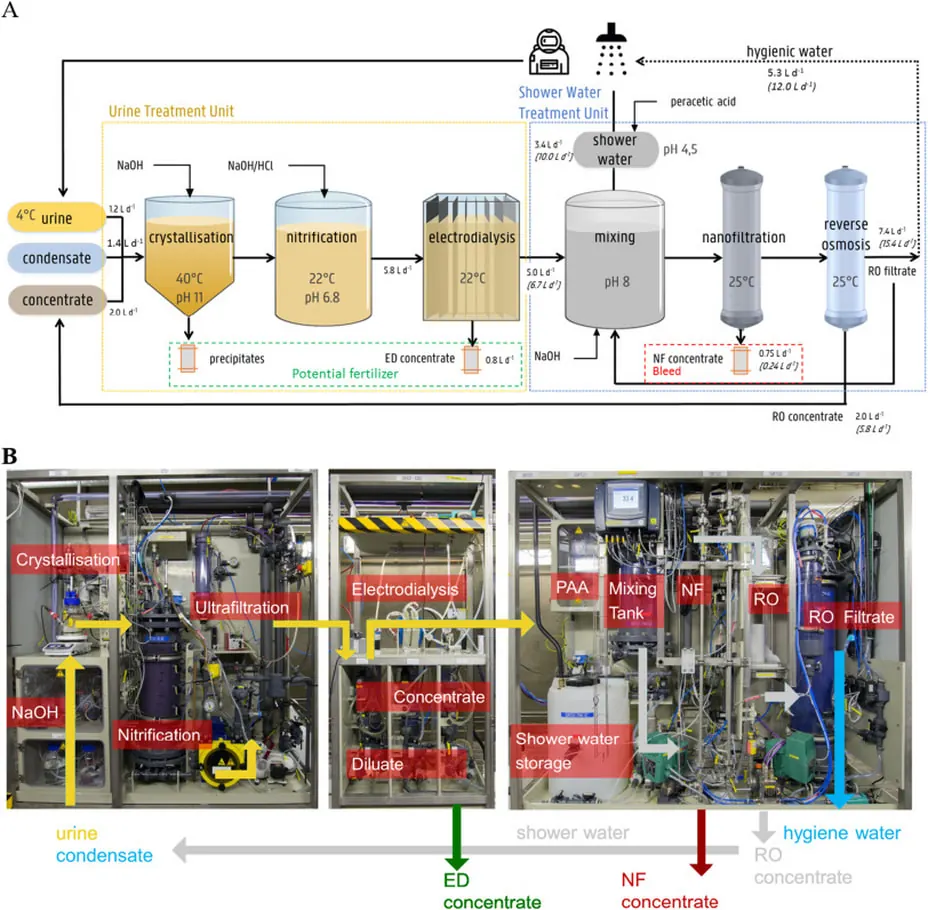
Water Treatment Unit Breadboard (WTUB) Test Unit for ISS
Waste Management:
Managing human waste in space requires specialized engineering due to the absence of gravity. Space toilets use powerful airflow, functioning like a vacuum, to direct urine and feces into separate collection systems. The collected urine is immediately sent to the water recycling system.
Solid waste is sealed, stored, and eventually loaded onto uncrewed cargo spacecraft, such as Tianzhou Cargo Spacecraft, which safely incinerate it upon re-entry into Earth's atmosphere.
Solid waste is sealed, stored, and eventually loaded onto uncrewed cargo spacecraft, such as Tianzhou Cargo Spacecraft, which safely incinerate it upon re-entry into Earth's atmosphere.
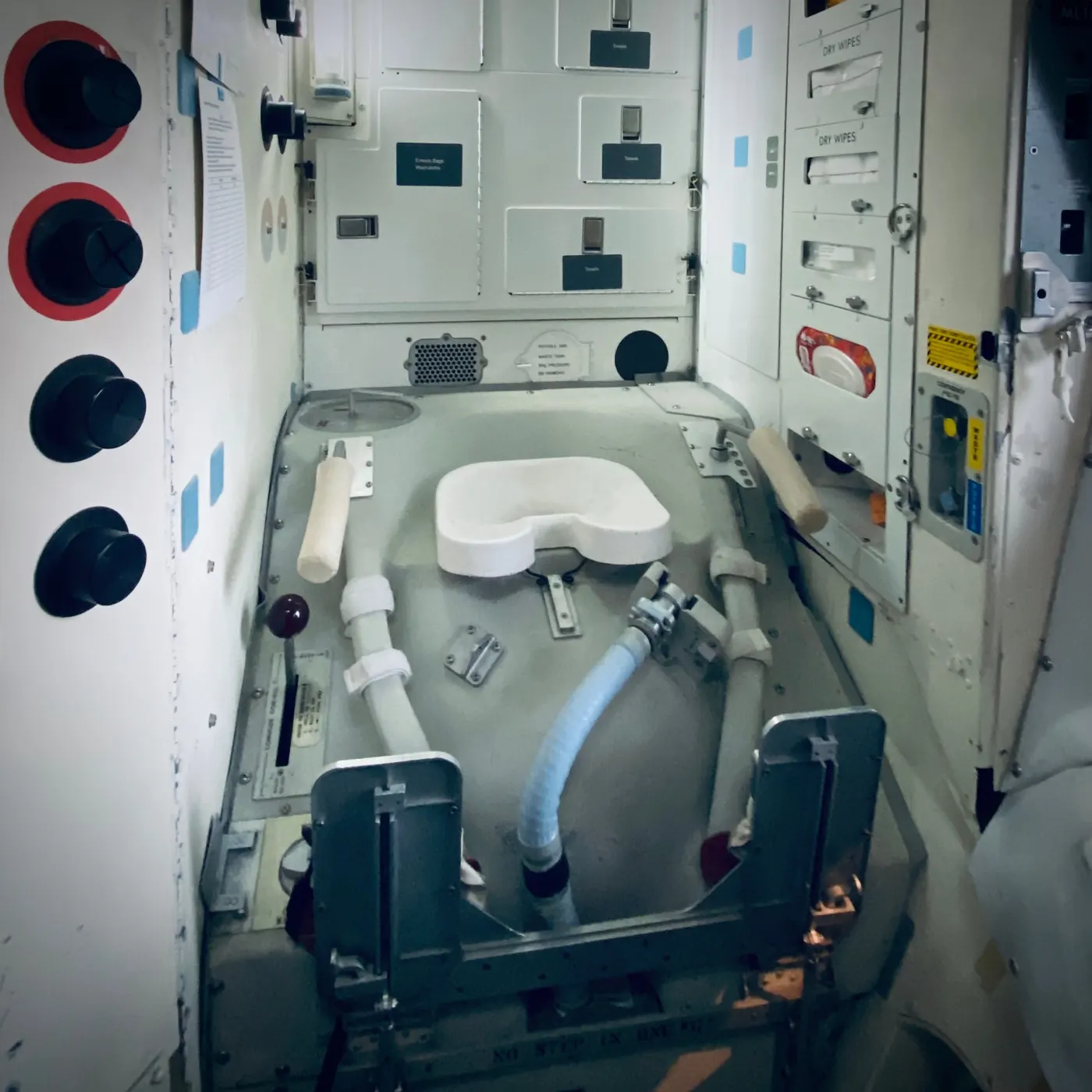 Washroom on board the ISS.
|
 |
The Six Regenerative Systems of the Chinese Space Station's ECLSS
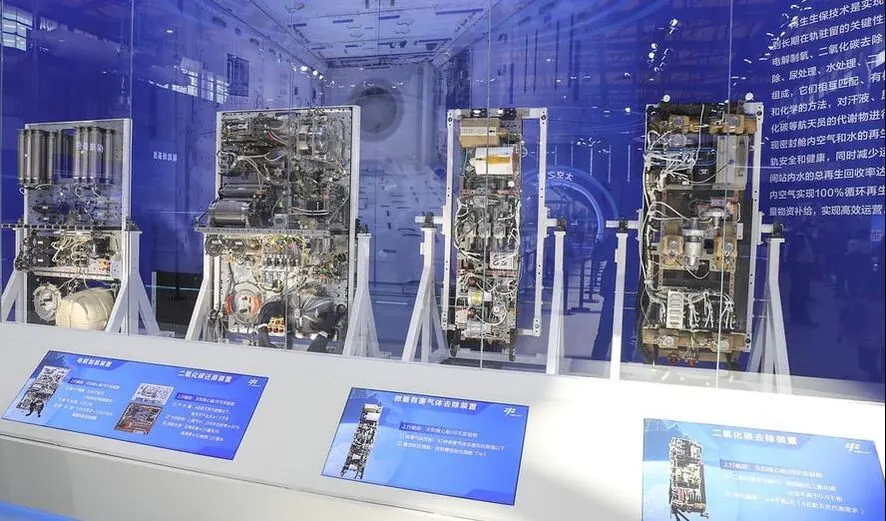
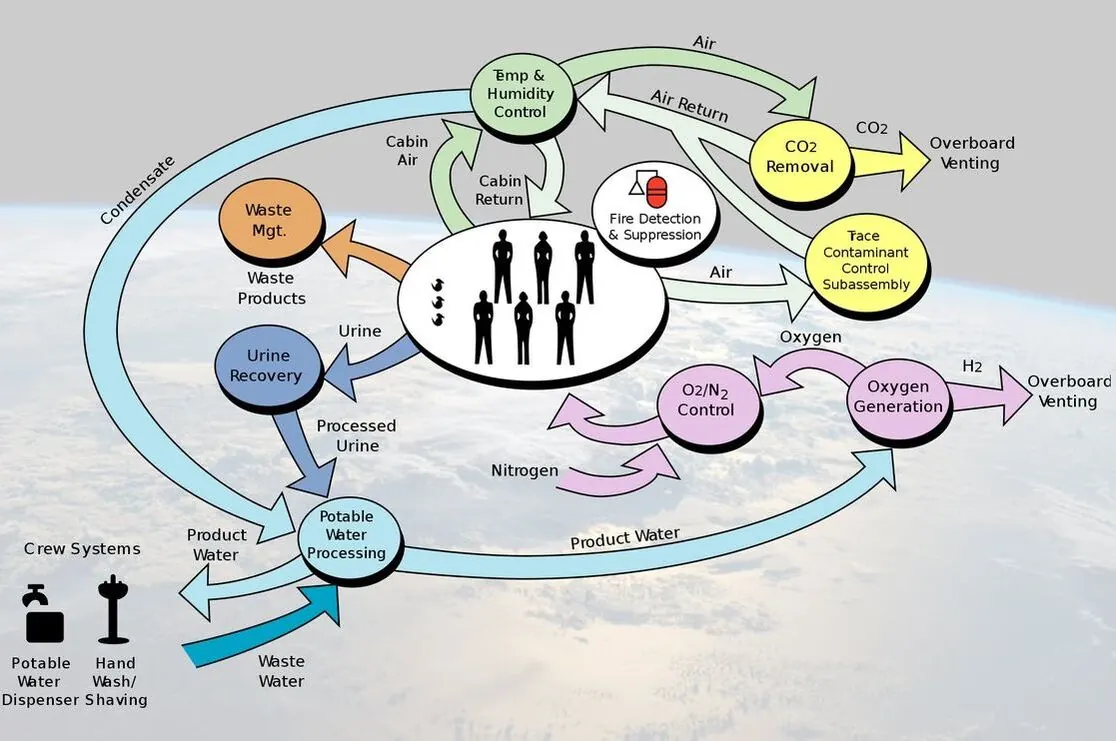
The Chinese Space Station's Environmental Control and Life Support System (ECLSS) is a world-leading regenerative systems operating in orbit, that is composed of 6 subsystems. This integrated system transforms the station from a supply-dependent outpost into a highly self-sufficient habitat. The six systems form a near-closed loop for air and water, dramatically reducing the need for supplies from Earth.
Water and Urine Processing systems provide water to the Oxygen Generation system. The crew breathes the oxygen and exhales CO₂, which is then captured by the CO₂ Removal system and sent to the CO₂ Reduction system to be turned back into water. This sophisticated interplay makes the Chinese Space Station a leading platform for sustainable, long-duration human spaceflight.
- Electrolytic Oxygen Generation System (电解製氧系统): The primary source of breathable air, this system uses electricity to split water into oxygen for the crew and hydrogen, which is sent to the reduction system.
- Carbon Dioxide Removal System (二氧化碳去除系统): This system uses molecular sieves to scrub exhaled CO₂ from the cabin atmosphere, preventing it from reaching toxic levels.
- Trace Contaminant Control System (微量有害气体去除系统): This system removes volatile organic compounds and other harmful gases released from equipment, materials, and human metabolism, ensuring air remains safe.
- Water Treatment System (水处理系统): This system collects and purifies humidity condensate (from breath, sweat) and water from hygiene activities. It uses multi-stage processes, including catalytic oxidation and iodination, to produce clean drinking water.
- Urine Processing System (尿处理系统): A specialized and critical system that recovers water directly from urine. It achieves a recovery rate of over 90%, contributing significantly to the station's overall water closure rate of >95%.
- Carbon Dioxide Reduction System (二氧化碳还原系统): This is the key technological link that closes the loop between the air and water systems. It uses the Sabatier process to react waste CO₂ with hydrogen (from the Oxygen Generation system), producing water and methane. This recycles carbon and oxygen atoms back into the life support system.
Water and Urine Processing systems provide water to the Oxygen Generation system. The crew breathes the oxygen and exhales CO₂, which is then captured by the CO₂ Removal system and sent to the CO₂ Reduction system to be turned back into water. This sophisticated interplay makes the Chinese Space Station a leading platform for sustainable, long-duration human spaceflight.