A Dream in the Void
Throughout most of our history, humanity looked up at the star-dusted blackness of space and marvelled at its mystery. The dream of living among the stars remained only in fantasy and religious stories. We, as a species that first learned to fly in 1903, in the time just shy of a hundred years, made that fantasy became a reality. This is the story of our evolution from experimental prototypes to a permanent orbital presence, a story of audacious dreams, Cold War rivalry, and ultimately, global partnership.
The Pioneers – First Steps
The race to space was not just about getting there first; it was about who could stay. The early stations were bold, often desperate, attempts to answer a fundamental question: Can humanity survive long-duration spaceflight?
|
 |
|
 |
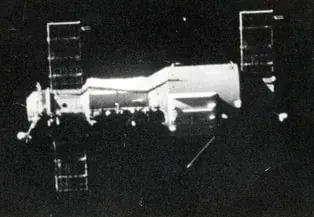
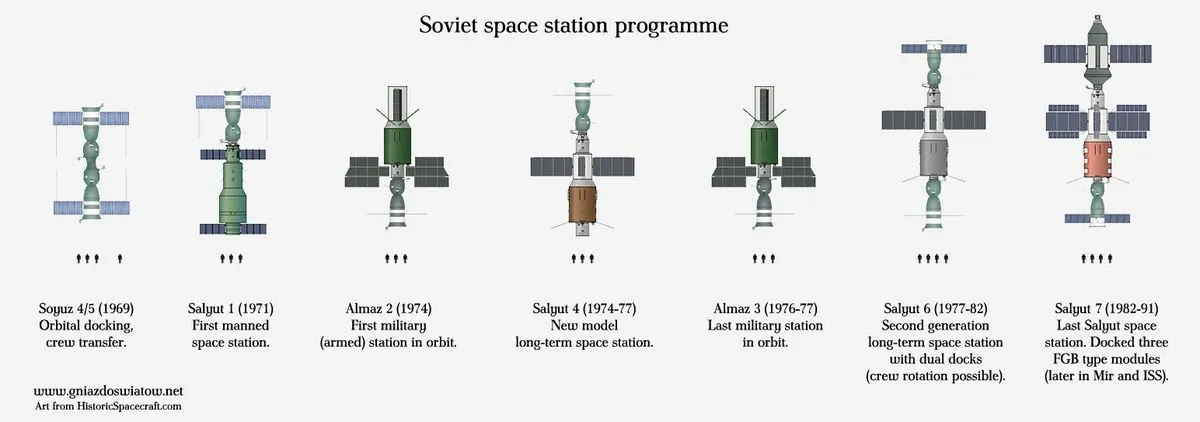
- Salyut 3 & 5 (Almaz stations, USSR, 1974-1977): These were secret military stations, disguised as part of the civilian Salyut program. Designated Almaz, they were equipped with a reconnaissance camera and even a defensive cannon. They demonstrated the dual-use potential of space stations and advanced crew rotation and resupply techniques.
- Salyut 4 (USSR, 1974-1977): A civilian scientific station. It hosted two crews for long-duration missions and was the first to use a new, more reliable solar array design. It represented a major step forward in the reliability and capability of Soviet stations.
The Path to Permanence – The First Long-Term Homes
The lessons of the early stations led to more sophisticated designs focused on crew endurance and scientific output.
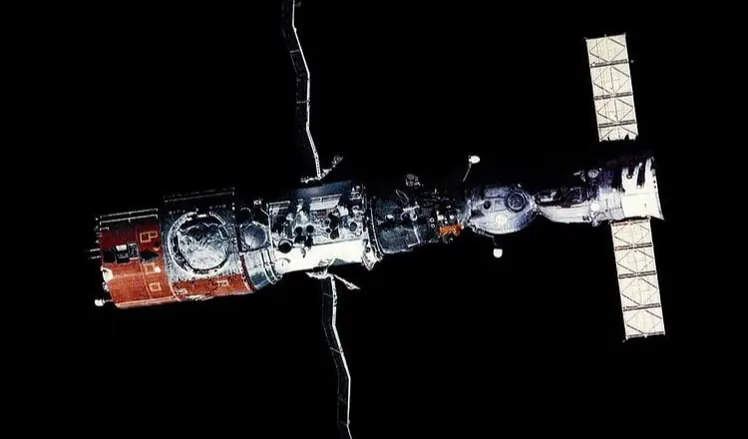
- Salyut 6 (USSR, 1977-1982): A revolutionary design where its key innovation lies in a second docking port, allowing a steady rotation of crews via the Soyuz spacecraft and, regular resupply by uncrewed Progress cargo vehicles. This broke the paradigm of finite missions, enabling near-continuous occupation and turning the station from a temporary camp into a sustainable outpost.
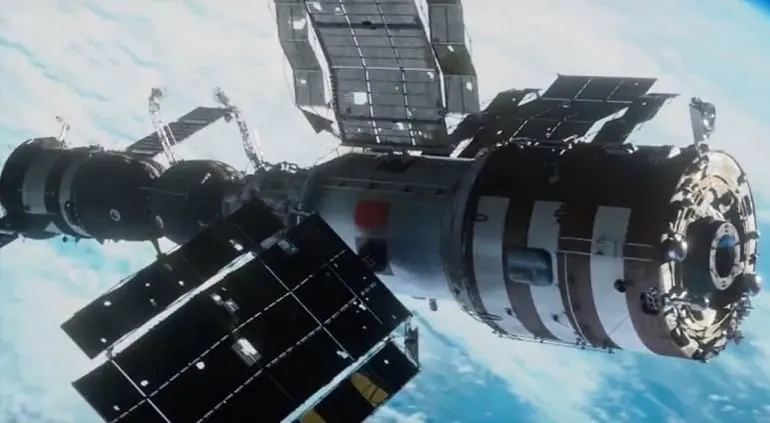
- Salyut 7 (USSR, 1982-1991): The last of the Salyut series. After a total power failure left it dead and frozen in 1985, a crew of two cosmonauts performed the most complex in-orbit repair in history to resurrect it.
 Salyut 6
|
 Salyut 7
|
The Modular Age – Mir and The International Space Station
The next logical leap was modularity: building a station in orbit, piece by piece, like a cosmic set of Lego bricks.
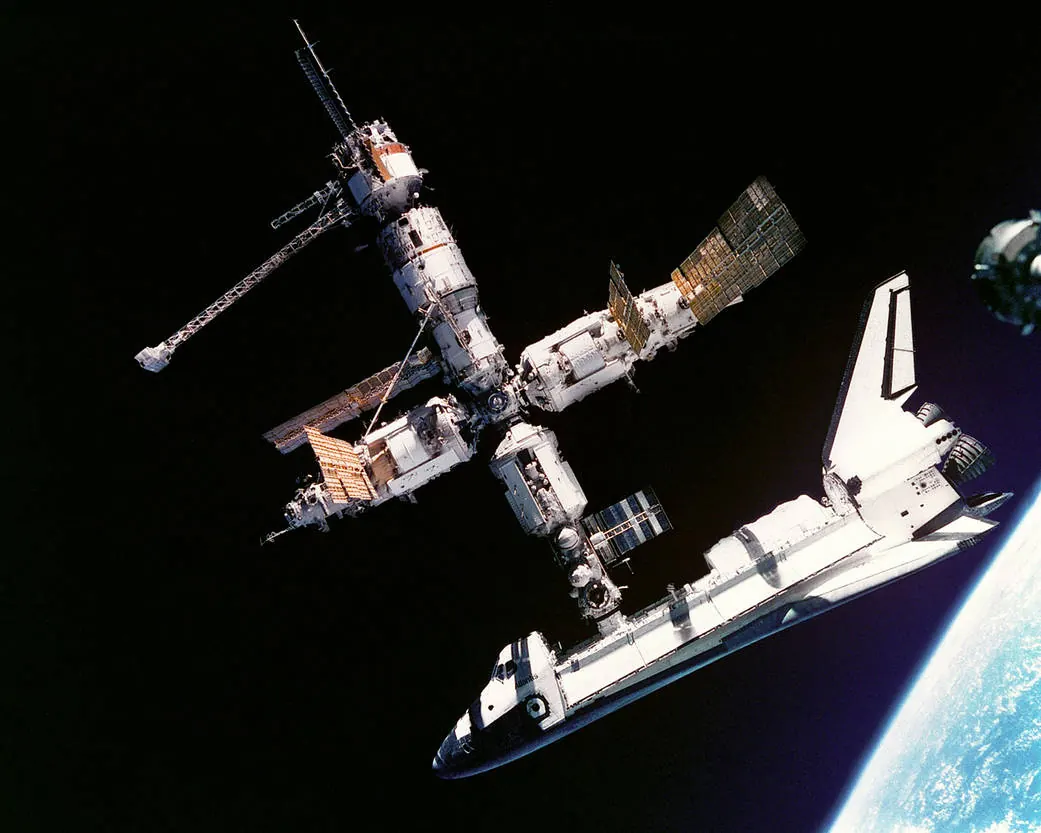
- Mir (USSR/Russia, 1986-2001): The world's first truly modular, long-term space station. Over a decade, it grew from a single core module into a sprawling, complex orbital city. Mir was our first real home in space. It taught us invaluable lessons on how to manage aging systems, conduct continuous science, and handle the psychological challenges of long-term isolation. One of its most important legacy was the Shuttle-Mir program, where American Space Shuttles docked with the Russian station, transforming former Cold War rivals into partners and directly enabling the ISS.
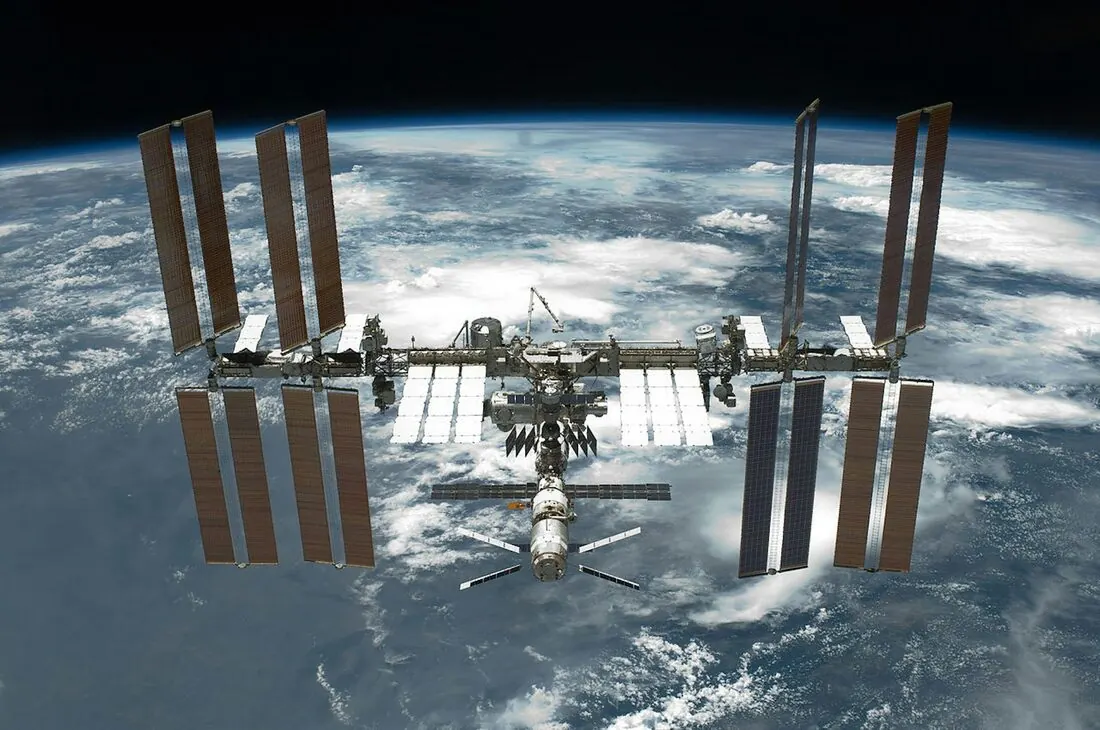
- International Space Station (ISS) (1998-Present): The pinnacle of international cooperation and the largest human-made object in space. A partnership between NASA (USA), Roscosmos (Russia), ESA (Europe), JAXA (Japan), and CSA (Canada), and took a total of 13 years for completion. The ISS is a microgravity laboratory that has hosted continuous human presence for over 23 years. It is the proving ground for technologies for deep space exploration and our greatest symbol of a collaborative, spacefaring future.
 |
 |
A New Dawn – Modern Expansion
The 21st century has seen the model for space stations diversify beyond government-led programs.
- Tiangong-1 & Tiangong-2 (China, 2011-2019): Meaning "Heavenly Palace," these were China's first prototype space stations. They were single-module stations designed to test critical technologies: autonomous rendezvous and docking, life support systems, and medium-duration crew missions. They were resounding successes, proving China's capability and ambition as a major space power.
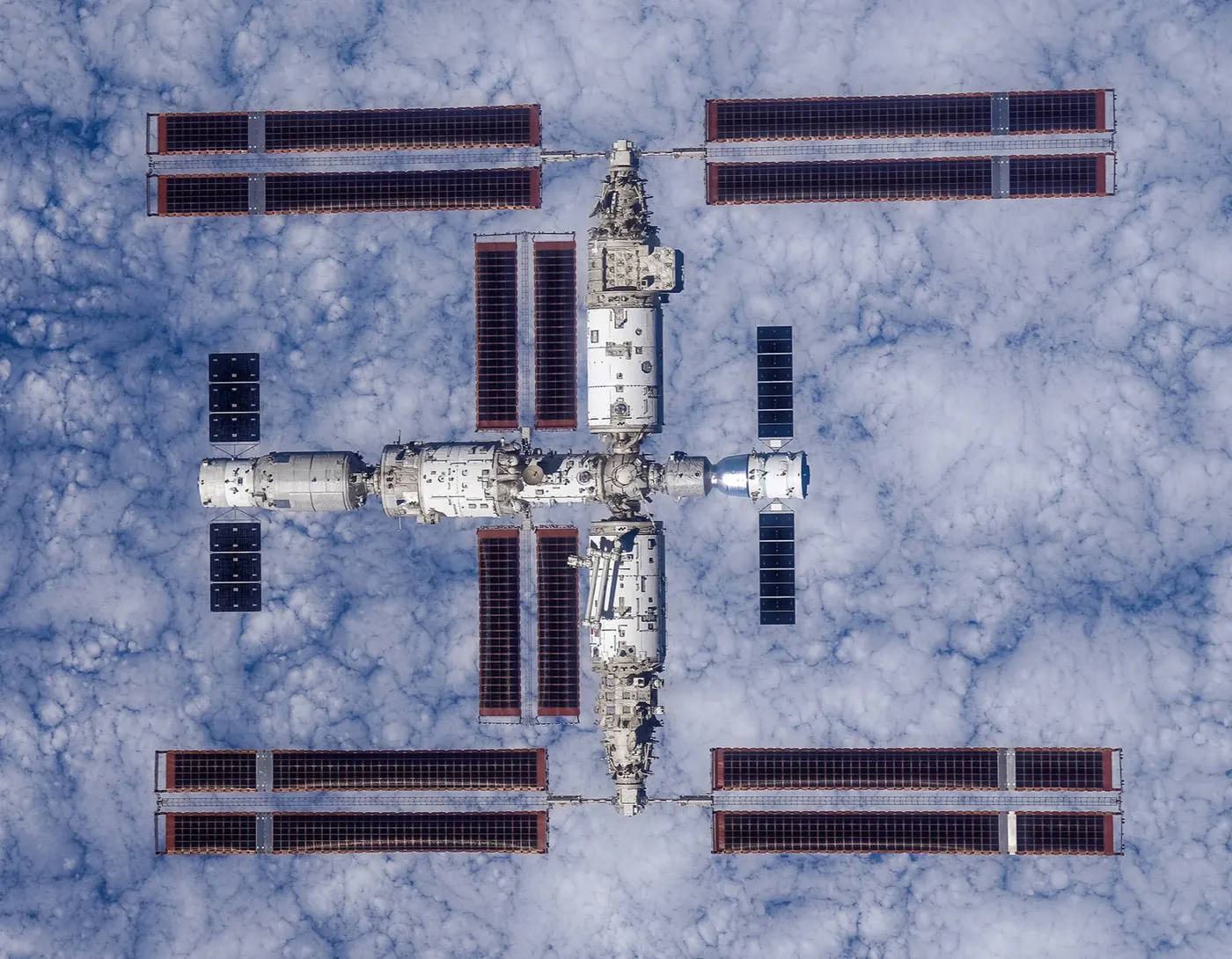
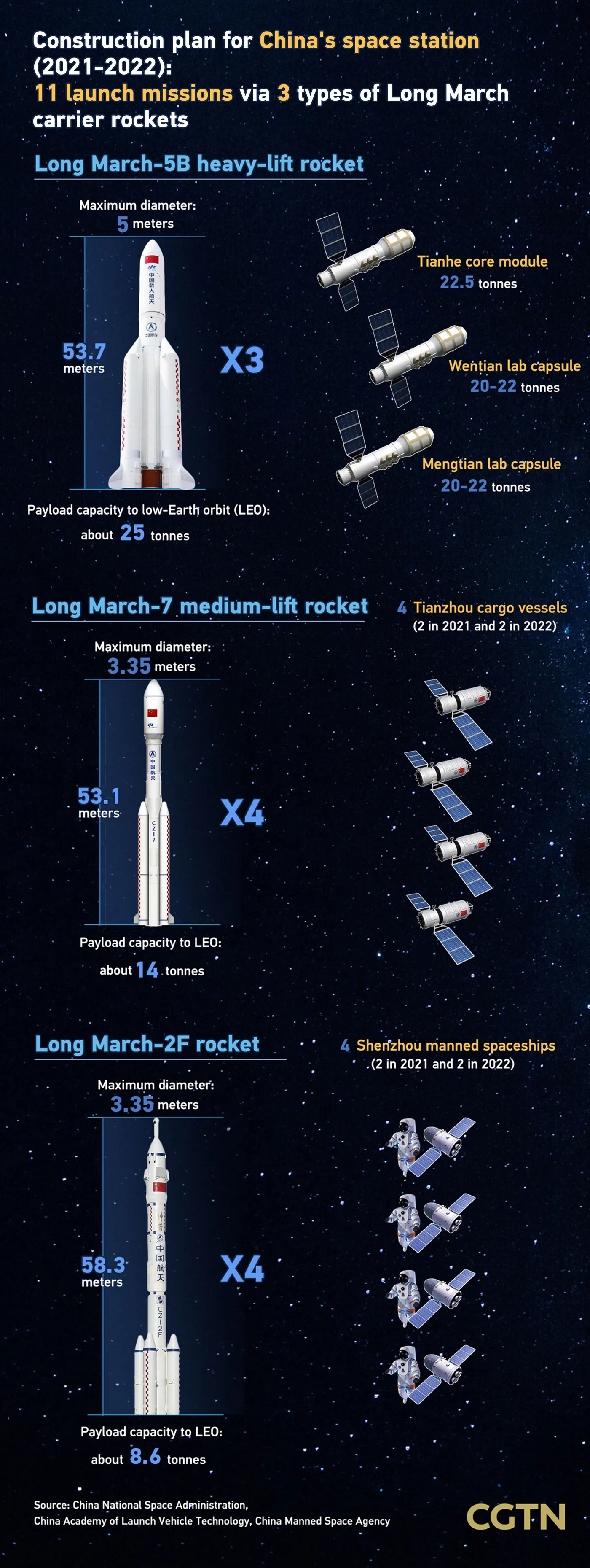
- Tiangong (China, 2021-Present): China's Tiangong Space Station, whose name means "Heavenly Palace," represents a new chapter in orbital habitation. Constructed with remarkable speed between 2021 and 2022, its efficient three-module T-shaped structure contrasts with the sprawling ISS, showcasing a modern, integrated design. Unique features set it apart: a sophisticated robotic arm, the "Sky Arm," can crawl across the station's exterior like an inchworm to assist with repairs and cargo. Furthermore, Tiangong is planned to be accompanied by Xuntian, a Hubble-class space telescope that will co-orbit independently and dock periodically for maintenance and upgrades by taikonauts—a revolutionary approach to space-based astronomy. As a national project that welcomes international experiments and collaboration, Tiangong solidifies China's role as a leader in aerospace development and ensures a continuous human presence in Earth orbit for years to come.