The Science of Gravity and Oceans
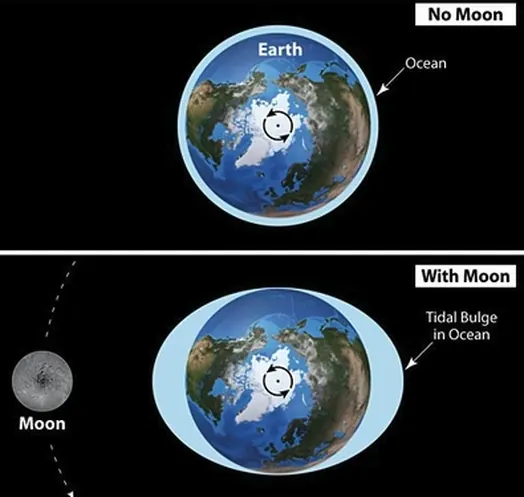
Tides are the rise and fall of sea levels caused by the gravitational forces exerted by the Moon and the Sun, and the rotation of the Earth. Gravity is a pull that exists between all objects with mass. Although the Moon is smaller than the Sun, it is much closer to Earth, which makes its gravitational pull on our oceans more significant. This pull creates a "tidal bulge" where the water reaches its highest point. Because Earth is rotating, a specific location on the coast will pass through these bulges, resulting in the changing water levels observed throughout the day.
The Moon Pulls on Earth’s Oceans
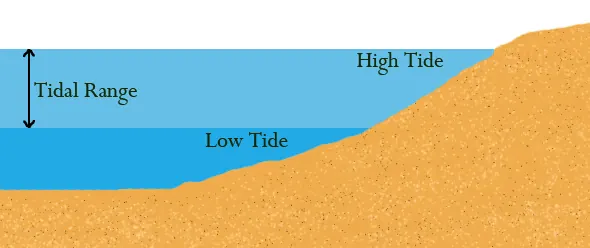
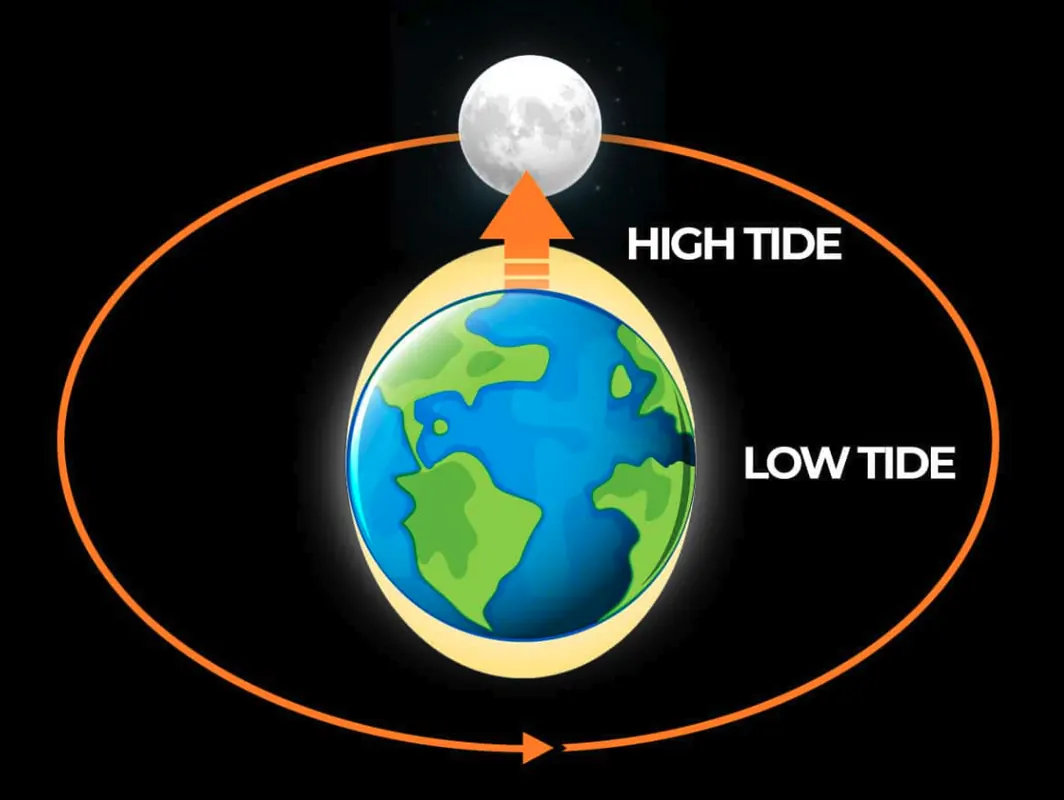
The Moon pulls on Earth’s water with a force called gravity, and this pull makes the ocean water slowly move. On the side of Earth facing the Moon, water is pulled slightly toward the Moon and forms a “bulge” of water, which we experience as a high tide. On the opposite side of Earth, another bulge forms because Earth is pulled slightly away from the water there, creating a second high tide. Areas between these bulges have less water and experience low tides.
Two High Tides and Two Low Tides Each Day
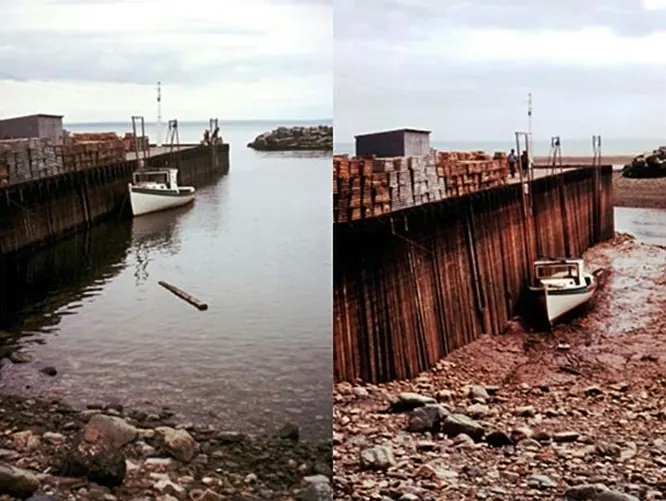
Earth spins once every 24 hours, so different places on the planet move through the ocean bulges during the day and night. As a place on the coast rotates into a bulge, the water level rises and people see high tide; when it moves away from a bulge, the water level falls and people see low tide. Because there are two bulges, most coasts get two high tides and two low tides in about one day. The time of each tide changes slightly from day to day because the Moon is also moving in its orbit around Earth.
The Sun’s Gravity and Tides
The Sun also has gravity that pulls on Earth’s oceans and helps to shape the tides. Even though the Sun is much more massive than the Moon, it is also much farther away, so its effect on tides is weaker than the Moon’s but still important. Ocean tides come from the combined effects of both the Moon’s and the Sun’s gravity acting on Earth. The height of high and low tides changes depending on how the Moon and Sun line up, since their gravitational forces can either combine or oppose each other.
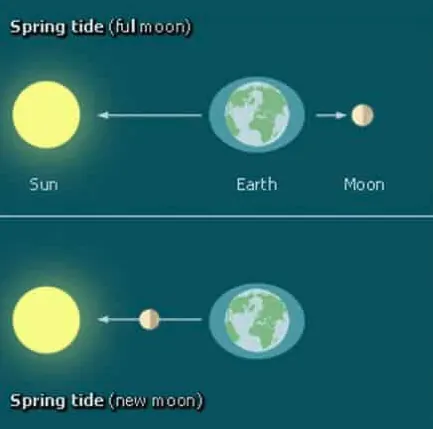
Spring Tides: Extra-Strong High and Low Tides
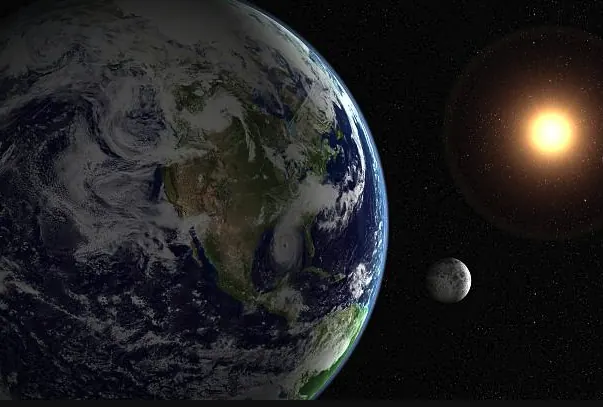
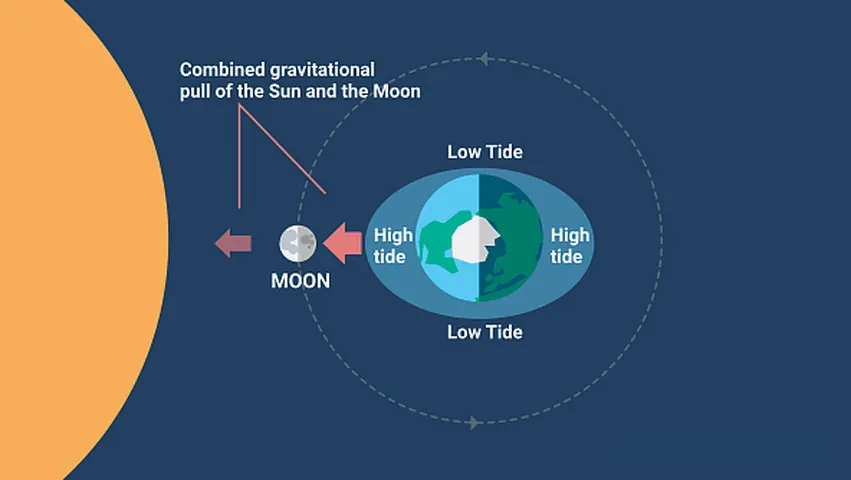
Spring tides occur roughly twice a month, during the Full Moon and the New Moon. Despite the name, they bear no connection to the spring season; the term refers to the water "springing" forth. During these phases, the Earth, Moon, and Sun are aligned in a straight line. The gravitational pull of the Sun adds to the gravitational pull of the Moon. This combined force creates the greatest difference between high and low water, resulting in very high tides and very low tides.
Neap Tides: Gentler High and Low Tides
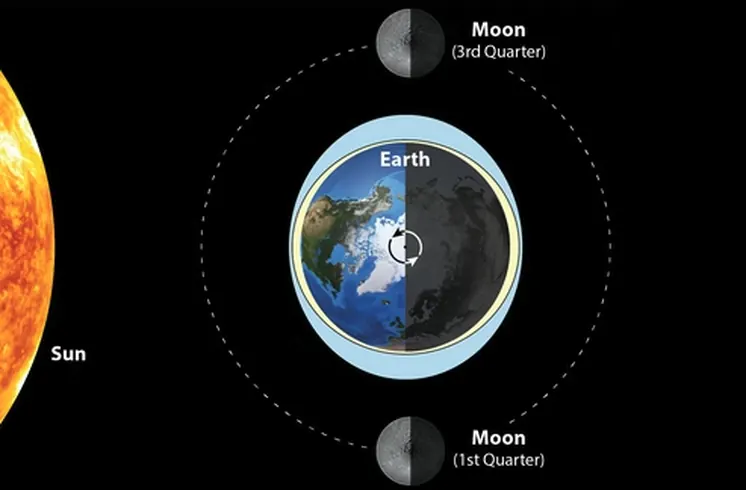
Neap tides occur during the First and Third Quarter Moon phases. At these times, the Moon and the Sun are at right angles (90 degrees) relative to the Earth. In this position, the Sun’s pull partly cancels the Moon’s pull on the oceans. High tides during neap tides are lower than usual, and low tides are higher than usual, so the difference between high and low water is smaller. Neap tides also occur about twice each lunar month, about one week after each spring tide.
Tides and Patterns in Time
The Moon takes about 27 days to go once around Earth, and the changing positions of the Moon and Sun create repeating tidal patterns over days and weeks. Over about one day, places near the ocean usually see a repeating pattern of two high tides and two low tides. Over about two weeks, the pattern of stronger spring tides and gentler neap tides repeats as the Moon changes from new to full and through its quarter phases. These predictable cycles help people plan activities such as sailing, fishing, and building structures near the shore.
 |
 |