Why have we A Lab in Space?
The unique environment of a space station, particularly the persistent state of microgravity, provides a laboratory that cannot be fully replicated on Earth. This setting enables the processes of scientific experiments without the dominating influence of gravity, which affects fluid behavior, heat transfer, and the settling of particles. Research in this domain has led to investigations in biology, physics, and materials science that offer different perspectives on phenomena we observe on our planet.
Biology and Biotechnology
In microgravity, controls on the directionality and geometry of cell and tissue growth can be dramatically different to those on Earth.
- Cell and Tissue Studies:
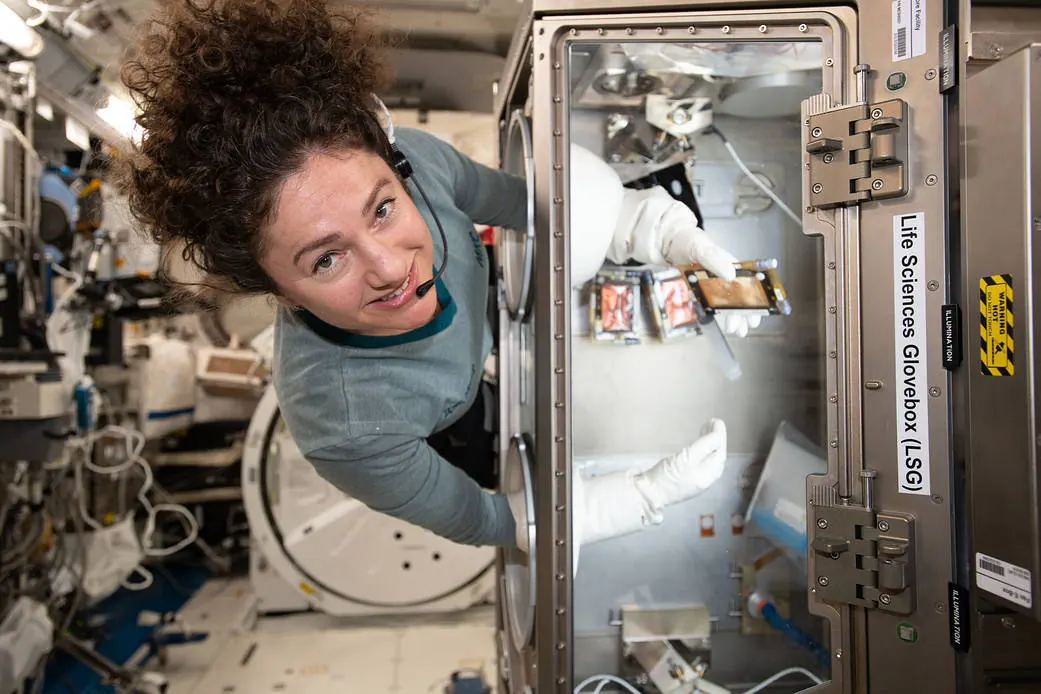
Expedition 62 Flight Engineer Jessica Meir swaps media that nourishes bone samples inside the Life Science Glovebox located in Japan’s Kibo laboratory module. Media Credit: NASA
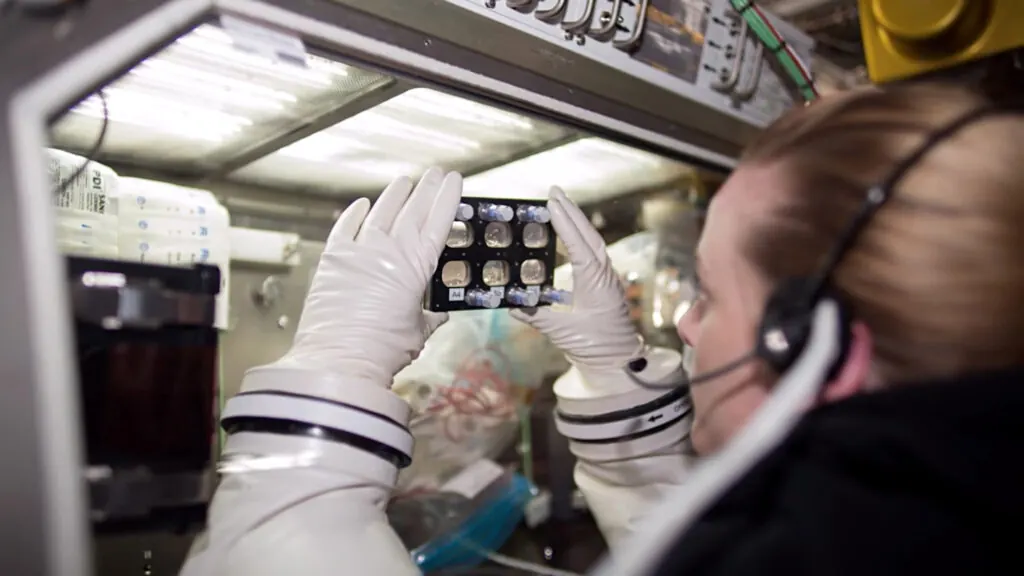
Kate Rubins examines samples of heart cells using the Microgravity Glovebox on the ISS. Media Credit: NASA
- Protein Crystal Growth
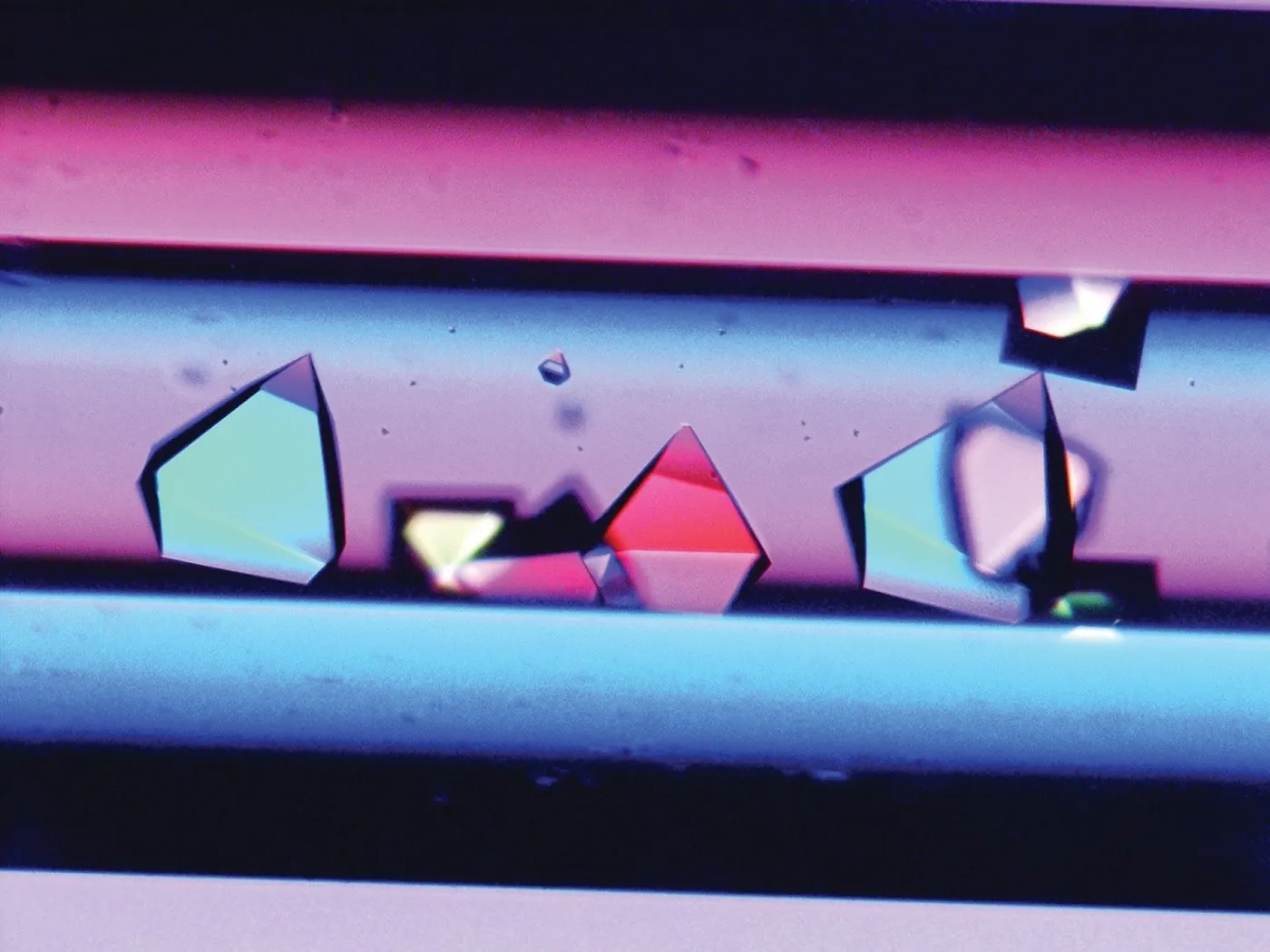
Protein crystals forming in the ISS’s Kibo Module. Media Credit: JAXA
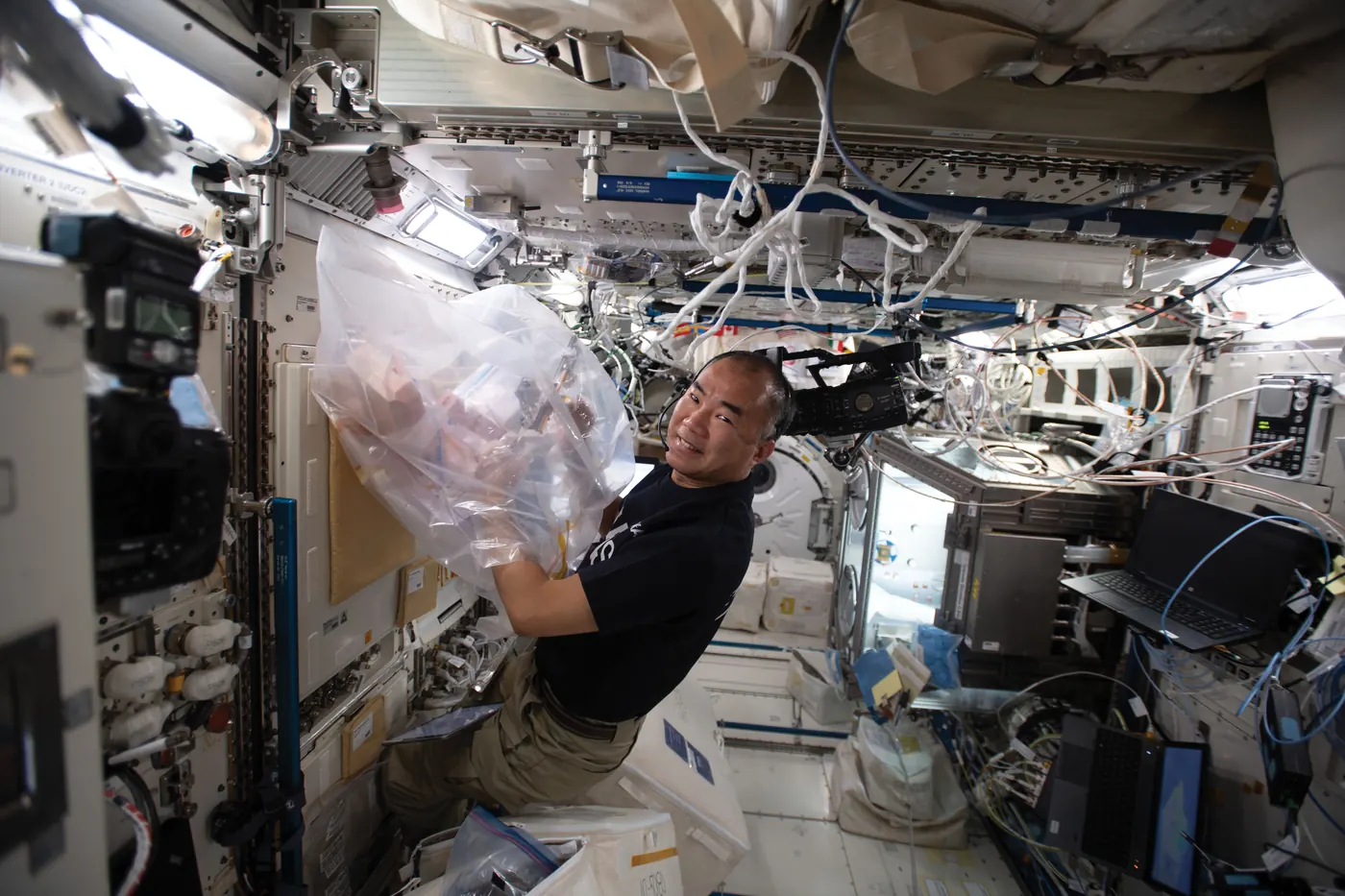
JAXA astronaut Soichi Noguchi works in the JAXA Protein Crystal Growth (PCG) Glove Bag to mix a sample for the JAXA Moderate Temperature Protein Crystallization Growth experiment. Meida credits: NASA
Physical Science
The absence of gravity-driven forces like buoyancy and convection allows physicists to study the fundamental behavior of matter and energy.
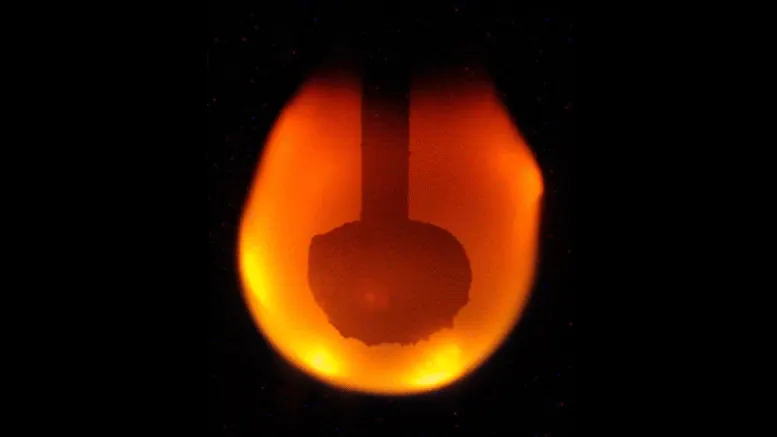
- Combustion Research:
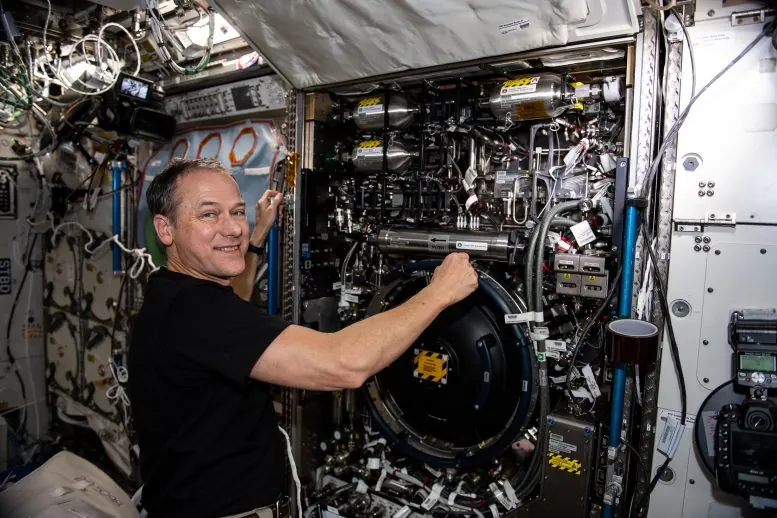 NASA astronaut and Expedition 66 Flight Engineer Thomas Marshburn configures the Combustion Integrated Rack to begin SoFIE operations. Credit: NASA
|
 |
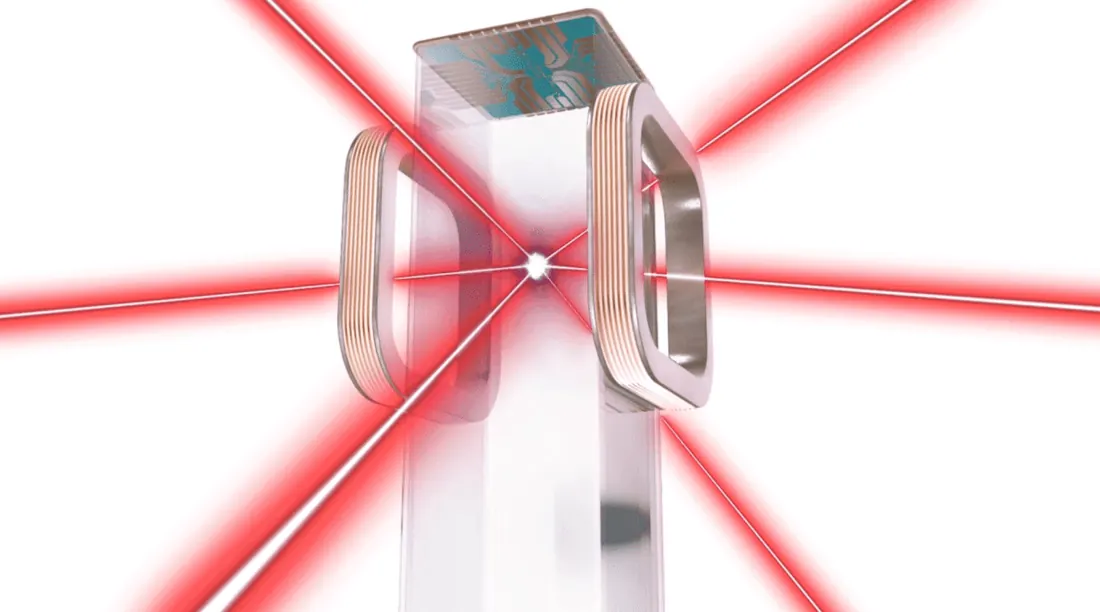
- The fifth state of matter:
Materials Science
Microgravity provides an environment to process and study materials without the density-driven effects that occur on Earth, such as sedimentation and buoyancy.
Testing Spacecraft Materials:
The Materials International Space Station Experiment (MISSE) is a long-running series of experiments that involves mounting sample plates containing hundreds of different materials, coatings, and components on the outside of the ISS . These samples are exposed to the harsh conditions of space, including atomic oxygen, extreme radiation, and temperature swings, for months or years. The data collected is used to select and develop more durable materials for future spacecraft and satellites .
The Materials International Space Station Experiment (MISSE) is a long-running series of experiments that involves mounting sample plates containing hundreds of different materials, coatings, and components on the outside of the ISS . These samples are exposed to the harsh conditions of space, including atomic oxygen, extreme radiation, and temperature swings, for months or years. The data collected is used to select and develop more durable materials for future spacecraft and satellites .

Astronaut Andrew Feustel swaps the MISSE PEC7A & 7B with PEC8 STS-134 Media Credit Wikipedia
Improving Industrial Processes:
CETSOL-MICAST investigate how metal alloys solidify in microgravity. Without gravity causing denser elements to sink, scientists can observe the true fundamental patterns of crystal growth. This knowledge helps improve industrial casting and solidification processes on Earth, potentially leading to metals with better properties .
The CETSOL-2 investigation aims to improve the strength of cast aluminium alloys by studying how they solidify in microgravity. On Earth, uneven cooling creates variations in strength and durability within a single piece. This experiment analyzes how controlling the cooling process and adding microparticles, known as "grain refiners," can create a more uniform and reliable internal structure, data which is crucial for building better computer models and industrial casting processes.
CETSOL-MICAST investigate how metal alloys solidify in microgravity. Without gravity causing denser elements to sink, scientists can observe the true fundamental patterns of crystal growth. This knowledge helps improve industrial casting and solidification processes on Earth, potentially leading to metals with better properties .
The CETSOL-2 investigation aims to improve the strength of cast aluminium alloys by studying how they solidify in microgravity. On Earth, uneven cooling creates variations in strength and durability within a single piece. This experiment analyzes how controlling the cooling process and adding microparticles, known as "grain refiners," can create a more uniform and reliable internal structure, data which is crucial for building better computer models and industrial casting processes.
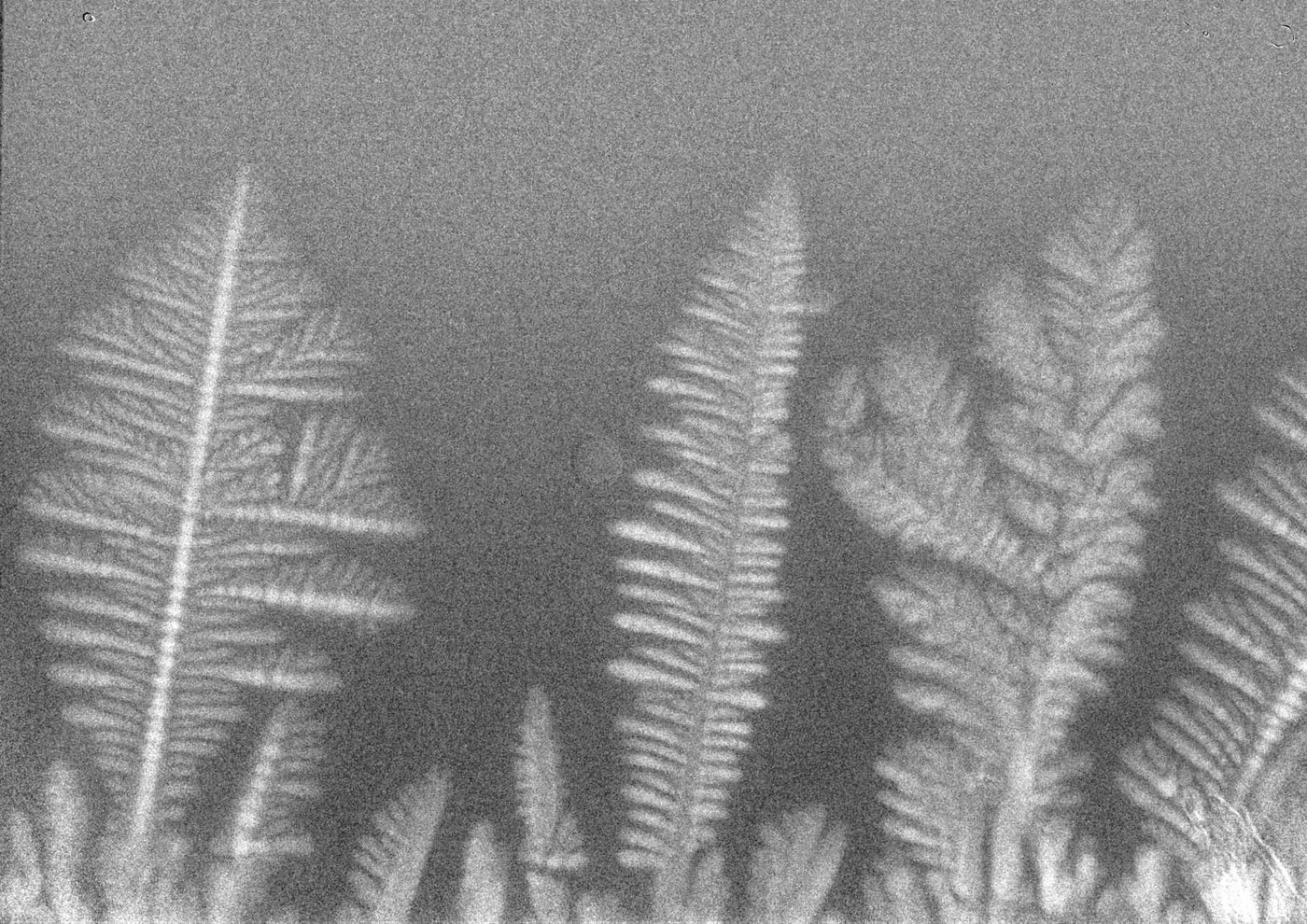 A solidified metal captured on X-ray. Media Credit: ESA
|
 Using the Materials Science Laboratory Media Credit: ESA
|