Meet the Rocky Neighbours
Imagine our Solar System as a giant racing track around the Sun. The four planets closest to the starting line, including Mercury, Venus, Earth, and Mars, are a special team. They are the terrestrial planets.
The word "terrestrial" comes from the Latin word terra, which means "Earth." So, these planets are "Earth-like." It means they are all primarily made of rock and metal, with a solid surface you could stand on (ignoring a lot of other factors). They are the inner planets, huddled close to the warmth of the Sun. Let's take a look at our rocky neighbours!
The word "terrestrial" comes from the Latin word terra, which means "Earth." So, these planets are "Earth-like." It means they are all primarily made of rock and metal, with a solid surface you could stand on (ignoring a lot of other factors). They are the inner planets, huddled close to the warmth of the Sun. Let's take a look at our rocky neighbours!
What Do They Have in Common?
The four terrestrial planets share some common traits:
- Rocky Surface: They have a solid, rocky crust. This surface is covered in mountains, valleys, and plains.
- Metallic Core: Deep inside each is a hot, dense core made mostly of iron and nickel.
- Few Moons: Compared to the giant planets, they have very few moons. Mercury and Venus have none, Earth has one, and Mars has two very small, lumpy ones.
- No Rings: None of the terrestrial planets have rings like Saturn's spectacular ones.
Mercury – The Speedy Scorched World
|
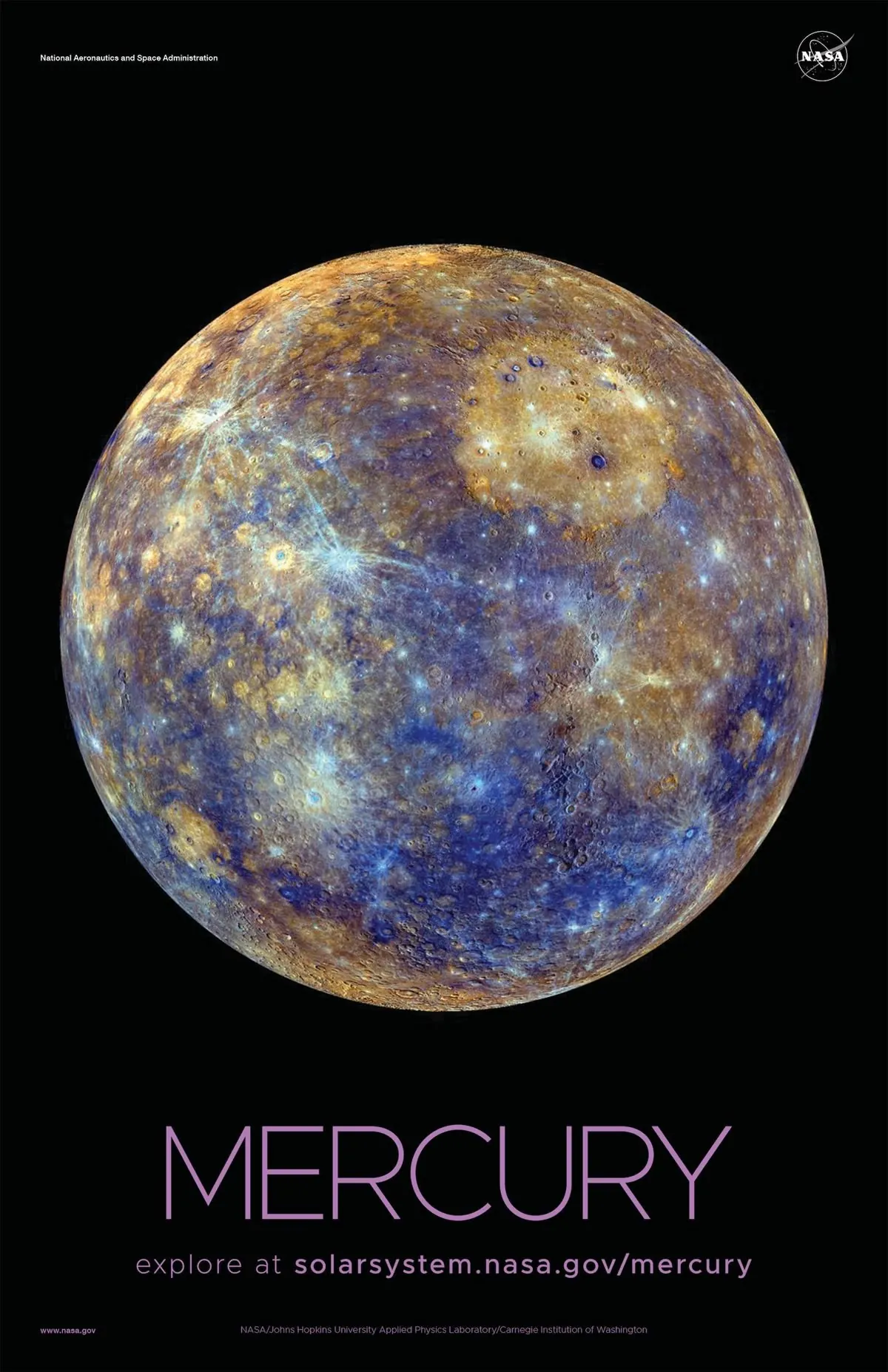
Mercury is the smallest and innermost planet in the Solar System. Its most defining characteristic is the extreme temperature variation on its surface, ranging from 430°C during the day to -180°C at night. This is due to the lack of a substantial atmosphere to retain heat.
Its surface is heavily cratered, resembling that of Earth's Moon, and is geologically inactive. Mercury possesses only a thin exosphere, composed of atoms blasted off its surface by solar radiation and micrometeoroid impacts, resulting in no appreciable weather. The planet has an unusual orbital relationship with the Sun. It completes an orbit (Mercury Year) every 88 Earth days, the fastest revolution in the Solar System, yet its rotational period (Mercury Day) is much slower, taking 59 Earth days to complete a single rotation. Interesting facts:
|
 |
Venus – The Cloudy, Volcanic Twin
|
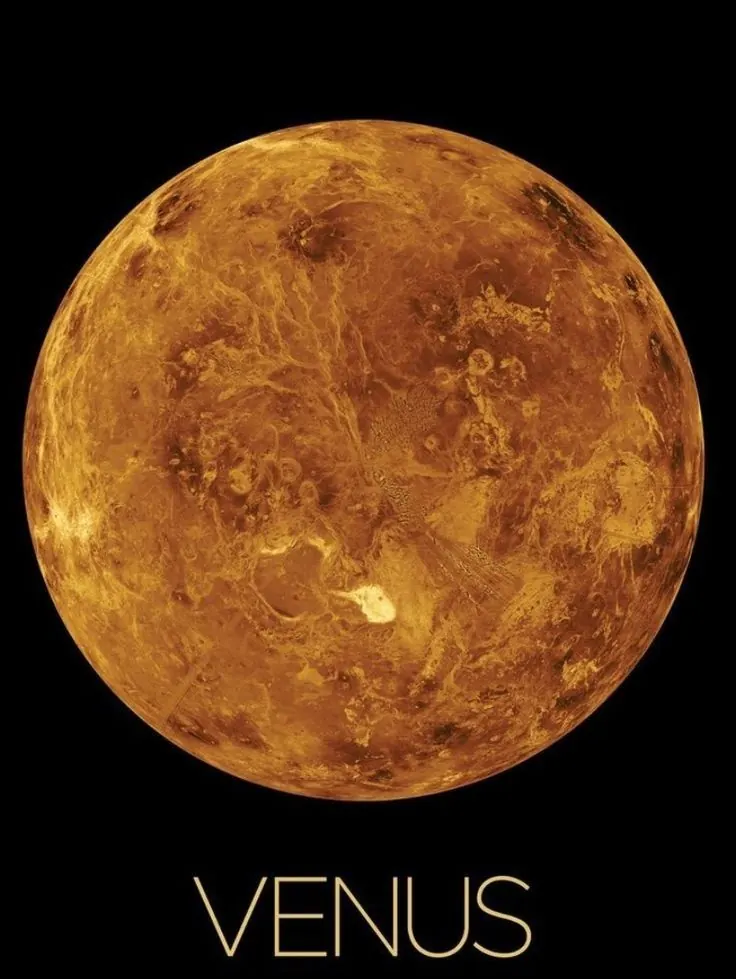
Venus, the second planet from the Sun, is often termed Earth's "twin" due to its similar size and mass. However, its environmental conditions are profoundly different and hostile.
It is the hottest planet in the Solar System, with a constant surface temperature of approximately 465°C, a result of an extreme runaway greenhouse effect. The atmosphere is immensely dense, composed primarily of carbon dioxide with clouds of sulfuric acid, creating a surface pressure over 90 times that of Earth's. The Venusian surface is a volcanic landscape, dominated by vast plains, shield volcanoes, and evidence of extensive past lava flows. Venus also exhibits unique orbital mechanics. It has a retrograde rotation, spinning clockwise on its axis, unlike the counterclockwise spin of most other planets. Consequently, a solar day on Venus (117 Earth days) is distinct from its sidereal rotation period of 243 Earth days, which is indeed longer than its orbital year of 225 Earth days. Interesting facts:
|
 |
Earth - A Dynamic Habitable World
|
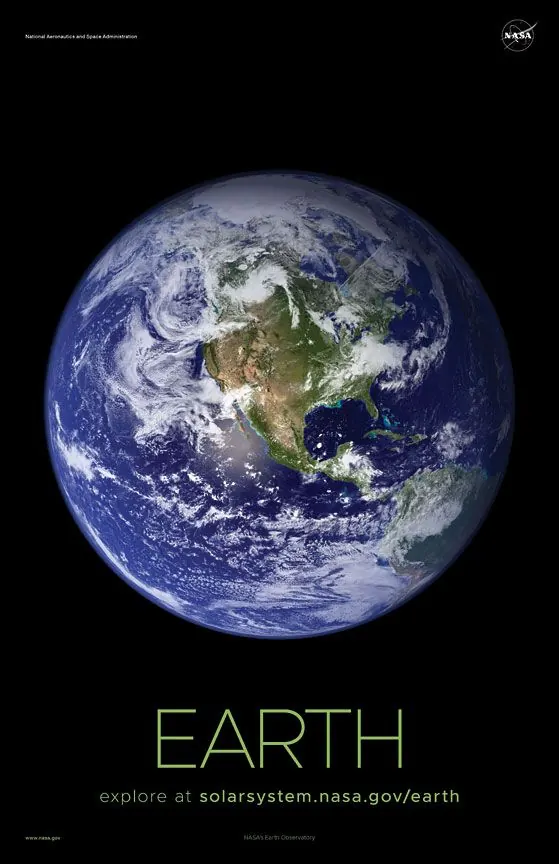
Earth, the third planet from the Sun, is the largest and densest of the terrestrial planets. It is distinguished by its ability to sustain liquid water on its surface and is the only known astronomical object to host life.
This habitability stems from its location within the Sun's habitable zone and the presence of a stabilizing atmosphere composed primarily of nitrogen and oxygen. This atmosphere provides protection from solar radiation and frequent small-body impacts. Earth's surface is geologically active, with a crust divided into tectonic plates whose movement shapes continents, mountains, and ocean basins. It is also the only planet with persistent surface oceans. Earth has one large natural satellite, the Moon, which stabilizes the planet's axial tilt and drives oceanic tides. The Earth-Moon system is dynamic; tidal interactions cause the Moon to recede from Earth at approximately 3.8 cm per year. Interesting facts:
|
 |
Mars: The Desert World
|
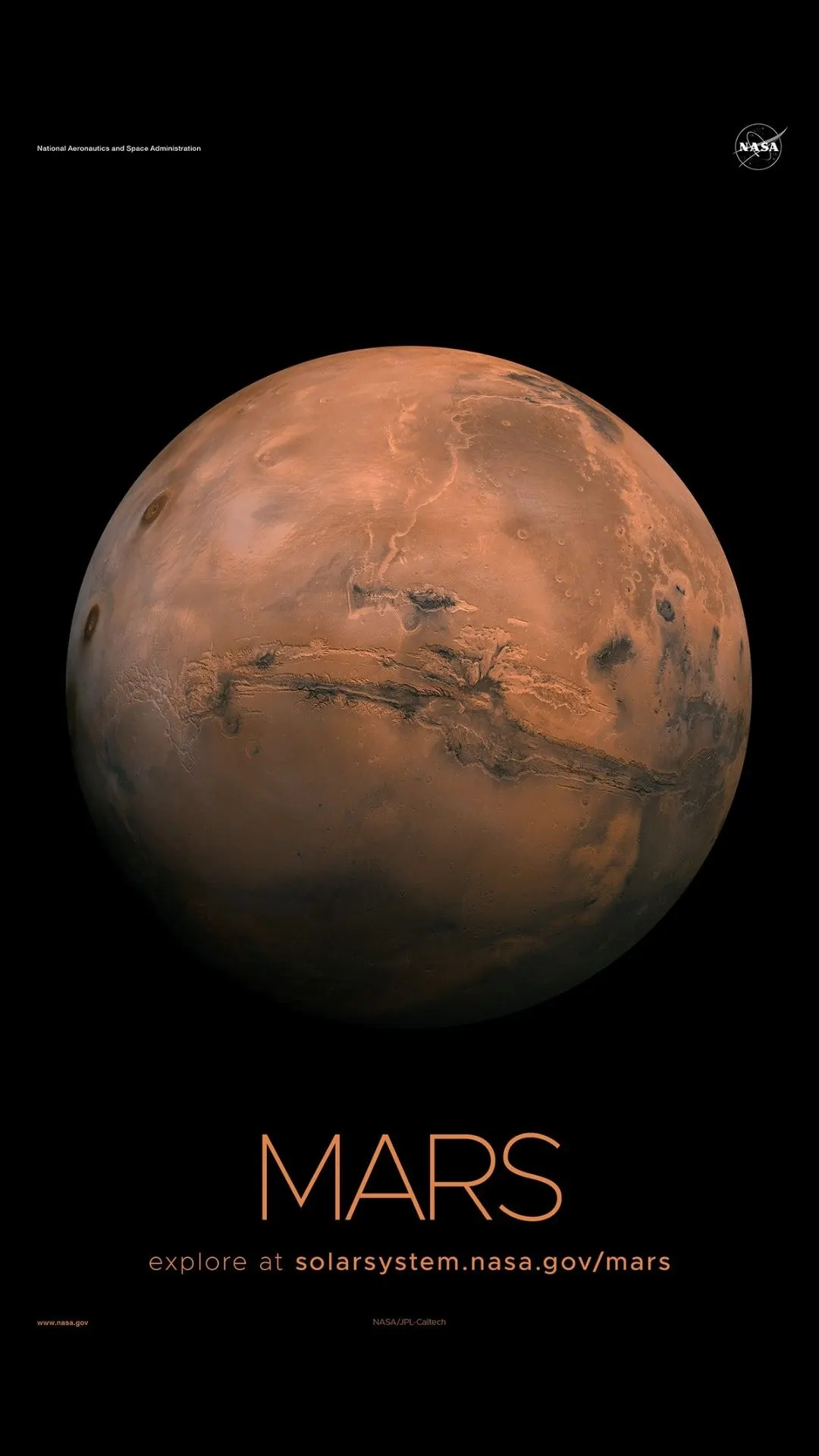
Mars, the fourth planet from the Sun, is a cold, desert world characterized by its distinct reddish hue, a result of iron oxide (rust) prevalent on its surface. It possesses a thin atmosphere composed primarily of carbon dioxide, which provides negligible protection from solar radiation and offers minimal greenhouse warming, resulting in an average surface temperature of -63°C.
The Martian landscape is defined by extreme geological features, including Valles Marineris, a vast canyon system, and Olympus Mons, the largest volcano in the Solar System. Evidence of ancient riverbeds and deltas indicates that liquid water once flowed on its surface. The planet's polar caps consist of a mixture of water ice and frozen carbon dioxide ("dry ice"). Mars has two small, irregularly shaped natural satellites, Phobos and Deimos, which are thought to be captured asteroids. Phobos is gradually spiraling inward due to tidal forces and is predicted to either impact the Martian surface or disintegrate into a planetary ring system in tens of millions of years. Interesting facts:
|
 |