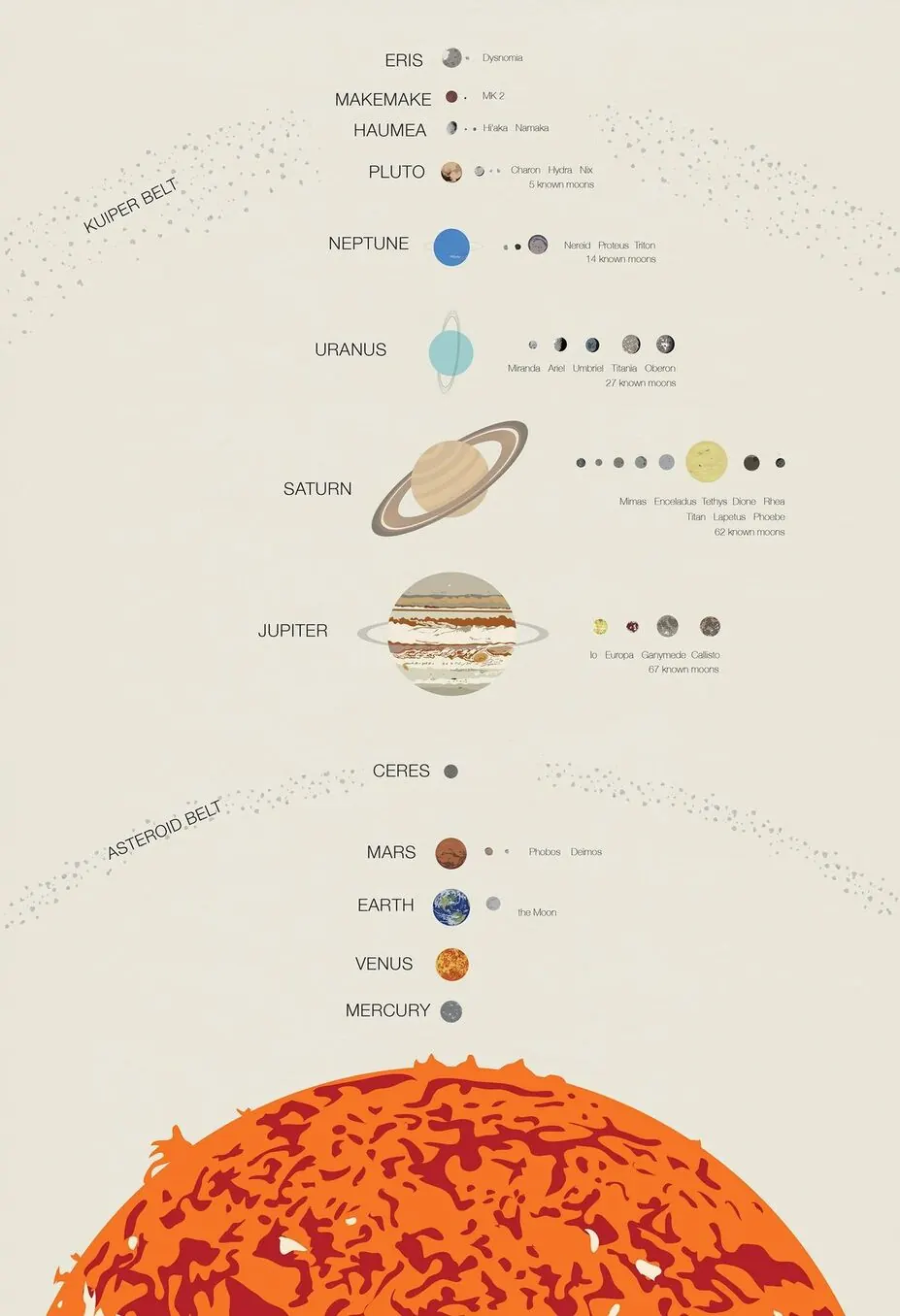
The Cosmic Nursery: NebulaA nebula is a vast interstellar cloud composed primarily of hydrogen and helium gas, along with microscopic dust particles. The term, derived from the Latin for "cloud," refers to these cosmic structures that serve as the fundamental raw material for star and planet formation. Consequently, nebulae are often called stellar nurseries, as they are the regions where new stars are born.
Nebulae originate from two main sources.
|
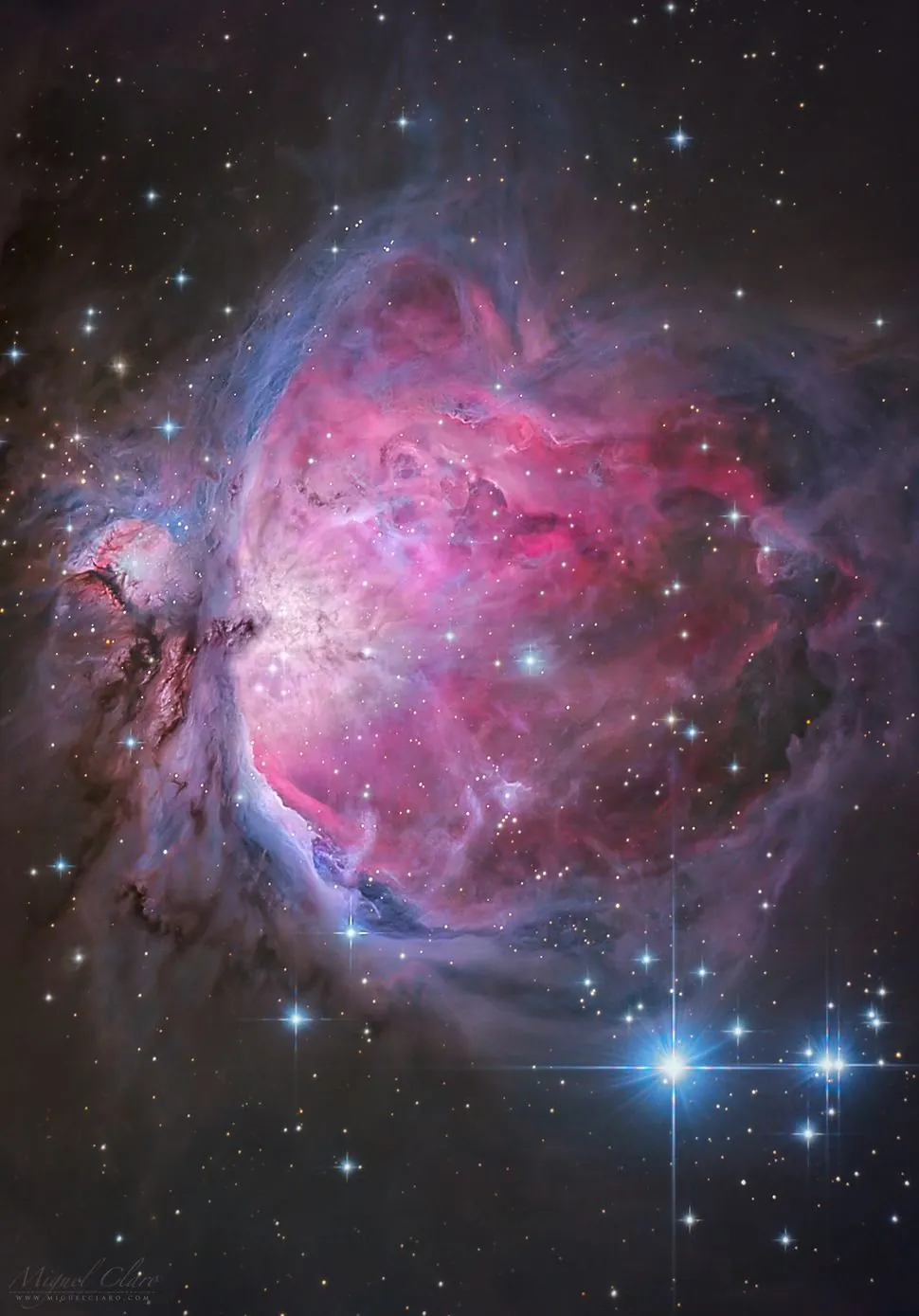 Messier 42, the Orion Nebula spans about 24 light-years across. The image is captured in the visible light spectrum.
|
The beginning of our solar system
Approximately 4.6 billion years ago, the solar nebula—a giant cloud of gas and dust—began to collapse. This collapse was likely triggered by a shockwave from a nearby supernova, which compressed the nebula and allowed gravity to pull the material inward.
The nebula consisted of:
- Gas (99% of mass): Mostly hydrogen (~90%) and helium.
- Dust (1% of mass): Microscopic particles of heavier elements (e.g., iron, silicon) and compounds like silicates and ices, which provided the solid seeds for planet formation.
The nebula consisted of:
- Gas (99% of mass): Mostly hydrogen (~90%) and helium.
- Dust (1% of mass): Microscopic particles of heavier elements (e.g., iron, silicon) and compounds like silicates and ices, which provided the solid seeds for planet formation.
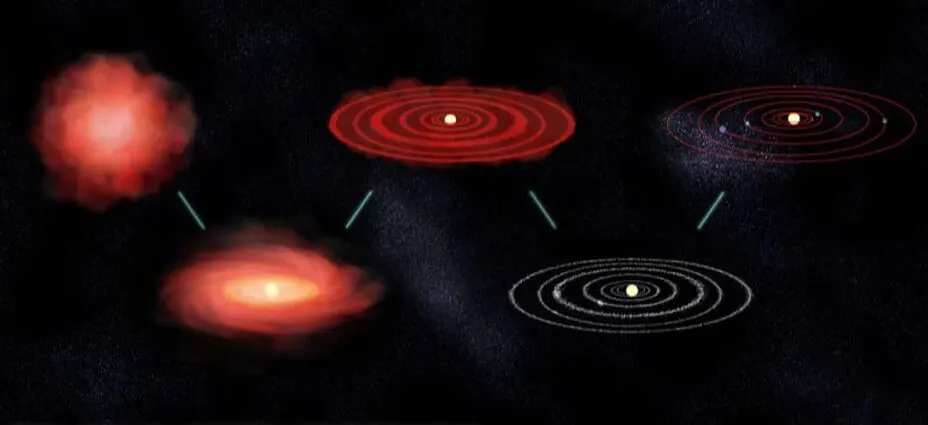
Solar System Formation
- The Solar Nebula: A vast, cold cloud of gas and dust begins to slowly rotate and collapse under its own gravity, likely triggered by a shockwave from a nearby supernova.
- The Forming Protoplanetary Disk: As the nebula collapses, it spins faster and flattens into a disk due to the conservation of angular momentum. Most material is pulled toward the centre forming a hot, dense centre called a protostar.
- Accretion of Planetesimals: Within the cooled outer disk, particles of dust and ice collide and stick together through electrostatic forces. This process, called accretion, gradually builds these tiny grains into kilometer-sized, solid bodies known as planetesimals.
- The Growth of Protoplanets: The largest planetesimals use their stronger gravity to attract more material, clear their orbital paths, and grow massively through collisions. These objects become protoplanets, the precursors to modern planets.
- The Modern System: The central star ignites nuclear fusion, becoming the Sun. Its solar wind blows away the remaining gas in the disk. The gravitational influence of the newly formed giant planets clears most leftover debris, leaving behind the Sun, eight planets, and minor bodies like asteroids and comets.