Introduction to the Icy Worlds
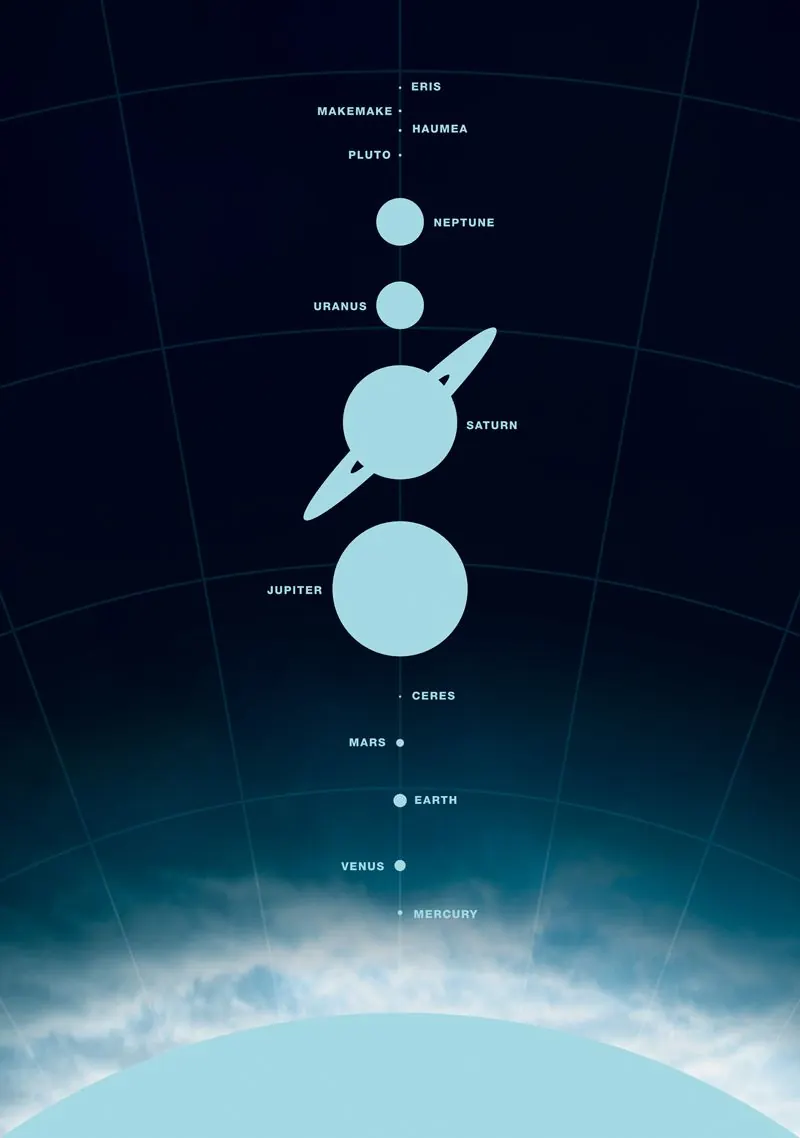
Beyond the gas giants, Uranus and Neptune form a distinct planetary class: the ice giants. They are distinguished from Jupiter and Saturn by a higher proportion of ices like water and methane mixed with rock and metal, overlaid by a hydrogen-helium atmosphere. This fundamental difference in composition underpins their unique characteristics.
 |
 |
Uranus: The Tilted Ice Giant
|
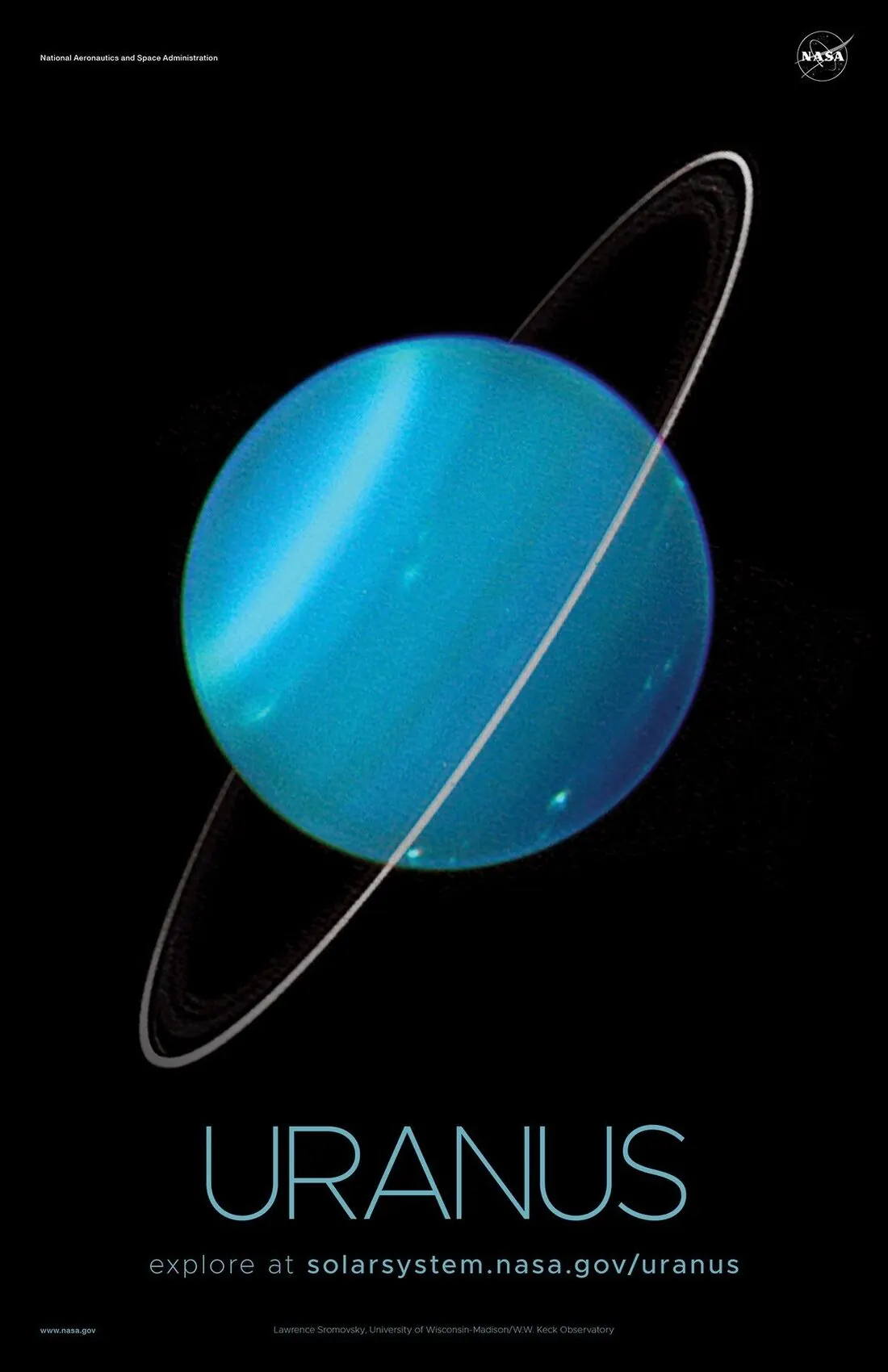
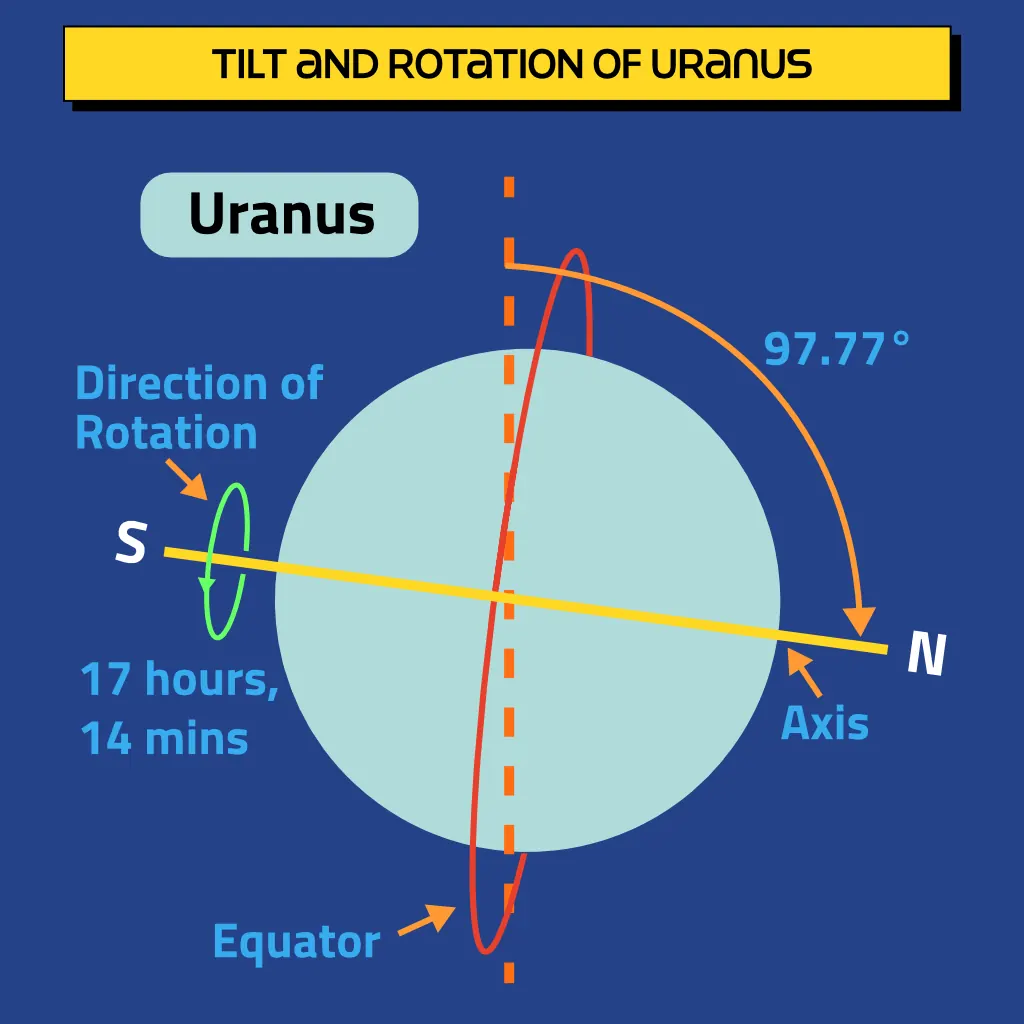
Uranus is distinguished by its extreme axial tilt of approximately 98 degrees, which results in a rotational axis that lies nearly parallel to the plane of its orbit. This configuration means that during its 84-Earth-year orbital period, each pole points almost directly at the Sun for a quarter of the orbit, leading to radical seasonal cycles. A hemisphere will experience 42 years of continuous sunlight followed by 42 years of darkness.
The cause of this tilt is widely theorized to be a collision with a planetary-sized body early in the Solar System's history, which may have also contributed to the planet's current thermal profile by disrupting its core and releasing its primordial heat reservoir in a single, ancient event. The atmosphere of Uranus, composed primarily of hydrogen and helium with a few percent methane, appears as a featureless, pale cyan disk for much of its orbit. The methane gas absorbs red light, giving the planet its color. Its apparent blandness is attributed to a lack of strong internal heat driving atmospheric convection, though discrete cloud features and storms have been observed, particularly around its equinoxes when solar heating becomes more uniform. |
 |
Interesting fact:
- Uranus requires 84 Earth years to complete a single orbit around the Sun, but a retrograde rotation period of only 17 hours and 14 minutes.
- Its rotational axis is tilted by approximately 97.77 degrees, causing it to orbit on its side.
- The planet has 13 known rings, which are notably dark and narrow; the rings are composed of likely ice and organic material.
- Uranus possesses 28 known moons, named after characters from the works of Shakespeare and Alexander Pope. Its major moons, including Miranda, Ariel, Umbriel, Titania, and Oberon, show evidence of complex geological histories.
- Due to its extreme tilt and long orbital period, each of its poles experiences around 42 years of continuous sunlight followed by 42 years of darkness.
Neptune: The Dynamic Ice Giant
|
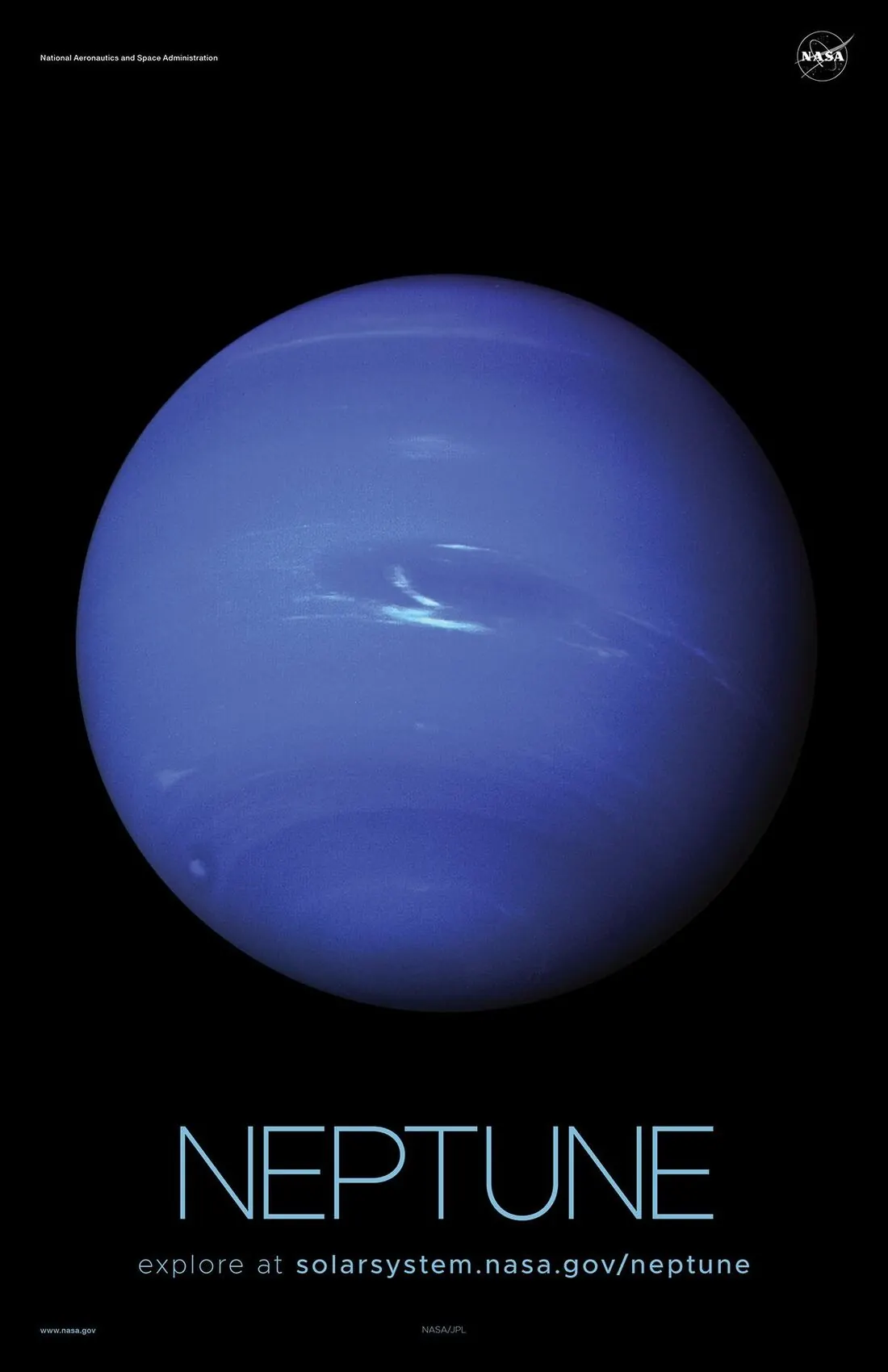
Neptune presents a stark contrast to Uranus in its atmospheric activity and energy balance, despite their similar sizes and bulk compositions. Neptune's axial tilt is a more conventional 28 degrees, resulting in seasonal changes similar to, though much longer than, those on Earth.
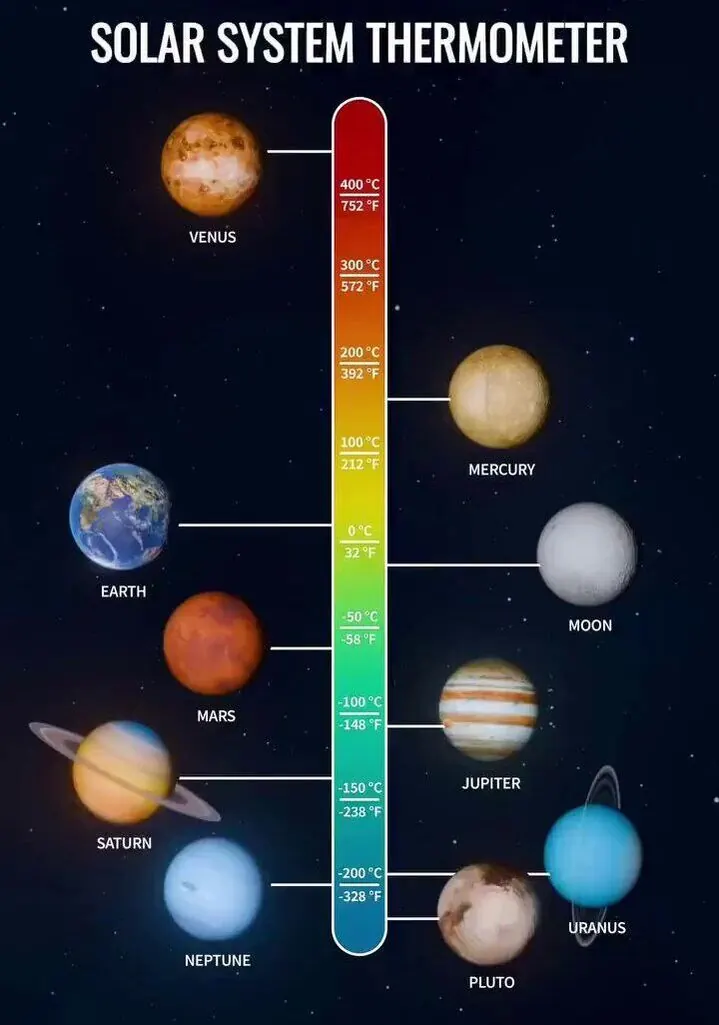
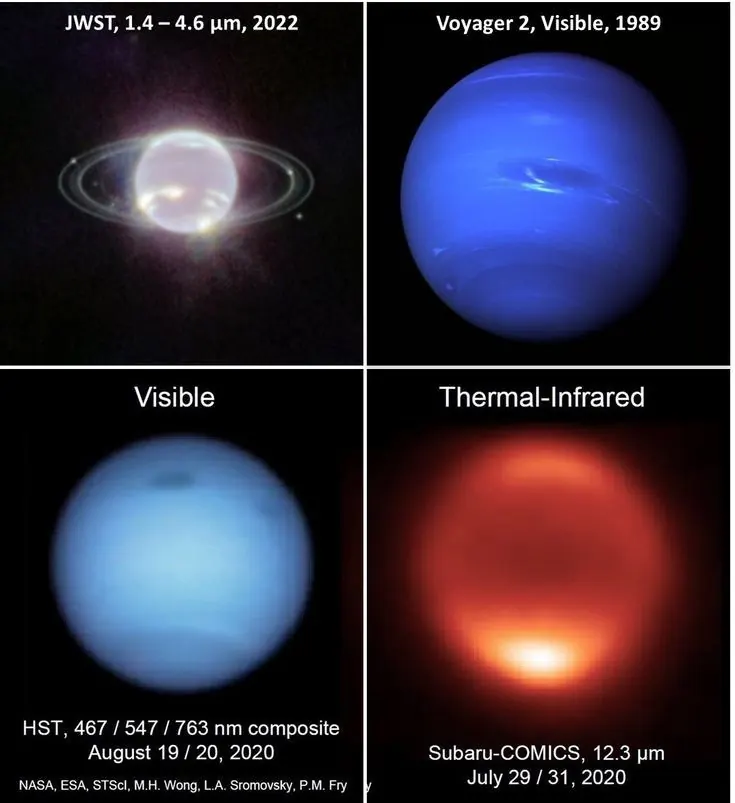
A key differentiator is its substantial internal heat source; Neptune radiates about twice as much energy as it receives from the Sun. This significant internal energy drives the most violent weather system observed on any planet in the Solar System, with winds exceeding 2,000 km/hr. Its atmosphere, also rich in methane, exhibits a deeper and more vivid blue hue than Uranus, suggesting the presence of an additional, unknown atmospheric component that modifies the coloration. The planet's dynamic nature is evidenced by constantly changing cloud patterns, high-altitude methane ice clouds, and the recurring appearance of large, dark anticyclonic storms like the Great Dark Spot observed by the Voyager 2 spacecraft. These features demonstrate that Neptune's meteorology is primarily powered by its internal heat, overcoming the minimal solar energy it receives at a distance of 30 astronomical units. |
 |
Interesting fact:
- Neptune's orbital period is approximately 165 Earth years, meaning it has completed only one orbit since its discovery in 1846.
- It has 14 known moons. The largest, Triton, is unique as it orbits in a retrograde direction (opposite to Neptune's rotation), strongly suggesting it is a captured Kuiper Belt object.
- Triton is geologically active, with cryovolcanoes that erupt nitrogen gas and dust particles into its thin atmosphere.
- The planet has 5 principal rings, which are faint and contain arcs of dust.
- Despite being the farthest known major planet from the Sun, Neptune's substantial internal heat drives the fastest winds in the Solar System, measured at over 2,000 km/hr.