Introduction
Beyond the Asteroid Belt, the architecture of the Solar System shifts from rocky, terrestrial planets to the realm of the gas giants. These are planets not composed primarily of solid rock or metal, but of vast envelopes of hydrogen and helium, the same elements that constitute the Sun. Jupiter and Saturn are the two largest of these giants and represent a class of planet fundamentally different from the inner worlds. Their study provides insight into the conditions of the early solar nebula and the diverse planetary systems that can form around a star.
Jupiter
|
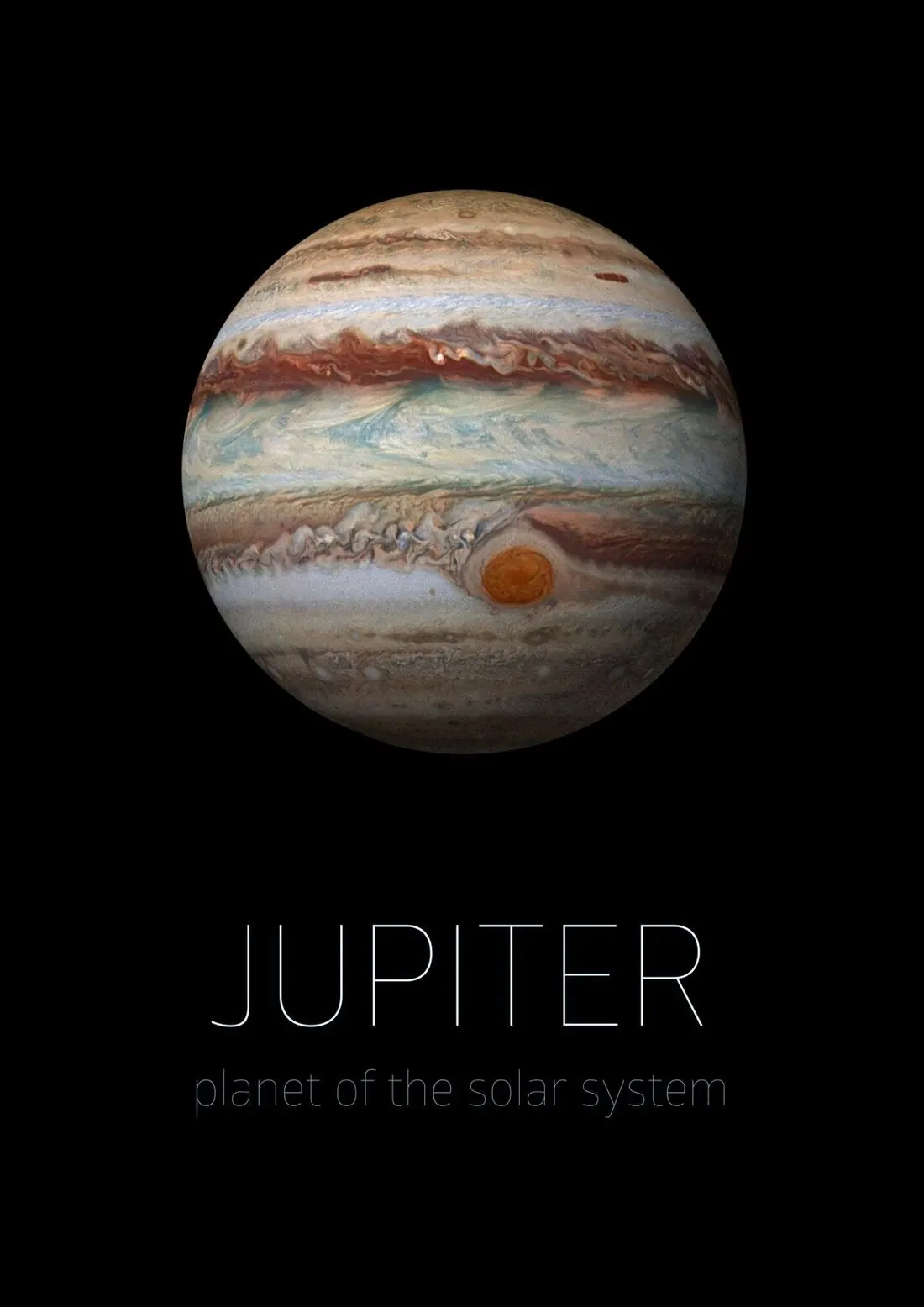
Jupiter is the most massive planet in our Solar System, containing more than twice the mass of all the other planets combined. The planet's atmosphere is characterized by prominent cloud bands, which are streams of gas moving at high speeds in alternating directions, and persistent atmospheric features, the most famous being the Great Red Spot. This spot is a giant storm, larger than Earth, that has been observed for centuries. The composition of Jupiter's atmosphere is predominantly molecular hydrogen and helium, with minor amounts of other compounds like methane, ammonia, and water vapor, which create the planet's distinctive tan and orange coloration.
Beneath the cloud tops, the immense pressure compresses hydrogen into a liquid state. Deeper still, this liquid hydrogen is thought to transition into a metallic form. This layer of metallic hydrogen, which does not exist naturally on Earth, is a highly efficient electrical conductor. It is within this layer that Jupiter's powerful magnetic field is generated, the strongest of any planet in the Solar System. Jupiter may possess a core, though its nature is not fully understood. Current models suggest a dense core of rock and ice, possibly ten to twenty times the mass of Earth, but it is likely diffused and mixed with metallic hydrogen due to the extreme pressures and temperatures. |
 |
Interesting Facts about Jupiter
- The Great Red Spot has been shrinking in observational records for the last century.
- Despite its size, Jupiter has the shortest day of all the planets, completing a rotation in approximately 10 hours.
The Moons of Jupiter
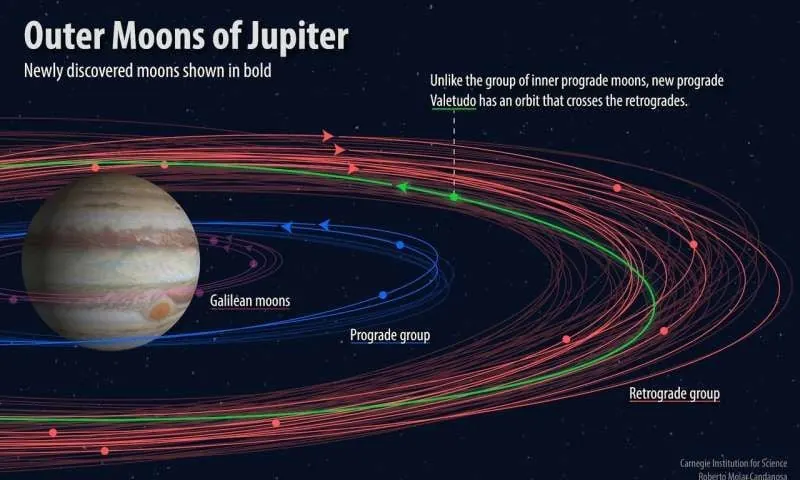
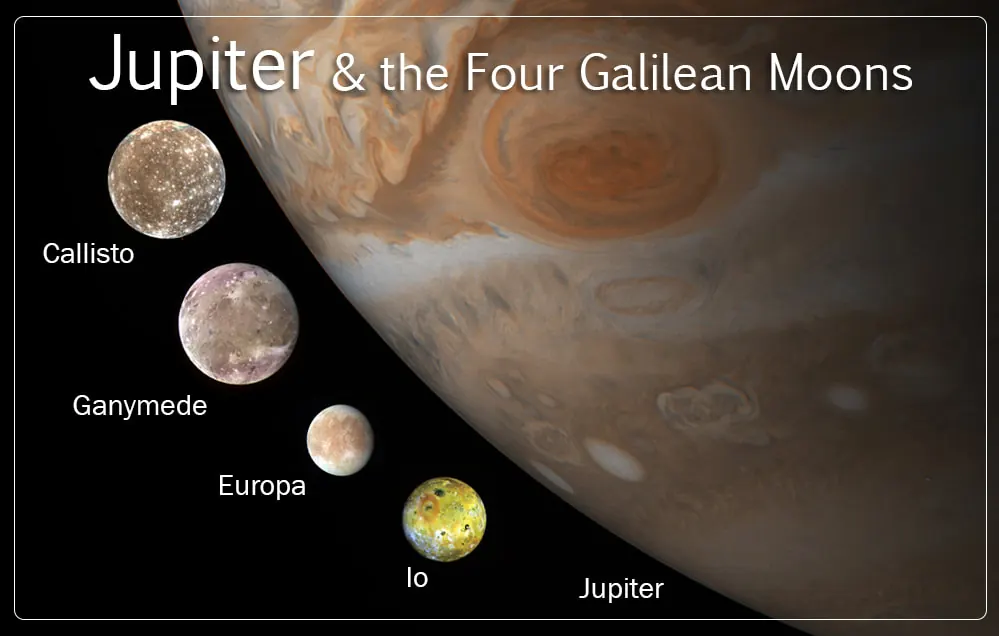
Jupiter hosts a vast system of at least 95 moons, often considered a miniature solar system in its own right. The four largest, known as the Galilean moons, were discovered by Galileo Galilei in 1610 and each present unique characteristics:
- Io is the most volcanically active body in the Solar System, with hundreds of volcanoes constantly resurfacing it with sulfur and silicate rock.
- Europa has a smooth, icy crust crisscrossed with cracks. Evidence strongly suggests a global subsurface ocean of liquid water lies beneath the ice, making it a candidate for potential habitability.
- Ganymede is the largest moon in the Solar System, even bigger than the planet Mercury. It is the only moon known to generate its own magnetic field.
- Callisto is a heavily cratered world, indicating an ancient surface largely unchanged by geological activity. It may also possess a subsurface ocean.
 |
 |
Saturn
|
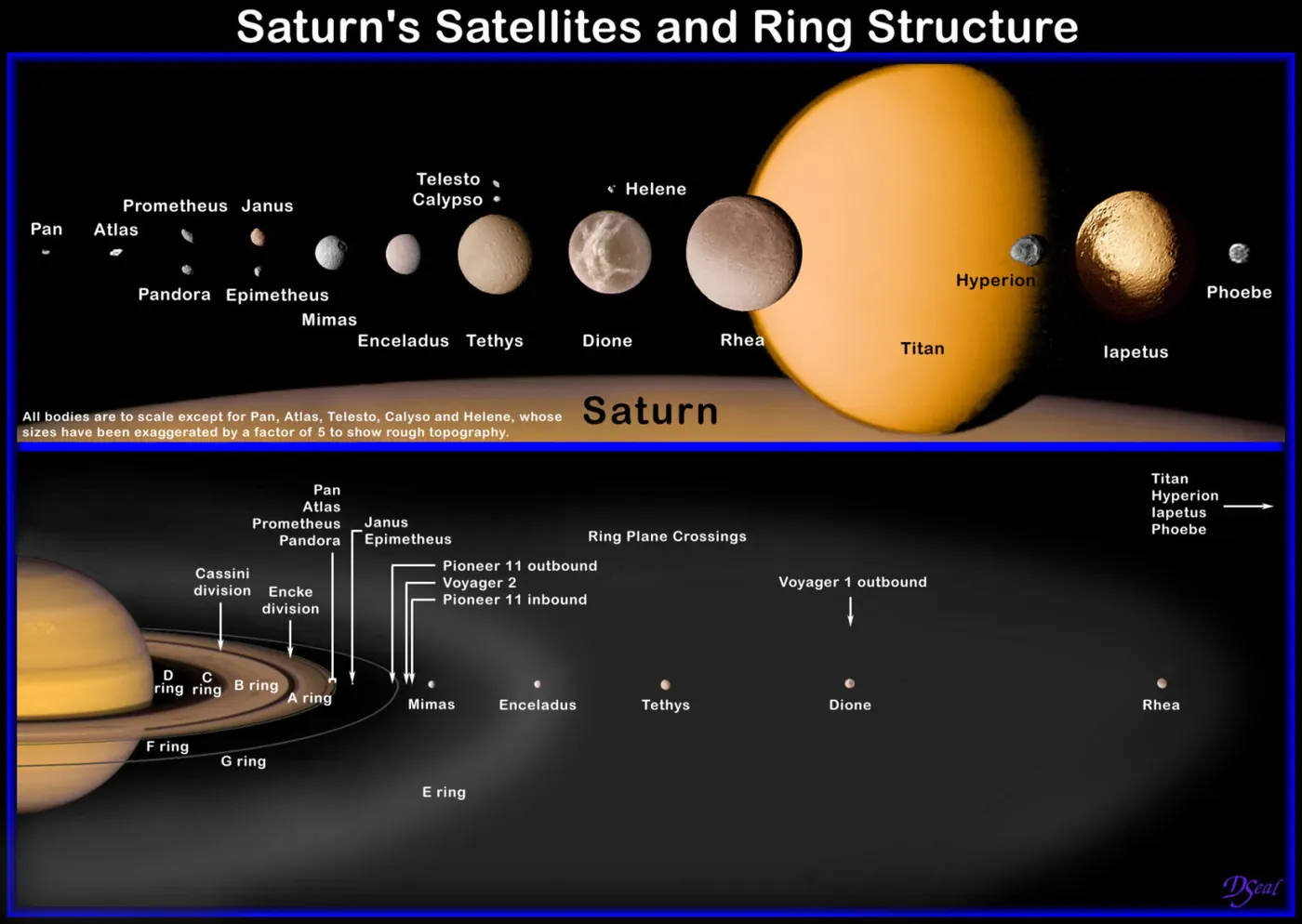
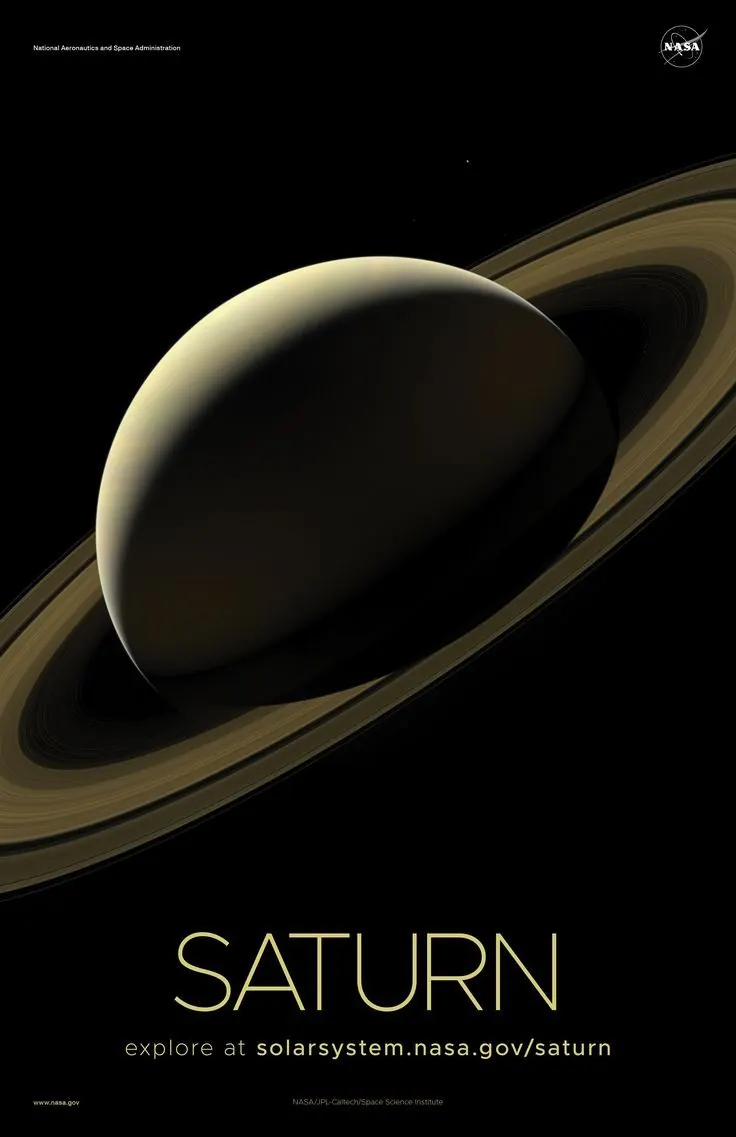
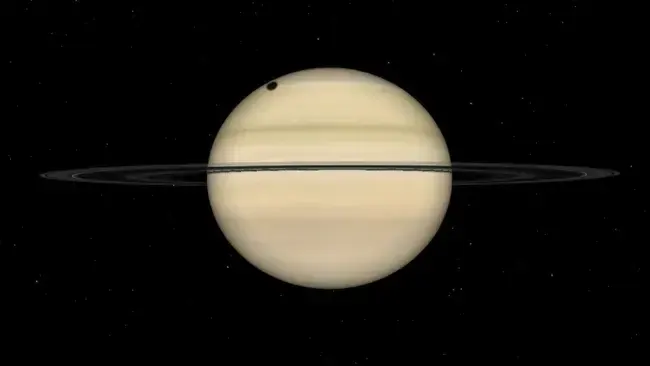
Saturn, the second-largest planet, is renowned for its spectacular ring system. While all four outer planets have rings, Saturn's are by far the most extensive and visible. These rings are not solid sheets but are composed of countless individual particles, ranging in size from tiny grains of dust to pieces as large as mountains. They are made almost entirely of dusty ice, which gives them a high reflectivity. The rings exhibit a complex structure of gaps and divisions, caused by gravitational interactions with Saturn's many moons.
In its overall composition and internal structure, Saturn is similar to Jupiter, being primarily composed of hydrogen and helium. However, it is significantly less dense; in fact, Saturn has a lower average density than water. Its internal layers are thought to follow the same progression from gaseous to liquid to metallic hydrogen, though the lower internal pressures mean the metallic hydrogen layer is thinner than Jupiter's. Saturn also generates a strong magnetic field, though it is weaker than Jupiter's. The planet's atmosphere appears more subdued than Jupiter's, with a paler, yellowish hue, but it can still produce large, persistent storm systems. |
 |
Interesting Facts about Saturn
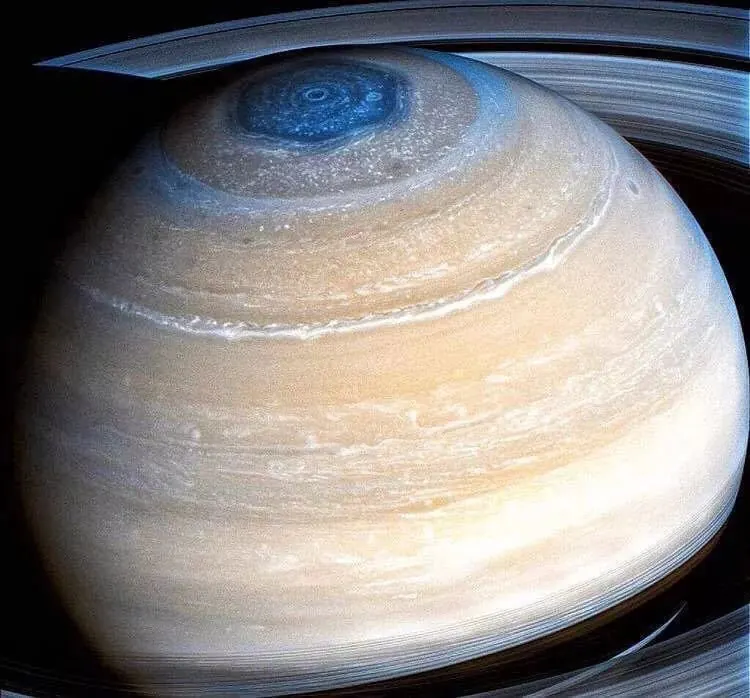
- The planet exhibits a persistent, hexagonal-shaped jet stream at its north pole, a weather pattern not seen on any other planet.
- While Saturn's rings are wide, stretching over 280,000 kilometers in diameter, they are remarkably thin, typically no more than 10 meters thick in most places.
 |
 |
The Moons of Saturn
Saturn's moon system, with over 145 confirmed moons, is notable for its diversity. Two moons, in particular, are of significant scientific interest:
- Titan is the second-largest moon in the Solar System and is unique for its dense atmosphere, which is primarily nitrogen, similar to Earth's. It is the only other body known to have stable liquid on its surface, in the form of lakes and rivers of methane and ethane.
- Enceladus is a small, icy moon. Geysers near its south pole eject water vapor and ice particles into space, providing strong evidence for a global liquid water ocean beneath its frozen crust. This makes Enceladus another key target in the search for environments that could support life.