Exploring Space with Robotic Spacecraft
Space exploration allows humans to study distant worlds without leaving Earth. Because of the vast distances, temperature extremes, and radiation in space, most exploration is carried out by robotic spacecraft. These machines act as our mechanical explorers, carrying cameras, sensors, and scientific instruments to collect data. Each spacecraft is designed for a specific purpose — some observe planets and stars from orbit, others touch down to study the ground directly. By working together, these different spacecraft types help humanity to advance our understanding of the Solar System and the wider universe.
Spacecraft That Orbit Their Targets
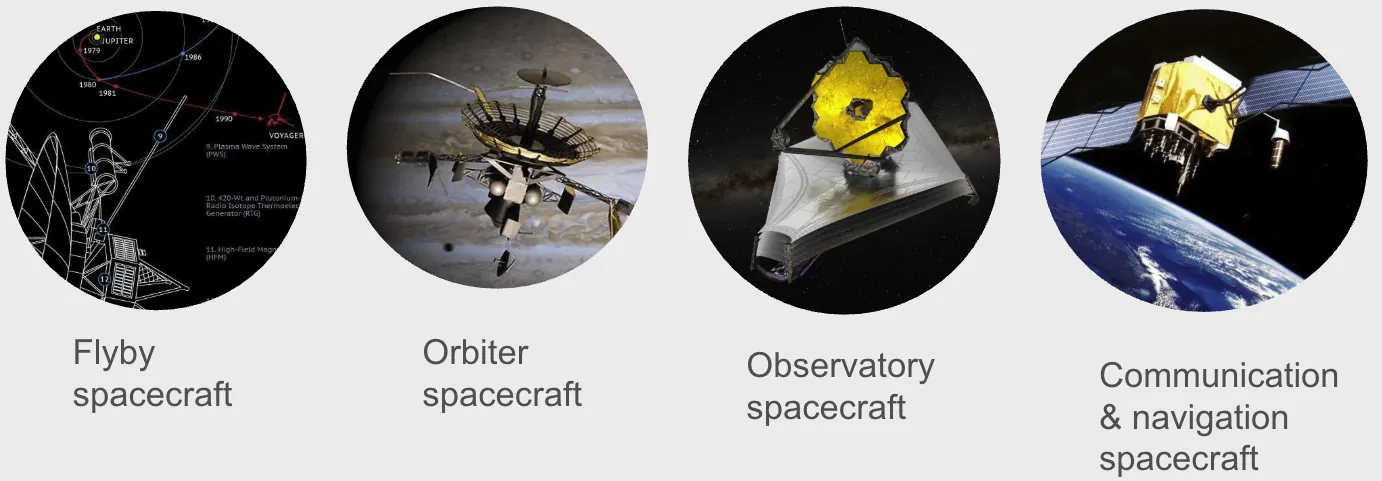
Robotic spacecraft that remain above the surfaces of planets or moons are designed to travel efficiently through space, circle their targets, or maintain stable orbits for long-term observation and communication.
|
Flyby Spacecraft
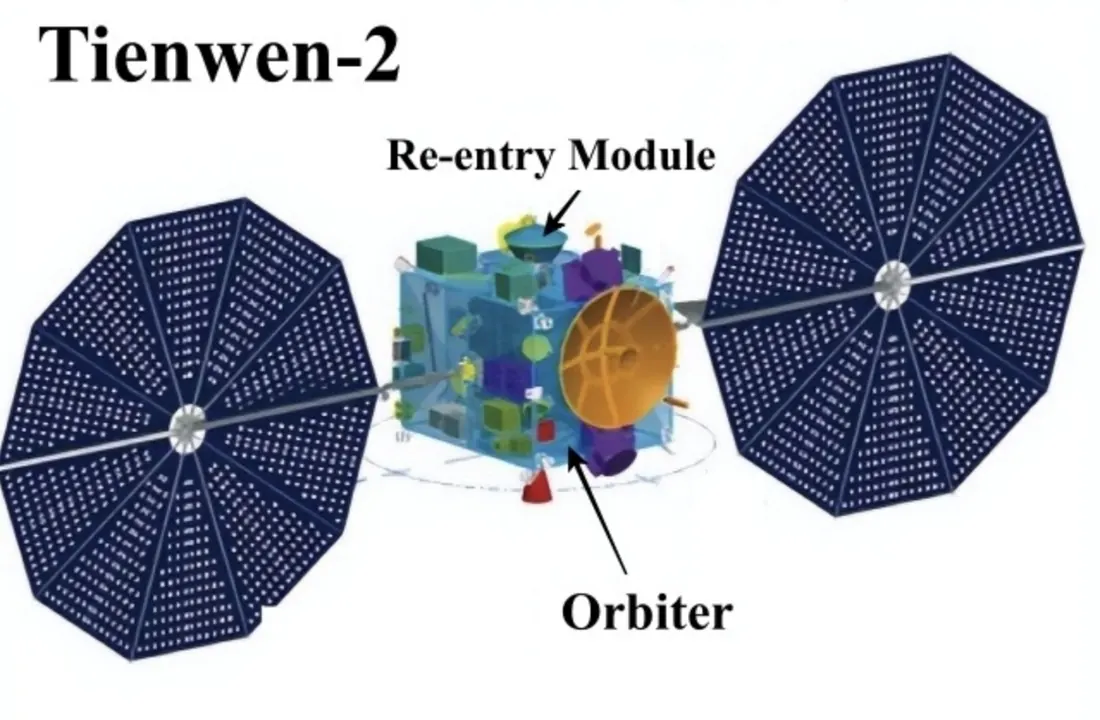
Flyby spacecraft pass planets or moons only once, using onboard instruments to capture images and measure magnetic fields, atmospheres, and particle environments during a brief encounter. They do not slow down or go into orbit but continue onward along their flight path. Examples include Voyager 1 and Voyager 2, which collected data from Jupiter, Saturn, Uranus, and Neptune before heading toward interstellar space. China’s Tianwen‑2 will also perform a flyby of a main-belt comet after collecting samples from a near‑Earth asteroid, combining exploration and sample-return goals. 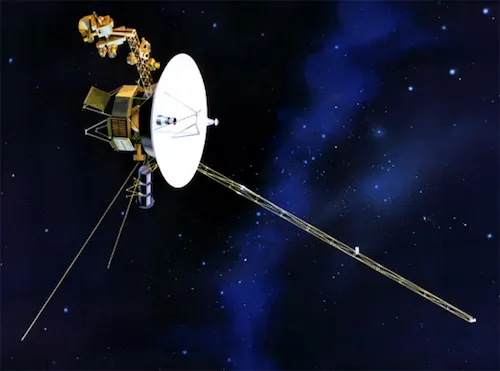 Voyager spacecraft
 Orbiter Spacecraft
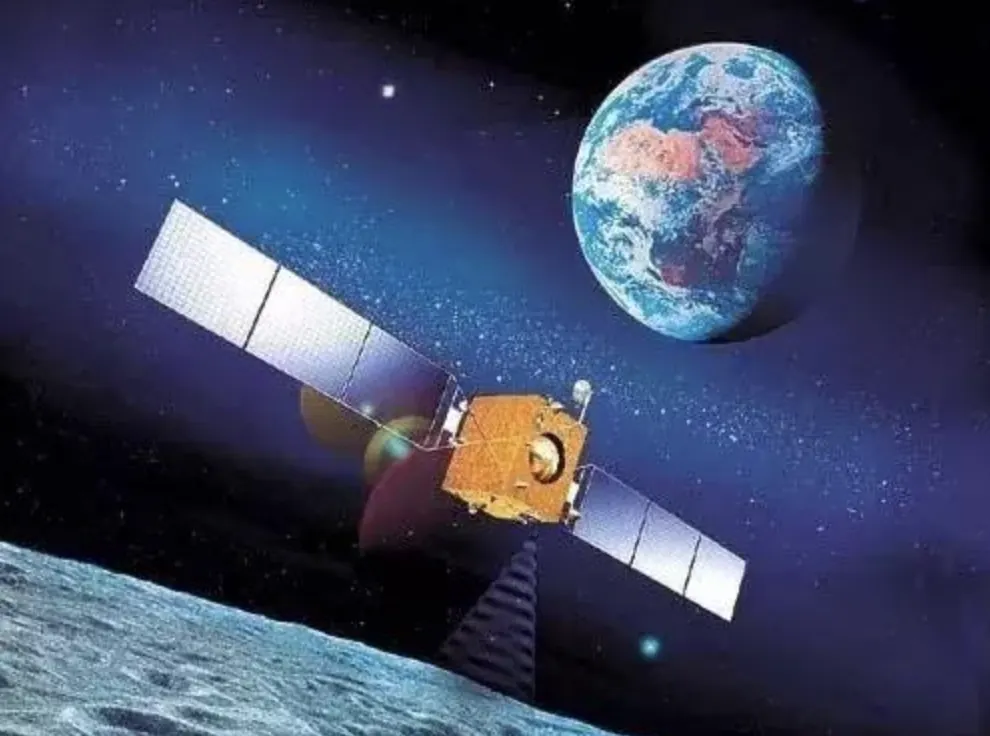
Orbiters slow down near their targets so they can be captured by gravity and circle a body many times. From orbit, they can build detailed maps, monitor changes over time, and act as relay stations for other spacecraft. Engineers must ensure that orbiters can function through periods of occultation, when the planet blocks sunlight or radio contact. Examples:
 |
Space Observatory Spacecraft
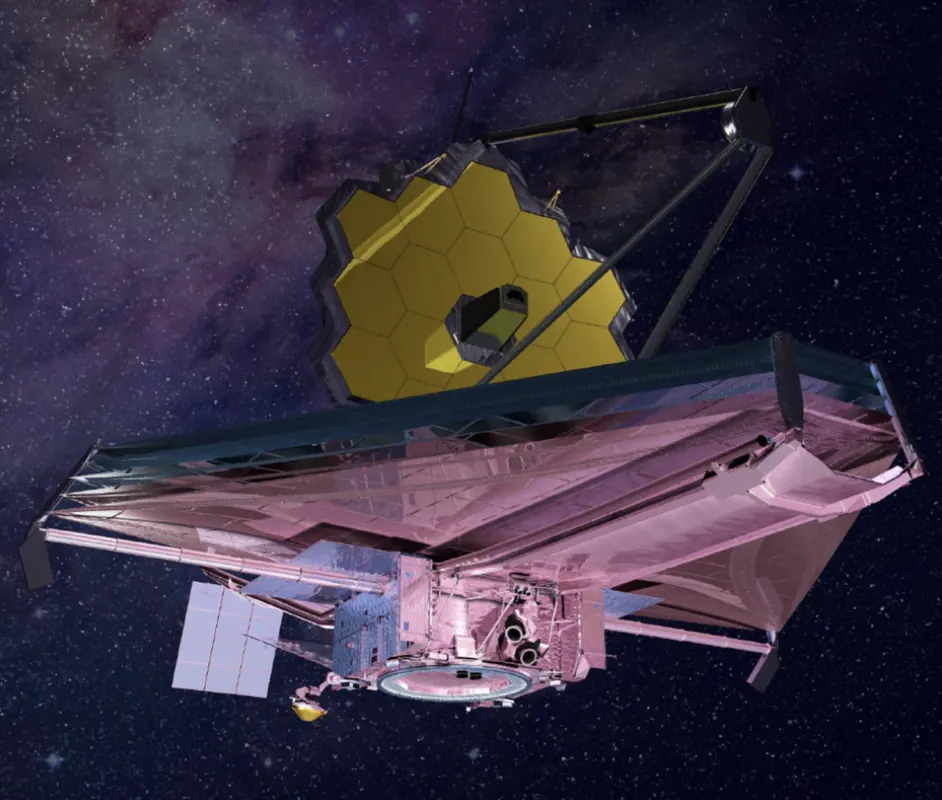
Space observatories operate in Earth orbit or special solar orbits to study stars, galaxies, black holes, and exoplanets. Observing from space avoids atmospheric distortion and allows measurements in wavelengths blocked at the surface, such as some ultraviolet and infrared bands. Examples:
 Communication and Navigation Spacecraft
Some spacecraft are developed to support exploration and operations rather than directly study celestial bodies. Communication spacecraft act as relays, transferring data between distant spacecraft and Earth, especially when surface transmitters have limited power. For example, Mars Odyssey relays data from Mars rovers back to Earth. Other orbiting spacecraft, like navigation satellites, provide position and timing signals. Systems such as the Global Positioning System (GPS) and BeiDou Navigation Satellite System (北斗卫星导航系统) make precise navigation possible on Earth and support spacecraft trajectory determination in deep space missions. 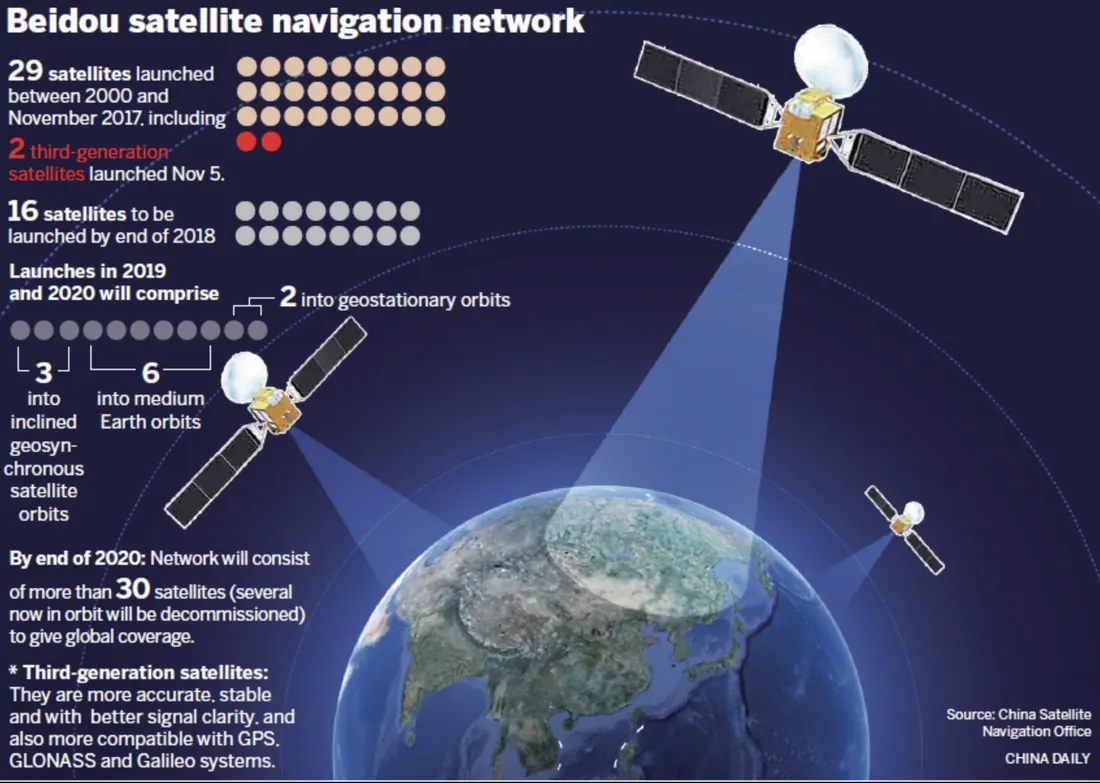 |
Spacecraft That Enter Celestial Bodies
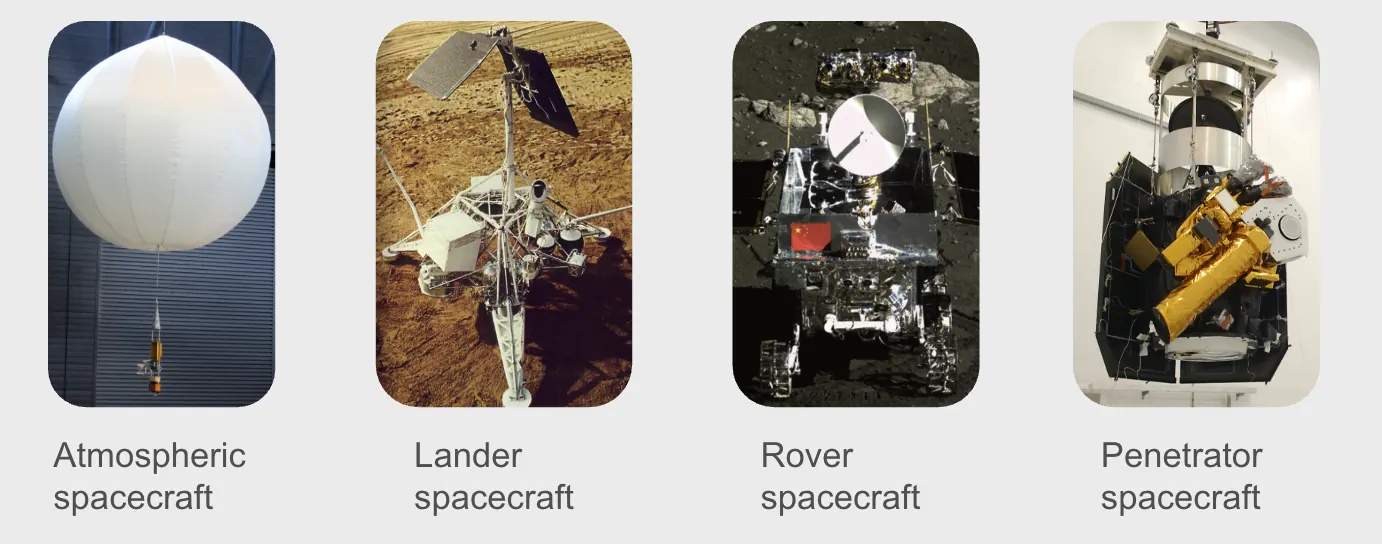
Some spacecraft are designed to travel through or land on the surfaces of other worlds. These explorers must withstand heat, friction, and impact as they enter atmospheres or touch down on solid ground.
|
Atmospheric Probes and Balloons
Atmospheric probes are carried by larger spacecraft until they reach their destination. They are released to descend through thick atmospheres, protected by strong heat shields. As they fall, they measure temperature, pressure, chemical composition, and wind speed. NASA’s Galileo probe entered Jupiter’s atmosphere and transmitted data before being destroyed by pressure. The Vega missions used balloons to float through Venus’s clouds, providing longer observation times. Similar approaches are being studied for future Chinese Venus missions involving atmospheric sampling and aerostat platforms. |
Rover Spacecraft
Rovers are mobile robots capable of moving across a planet’s surface. They carry navigation cameras, spectrometers, and robotic arms to collect and analyze samples. Mobility allows them to explore varied terrains and compare geological features. NASA’s Perseverance rover records rock samples in sealed tubes on Mars, while China’s Zhurong (祝融) rover investigates Martian soil and sand dunes. Both provide data that complement orbiter observations. 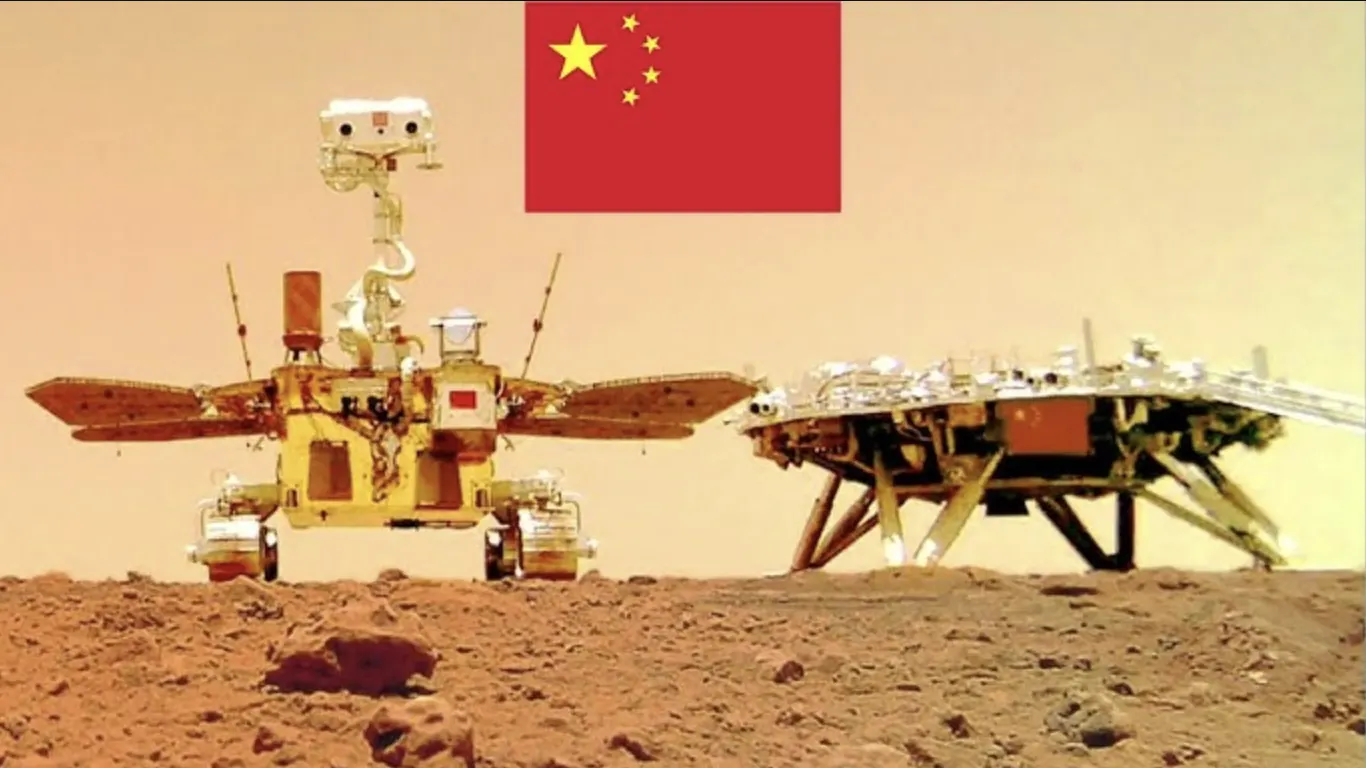 |
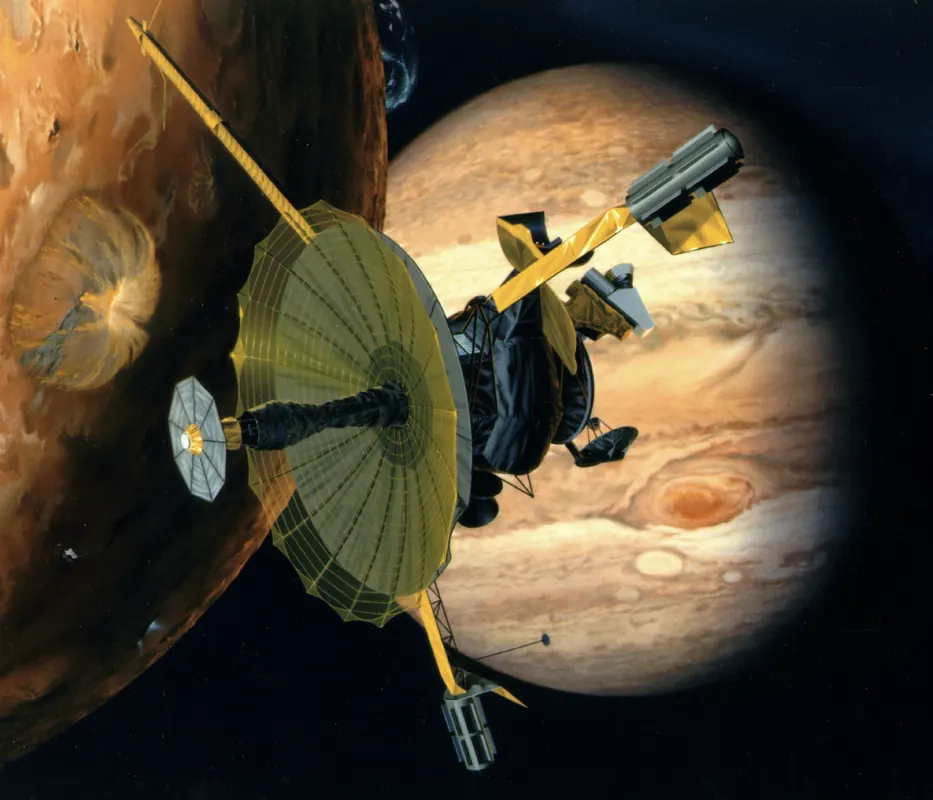 Lander Spacecraft
Landers slow down during descent to make a gentle touchdown. Once on the surface, they perform analysis of rocks, soil, and ice using onboard instruments. Unlike rovers, they remain stationary. Examples include the Viking 1 and Viking 2 landers on Mars, and China’s Chang’e 3 and Chang’e 4 on the Moon. Chang’e 4's success on the lunar far side allows measurements of surface materials and radio noise levels shielded from Earth’s interference. 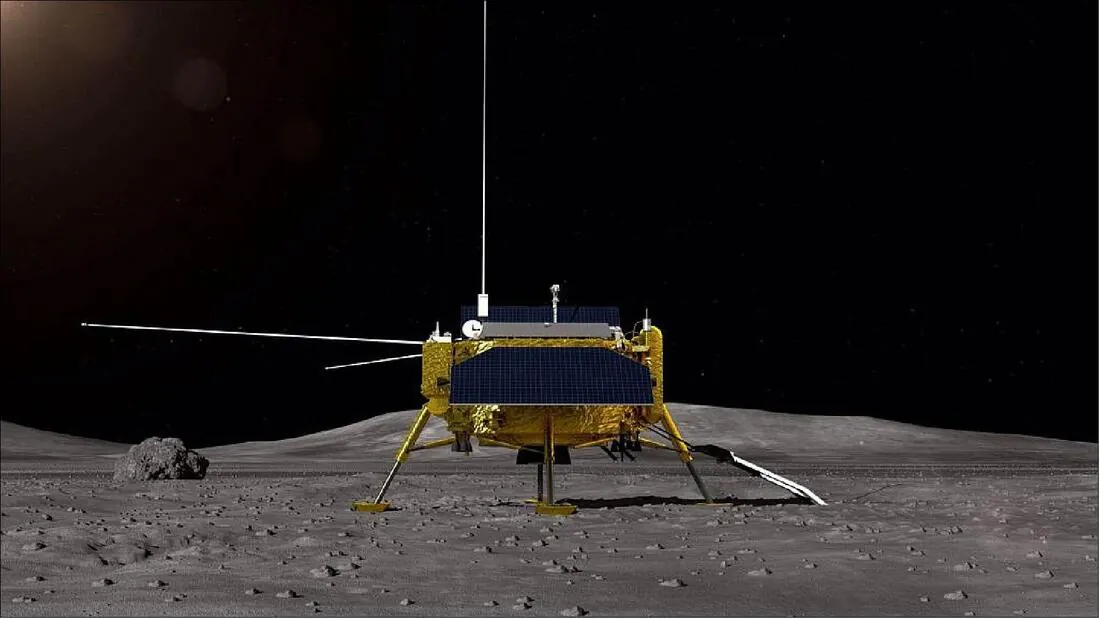 |
Penetrator Spacecraft
Penetrators are built to impact a surface at high velocity and embed scientific instruments beneath the upper layer. This design allows them to study subsurface materials that cannot be reached by landers or observed from orbit. The Deep Impact mission used such a device to strike Comet Tempel 1 and analyze its internal composition. Future concepts may use penetrators to study icy moons, searching for signs of water or buried organic materials. 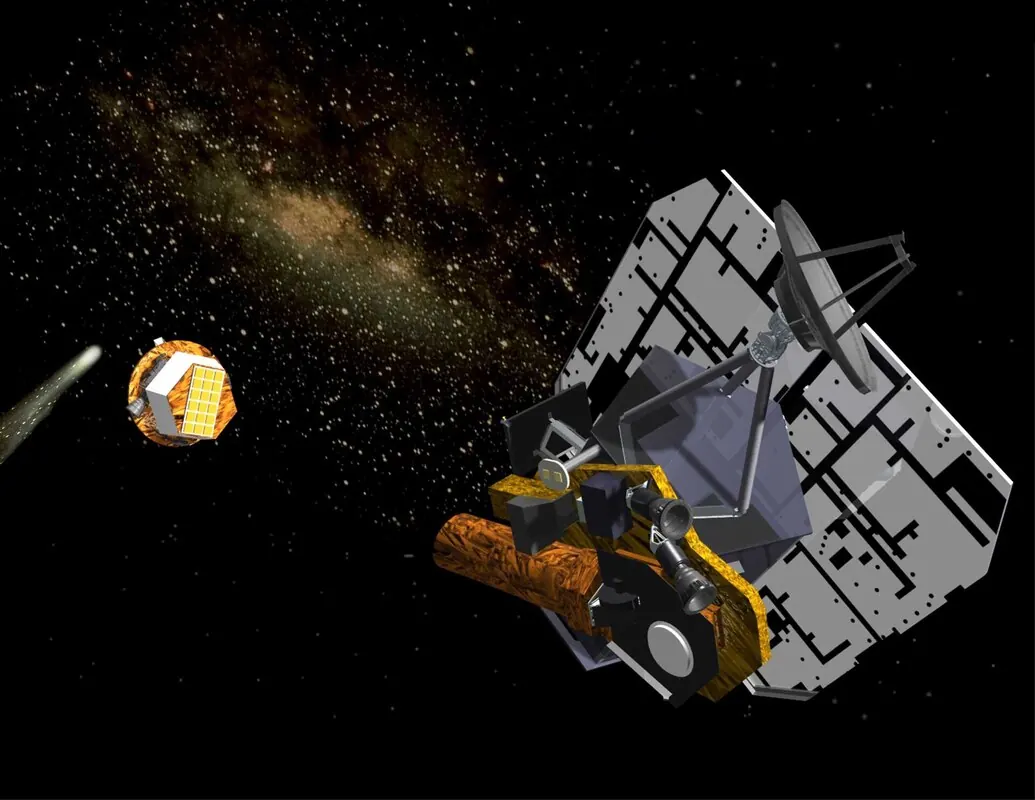 |
Activity: Chinese Spacecraft Research
Step 1 – Create a Drive Folder
Step 2 – Make a Google Doc
Step 3 – Choose and Research One Chinese Spacecraft
Students choose one spacecraft, for example: 嫦娥三号、嫦娥四号、嫦娥五号、天问一号、高分五号、风云四号、北斗导航卫星、悟空号、墨子号等.
Step 4 – Collect 1–2 Images
Step 5 – Organize and Share
- Open Google Drive and click + New → Folder.
- Name it: Chinese Spacecraft Research
- Open the folder
Step 2 – Make a Google Doc
- Inside the folder, click + New → Google Docs.
- Name it: [Spacecraft Name] – Research – [Your Name].
- At the top of the Doc, type: your name, date, and spacecraft name.
Step 3 – Choose and Research One Chinese Spacecraft
Students choose one spacecraft, for example: 嫦娥三号、嫦娥四号、嫦娥五号、天问一号、高分五号、风云四号、北斗导航卫星、悟空号、墨子号等.
- Suggested starting links for Chinese satellites:
- Communication: https://space.skyrocket.de/directories/sat_com_china.htm
- Earth observation: https://space.skyrocket.de/directories/sat_eo_china.htm
- Navigation (BeiDou): https://space.skyrocket.de/directories/sat_nav_china.htm
- Science/technology: https://space.skyrocket.de/directories/sat_sci-tech_china.htm
- What is the name (Chinese + English)?
- Is it a satellite, orbiter, lander, or rover?
- What is its main job (e.g., weather, navigation, Moon, Mars)?
- When was it launched (year)?
- One interesting fact.
Step 4 – Collect 1–2 Images
- Find 1-2 image of the spacecraft.
- Save them to the Google Drive.
Step 5 – Organize and Share
- Check that Google Folder.
- Select the folder → Share → General access→ give Viewer access to all school members.