Early Dreams and First Rockets
This is a brief history of how humans learned to travel beyond Earth. Each step in this timeline represents a new technical achievement that allowed us to see further and stay longer in space. For many years, rockets were used only on Earth for research and to carry instruments high into the sky. Scientists then began to wonder whether rockets could be strong enough to push machines, and one day, people, all the way into space. This new idea transformed spaceflight from a dream into a plan, leading countries to design rockets capable of reaching orbit around Earth.
1957: First Satellite Orbits Earth – Sputnik 1
|
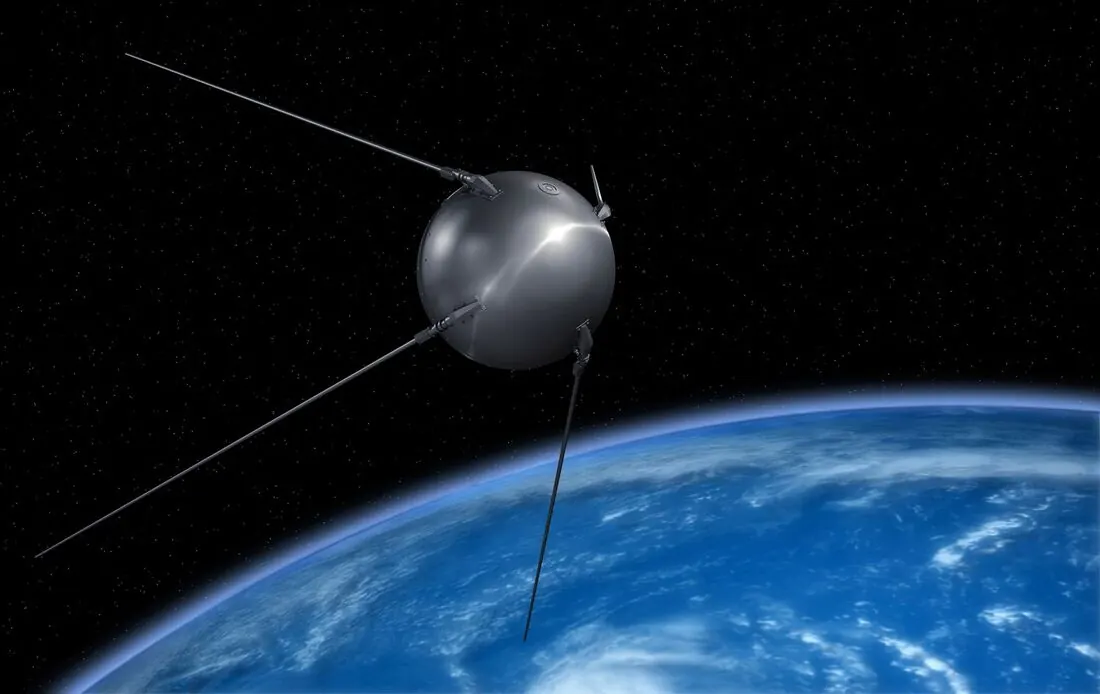
In 1957, the first human-made object was sent into space. The Soviet Union launched Sputnik 1, the first human‑made satellite to orbit Earth. It was launched using a rocket, which is a vehicle that carries its own fuel to push through Earth's atmosphere. Sputnik 1 was a metal sphere with antennasand did not have people on it, but it sent back a "beep" radio signal while circling the planet about once every hour and a half. This mission proved that rockets could place objects into orbit, which is a curved path around a planet, and started a new period of space exploration called the “space age.”
|
 |
1961: First Human Orbits Earth – Yuri Gagarin
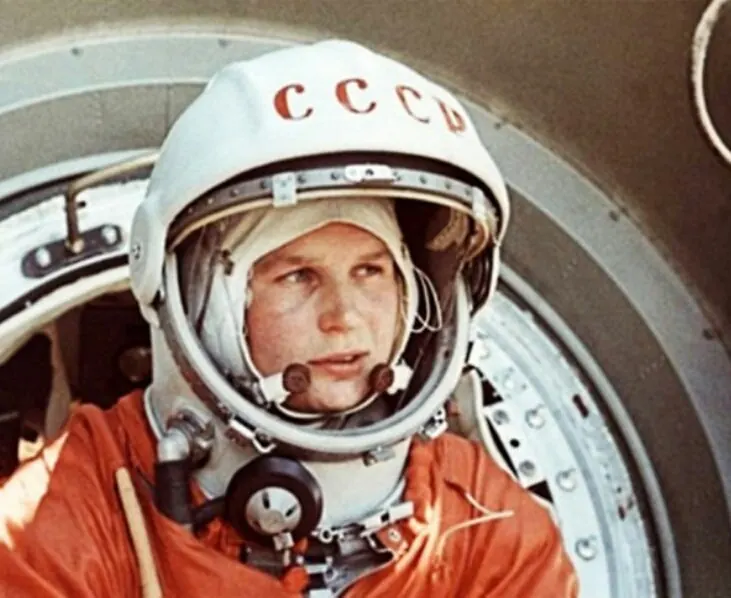 |
In 1961, Yuri Gagarin from the Soviet Union became the first human to travel into space and orbit Earth in a spacecraft called Vostok 1. His flight lasted about 108 minutes, during which the spacecraft completed one full trip around the planet before he returned safely to Earth. This milestone proved that humans could survive the launch and the feeling of weightlessness in space. It changed our understanding of the human body's ability to function outside of Earth's gravity.
|
1969: First Humans Walk on the Moon – Apollo 11
|
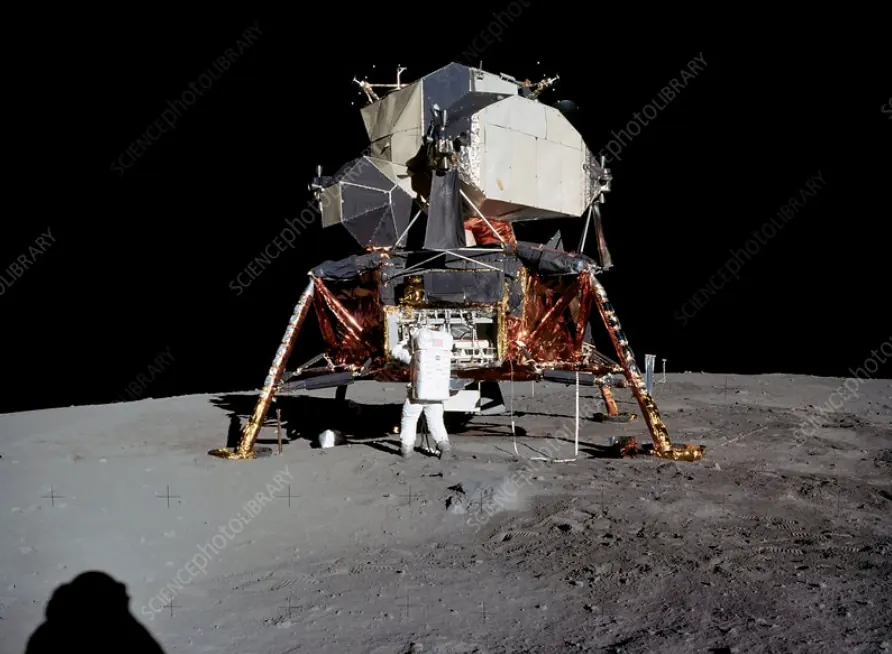
In 1969, the Apollo 11 mission from the United States achieved the goal of landing humans on another world. Using a lunar module named Eagle,two astronauts, Neil Armstrong and Buzz Aldrin, landed on the surface of the Moon while Michael Collins orbited above. Armstrong stepped onto the Moon’s surface on July 20, 1969, followed by Aldrin, and they collected rocks and soil to bring back to Earth for study. This achievement showed that humans could navigate between celestial bodies and return home safely. It provided the first direct samples of material from outside our planet.
|
 |
Looking Farther – Voyager Visits the Outer Planets
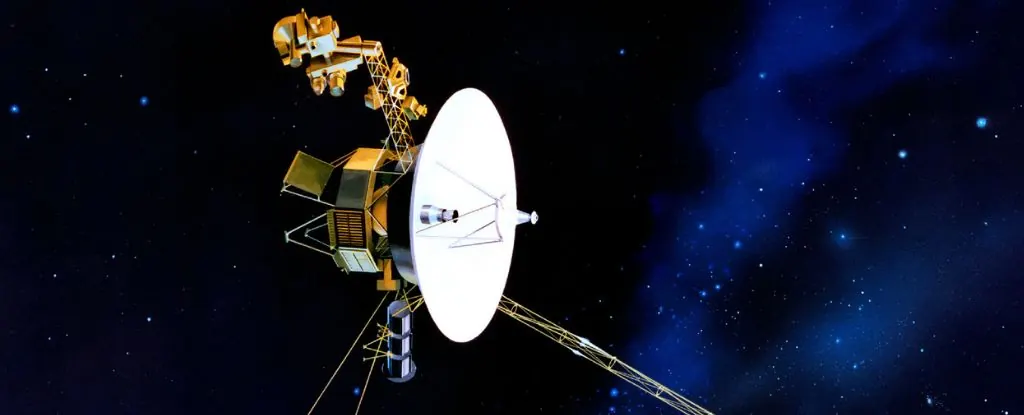
In 1977, NASA launched two spacecraft, Voyager 1 and Voyager 2, to explore the outer planets of our Solar System. Voyager 2 flew past Jupiter and Saturn and then became the first human‑made object to visit Uranus and Neptune, discovering new moons and studying their atmospheres and rings. These flybys let scientists see distant worlds up close for the first time and helped them compare the different types of planets in our Solar System.
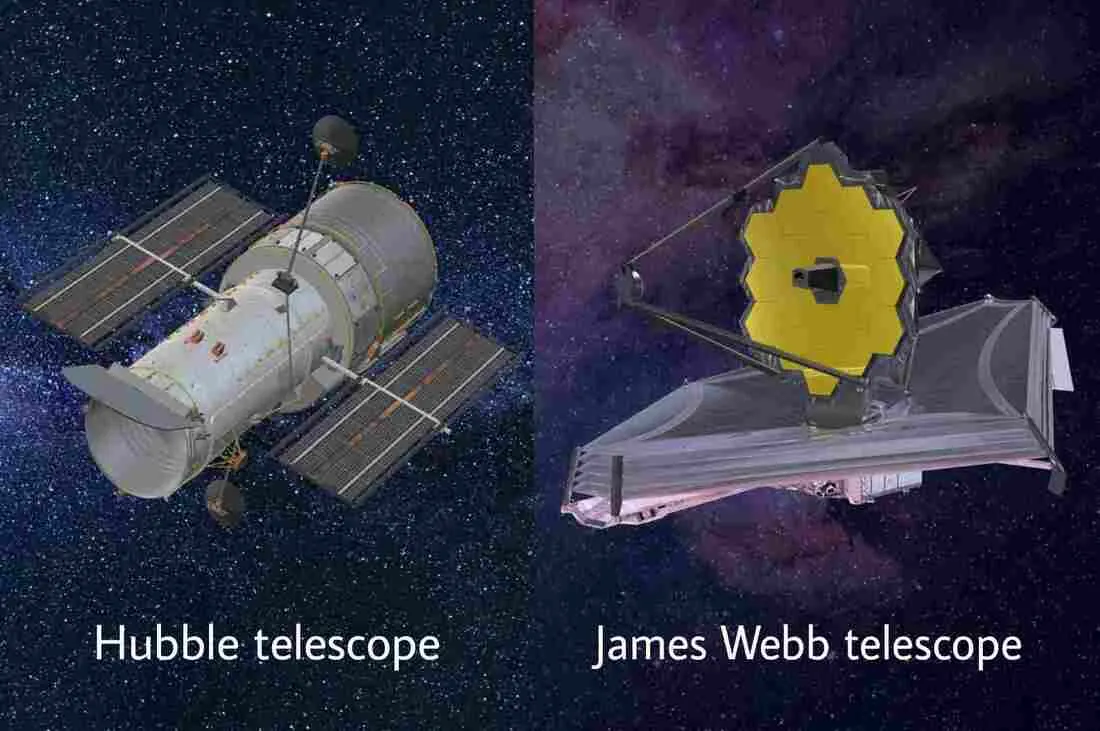
A Telescope Above the Air – Hubble Space Telescope and the James Webb Space Telescope
|
In 1990, the Hubble Space Telescope was launched into orbit around Earth so it could look at the universe without the blurring effect of our atmosphere. After an early repair to its main mirror, Hubble began sending back very sharp images of distant galaxies, nebulae, and planets in our own Solar System. These observations have helped astronomers measure how fast the universe is expanding and study objects such as supermassive black holes and planets around other stars.
In late 2021, the James Webb Space Telescope (JWST) was launched as a powerful new observatory to look at the universe in infrared light. After traveling to a special orbit and carefully unfolding its mirrors and sunshield, Webb began science work and released its first full‑color images and data in July 2022. These images show very distant galaxies, forming stars, and planets around other stars, helping scientists study how the first galaxies formed and how planetary systems change over time. |
 |
Living in Space: Space Stations
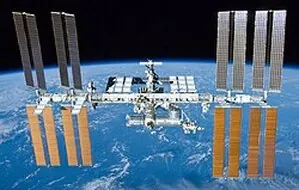  |
After the first Moon landings, space agencies began building space stations, which are large structures where astronauts can live and work in orbit for months. In 1998, the first module of the International Space Station (ISS), called Zarya, was launched, and later that year it was joined to the U.S. Unity module to start the station’s assembly. The ISS has grown into a large laboratory where astronauts from many countries study how living in space affects the human body and how materials and plants behave in low gravity. This capability taught us how to grow food, recycle water, and maintain machines in space for many months or years at a time.
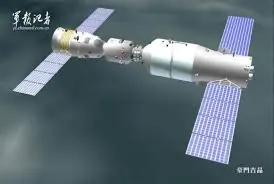
In 2021, China launched Tianhe, the core module of its Tiangong space station, starting a new long‑term orbital laboratory. Tianhe provides living and working space for astronauts and supports experiments in low gravity, with additional modules and visiting spacecraft expanding the station over time. This shows another way countries can build and operate modular space stations, adding more places in orbit where people can live and do science. |
Exploring Mars with Rovers
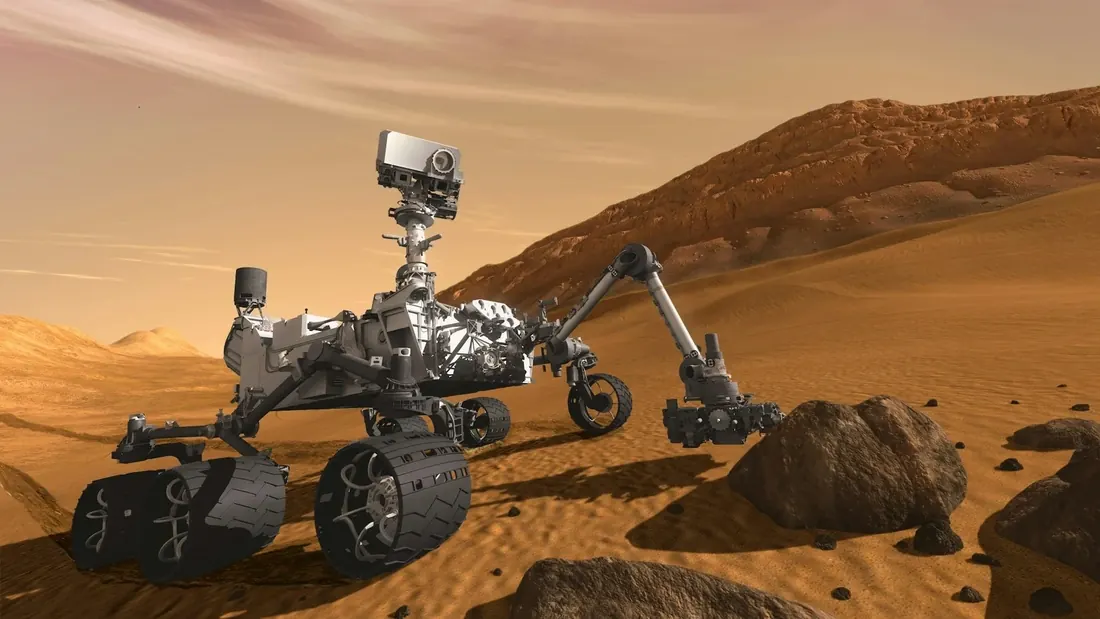
In 2012, NASA’s Curiosity rover landed in Gale Crater on Mars to find out whether Mars ever had conditions that could support tiny life forms called microbes. Curiosity studies Martian rocks, climate, and radiation to learn how water and other important chemicals behaved on the planet in the past. In 2021, another rover named Perseverance landed in Jezero Crater to look for signs of ancient microbial life, collect rock and soil samples for a possible return to Earth, and test how to make oxygen from the thin Martian air. These rovers help scientists understand whether Mars was once more Earth‑like and how humans might one day live and work there.
Also in 2021, China’s Tianwen‑1 mission delivered its first Mars rover, called Zhurong, to the surface of Mars in a region named Utopia Planitia. Tianwen‑1 included an orbiter to circle Mars and a lander that carried Zhurong down, making China the first country to orbit, land, and operate a rover on Mars in a single mission. Zhurong uses cameras, a ground‑penetrating radar, and other instruments to study Mars’s rocks, soil, and underground structure, helping scientists look for signs of past water and learn more about how Mars has changed over time.
Also in 2021, China’s Tianwen‑1 mission delivered its first Mars rover, called Zhurong, to the surface of Mars in a region named Utopia Planitia. Tianwen‑1 included an orbiter to circle Mars and a lander that carried Zhurong down, making China the first country to orbit, land, and operate a rover on Mars in a single mission. Zhurong uses cameras, a ground‑penetrating radar, and other instruments to study Mars’s rocks, soil, and underground structure, helping scientists look for signs of past water and learn more about how Mars has changed over time.
2014: Landing on a Comet and visits to Asteroids
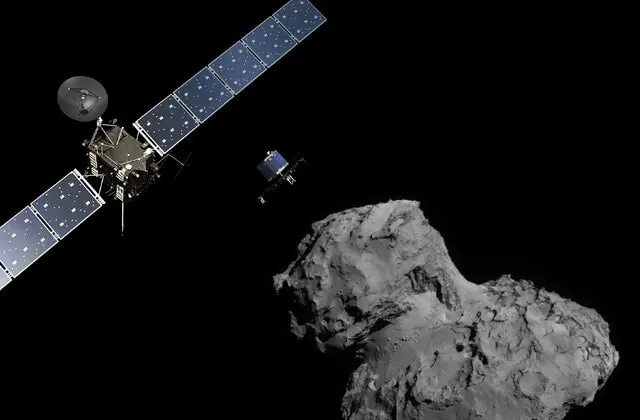
In 2014, the European Space Agency’s Rosetta spacecraft placed a small lander named Philae on a comet called 67P/Churyumov–Gerasimenko. Rosetta first orbited the comet, then released Philae, which touched down and sent back data about the comet’s surface and materials. This showed that spacecraft could travel for many years through space, match a comet’s path, and study how such icy bodies may have helped bring water and other building blocks to early planets.
Around 2018–2019, space agencies sent missions to small rocky bodies called asteroids to collect samples. Japan’s Hayabusa2 arrived at asteroid Ryugu in 2018 and later returned samples to Earth, while NASA’s OSIRIS‑REx reached asteroid Bennu in 2018 and collected material for a sample‑return mission. These missions tested careful navigation around tiny, low‑gravity objects and brought back pieces of asteroids so scientists can study how the Solar System formed.
Around 2018–2019, space agencies sent missions to small rocky bodies called asteroids to collect samples. Japan’s Hayabusa2 arrived at asteroid Ryugu in 2018 and later returned samples to Earth, while NASA’s OSIRIS‑REx reached asteroid Bennu in 2018 and collected material for a sample‑return mission. These missions tested careful navigation around tiny, low‑gravity objects and brought back pieces of asteroids so scientists can study how the Solar System formed.
2018 and After: Flying Close to the Sun – Parker Solar Probe
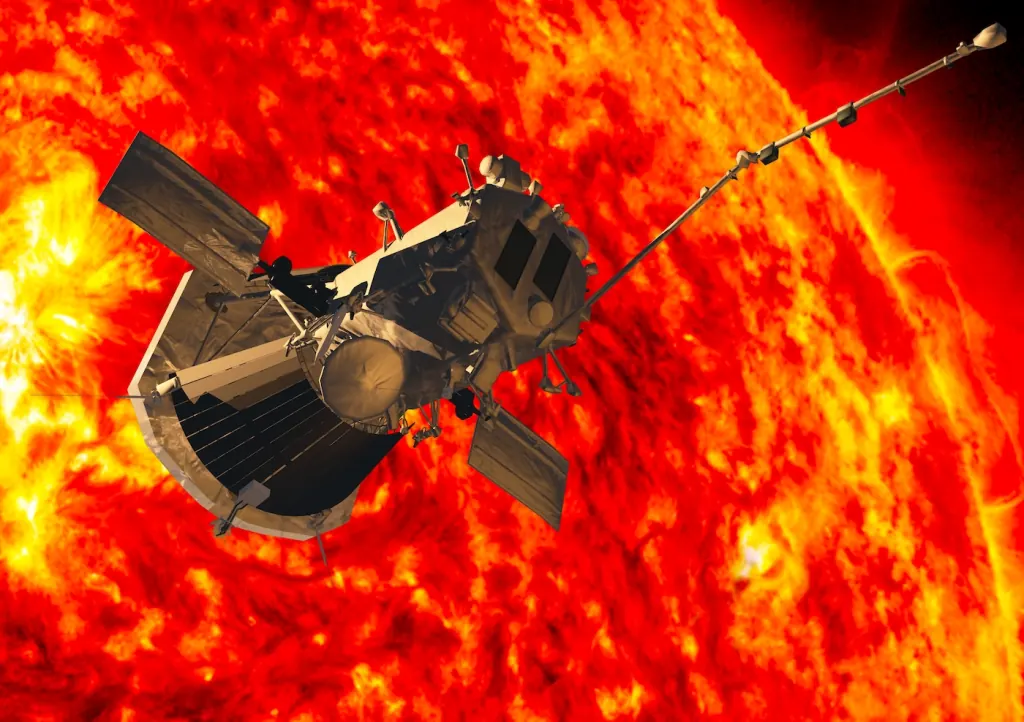 |
In 2018, NASA launched the Parker Solar Probe to study the Sun’s outer atmosphere, called the corona, and the stream of particles that flows outward as the solar wind. Using repeated flybys of Venus, the spacecraft moves into a smaller and smaller orbit and has now become the closest human‑made object to any star, even flying through parts of the corona itself. By measuring particles, magnetic fields, and radiation near the Sun, Parker Solar Probe helps scientists understand how the corona is heated and how the solar wind starts and changes as it moves through the Solar System.
In 2020, the European Space Agency and NASA launched Solar Orbiter, a spacecraft designed to observe the Sun and its surroundings from different angles. Solar Orbiter travels on an oval‑shaped path that allows it to take detailed images of the Sun and to sample the solar wind and magnetic fields in the space around it. Over time, its tilted orbit will also give the first close‑up views of the Sun’s polar regions, helping scientists study how the Sun’s magnetic field changes and how it affects space weather near Earth and other planets. |
Looking Ahead in Space
Space exploration has grown from simple beeping satellites to rovers on Mars, stations in orbit, and spacecraft flying close to the Sun. Each new mission adds a capability—orbiting Earth, landing on the Moon, visiting comets and asteroids, or studying distant galaxies—and helps scientists ask better questions about how the universe works. As more countries and teams join this work, students today may grow up to design the rockets, robots, and telescopes that appear in the next steps of this timeline.