How Ancient Peoples Watched the Sky
For thousands of years, people in ancient civilizations looked up at the night sky with wonder and curiosity. Without electric lights or modern telescopes, the stars were some of the brightest and most visible features of the natural world. These early observers noticed something remarkable: the patterns of stars remained the same night after night and season after season. By carefully watching these patterns, ancient peoples discovered that the night sky could teach them about time, help them find their way, and tell them stories about their gods and heroes.
Long before modern astronomy, people in Mesopotamia, Egypt, China, and Greece developed systematic ways of observing the heavens. They recognized that the Sun, Moon, and stars moved in predictable patterns across the sky. They noticed that certain stars appeared and disappeared with the seasons, and that the Moon changed shape in regular cycles. This careful watching was not just for curiosity—it had very practical purposes that affected their daily lives, their agriculture, and their beliefs.
For thousands of years, people in ancient civilizations looked up at the night sky with wonder and curiosity. Without electric lights or modern telescopes, the stars were some of the brightest and most visible features of the natural world. These early observers noticed something remarkable: the patterns of stars remained the same night after night and season after season. By carefully watching these patterns, ancient peoples discovered that the night sky could teach them about time, help them find their way, and tell them stories about their gods and heroes.
Long before modern astronomy, people in Mesopotamia, Egypt, China, and Greece developed systematic ways of observing the heavens. They recognized that the Sun, Moon, and stars moved in predictable patterns across the sky. They noticed that certain stars appeared and disappeared with the seasons, and that the Moon changed shape in regular cycles. This careful watching was not just for curiosity—it had very practical purposes that affected their daily lives, their agriculture, and their beliefs.
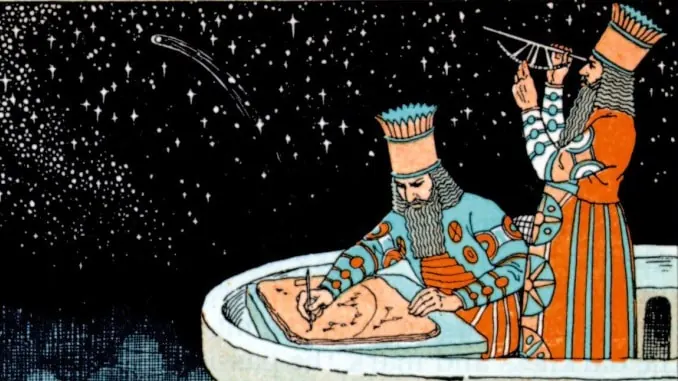
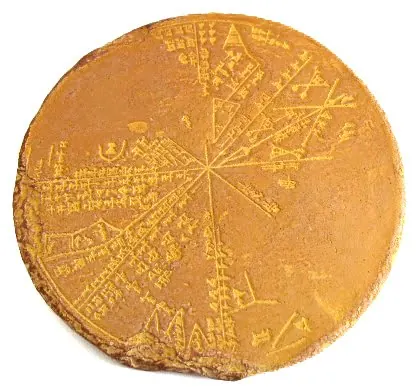
Mesopotamia: The First Star CatalogsIn ancient Mesopotamia, Babylonian astronomers were among the first to carefully organize observations of the night sky. They named the Sun, Moon, planets, and many stars and constellations, dividing the sky into regions and recording their observations on clay tablets in cuneiform writing, creating early star catalogs.
They also used the Moon’s phases to build a 12‑month lunar calendar, adding an extra month when needed to keep it aligned with the seasons. Around 500 BCE, they divided the path of the Sun, Moon, and planets into twelve equal parts with named sections such as Aries, Taurus, and Gemini, creating the zodiac system that still influences how the sky is divided today. |
  |
Ancient Egypt: Reading the Stars for the Nile
|
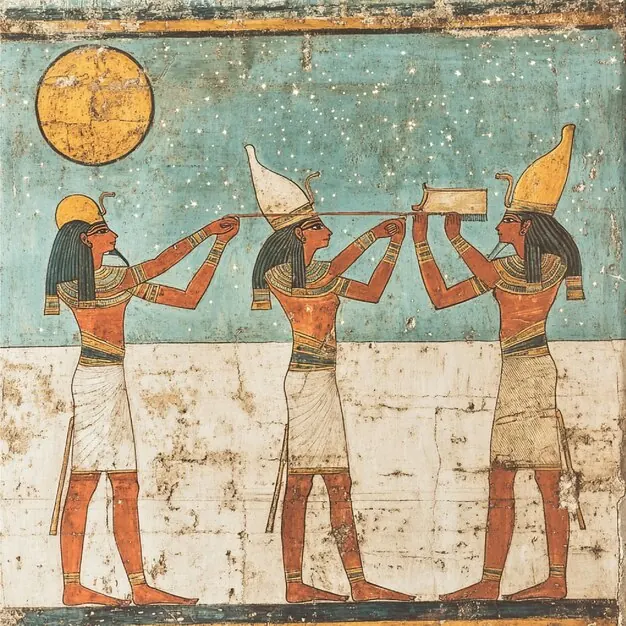
Ancient Egyptians used the stars to predict the yearly flooding of the Nile, which brought water and fertile soil for farming. They noticed that when the bright star Sirius reappeared in the dawn sky, the Nile flood would soon begin, allowing priests to prepare fields in advance.
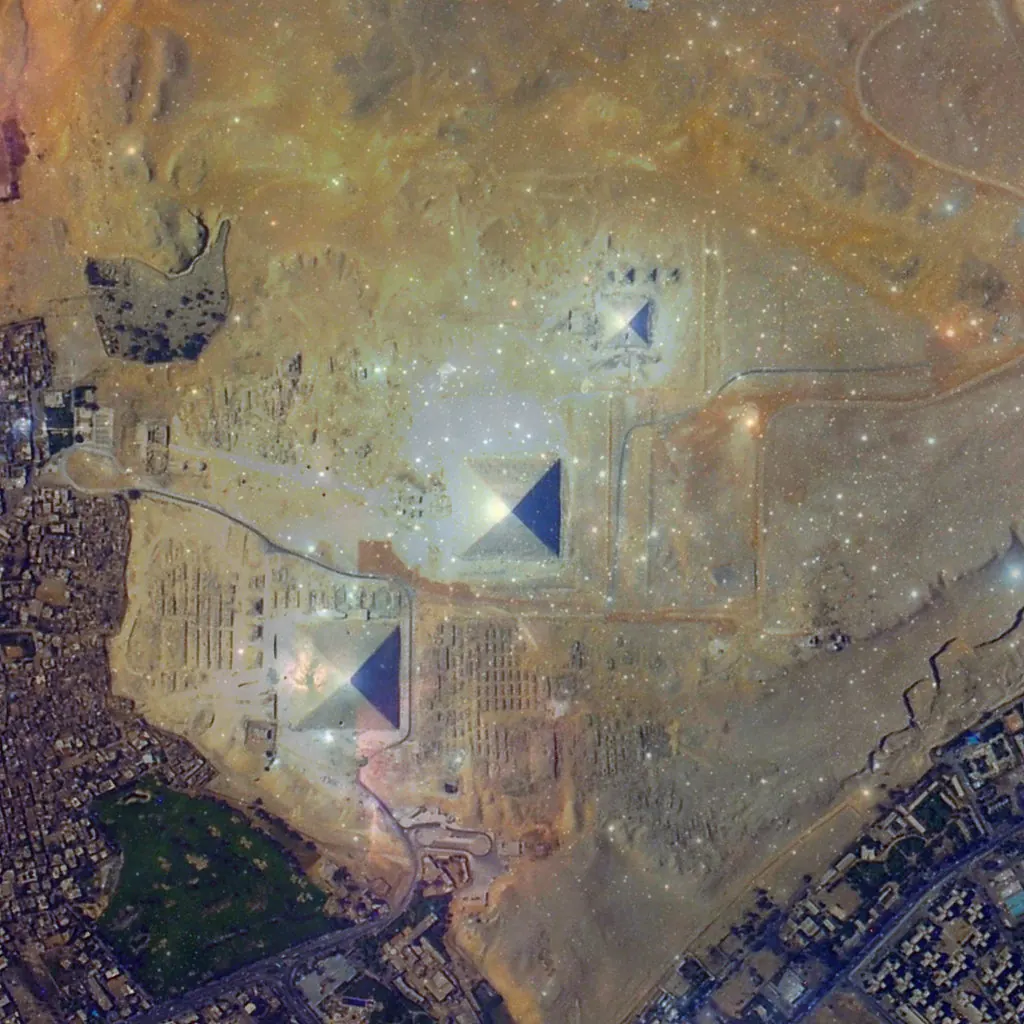
They developed a 365‑day solar calendar with 12 months of 30 days plus 5 extra days, grouped into three seasons matching the Nile’s cycle: flooding, planting, and harvest. Large structures like the pyramids were aligned with stars such as Orion’s Belt and the North Star. Egyptians also divided the night sky into 36 star groups called decans, each rising about every 10 days, and used their rising positions to tell the time at night and to schedule religious and daily activities. |
  |
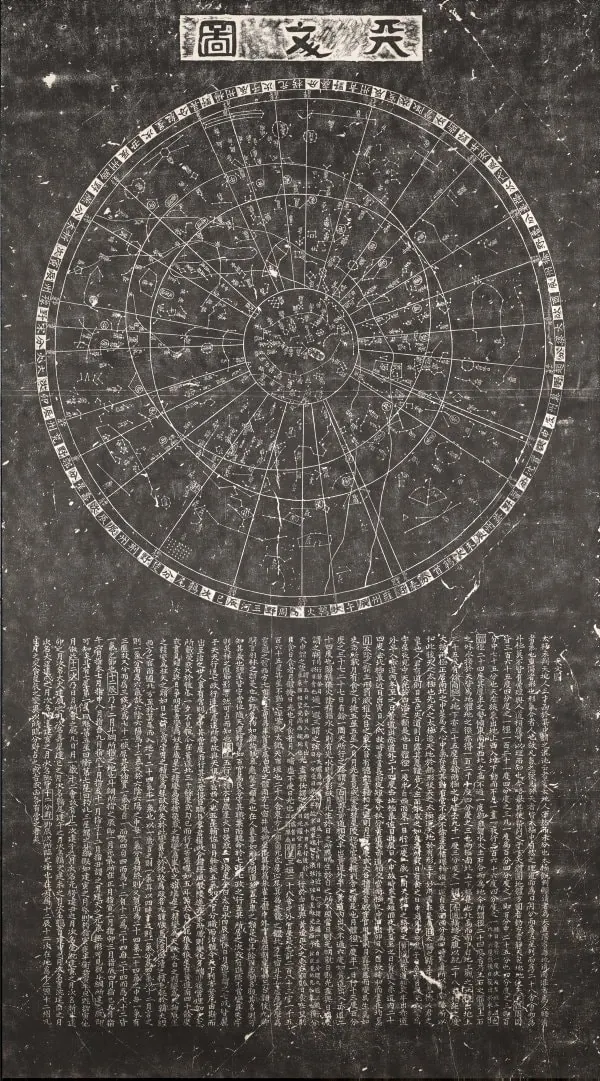
Ancient Chinese AstronomyAncient Chinese astronomers were careful, long‑term observers of the night sky. Starting around 1300 BCE, they named many stars and grouped them into 28 lunar mansions (二十八宿) and three “enclosures” (三垣) near the North Pole, creating 31 sky regions. Instead of focusing on the Sun’s path like Western astronomy, they emphasized the circumpolar stars that never set, using the north celestial region as a steady reference for sky maps.
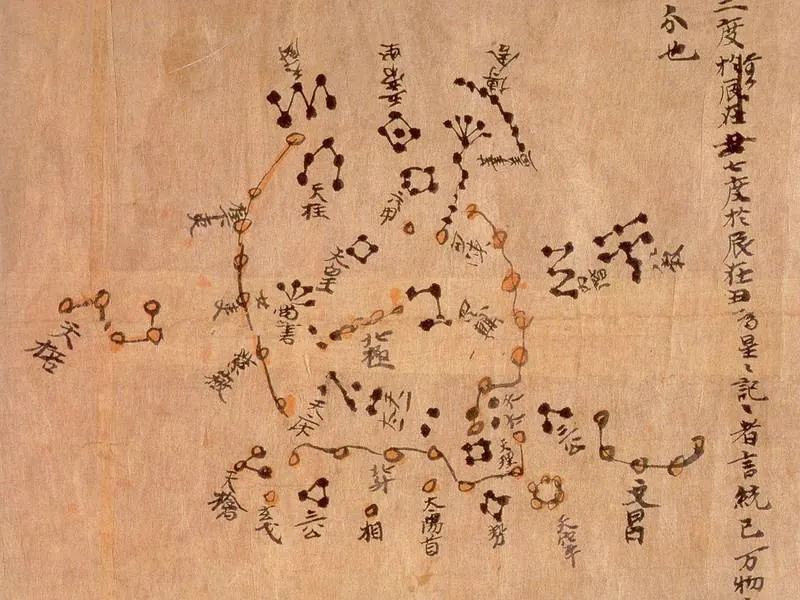
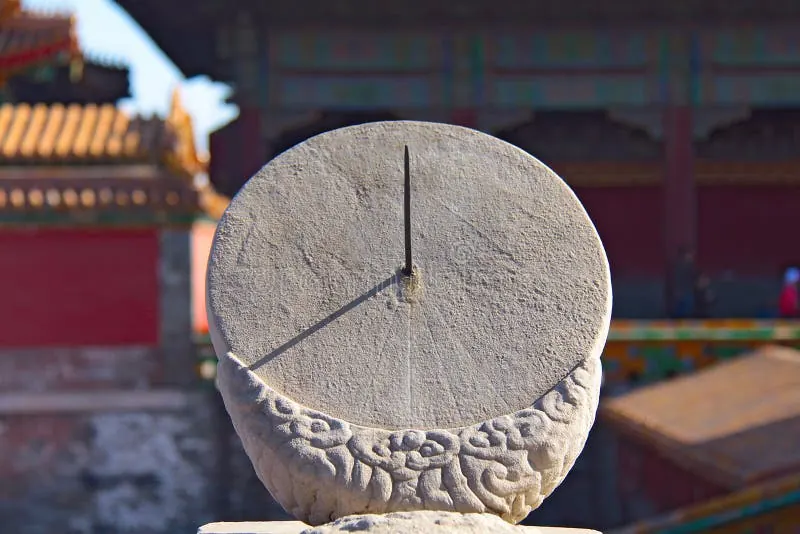
Over many centuries, Chinese observers recorded more than 1,600 solar and lunar eclipses and made the first reliable record of a total solar eclipse in 780 BCE. They described “guest stars” (客星, supernovae) and noted patterns of sunspots (黑子) on the Sun as early as 364 BCE, long before these were reported in Europe. A key surviving work is the Dunhuang star map (敦煌星图) from about 700 CE in the Tang Dynasty, showing over 1,350 stars in 257 constellations and regarded as the oldest complete preserved star chart. Chinese astronomers also linked the sky to calendars and timekeeping. Because Jupiter takes about 12 years to orbit the Sun, they divided its path into 12 sections and used Jupiter’s position to label years, leading to the 12 Terrestrial Branches (地支) used in the Chinese zodiac. On the ground, they developed early observational instruments and timekeepers such as sundials (日晷), gnomons for measuring the Sun’s shadow (表), and armillary spheres (浑仪) to model the heavens, combining careful sky records with practical tools for measuring time and direction.  |
   |
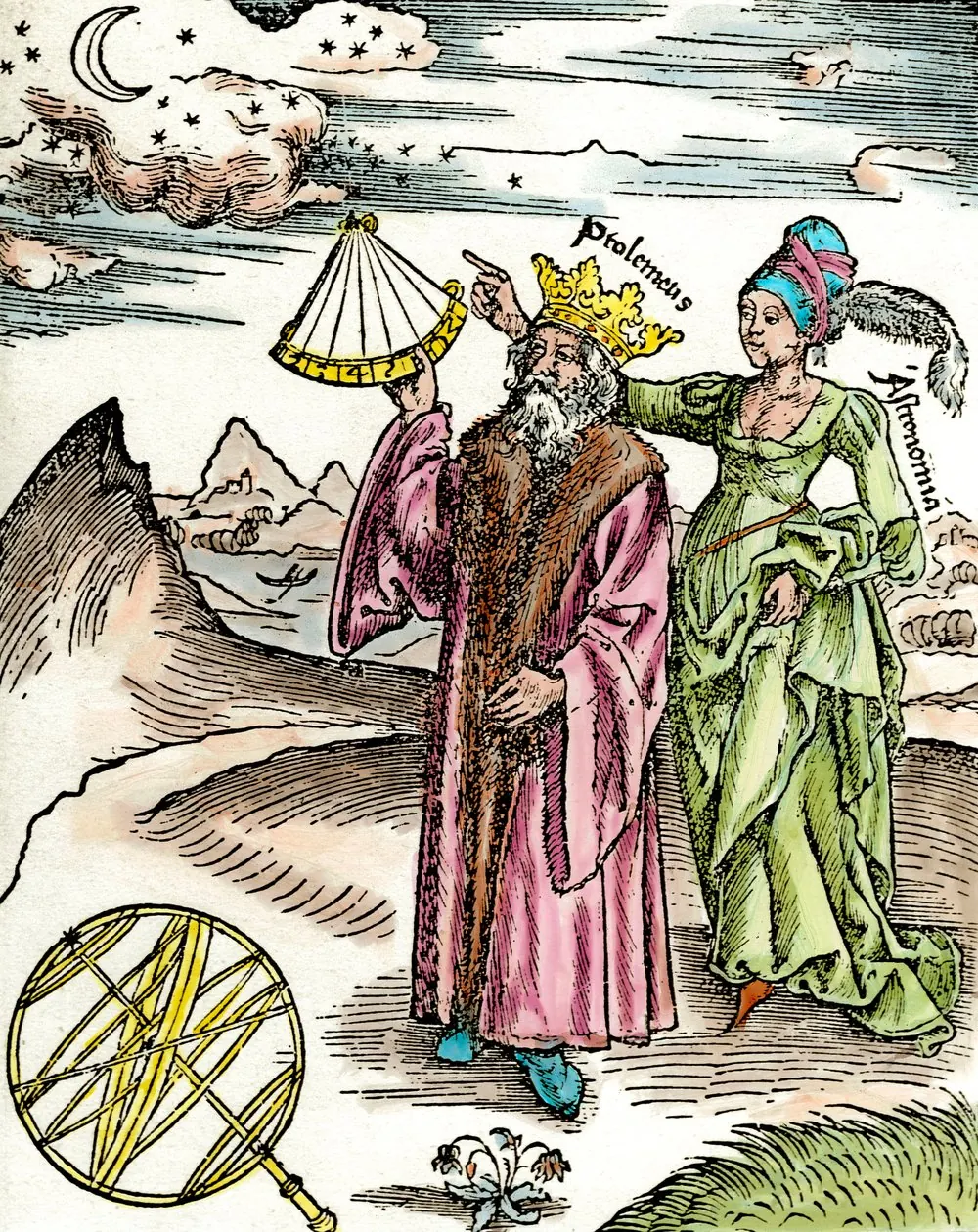
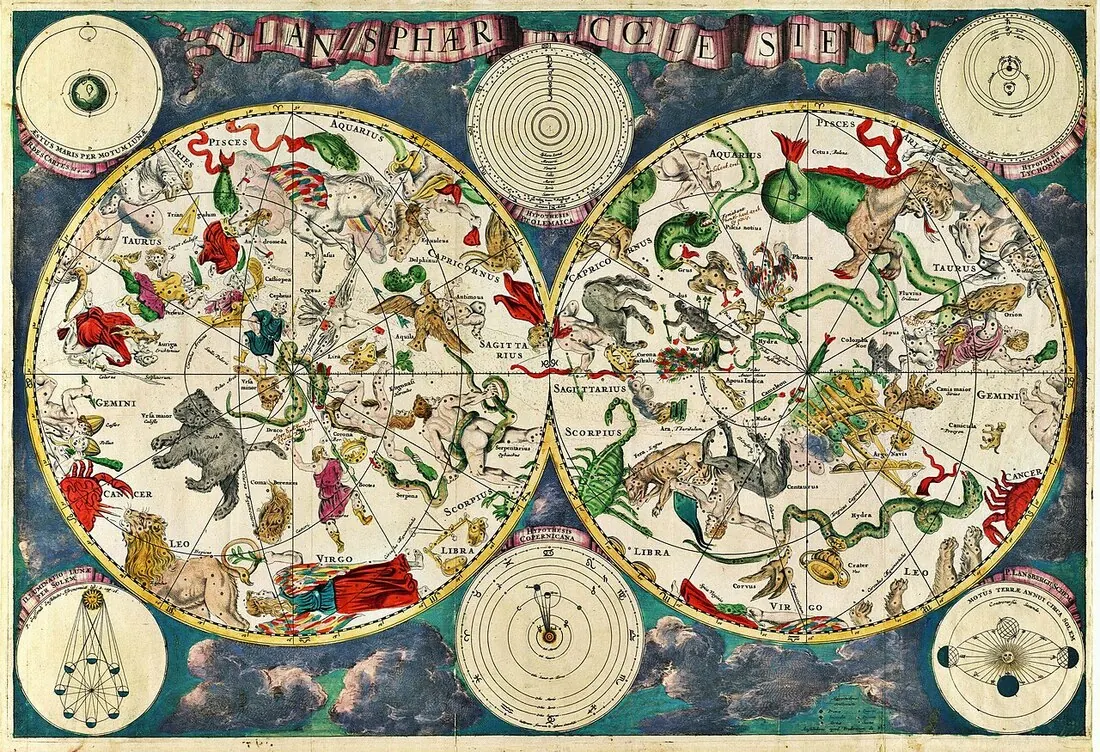
Ancient Greece: Constellations and StoriesGreek astronomers used geometry to study the sky and organized visible stars into 48 constellations, forming an early coordinate system. Ptolemy recorded star positions in catalogs so others could locate them using shared mathematical references.
Constellations also appeared in Greek stories and poetry. Homer mentioned Orion, Ursa Major, Sirius, and the Pleiades, which people used in real life for navigation and farming. Orion’s three‑star “belt” made it easy to recognize, and its appearance in the evening sky signaled winter and stormy conditions, helping sailors and farmers plan for rough seas and seasonal work. Ursa Major (the Great Bear or Plough) was for navigation: two stars at the edge of its “bowl” point toward the North Star, giving a simple way to find north at night. Because Ursa Major never set in northern skies, it acted as a constant sky marker for travelers and sailors. |
 |
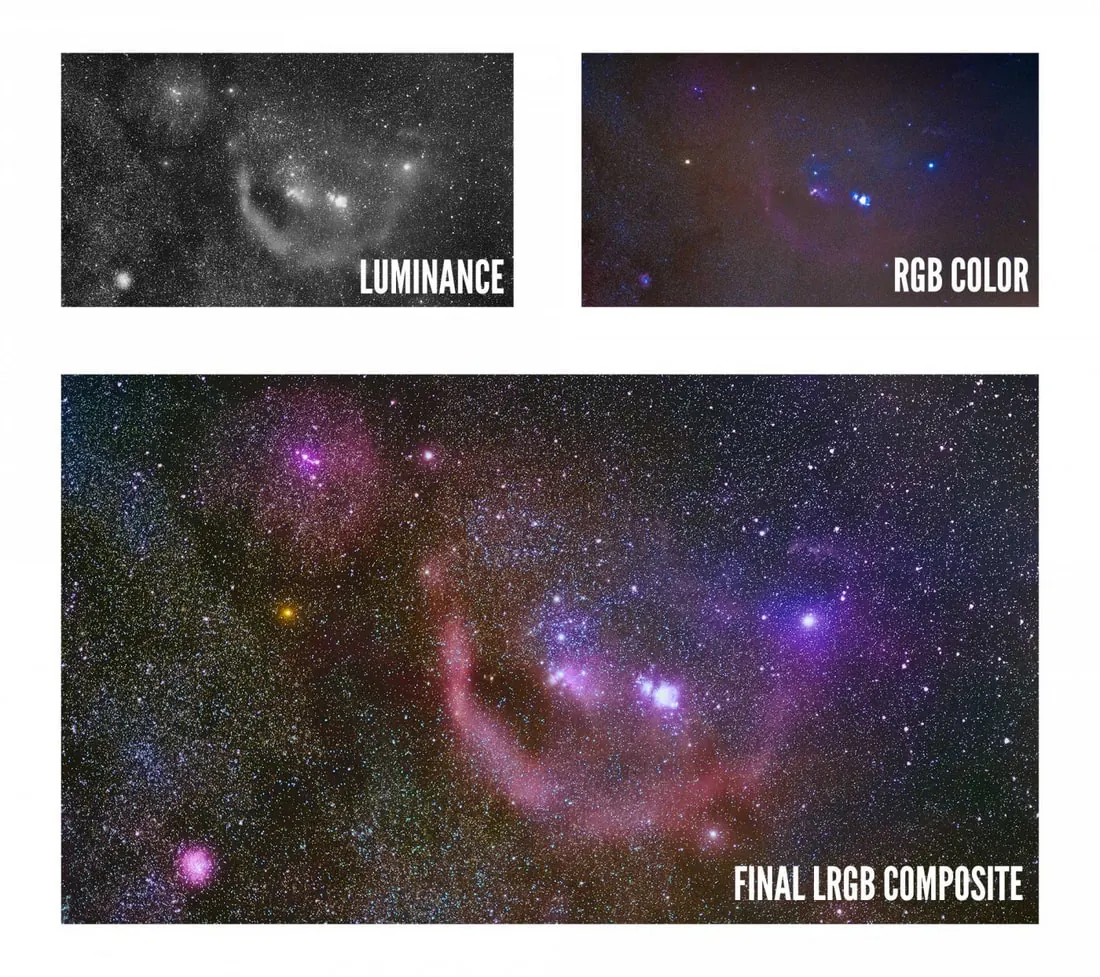
Activity: Image stacking
1. Get the Images
- Open the shared Google Drive folder for this activity.
- Download all provided star field images to your device.
- Go to https://pixlr.com/express/.
- Click Open Photo and choose the first star image as your base layer.
- Click Add image / Add layer.
- Add the second star image on top.
- Add a third image the same way.
- Select the layer.
- Lower opacity so you can see both layers.
- Use Move and Rotate to line up the stars with the base image.
- When they match, return opacity to near 100%.
- Repeat for all layers.
- Click Save/Download and name it: [YourName]_stacked_stars.png.
- Upload your final image to the class Google Drive or turn it in on Classroom.